Cleopatra's Sunken Palace: Exploring Alexandria's Underwater Ruins
What Is Cleopatra's Sunken Palace?
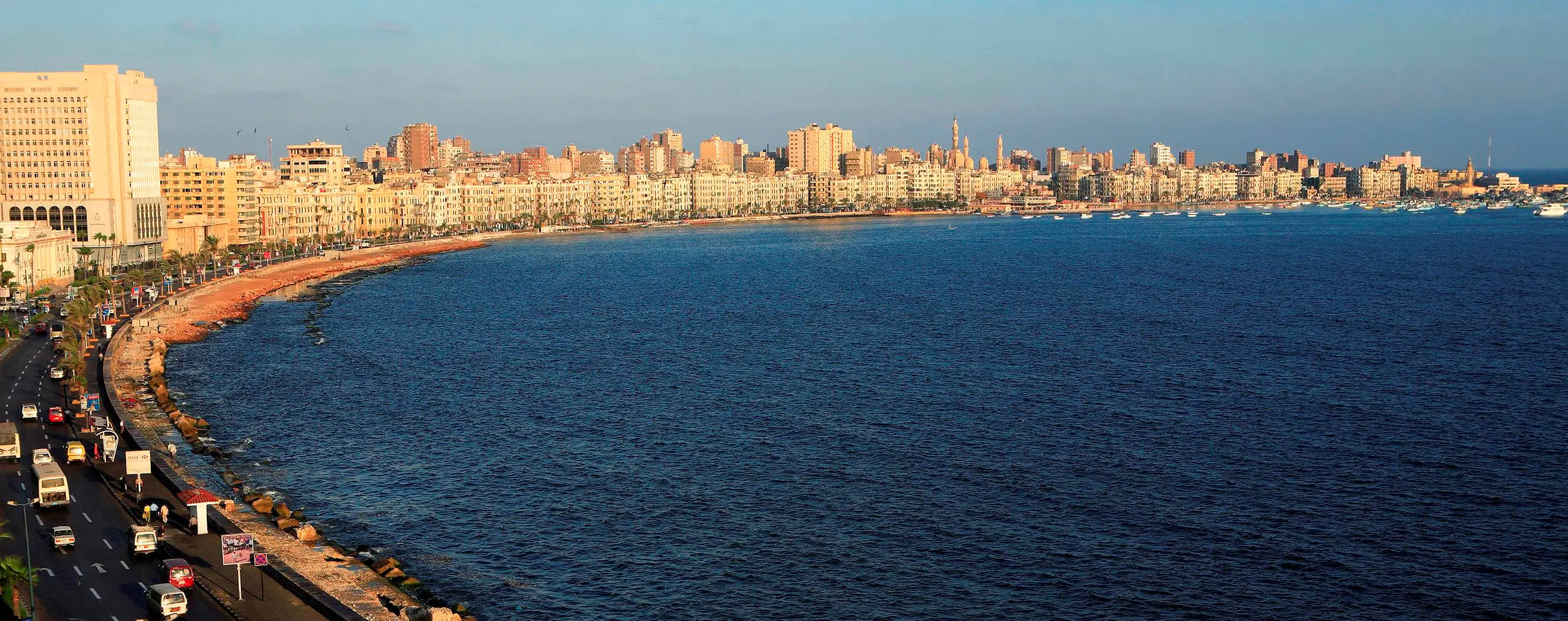
Beneath the boat traffic of Alexandria's Eastern Harbor, a few meters down, lie the remains of the royal quarter where Cleopatra VII lived. There are columns down there, statues, foundation walls, whole chunks of a palace complex. The area they cover used to hold temples, a small harbor, and an island called Antirhodos, which is where the queen actually resided.
The sea didn't take it all at once. Centuries of earthquakes pushed the shoreline down bit by bit, and nobody alive knew how much was sitting under that harbor until the 1990s, when a French archaeologist ran sonar across the seabed and picked up an entire royal district.
People write about this site constantly. Almost nobody has actually seen it. That tension is the whole story, so let's start with how the palace ended up underwater.
Why Did It Sink?
Earthquakes. Several of them.
The worst hit in 365 AD. An earthquake off Crete set off a tsunami that hammered the Mediterranean coast, and Alexandria took it hard. The land along the harbor dropped, water poured in over the royal quarter, and the earthquakes that came later, in the following centuries, kept pushing everything lower.
The city itself was already fading by then. The library was gone, the population had shrunk, and after the Arab conquest in 642 AD the town's center of gravity moved inland. Nobody rebuilt on the drowned quarter. Why would they? The sea had it.
And that's what makes this site unusual. Palaces get demolished, their stones get stolen, cities get built on top of their ruins. This one dropped into the water and stayed, untouched under the sediment for 1,600 years.
The Discovery: Frank Goddio Changes Everything
In the 1990s, the French underwater archaeologist Frank Goddio started surveying the Eastern Harbor with proper equipment: sonar, GPS, magnetometers. The Egyptian authorities let his team work, and what they found under the mud changed how people drew the map of ancient Alexandria.
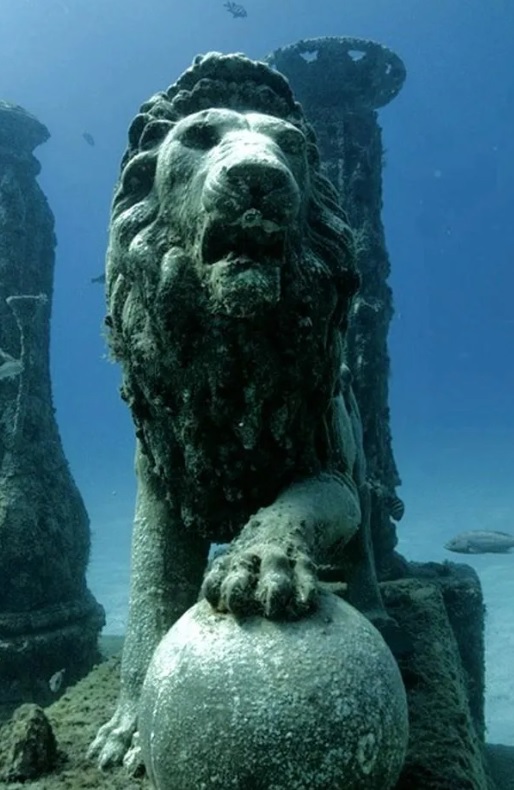
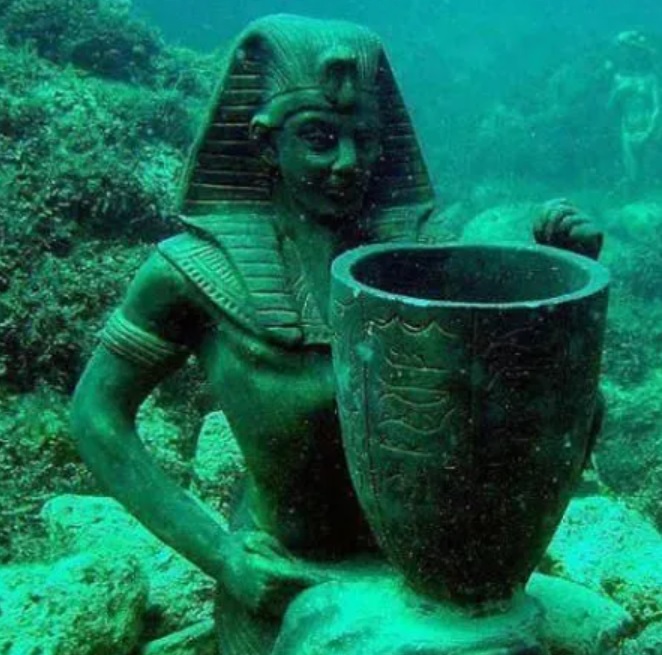
His team located Antirhodos, the island where Cleopatra's palace complex stood, and mapped its harbor installations. They found the Timonium, the structure Mark Antony built. Columns, statues, sphinxes, pottery, jewelry, foundation walls, all of it catalogued, and some of it went into traveling exhibitions that toured Europe and the US.
Two finds come up in every article about the site. A colossal head believed to be Caesarion, Cleopatra's son. And a black granite sphinx in beautiful condition, probably wearing the face of a Ptolemaic pharaoh. Both sit in museum collections now instead of underwater.
The excavations also settled an old argument. The harbor the Greek geographers described was real, and it sat right where the modern one is. The ancient texts weren't exaggerating. The city really did extend into water that's now several meters deep.
What's Still Down There
Plenty. The excavations were partial, deliberately, and most of the site remains in place under the seabed.
Divers who've been down describe foundation walls, granite columns lying where they fell, some still standing in rows, the paved surfaces of Antirhodos, and stone blocks from the ancient lighthouse, which toppled into the sea much later and scattered near the Qaitbay side of the harbor.
The water is the catch. Visibility in the Eastern Harbor is bad, often just a few meters, and the sediment on the seabed stirs up easily. This is not Red Sea diving with clear water and coral. It's dark, silty, urban archaeology, and what you actually see depends on conditions nobody controls.
Can You Dive or Visit It?
This is where things get complicated.
Diving: It exists. A small number of dive centers in Alexandria run dives over the sunken quarter with permission and archaeological supervision. The depth is shallow, usually 5 to 8 meters, and floating over a palace is not something most people ever do. But conditions run the show, and dive days get cut short or canceled whenever visibility drops.
The underwater museum: Everyone asks about this one. A museum in the Eastern Harbor has been designed, announced, studied, postponed, and re-announced since the 2000s. Tunnels on the seabed, viewing structures, the works. Nothing got built. There is no underwater museum in Alexandria today, and no ticket you can buy. Articles claiming otherwise are ahead of reality.
From shore: You can stand on the Corniche, look at the water, and know what's down there. It's a strange feeling the first time. The harbor loop between Qaitbay and Ras El Tin covers the water hiding the palace.
The Underwater Museum That Never Opened
The museum project is worth a paragraph of its own, because it says a lot about how Alexandria works. Real architectural firms drew up real designs: fiberglass tunnels on the seabed, visitors walking below the surface among the ruins, the first project of its kind at that scale anywhere. Then funding problems, conservation worries, the political mess after 2011, and the basic difficulty of building inside a working harbor pushed it back. Again and again.
The idea isn't dead. Officials bring it up every few years, usually around tourism conferences. Whether it happens in five years or twenty, nobody here will be surprised either way.
What to Do Instead: Seeing the Story From Shore
The palace stays underwater, but the harbor area tells the story in pieces:
Qaitbay Citadel: Built with stones from the fallen lighthouse, it stands on the same shoreline that watched the royal quarter sink. The walls also give you the best view over the water hiding the palace.
The Naval Unknown Soldier Memorial: The granite monument in the same harbor, marking the water's role in the city's story.
Ras El Tin sea walk: The palace stretch faces the deepest part of the sunken quarter, close to where the Timonium was mapped.
The rest of downtown: The sinking never stopped. Ancient remains keep turning up in construction digs across the city center, which tells you how much is still buried.
Is It Worth Exploring?
Divers with flexible schedules should go for it, expectations managed. It's a one-of-a-kind site, the shallow depth makes it doable, and floating over a palace isn't a normal Tuesday. The bad visibility is real though, and some dives come up short.
Everyone else gets the story from above, and the harbor tells it well. Standing at the citadel, looking across water that hides a queen's residence, is not nothing.
The practical side: dive centers, permits, conditions, and the harbor loop all take coordination. Aten Tours' Alexandria day tours fold the story into a full day, citadel, harbor viewpoints, the naval memorial, with the underwater history narrated properly, so you leave knowing what's under the boats instead of just knowing something is.