El-Shatby Necropolis: Alexandria's Oldest Surviving Structure
What Is the El-Shatby Necropolis?
The oldest building you can still walk into in Alexandria is a cemetery. Not the citadel, not a mosque, none of the famous landmarks. The Shatby Necropolis, a Greek burial complex carved into the rock in the 3rd century BC, is older than the catacombs by generations. It was already underground before the Roman Empire existed.
It sits in the Shatby district between the university hospital and other modern buildings, easy to walk past without noticing. Which is roughly how it survived. Nobody built over it because, for a long time, nobody remembered it was there.
Why It's Old: The First Cemetery of Greek Alexandria
Alexandria was founded around 331 BC, and the Greeks who settled it brought their burial customs with them. The Shatby necropolis is the earliest of these, dating from roughly the reign of Ptolemy II, the city's first generations of dead. Older than Kom El Shoqafa. Older than Pompey's Pillar. Older than almost everything you can visit in the city today.
Most Alexandria sites show you the Roman city or the Islamic city. Shatby shows you the very beginning, the Greek city that Alexander's successors built, in the centuries when Alexandria was becoming the Mediterranean's most important metropolis.
It also matters archaeologically. The burial traditions here, rock-cut tombs with family chambers and ritual dining rooms, established the patterns that later Alexandrian cemeteries, including the famous catacombs, developed and expanded. Shatby is where the tradition started.
Shatby vs. Kom El Shoqafa: What's the Difference?
Visitors mix these two up constantly, so let's untangle it. Both are underground burial sites carved into rock, and both date to antiquity. Beyond that, they don't have much in common.
Shatby is the older one by centuries, Greek in origin, from the 3rd century BC. The layout is basic. Burial chambers sit around courtyards, and there's a triclinium, a ritual dining room where families held funeral feasts in the Greek custom.
Kom El Shoqafa is Roman-era, from the 2nd century AD, and much grander. It has a spiral staircase down into a multi-level complex, decorated with a blend of Egyptian, Greek, and Roman imagery.
If you only have time for one, most people should pick the catacombs. Kom El Shoqafa gives you the spectacle. Shatby gives you the beginning of the whole story.
How It Was Found
Like half of hidden Alexandria, it was found by accident. In the 1890s, construction work for the new university hospital hit ancient chambers while digging. Archaeologists arrived, and the necropolis came back to light after roughly two millennia underground.
The site quickly became part of the city's archaeological record. E.M. Forster, the novelist, wrote one of the earliest popular guides to Alexandria in the 1920s and included Shatby among the sites worth knowing. From that point on it was excavated, studied, and preserved, though never turned into the major attraction its age might suggest.
What You'll Actually See
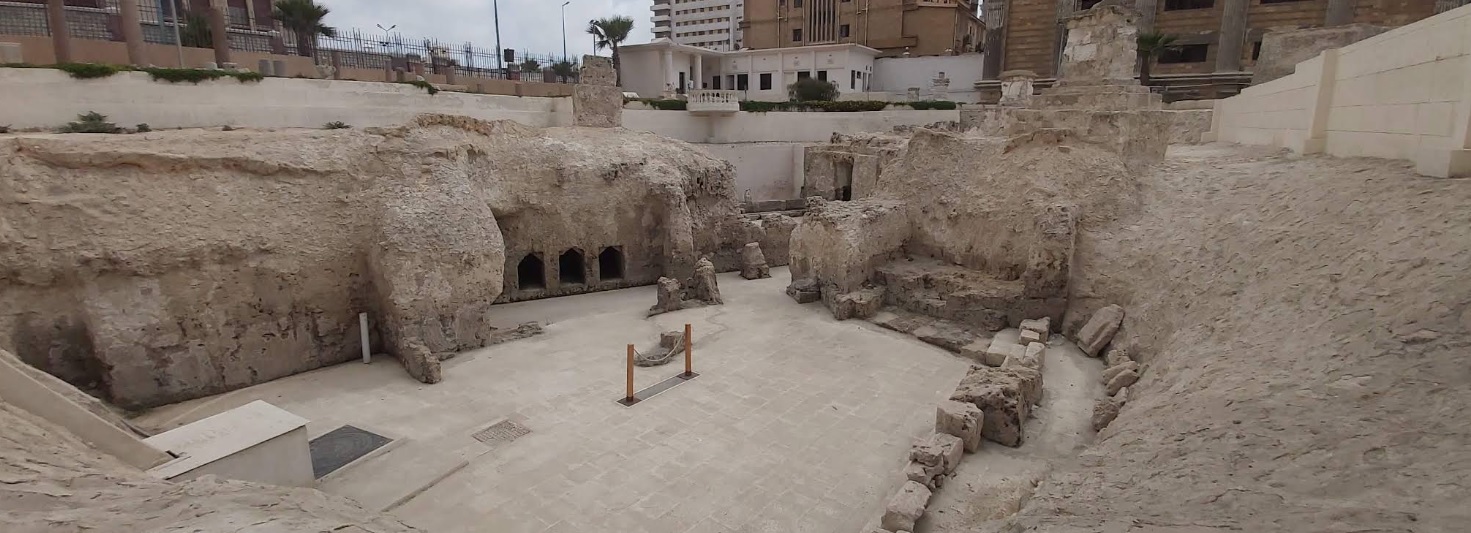
This is a modest, scholarly site, so temper the expectations. You descend into a series of rock-cut burial chambers arranged around open courtyards. The carving work is plain but legible. Doorways framed in the Greek style. Burial loculi cut into the walls where bodies were laid. The triclinium with its rock-cut benches where funeral meals were shared.
The site is small. Most visits run twenty to thirty minutes, and you'll likely share it with archaeology students rather than tour groups.
Visiting Practicalities
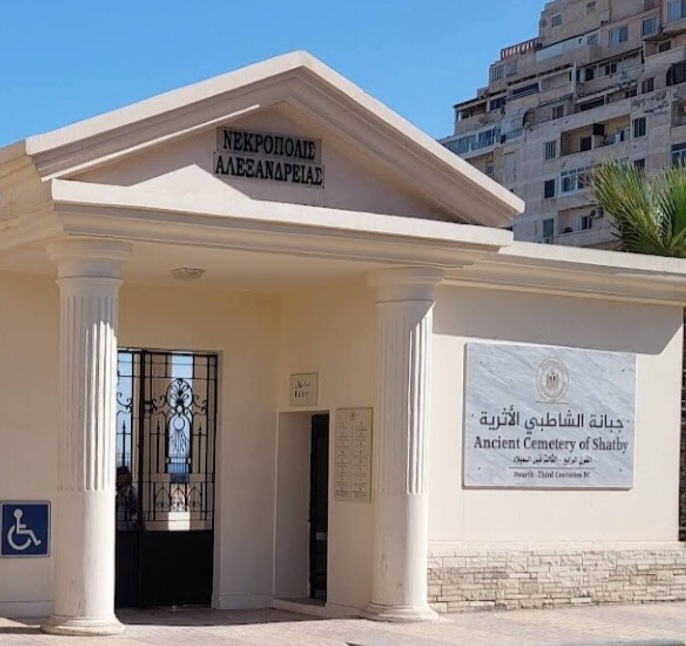
The necropolis sits on Port Said Street in the Shatby district, right by the university hospital complex, east of downtown.
Hours and Entry: It opens during daytime hours, generally mornings through afternoon, with entry costing a small fee. Hours in Alexandria shift occasionally, so a quick local check before going is the safe move.
How Long: Twenty to thirty minutes covers it properly.
What's Nearby: Pompey's Pillar and the catacombs pair naturally with Shatby. All three sit in the same general belt of the city, and visiting them together tells the full story of Alexandrian burial traditions from Greek beginnings to Roman grandeur.
Is It Worth Visiting?
For first-time visitors with one day in the city, no, prioritize the citadel, the catacombs, and the library. Shatby is a specialist site, and it competes poorly against the headline attractions for a short schedule.
For archaeology enthusiasts, for second visits, for anyone who wants to stand inside the oldest thing in Alexandria, yes, absolutely. It's quiet, cheap, historically significant, and almost never crowded. You'll likely have 2,300 years of history to yourself.
If you're building a full archaeology day, Shatby, Pompey's Pillar, and the catacombs in one loop, Aten Tours' Alexandria day tours can arrange the routing with a guide who explains how the burial traditions evolved from these Greek beginnings into the Roman spectacle of Kom El Shoqafa.