.jpg "Pyramid Texts inside the Pyramid of Unas")
.jpg "Pyramid of Unas at Saqqara")
The Pyramid of Unas: Saqqara's Hidden Chamber of Ancient Texts
Why the Pyramid of Unas Matters
From the outside, the Pyramid of Unas looks unremarkable — a low mound of rubble easy to walk past on the way to Saqqara's more famous monuments. Step inside, though, and it holds one of the most important discoveries in Egyptology: the Pyramid Texts, the oldest known body of religious writing in the world, carved directly into the walls of the burial chamber over 4,300 years ago.
A Pharaoh's Final Resting Place
Unas was the last ruler of Egypt's Fifth Dynasty, reigning in the 24th century BCE. His pyramid was built at Saqqara, south of the older and much taller Step Pyramid of Djoser. Compared to the giants at Giza, it's modest in scale — but its historical weight has nothing to do with its size.
The Pyramid Texts
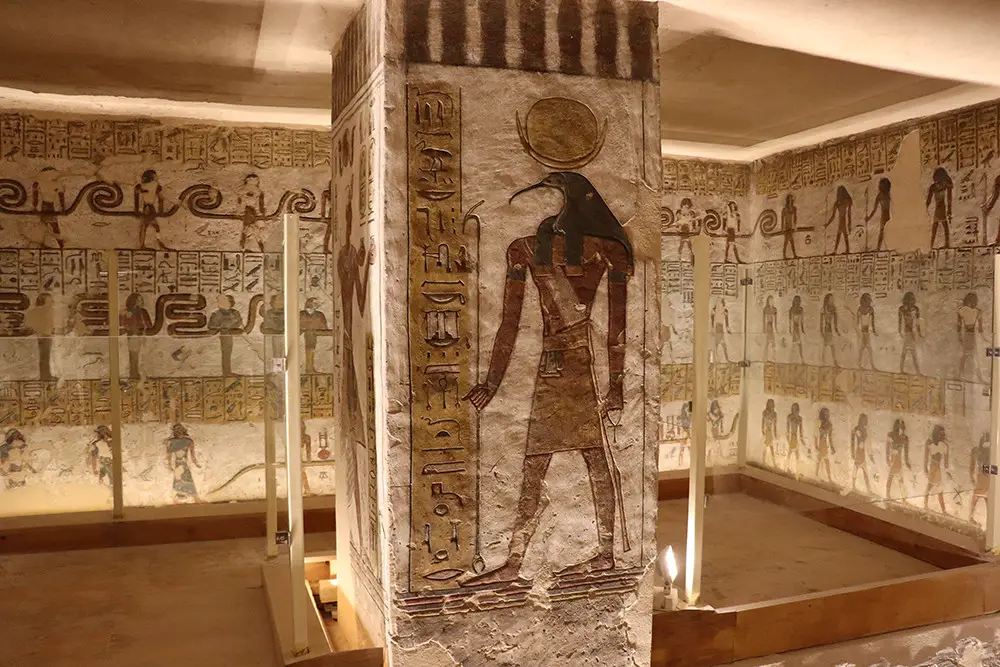
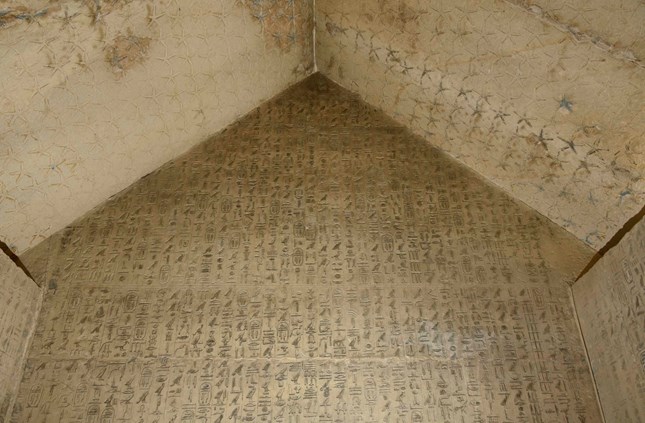
Unas was the first pharaoh to have funerary spells carved into his pyramid's interior. These hieroglyphic inscriptions, known today as the Pyramid Texts, were meant to guide the king's spirit into the afterlife and protect him along the way. They later formed the basis for the Coffin Texts and the Book of the Dead, making Unas's burial chamber a direct ancestor of some of Egypt's best-known religious literature.
What You'll See Inside
The burial chamber's ceiling is painted with stars, meant to place the pharaoh among the eternal night sky. The surrounding walls are covered floor to ceiling in tightly carved hieroglyphs, still legible after more than four millennia. A basalt sarcophagus sits in the chamber, and the contrast between the crumbling exterior and this dense, decorated interior is part of what makes a visit here memorable — it feels less like a monument and more like stepping into a private, ancient library.
Practical Visiting Information
The pyramid sits within the Saqqara necropolis, roughly 30 kilometres south of Cairo. Entry usually requires a separate ticket from the main Saqqara pass, and access to the interior chamber can occasionally close for conservation work, so checking ahead is worth it. Mornings are quieter and cooler, particularly useful given the narrow, low passage leading down to the chamber. Comfortable shoes and a flexible schedule help, since the descent isn't suited to anyone with mobility concerns.
Pairing It With Nearby Sites
Saqqara rewards a slower visit. The Step Pyramid of Djoser is a short walk away, and the Imhotep Museum near the entrance puts many of the necropolis's finds into context. Most travellers combine Saqqara with a wider day trip from Cairo to Alexandria, stopping at the pyramids en route before continuing north to the coast.
Getting There From Alexandria
Travellers based in Alexandria typically join a guided day tour rather than arranging Saqqara access independently, since the site sits well outside the city and ticketing can be confusing without local support. For route options and timing, see this guide on how to get from Cairo to Alexandria, which covers the logistics of combining both cities in one trip.