Eliyahu Hanavi Synagogue: Alexandria's Restored Synagogue and How to Visit
What Is the Eliyahu Hanavi Synagogue?
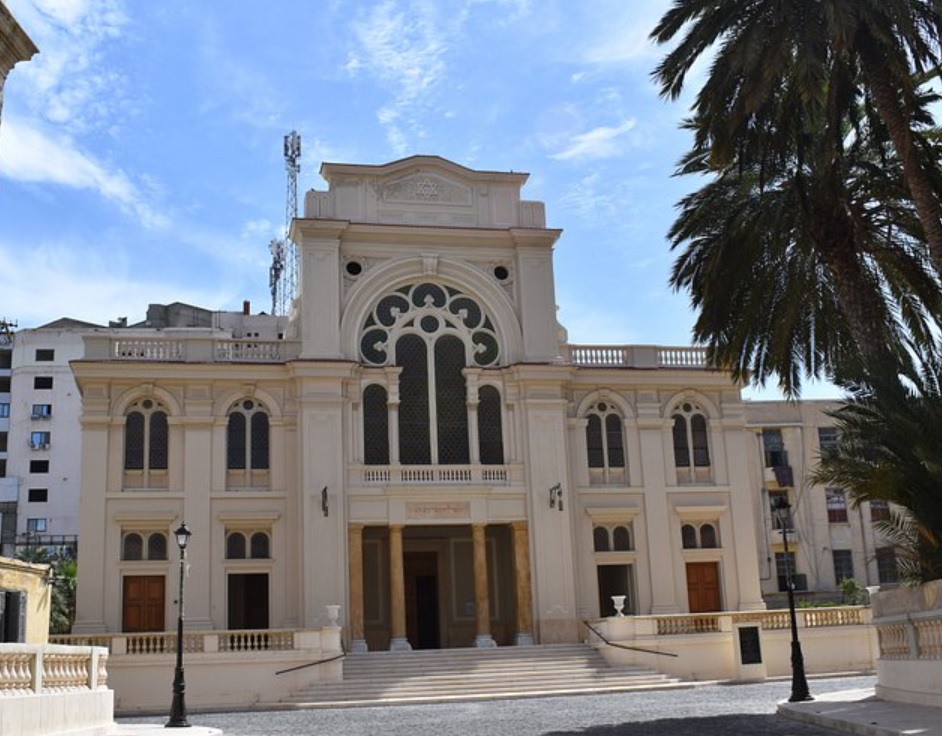
From the street, honestly, not much. A big weathered limestone building on Nasser Street with dark green shutters, no signs waving you in, nothing announcing itself. That's how it stayed for decades—closed, quiet, unknown even to people living a few blocks away.
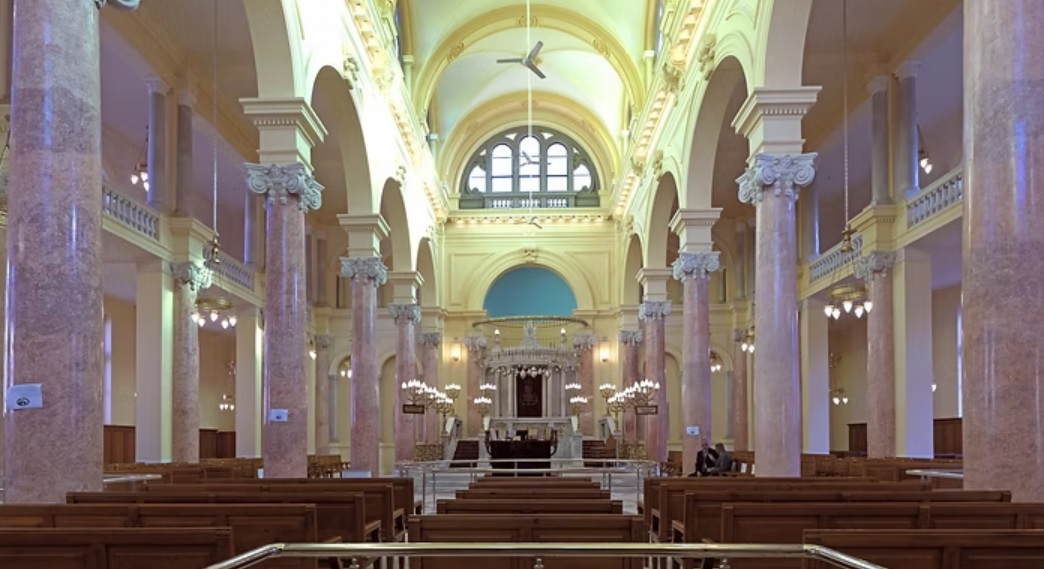
Inside is the part nobody expects. A vast hall of pale Italian marble, brass chandeliers hanging way up, rows of dark wooden benches, and a sanctuary platform at the far end that once seated thousands. The formal name is Eliyahu Hanavi—Elijah the Prophet—but Alexandrians always just called it "the Jobars' synagogue," after the family that kept it running for generations. After Cairo's Ben Ezra, it's the most important surviving Jewish monument in Egypt.
The History: Older Than It Looks
Jews have been in Alexandria almost as long as Alexandria has existed. The community that grew here in Greek and Roman times produced Philo, the philosopher, and tradition says a synagogue stood on or near this spot close to two thousand years ago. The building you see now, though, is younger. It went up in 1854 under the Mohammad Ali dynasty, and when part of it collapsed in 1881, it was rebuilt bigger into the basilica-style hall standing today.
Its golden decades came in the early twentieth century. The city's Jewish families—the Jobars, the Aghions, the merchant dynasties—helped make Alexandria one of the richest, most cosmopolitan ports on the Mediterranean, and this synagogue was where that world gathered.
The 2017-2020 Restoration
By the 2010s the building was losing the fight. Rain came through the roof, marble had cracked, and the remaining congregation—a handful of elderly people by then—had no way to maintain a hall that size. The Egyptian government took it on: a restoration of roughly $4 million, run by the Ministry of Tourism and Antiquities with international heritage specialists brought in.
It took years. Structure stabilized, marble pieced back together, chandeliers taken down and cleaned, the green shutters repaired one by one. It reopened in January 2020, right before the pandemic shut the world down anyway, at a ceremony attended by officials and diaspora families whose grandparents had left Egypt half a century earlier. It now stands as the best-preserved historic synagogue in the Arab world, comfortably.
Visiting Practicalities
Nasser Street, downtown, a few minutes on foot from Attarine Souq and the Roman Amphitheatre. Finding it is easy.
Getting in is the part that trips people up. There are no posted hours and no ticket booth. Visits get arranged in advance through tourism authorities or a tour operator—partly for security, partly because the site is protected. Just show up and hope? You'll probably find the door locked. The way that actually works is to set it up through a guide or ask at the tourist office a day ahead.
Once inside, photos are generally fine, and the interior deserves the camera time: rose-marble columns, a brass menorah, the women's gallery running along three sides. Dress modestly—services still happen here, whatever the size of the congregation.
The Story of Alexandria's Jewish Community
Back up to the 1940s and the picture looked nothing like today. Around 40,000 Jews called Alexandria home—bankers, merchants, pharmacists, filmmakers. One family might drift between Arabic, French, Italian, and Greek in a single conversation. The city's cosmopolitan reputation wasn't a tourism slogan; these people were the reason for it.
After 1948 it unraveled fast. Wars, expulsions, and rising nationalism pushed nearly everyone out by the 1960s. A handful stayed in Egypt; almost nobody lives in Alexandria year-round now. The synagogue outlived its congregation, which is exactly why the restoration mattered—it kept a chapter of the city's own past standing.
What's Nearby?
Everything classical Alexandria runs within walking distance:
Attarine Souq: Two minutes. The old antiquities market—brass, coins, spices, and the shops that once supplied half of Europe with Egyptian artifacts.
Kom El Dikka and the Roman Amphitheatre: Ten minutes on foot. Egypt's only surviving Roman theatre, with the Villa of the Birds right there.
Nabi Daniel Mosque: Around the corner. Tradition puts the tomb of Alexander the Great underneath it. Scholars argue about that one constantly.
The harbor: Fifteen minutes east on foot, with Qaitbay Citadel visible down the coast.
Is It Worth Visiting?
If your interest in Egypt goes past the pharaohs, yes. The synagogue is one of the last standing pieces of Alexandria's multicultural era, and after the restoration you're seeing it in better shape than anyone has in fifty years. It slots neatly into a downtown walk with Attarine and Kom El Dikka.
The complication is getting in—arrangements have to be made, so it belongs in a planned day, not a spontaneous wander. That's the job of Aten Tours' Alexandria day tours: the guide sorts the paperwork and the timing and folds the synagogue into the rest of the downtown route without you chasing locked doors.