
Contact with us
We're here to help you plan your perfect trip. Contact us anytime!
Travel with confidence with Aten Tours, where local expertise meets exceptional service. From carefully curated itineraries and handpicked experiences to seamless planning and dedicated support, we create personalized journeys designed around what matters most—comfort, quality, and unforgettable experiences across Egypt and beyond.
At Aten Tours, we are proud to create experiences that leave lasting memories. Read genuine feedback from travelers who explored Egypt’s wonders, enjoyed luxury holidays, and discovered the world with confidence and ease.
Traveling solo in Egypt with Aten Tour was one of the best decisions I made. As a 22-year-old female traveler, I was a little nervous before arriving, but I felt safe and well looked after from day one. Everything was well organized, my guide was knowledgeable, kind, and always happy to help, and I never had to worry about a thing. The whole trip was smooth, enjoyable, and filled with unforgettable moments. I'm so glad I chose Aten Tour and would definitely travel with them again.
My fiancé and I booked a private 5-day tour of Egypt with Aten Tours, covering Cairo, Aswan, Abu Simbel, and Luxor. From the moment we arrived, everything was perfectly organized. The team took care of every detail, making our trip completely stress-free. Our guides were knowledgeable, friendly, and passionate about Egypt's history, and every destination exceeded our expectations. Even after returning home, we still find ourselves talking about this unforgettable experience. We highly recommend Aten Tours to anyone looking for a well-planned and memorable trip to Egypt.
Traveling with Aten Tour made our vacation completely stress-free. Every hotel, transfer, and excursion was exactly as promised, and the team was always available whenever we had a question. We really appreciated the personal attention and warm hospitality throughout the trip. We came home with unforgettable memories and would definitely recommend Aten Tour to anyone planning a trip to Egypt.
We booked an 8-day trip with Aten Tour, and it turned out to be one of our favorite vacations. Everything was well organized from start to finish, which made traveling around Egypt really easy. We never felt rushed, the hotels were great, and the team was always helpful whenever we needed anything. Egypt had been on our bucket list for a long time, and we're so glad we chose Aten Tour for this experience.
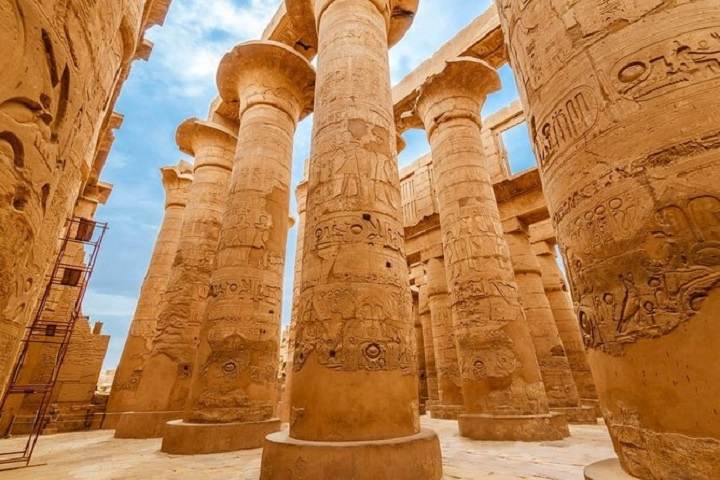
Our family booked a tour with Aten Tour after reading several positive reviews, and they definitely lived up to our expectations. Communication before the trip was quick and helpful, and everything during the tour was exactly as described. The hotels were comfortable, the transportation was smooth, and the guides made every stop interesting with their stories and local knowledge. Egypt had always been a dream destination for us, and this trip made it even more memorable.
Yes, especially if you want a break from monument-hopping or one of the best skyline views of Islamic Cairo in the city.
Formal gardens, a lake, a palm-lined promenade, a restored stretch of the 12th-century Ayyubid wall, and panoramic views of the Citadel and Islamic Cairo's minarets from the highest points.
The Darassa Hills had been used as Cairo's landfill for about five centuries. The Aga Khan Trust for Culture cleared the site and transformed it into gardens instead of building on undeveloped land elsewhere.
A 30-hectare public park in Cairo, built on a former rubbish dump and opened in 2005 by the Aga Khan Trust for Culture, known for its gardens and views over Islamic Cairo.
Flax was woven into linen, Egypt's most common fabric and a major export good, supporting a textile industry that stretched from farming villages to royal workshops.
Farmers relied on wooden ploughs pulled by oxen, hand sickles for harvesting, and a shadoof, a simple lever device, to lift water from the river into irrigation channels.
Each year's flood deposited a layer of fertile black silt across the fields, renewing the soil naturally. This cycle divided the calendar into flooding, growing and harvest seasons.
Farmers grew emmer wheat and barley for bread and beer, flax for linen, and vegetables such as onions, garlic and leeks. Grapes, dates and figs added variety, while papyrus reeds served practical and ceremonial purposes.
Masses run through the week, mostly in Arabic, and historically some were in French and Italian. Weekend services pull the bigger crowds. Times have moved around over the years, so check the current schedule locally before you plan around one.
Yeah, the church generally opens during the day, and anyone can walk in quietly regardless of faith. Dress modestly, keep your voice down, and go easy on the photos if people are praying.
The building went up in the nineteenth century for the Catholic European residents living here during the city's cosmopolitan era. The Franciscans themselves had been in Alexandria long before that.
Nope. The monastery sits at the foot of Mount Sinai out in the desert. This one is the city's main Catholic church, run by Franciscans right in the downtown historic district.
It's in the Attarine area of downtown, a short walk from the souq and the main city squares, and about ten minutes on foot from the sea. People constantly mix it up with St. Catherine's Monastery in Sinai, which is a completely different place.
A light jacket for the cooler evening air and comfortable shoes, since part of the show is a walk over uneven stone in low light.
Yes. The evening show focuses on atmosphere and narration, while daylight lets you see the carvings, inscriptions, and scale of the complex up close.
Several, usually including English, Arabic, French, German, Spanish, and Italian, with each evening's performances split by language.
Close to an hour, including the walk through the temple and the seated finale at the Sacred Lake.
For readers of poetry, it's the room where "Ithaka" was written—no statue replicates that. For visitors new to Cavafy, it's still a brief, inexpensive stop that adds real depth to the story of old Alexandria.
His bed, the desk where he worked, period furniture, plus manuscripts, letters, and photographs of the poet in his final years. The rooms are kept as close as possible to how he left them.
The museum has historically run on reduced days, usually mornings, with closures in August. The schedule has changed more than once, so confirming current hours through the Greek cultural authorities or your hotel before going is the reliable move.
Constantine P. Cavafy was a Greek poet born in Alexandria in 1863. He spent most of his life in the city working as a civil servant while writing poetry, and works like "Ithaka" and "Waiting for the Barbarians" made him one of the defining voices of modern literature.
Sharia Sharm El Sheikh (formerly Lepsius Street) in the Messallah district—a short walk from Attarine Souq and about fifteen minutes on foot from the Roman Theatre in central Alexandria.
The Rosetta Stone records a priestly decree issued after the coronation of Ptolemy V at Memphis, written in hieroglyphic, Demotic and Greek.
It was a renewal ceremony held after roughly thirty years of a pharaoh's reign, re-enacting the original coronation to restore royal power.
Most coronations took place at Memphis, in the temple of Ptah, where priests performed the rites needed to confirm divine authority.
The white Hedjet represented Upper Egypt and the red Deshret represented Lower Egypt. Combined, they formed the Pschent, the double crown symbolising a unified Egypt.
It marked the transformation of a mortal ruler into the living embodiment of Horus, the god of kingship, and gave the new pharaoh responsibility for maintaining ma'at, the balance between order and chaos.
Choose a reputable tour operator and confirm the departure location, dates, accommodation, transportation, meals, safari activities, camping arrangements and what's included in the price before making your reservation.
Wear lightweight, comfortable clothes and closed shoes. Bring sunglasses, sunscreen, a hat or scarf and warm clothing for the evening because desert temperatures can become much cooler after sunset.
Desert travel should be arranged with an experienced, licensed guide and suitable 4x4 vehicle. Egypt's tourism guidance recommends experienced, licensed guides for desert excursions and checking relevant access requirements before traveling.
Absolutely. Spending the night away from major cities provides excellent opportunities for stargazing when weather conditions are suitable.
A private trip combines Siwa's ancient history, oasis landscapes, salt lakes, traditional culture, and Great Sand Sea adventure in one experience. It is an ideal option for travelers looking for a more flexible and personalized Western Desert adventure.
The cooler months are generally more comfortable for exploring the oasis and taking part in desert activities. However, Siwa can be visited throughout the year, with the choice depending on your tolerance for hot daytime temperatures.
Desert excursions should be organized with an experienced, licensed guide and suitable 4x4 vehicle. Egypt's tourism authority recommends using experienced operators or licensed guides and checking transportation, access and permit requirements before heading into desert areas.
This trip combines oasis scenery, desert adventure, geological formations, traditional camping, spectacular sunsets, and stargazing in one experience. It is an excellent choice for travelers who want to explore a side of Egypt beyond Cairo, Luxor, and the traditional archaeological sites.
The cooler months are generally more comfortable for desert activities and overnight camping. During the hotter months, travelers should be prepared for high daytime temperatures and follow their guide's recommendations.
The safest approach is to travel with an experienced, licensed desert guide and an appropriate 4x4 vehicle. Egypt's tourism authority specifically recommends using experienced, licensed guides for excursions outside the oasis and checking permits and logistics before departure.
Yes, many families enjoy the Bahariya and White Desert experience. However, activities such as sandboarding and off-road driving should be discussed with your tour operator when traveling with young children.
Yes. An overnight safari gives you the opportunity to experience the changing colors of the desert at sunset and sunrise, followed by breakfast at the campsite.
Yes. You can request itinerary adjustments or additional experiences when arranging your tour with Aten Tours.
Yes. The Grand Egyptian Museum is included in the Cairo sightseeing program, where you can explore its collection of ancient Egyptian artifacts and Tutankhamun's treasures.
Yes. The tour is private, with a dedicated Egyptologist guide and private air-conditioned vehicle throughout the itinerary.
You will visit the Giza Pyramids and Great Sphinx, Memphis and Saqqara, the Grand Egyptian Museum, the Citadel of Salah El-Din, Old Cairo, and Khan El Khalili.
The tour includes private sightseeing in Cairo and Alexandria, hotel accommodation, an English-speaking Egyptologist guide, private air-conditioned transportation, meals as listed, and airport transfers.
Yes. The tour is arranged privately with a dedicated Egyptologist guide and private vehicle, allowing you to explore the main sites at your own pace.
Yes. Domestic flights between Cairo and Luxor are included according to the tour itinerary.
You will visit the Giza Pyramids and Great Sphinx, Saqqara and the Step Pyramid, Memphis, the Grand Egyptian Museum, and the Citadel of Saladin.
The tour includes private sightseeing in Cairo and Luxor, domestic flights between the two cities, hotel accommodation, an Egyptologist guide, private transportation, and meals as listed in the itinerary.
The Sharm El Sheikh portion includes a Sinai desert quad bike experience and a boat trip to Ras Mohammed National Park, where you can swim and snorkel among the Red Sea's coral reefs.
The tour includes a domestic flight from Cairo to Sharm El Sheikh. An Aten Tours representative will meet you at the airport and transfer you to your hotel.
You will visit the Giza Pyramids, Great Sphinx, Saqqara, Memphis, the Egyptian Museum, Citadel of Saladin, Alabaster Mosque, Old Cairo, and Khan El Khalili.
The tour includes accommodation, private guided sightseeing in Cairo and Sharm El Sheikh, domestic flights between Cairo and Sharm El Sheikh, private transportation, and meals as mentioned in the itinerary.
His tomb, KV35, was discovered in the Valley of the Kings and later held a cache of other royal mummies hidden there for protection.
His reign lasted approximately twenty five years, spanning military campaigns early on and a more stable, construction focused period later.
He was known for his physical strength and athletic skill, particularly archery and horsemanship, as well as military campaigns in Nubia and the Levant.
Amenhotep II was a pharaoh of Egypt's 18th Dynasty who ruled during the New Kingdom, succeeding his father Thutmose III around 1427 BCE.
Rarely. Luxor averages under 4mm of rainfall a year, one of the driest totals in the world, so weather planning here is almost entirely about temperature rather than rain.
The alignment happens twice a year, around February 22 and October 22. Both dates draw extra visitors to Abu Simbel, so booking that leg of the trip early is worth it if the date matters to you.
Summer (June to September) is genuinely hot, with July regularly passing 40°C, but sightseeing is still manageable with early starts, air-conditioned breaks, and steady hydration. Tomb and temple interiors stay noticeably cooler than the open air.
November and February are usually rated highest, since both combine comfortable daytime temperatures around 23–28°C with crowds and prices that haven't yet hit the December–January peak.
The Alexandria portion includes the Catacombs of Kom El Shoqafa, Citadel of Qaitbay, Montazah Royal Palace and Gardens, Bibliotheca Alexandrina, Pompey's Pillar, Abu Al-Abbas Al-Mursi Mosque, and the Roman Amphitheatre at Kom El-Dikka.
The family itinerary includes Bahariya Oasis, the Black Desert, Agabat Valley, Crystal Mountain, and the White Desert, with a 4x4 vehicle used for the desert exploration.
After completing the Alexandria sightseeing, you will be transferred back to Cairo and stay overnight before your representative takes you to Cairo International Airport for your departure flight.
Yes. The tour includes a full-day visit to the Abu Simbel temples, including the Great Temple of Ramses II and the Temple of Queen Nefertari.
The itinerary includes 9 nights and 10 days, with overnight stays in Cairo, Luxor, Aswan, and Alexandria according to the tour schedule.
The tour includes private transportation, domestic flights, hotel stays, sightseeing with a private Egyptologist guide, and visits to Cairo, Luxor, Aswan, the White Desert, Bahariya Oasis, and Alexandria.
The itinerary brings together ancient Egyptian landmarks, desert landscapes, 4x4 exploration, and Mediterranean attractions, giving families a varied experience within four days.
Bahariya Oasis is located in Egypt's Western Desert and requires several hours of driving from Cairo. The journey forms part of the desert adventure included in the tour.
Yes. Sandboarding is available as an optional activity during the visit to the desert dunes, depending on conditions and the family's preference.
Yes. You will explore the White Desert with a 4x4 vehicle and visit distinctive desert landscapes, including Agabat Valley, black rock formations, and Crystal Mountain.
The tour combines sightseeing in Cairo, a desert adventure in Bahariya Oasis and the White Desert, and a full day exploring Alexandria.
Yes. If your flight schedule allows enough time, your guide can arrange an optional short excursion in Cairo before your transfer to Cairo International Airport.
You will spend a night in St. Catherine near the monastery before the early-morning Mount Sinai experience.
The private nature of the Cairo Alexandria Sinai Family Tour packages allows the schedule to be adjusted when possible to suit your family's pace and sightseeing needs.
Yes. Your family travels with private transportation in an air-conditioned vehicle, providing greater comfort and flexibility throughout the journey.
You will visit the Giza Pyramids and Great Sphinx, the Egyptian Museum, and several historic churches in Coptic Cairo.
Yes. The itinerary is designed for families and combines sightseeing, cultural experiences, and time to rest between activities. The private arrangements also allow the schedule to be more comfortable for families traveling with children.
The tour includes major attractions in Cairo, historic sites in Coptic Cairo and Wadi El Natrun, the main highlights of Alexandria, and important sites in Sinai, including St. Catherine and Mount Sinai.
A Wadi El Natrun Egypt day trip offers fascinating Coptic history, ancient monasteries, peaceful landscapes, and an enriching experience beyond Alexandria.
Yes, the Alexandria to Wadi El Natrun day trip is private, offering comfortable transportation, flexible sightseeing, and a personalized experience throughout.
You can visit historic Coptic monasteries, discover their religious significance, and learn about Wadi El Natrun’s ancient monastic traditions.
The Wadi El Natrun day tour from Alexandria takes a full day, allowing enough time to explore monasteries and historic sites comfortably.
The tour includes private transportation, hotel pickup, an expert guide, monastery visits, and a comfortable Alexandria to Wadi El Natrun journey.
For what it costs—almost nothing—it's an easy yes. It's the best green space in central Alexandria, the waterfall is one of the nicer photo spots in town, and the ancient walls give it real historical weight beyond just being a park.
Yes the rocky ridges running along the park's paths are actual sections of the city's old fortification walls, some dating back to the Arab era and beyond. They're woven right into the landscaping, with some informational plaques.
Along the road connecting Moharram Bek to downtown, roughly halfway between the two. Any taxi from the city center takes a few minutes, and it's within walking distance if you're already near the Roman Theatre.
The waterfall and lake come first, then the ancient wall sections running along the paths, a fossilized tree trunk millions of years old, the Al-Shohada Mosque, and scattered Roman-era stone fragments. Plus playgrounds and snack carts if you've got kids in tow.
"Shallalat" means waterfalls in Arabic, named for the park's centerpiece—a man-made waterfall pouring over stacked rocks into the lake below, with a stone bridge crossing over the top of it.
The park opens in the morning, around 9 AM, and closes near sunset. Weekdays are quiet; Fridays and holidays bring the full picnic crowds. Morning gives you the waterfall, the birds, and empty paths.
Almost. Entry costs a few Egyptian pounds, though the fee occasionally changes or gets dropped depending on current policy. Whatever it is, it's pocket change—and cheap even by Alexandria standards.
It's Alexandria's big central park, sitting between downtown and Moharram Bek. Its name means "waterfalls" in Arabic, and there's a real man-made waterfall pouring into a lake right in the middle. It's also built along the old fortification walls of the ancient city.
Choose your preferred date, provide your hotel details, and complete the online booking to confirm your Alexandria day tour.
Yes, private transportation and a flexible itinerary make the tour comfortable and convenient for families exploring Alexandria together.
Yes, the Alexandria city tour with Qaitbay Citadel and Catacombs includes both attractions along with several important historical sites.
Top attractions include Qaitbay Citadel, Catacombs of Kom El Shoqafa, Pompey’s Pillar, Bibliotheca Alexandrina, and Montaza Garden.
The Alexandria Egypt full day sightseeing tour takes a full day, including travel from Cairo, sightseeing, lunch, and the return journey.
You can visit the Catacombs, Pompey’s Pillar, Roman Amphitheatre, Bibliotheca Alexandrina, Qaitbay Citadel, Montaza Garden, and Royal Jewelry Museum.
A private tour includes hotel pickup, private transportation, an Egyptologist guide, sightseeing, lunch, and visits to Alexandria’s main attractions.
You can book online by selecting your preferred date, providing hotel details, and confirming your Alexandria Giza Pyramids quad bike day trip.
Yes, beginners can enjoy the quad bike tour with basic instructions and guidance before riding through the desert.
The safari includes desert quad biking, camel riding, pyramid views, private transportation, and guided sightseeing around the Giza Plateau.
The tour takes a full day, including transportation from Alexandria, pyramid sightseeing, quad biking, camel riding, and the return journey.
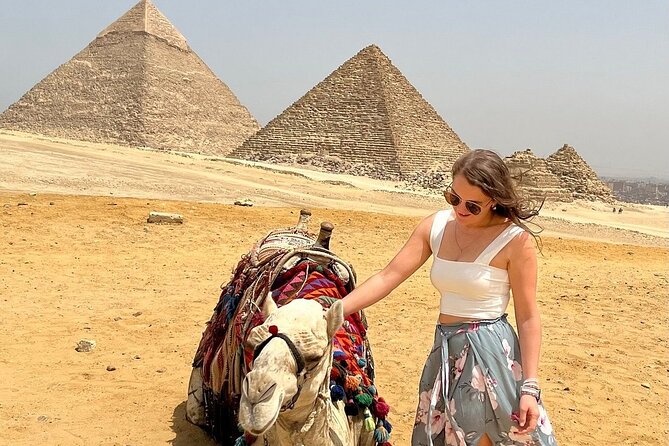
Yes, the experience includes a traditional camel ride near the pyramids, offering beautiful desert views and memorable photo opportunities.
It includes private transportation, hotel pickup, an Egyptologist guide, pyramid sightseeing, quad biking, camel riding, and desert exploration.
You can book a Giza and Saqqara tour from Alexandria online by selecting your date, providing hotel details, and confirming your reservation.
The Alexandria to Saqqara and Giza day trip cost depends on group size, inclusions, entrance tickets, and selected transportation options.
Yes, the private Giza and Saqqara day trip from Alexandria offers flexible transportation, personalized sightseeing, and comfortable arrangements for families.
A Giza Pyramids and Saqqara tour from Alexandria includes the pyramids, Sphinx, Valley Temple, Step Pyramid, and ancient monuments.
The Alexandria to Giza and Saqqara private tour usually takes a full day, including transportation, sightseeing, and guided visits.
The Ras Mohamed National Park Tour from Sharm El Sheikh is a popular excursion that allows visitors to explore one of the most famous protected areas in the Red Sea, known for its coral reefs, clear waters, and beautiful natural scenery.
A Giza and Saqqara day tour from Alexandria includes private transportation, an expert guide, Giza Pyramids, Sphinx, and Saqqara visits.
Morning tours are often a good choice because the weather can be more comfortable and sea conditions may be favorable for snorkeling and sightseeing.
Yes. It can be an enjoyable family excursion, although parents should consider children's ages and swimming ability if snorkeling is included.
Visitors can enjoy spectacular coastal scenery, coral reefs, colorful fish, and other natural attractions. The exact sights depend on the chosen itinerary and weather conditions.
Swimming ability may be required for snorkeling activities. However, some packages may offer options for guests who prefer to stay on the boat or enjoy sightseeing without entering the water.
The tour offers an easy and family-friendly way to experience the beauty of the Red Sea and observe coral reefs and marine life without needing to dive or swim.
Yes. The tour is conducted on a boat with safety equipment and is suitable for visitors who prefer a relaxed way to discover the Red Sea.
Morning trips are often a popular choice because of the pleasant weather and good visibility, although the best time can depend on the day's sea and weather conditions.
Bring comfortable clothes, sunglasses, sunscreen, a hat, water and a camera to capture the beautiful Red Sea scenery.
Book the Great Pyramid of Khufu tour from Alexandria online with Aten Tours, enjoying private service, secure booking, and support.
Yes, the private Giza Pyramids tour from Alexandria includes comfortable air-conditioned transportation between your hotel and Giza throughout the day.
The Alexandria to Giza Pyramids day tour with camel ride lasts one full day, including transportation, sightseeing, lunch, and return.
This private tour includes a camel ride across the Giza desert, offering memorable pyramid views and excellent opportunities for photos.
Yes, the tour includes entry inside the Great Pyramid of Khufu, allowing you to explore narrow passages and the King's Chamber.
Yes, this Giza Pyramids Tour from Alexandria includes private hotel pickup, round-trip transportation, an Egyptologist guide, lunch, and camel ride.
Yes. Couples can enjoy the safari together, either riding separate quad bikes or choosing an option that allows two people to share a quad bike, if available.
Bring your booking details, sunglasses, sunscreen, comfortable shoes, water, and a camera if you want to capture the experience.
Early morning and late afternoon are popular options because temperatures are generally more comfortable, while sunset tours offer beautiful desert views.
In most cases, guests can ride their own quad bike, subject to age, safety, and operator requirements.
Yes, an Aswan day tour is enough to visit major highlights including Philae Temple, High Dam, and Unfinished Obelisk.
The High Dam tour Aswan takes several hours, covering the High Dam, Philae Temple, and Unfinished Obelisk comfortably.
Yes, the Philae Temple tour Aswan is private, offering comfortable transportation and a dedicated Egyptologist guide throughout your sightseeing experience.
The Unfinished Obelisk tour Aswan lets you explore the ancient granite quarry and learn about ancient Egyptian stoneworking techniques.
The Aswan day tour Philae Temple High Dam price depends on group size, inclusions, and selected tour arrangements.
The Aswan sightseeing tour includes Philae Temple, High Dam, Unfinished Obelisk, private transportation, and an Egyptologist guide.
A private Abu Simbel tour from Aswan offers greater comfort, flexible arrangements, private transportation, and a more personalized temple experience.
The Abu Simbel day trip from Aswan starts early, allowing enough time to travel, explore both temples, and return comfortably.
Travel from Aswan to Abu Simbel by comfortable vehicle, enjoying a convenient journey as part of your Aswan to Abu Simbel day tour.
The Abu Simbel temples tour from Aswan includes the Great Temple of Ramses II and the Temple of Queen Nefertari.
An Abu Simbel day trip from Aswan usually takes a full day, including transportation, temple visits, guided sightseeing, and return journey.
An Abu Simbel tour from Aswan includes transportation, temple entrance, guided sightseeing, and time to explore the magnificent ancient temples.
If the city's history beyond the pharaohs interests you, yes. It's the last major building left from Alexandria's cosmopolitan era, freshly restored, and it fits neatly alongside Attarine and the Roman Theatre in one downtown walk.
Generally, yes. The marble, the chandeliers, the women's gallery—they photograph beautifully. Dress modestly though, since it's still a working house of worship.
Almost none. About 40,000 lived here in the 1940s; by the 1960s, nearly all had left. A handful remain elsewhere in Egypt, and nobody stays in Alexandria year-round anymore. The synagogue is what's left of that world.
The 1854 construction was funded under the Mohammad Ali dynasty. The rebuild after 1881 produced the grand basilica-style hall standing today—one of the largest synagogues in the Middle East.
The current structure dates to 1854, then got rebuilt bigger after a partial collapse in 1881. The congregation stretches back much further—tradition places a synagogue on this spot nearly two thousand years ago.
The work ran from 2017 to 2020 and cost the Egyptian government around $4 million. The reopening landed in January 2020—a few weeks before the pandemic shut everything anyway.
Nasser Street, downtown Alexandria. Attarine Souq and the Roman Amphitheatre sit within a ten-minute walk, so it drops neatly into a downtown day.
Yes, but not by just showing up. There are no fixed opening hours—the visit gets arranged in advance through tourism authorities or a tour operator, mostly for security reasons. Walk up unannounced and the door will likely stay closed. Set it up through a guide or ask at the tourist office a day ahead.
Bring comfortable clothing, sunscreen, sunglasses, water, and a camera to enjoy the scenery and capture memorable moments during your Nile trip.
During an Aswan Nile felucca tour, you sail along the river, admire islands and landscapes, take photos, and enjoy traditional sailing.
A private felucca ride Aswan offers more privacy, flexible timing, personalized sailing, and a comfortable way to enjoy the Nile.
A Nile felucca ride Aswan usually lasts several hours, depending on the selected itinerary, sailing conditions, and preferred departure time.
An Aswan felucca ride typically includes a traditional boat trip, a professional crew, and time to enjoy Nile scenery and views.
You can enjoy peaceful Nile views, traditional sailing, fresh air, scenic islands, and a relaxing experience away from busy city streets.
Yes, a small on-site museum displays artifacts recovered during the Swiss Institute of Archaeology's excavations, alongside the temple's remaining ruins.
Merneptah's temple was built against the mortuary temple of Amenhotep III and reused many of its stone blocks, a common practice in the Ramesside period that sped up construction using existing material.
Discovered here in 1896 by Flinders Petrie, the Merneptah Stele contains the earliest known written reference to Israel. It's now displayed in the Egyptian Museum in Cairo.
It's the mortuary temple of Pharaoh Merneptah, built around 1210 BC on Luxor's West Bank, close to the Ramesseum and Medinet Habu. It follows the 19th Dynasty tradition of memorial temples built to sustain the king's cult after death.
Bring swimwear, sunscreen, sunglasses, a towel, comfortable clothing, and waterproof protection for personal belongings during the boat trip.
Yes, families can enjoy snorkeling, swimming, boat rides, and relaxing on the island, although age requirements may vary by operator.
You sail by boat, stop at snorkeling locations, swim among marine life, enjoy lunch, and relax while exploring the Red Sea.
Most trips take a full day, including hotel transfers, boat sailing, snorkeling stops, island time, lunch, and returning to Hurghada.
Expect a boat trip, snorkeling in clear waters, colorful marine life, swimming, and relaxing around Giftun Island’s beautiful coastline.
The tour usually includes boat transportation, snorkeling, equipment, lunch, refreshments, and time to relax around Giftun Island.
Yes. Viewing points and the Suez Canal Authority building in Ismailia let visitors watch ships pass through, and the site pairs well with a wider Egypt itinerary that includes Alexandria.
The canal closed between 1967 and 1975 following regional conflict, reopening only after extensive clearance and repair work.
Yes. Pharaoh Necho II began an early version of the canal around 600 BCE, and Persian ruler Darius I later completed a working waterway linking the Nile to the Red Sea.
The canal opened on 17 November 1869 after ten years of construction led by French diplomat Ferdinand de Lesseps and the Suez Canal Company.
The Suez Canal is known for connecting the Mediterranean Sea and the Red Sea, giving ships a direct route between Europe and Asia without sailing around Africa.
Highlights include Hurghada landmarks, the Grand Mosque, Hurghada Marina, local shopping areas, and opportunities to experience authentic Egyptian city life.
A private tour provides flexibility, personalized sightseeing, comfortable transportation, and shopping opportunities based on your interests and preferred schedule.
You can buy Egyptian souvenirs, spices, perfumes, handicrafts, clothing, jewelry, and traditional products from local markets and shops.
Most tours last several hours, giving you enough time for sightseeing, visiting attractions, shopping, and discovering local Egyptian culture.
You can visit the Grand Mosque, Hurghada Marina, local markets, souvenir shops, and other popular attractions around the city.
The tour includes hotel transfers, guided sightseeing, visits to Hurghada landmarks, shopping stops, and time to explore local markets.
A Hurghada desert safari by quad bike can suit families, although age requirements and participation rules may vary between different tour operators.
Yes, beginners can join a Hurghada ATV desert safari tour, with safety instructions and guidance provided before and during quad biking.
You ride through the desert, visit a Bedouin village, meet local people, and discover traditional customs and desert lifestyle.
Expect exciting quad biking across desert landscapes, scenic views, guided rides, and opportunities to experience traditional Bedouin culture during your adventure.
A Hurghada quad bike desert safari usually lasts several hours, including hotel transfers, safety instructions, quad biking, and desert activities.
A Hurghada Quad Biking Tour usually includes quad riding, desert transportation, a Bedouin village visit, refreshments, and guided assistance throughout.
Yes. After a restoration project by the American Research Center in Egypt, the temple reopened to the public in January 2014 and can be visited as part of a West Bank tour.
There's no public transport to the site. Most visitors reach it by private car or taxi, usually combined with a visit to Medinet Habu or the Colossi of Memnon on Luxor's West Bank.
Construction began in the early 1st century CE under Roman rule. Inscriptions inside name several Roman emperors, including Vespasian, Domitian, Otho, Hadrian, and Antoninus Pius, who added to its decoration over time.
It stands on the West Bank of the Nile at Luxor, about 4 km south of the Ramses III temple at Medinet Habu and 1 km from the ruins of Amenhotep III's palace at Malkata.
Deir el-Shelwit is a small Roman-period temple on Luxor's West Bank, built for the goddess Isis in the early 1st century CE. It's the only Graeco-Roman temple in the area dedicated solely to Isis rather than the Theban Triad of Amun, Mut, and Khonsu.
Morning on a weekday, if you can swing it. The animals actually move around before the heat kicks in, the trees keep things cool, and you miss the Friday crowds entirely.
That depends who's asking. With kids? Absolutely. Adults with a tight schedule might find the ancient sites more worth their time, but if you've got a free morning and like gardens, it's a nice change of pace.
Moharram Bek district, inside the Noor public garden—right between downtown and Montaza. A taxi from the center runs about 15 minutes, longer if traffic is being traffic.
Kids are basically the entire point of the place. The paths are wide enough for strollers, snacks are easy to grab, and the animals sit close enough to the fences that little ones actually see them.
Lions, tigers, elephants, bears, zebras, deer, and a whole monkey section that never sits still. The bird side is actually strong too—flamingos, peacocks walking around loose, parrots, ostriches. And there's a reptile house tucked away with snakes and crocodiles if you can find it.
Doors open around 9 AM and they shut things down around sunset. Fridays are packed—that's the local weekend. If you want the animals awake and some breathing room, go in the morning.
Honestly, almost nothing. A few Egyptian pounds per adult, and there's a tiny extra charge if you want to bring a camera in. Prices do move around a bit, so whatever you read online, just double-check at the window.
The Coptic and Islamic Cairo tour is a full-day experience covering Cairo’s major Islamic and Coptic landmarks before returning to your hotel.
Yes, the Hanging Church and Khan El Khalili tour combines Coptic Cairo’s historic sites with time to explore the famous bazaar.
Yes, the Cairo Citadel and Khan El Khalili tour visits the historic Citadel before continuing to Cairo’s famous traditional bazaar.
You can visit the Citadel, Mohamed Ali Mosque, Sultan Hassan Mosque, Ibn Tulun Mosque, Hanging Church, Abu Serga, and Ben Ezra Synagogue.
Yes, the private Coptic and Islamic Cairo tour includes an Egyptologist guide and comfortable private transportation throughout the experience.
The tour includes a private guide, hotel transfers, historic mosques, Coptic churches, Khan El Khalili, and lunch at a local restaurant.
Yes, the private Giza Pyramids and Sphinx tour is ideal for travelers wanting to see Cairo’s highlights within approximately four hours.
Entry inside the Great Pyramid is not included, but your guide can help arrange it as an additional option.
Yes, the Giza Pyramids and Sphinx tour includes convenient private pickup and drop-off from your Cairo or Giza hotel.
The Giza Pyramids half day tour from Cairo covers Khufu, Khafre, Menkaure, the Great Sphinx, and Valley Temple of Khafre.
Yes, this private Giza Pyramids and Sphinx tour includes a dedicated guide and vehicle exclusively for your group.
The Giza Pyramids half day tour lasts approximately four hours, including private hotel pickup, sightseeing, and drop-off in Cairo.
The tour includes private hotel pickup, transportation, an Egyptologist guide, entrance fees, bottled water, and visits to Giza and the Sphinx.
Yes, the Cairo night tour includes pickup and drop-off from central Cairo and Giza hotels with private transportation.
The Cairo by night sightseeing tour combines famous landmarks, historic Islamic architecture, city views, and authentic local atmosphere after sunset.
A Cairo evening tour includes downtown Cairo, Tahrir Square, Cairo Tower, Al Moez Street, and El Fishawy Café.
Yes, this private Cairo night tour includes a dedicated Egyptologist guide, private transportation, and flexible sightseeing based on your interests.
The Cairo night tour lasts approximately four hours, starting in the evening and ending with your return to the hotel.
The Cairo by night tour includes a private guide, hotel transfers, Cairo Tower, Al Moez Street, and El Fishawy Café.
Yes. Extra nights, a different pace, or additional Cairo sites can be arranged before booking. Message us on WhatsApp to customize it.
Private, with an English-speaking Egyptologist guide dedicated to your group throughout Cairo and Alexandria.
No, these are optional add-ons at an extra cost, along with camel rides at the pyramids and entry to the Solar Boat Museum.
A day trip. You'll spend all 4 nights at your hotel in Cairo, with an early start and evening return on the Alexandria day.
Yes. Extra days, a different pace, or additional Cairo or Sharm El Sheikh excursions can be arranged before booking. Message us on WhatsApp to customize it.
Sightseeing in Cairo is with an official English-speaking guide; group size depends on the option booked, so confirm at booking whether you want a private or shared tour.
A snorkeling boat trip to Ras Mohammed National Park and a quad bike safari in the desert are both included; other water sports and diving can be arranged locally as optional extras.
By domestic flight, included in the price, on Day 4. The return flight to Cairo is on Day 7.
No, it's an optional add-on at an extra cost, arranged with your guide on the day.
The quad bike ride is about an hour over uneven desert terrain, and the Ras Mohammed trip involves swimming and snorkeling in open water. Both are manageable for most travelers, but let your guide know in advance if you'd prefer a lighter pace.
By domestic flight, included in the price, on Day 4. The return flight to Cairo is on Day 7, connecting to your international departure.
No. This itinerary covers Cairo and Sharm El Sheikh only, with no time in Upper Egypt and no Nile cruise. Travelers who want to add Luxor and Aswan can ask us about extending the trip.
Yes, you can book a private Luxor West Bank tour with convenient pickup and drop-off from your hotel in Luxor.
Yes, the Luxor Valley of the Kings and Hatshepsut Temple tour includes visits to both iconic ancient Egyptian attractions.
You will explore the Valley of the Kings, Hatshepsut Temple, Colossi of Memnon, Medinet Habu, and Deir El Medina.
Yes, the private Luxor West Bank tour is ideal for families, couples, and small groups seeking comfort, flexibility, and personalized sightseeing.
The Luxor West Bank full day tour takes approximately eight hours, allowing enough time to explore major historical sites comfortably.
The Luxor West Bank Tour includes private transportation, a professional guide, site visits, lunch, bottled water, and hotel transfers.
Partially. The central area along the Corniche — from the Qaitbay Citadel to Stanley Bridge — is walkable, and many attractions are within 15 to 30 minutes of each other on foot. Walking is best in the morning or evening; summer midday heat makes it uncomfortable. Sidewalks exist but aren't always in great condition, and crossing major roads requires care.
No. For getting around the city itself, a rental car is more trouble than it's worth. Traffic is heavy, parking is difficult in central areas, and ride-hailing or taxis cover most needs affordably. Car rental is only worth considering if you plan to take day trips outside the city to places not easily reached by public transport.
Microbuses are safe but not particularly tourist-friendly. Routes are marked in Arabic only, there are no formal stops on most routes, and the vans can get very crowded. They're extremely cheap (EGP 5 to 10 per ride) and give you an authentic local experience, but you'll need some Arabic and patience. Ride-hailing apps are simpler for most visitors.
White taxis (metered) typically cost EGP 20 to 50 for short central rides and up to EGP 100 to 150 for longer cross-city trips. Black-and-yellow taxis require fare negotiation but are generally slightly cheaper. Ride-hailing apps show you the fare upfront before you book.
The historic Raml tram line along the Corniche is currently undergoing a major modernisation project and is not operating as a regular passenger service. The old tram infrastructure is being replaced with an elevated light rail system. Use ride-hailing, taxis, or buses instead. The tram remains an important part of Alexandria's urban heritage.
For most visitors, ride-hailing apps (Uber and Careem) are the best option. They're affordable, reliable, and eliminate the need to negotiate fares or figure out Arabic route signs. Download both apps before you arrive and use whichever offers a better price or shorter wait time.
Private. Your guide, driver, and vehicle are dedicated to you or your group only, so the pace and stops can be adjusted.
No, it's an optional add-on at an extra cost, arranged with your guide on the day.
The Grand Egyptian Museum (GEM), visited on Day 3, along with Tutankhamun's treasures and other major collections, was impressive.
It's a day trip from Cairo, about 2.5 hours each way. You'll spend all 4 nights at your hotel in Cairo, with a full sightseeing day in Alexandria before driving back the same evening.
An Edfu and Kom Ombo tour from Luxor lets you discover two impressive ancient Egyptian temples in one day while enjoying a comfortable journey with an expert guide.
Edfu and Kom Ombo are located south of Luxor along the Nile Valley. Private transportation makes it easy to visit both temples in one day from Luxor.
Yes, the private Edfu and Kom Ombo tour from Luxor offers a comfortable and flexible experience, making it a convenient choice for families and private groups.
The Edfu Kom Ombo temples day tour includes visits to the Temple of Horus at Edfu and the Temple of Kom Ombo, known for its unique design and Nile views.
The Luxor to Edfu and Kom Ombo day trip takes a full day, allowing you enough time to explore both temples and learn about their history.
The tour includes private transportation from Luxor, visits to the Temples of Edfu and Kom Ombo, an expert guide, entrance tickets, and lunch.
The Luxor Hot Air Balloon Ride takes place over Luxor’s West Bank, with views of the Valley of the Kings, Temple of Hatshepsut, and the Nile.
Yes, the Luxor sunrise hot air balloon tour includes pickup from your Luxor hotel or Nile cruise, transportation to the launch area, and the return transfer after the flight.
During a hot air balloon Luxor Egypt experience, you can enjoy breathtaking views of the Nile, Valley of the Kings, Temple of Hatshepsut, farmland, desert landscapes, and Luxor’s West Bank.
The hot air balloon Luxor Egypt, flight lasts around 45 minutes, with extra time for pickup, the Nile crossing, and return transfer.
The Luxor hot air balloon ride at sunrise starts before sunrise. The exact pickup time varies by season and sunrise time.
The Luxor Hot Air Balloon Ride includes hotel or Nile cruise pickup, a motorboat ride across the Nile, refreshments before takeoff, and around 45 minutes of flight time over Luxor’s West Bank.
Book the Luxor to Cairo Day Trip by Flight online by choosing your travel date. Your tour team will arrange the flights, transfers, guide, and Cairo itinerary.
During the trip, you can visit the Pyramids of Giza, the Great Sphinx, the Grand Egyptian Museum, and selected historic areas of Cairo, depending on the itinerary and available time.
Yes. The Cairo day tour from Luxor includes the Pyramids of Giza, the Great Sphinx, and the Grand Egyptian Museum, all in one day.
Yes. The Luxor Cairo private day tour by flight is arranged exclusively for your group, with a private guide and vehicle in Cairo. This gives you a more comfortable and flexible way to explore the city.
The Cairo day trip from Luxor by plane takes a full day, including flights, sightseeing, meals, and transfers. The itinerary is planned to give you enough time to visit Cairo’s main attractions before your return flight to Luxor.
The Luxor to Cairo Day Trip by Flight includes round-trip domestic flights between Luxor and Cairo, private transportation, an expert guide, entrance to the included sightseeing sites, and transfers from and back to your Luxor hotel.
The Luxor Karnak Sound and Light Show takes place at Karnak Temple in Luxor. The experience explores different areas of the temple before concluding near the Sacred Lake.
Yes. This private Karnak Sound and Light Show Luxor includes pickup and drop-off from your hotel or Nile cruise, private air-conditioned transportation, and your show ticket.
The Karnak Sound and Light Show lasts approximately 75 minutes. The complete private tour, including transportation, pickup, the show, and return, takes around 3 hours.
Yes, Karnak Sound and Light Show tickets are included in this private tour. Your representative will have your entrance ticket ready at the gate for a smooth arrival.
The Karnak Temple Sound and Light Show takes you through the illuminated temple complex while a narrated presentation tells the story of Karnak, its pharaohs, and its importance in ancient Egyptian history.
The Karnak Sound and Light Show is an evening experience at Karnak Temple in Luxor, combining dramatic lighting, music, and narration to reveal the history of ancient Thebes and the pharaohs.
Booking a Dendera and Abydos Tour from Luxor is an excellent way to discover two of Egypt’s remarkable ancient temples in one day while enjoying a comfortable and convenient journey from Luxor.
A private Dendera and Abydos tour gives you a more personalized experience, with private transportation, a professional guide, and the flexibility to explore the temples at your own pace.
Yes, the Dendera Abydos temples day trip from Luxor can be arranged as a private experience, offering comfortable transportation and a flexible itinerary.
A full day Dendera and Abydos tour lets you visit the Temple of Hathor at Dendera and the Temple of Seti I at Abydos, known for their beautiful carvings and hieroglyphs.
The Dendera and Abydos tour from Luxor is a full-day experience. You will have enough time to explore both temples and learn about their fascinating ancient Egyptian history.
The Dendera and Abydos Tour from Luxor includes hotel pickup and drop-off, private transportation, an English-speaking guide, entrance fees, and bottled water.
In the major malls (San Stefano, City Centre, Green Plaza), most stores accept cards. In the traditional markets and smaller shops, cash is the only option. Carry enough Egyptian pounds for market shopping. ATMs are widely available throughout the city.
If you want international brands, air conditioning, and a pleasant mall experience, yes — it's the best mall in the city. If you're looking for authentic, locally-made goods or traditional atmosphere, you'll be disappointed. It's a modern shopping centre, not a cultural experience.
Alexandria's particular strengths are antiques and vintage items (coins, brassware, old photographs), Egyptian cotton scarves and textiles, essential oils and attar perfumes, and spices. Standard Egyptian souvenirs like papyrus prints and alabaster figurines are widely available too, but check quality carefully — reproductions are common.
Yes, in all the traditional souks and street markets. Vendors will typically start with a price that's two to three times what they expect to get. Negotiate politely and be prepared to walk away — if they call you back, you were close to a fair price. In malls, all prices are fixed.
Yes, but manage your expectations. Alexandria isn't a shopping destination in the way that Dubai or Istanbul are. The traditional markets are interesting and atmospheric, and the modern malls cover most practical needs. The city is strong on antiques, cotton, perfumes, and spices. For high-end international luxury, the range is limited compared to Cairo.
It depends what you're after. Souk El Attarine is the best traditional market for antiques, souvenirs, and essential oils. San Stefano Grand Plaza is the best mall for international brands and a comfortable, air-conditioned shopping experience. Zan'et El Sitat is the best spot for affordable women's clothing and fabrics.
Modern construction methods could replicate its scale, but doing so with the tools available to Egyptians around 2560 BCE, achieving that level of alignment without modern surveying equipment, remains an unmatched engineering feat.
The Edwin Smith Papyrus documents 48 surgical cases with systematic diagnosis and treatment, and physicians used splints, sutures, and antibacterial substances like honey in wound care, alongside early dental and prosthetic devices.
They tracked the heliacal rising of Sirius to predict the Nile flood and built a 365 day civil calendar close to the true solar year, and they aligned temples such as Abu Simbel to specific solar events.
Yes. The Rhind Mathematical Papyrus, copied around 1650 BCE, shows Egyptians solving fraction problems, calculating land areas, and applying early algebra, mainly to manage taxation, food distribution and construction rather than as abstract theory.
It stands in the Open Air Museum, a dedicated section of the Karnak Temple Complex near Luxor, reachable on foot from the main temple precinct.
French Egyptologist Franck Larché led the reconstruction using recovered blocks, completing the project in 1997 inside Karnak's Open Air Museum.
Thutmose III, Hatshepsut's successor, dismantled the chapel after her death and replaced it with his own red granite barque shrine, reusing the blocks as fill inside Karnak's third pylon.
The name comes from the reddish quartzite used for its upper structure, contrasted with a base of black granite and grey diorite.
The Red Chapel, or Chapelle Rouge, is a red quartzite barque shrine built around 1473 BCE by Pharaoh Hatshepsut to house the sacred barque of Amun-Ra at Karnak Temple. It now stands reconstructed in Karnak's Open Air Museum.
Yes. The Abu Simbel day trip from Luxor with Aswan is available as a private experience with your own guide and vehicle.
You will travel from Luxor to Aswan in a private air-conditioned vehicle. The next day, you will travel from Aswan to Abu Simbel and then return to Luxor.
The tour includes private transportation, an English-speaking Egyptologist guide, entrance fees, lunch, one night in Aswan, breakfast, bottled water, soft drinks, and taxes and service charges.
Yes. You can book a private Abu Simbel and Aswan tour from Luxor with private transportation, accommodation, and a professional Egyptologist guide.
Yes. The Abu Simbel tour from Luxor includes one night at a hotel in Aswan with breakfast. A breakfast box is also provided for the trip to Abu Simbel.
Yes. The Luxor to Abu Simbel and Aswan tour is private and includes a private air-conditioned vehicle, a professional Egyptologist guide, hotel pickup, and drop-off in Luxor.
The tour includes the Unfinished Obelisk, High Dam, Philae Temple, Nubian Village, and Abu Simbel Temples. You will also enjoy a felucca ride in Aswan.
The Abu Simbel and Aswan tour from Luxor takes 2 days and includes an overnight stay in Aswan. You will visit the main attractions of Aswan on the first day and explore the Abu Simbel Temples on the second day.
Yes. As a private tour, the itinerary can be adjusted to your group’s interests and preferred pace.
The Giza Saqqara Memphis full day tour lasts approximately 8 hours, giving you time to explore the main sites without rushing.
The Saqqara and Memphis tour from Cairo includes private transportation, an Egyptologist guide, sightseeing, and hotel pickup and drop-off.
You’ll visit the Great Pyramids, Great Sphinx, Step Pyramid of Djoser, and ancient Memphis with its impressive monuments.
Yes. The private tour is ideal for families, couples, and small groups who prefer a comfortable and flexible sightseeing experience.
The Giza Pyramids and Saqqara day tour from Cairo takes around 8 hours, including sightseeing, lunch, and transportation.
The tour includes private transportation, an Egyptologist guide, hotel pickup and drop-off, and visits to Giza, Saqqara, and Memphis.
The White Desert camping tour from Cairo includes desert camping, meals, 4x4 transportation, and time to enjoy the White Desert’s unique landscapes and unforgettable night sky.
Yes. The Black Desert and White Desert tour includes a private 4x4 ride through the desert, allowing you to reach remote landscapes and unique rock formations.
Yes, a private White Desert safari from Cairo is ideal for families, couples, and small groups who prefer a flexible itinerary and private transportation.
A Bahariya Oasis overnight safari combines desert exploration, a 4x4 adventure, and an overnight camping experience surrounded by the peaceful landscapes of Egypt’s Western Desert.
The Bahariya Oasis and White Desert tour from Cairo is a 2-day adventure, giving you enough time to explore the oasis, desert landscapes, and White Desert.
The White Desert Safari from Cairo includes private transportation, a 4x4 desert safari, a visit to Bahariya Oasis and the White Desert, camping, meals, and a professional guide.
Yes, convenient pickup and drop-off are available from hotels in Cairo or Giza.
Yes. The tour is private, with a dedicated vehicle, driver, and Egyptologist guide for your group.
Yes, the tour includes a lunch stop at a local restaurant.
You’ll see the three main pyramids, the Great Sphinx, and the Grand Egyptian Museum’s ancient Egyptian collections.
The private tour takes around 8 hours, including transportation and time to explore both major attractions.
It includes private hotel pickup, transportation, an Egyptologist guide, and visits to the Giza Pyramids, Great Sphinx, and Grand Egyptian Museum.
Archaeologists have discovered extensive remains of the ancient royal quarter, including what are believed to be parts of Cleopatra's palace, columns, sphinxes, and statues. Some finds are displayed at the Graeco-Roman Museum. Occasional diving tours are available for certified divers.
Yes. It reopened to the public after an extended renovation. It's open daily and is the only museum in Egypt dedicated entirely to the Greek and Roman periods.
A full day if you want to see everything at a reasonable pace. Half a day if you focus on just the western cluster (catacombs and Pompey's Pillar) or just the central cluster (Kom el Dikka and the museum).
No. The lighthouse was one of the Seven Wonders of the Ancient World but was destroyed by earthquakes. The Citadel of Qaitbay now stands on or near the same site, and some of the lighthouse's stone blocks were reportedly reused in the citadel's construction.
No. The original library was destroyed gradually over centuries. Nothing physical survives from it. The modern Bibliotheca Alexandrina is a new building inspired by the original, but it's not built on the same site and contains no original library materials.
The main ones are the Catacombs of Kom el Shoqafa, Pompey's Pillar and the Serapeum platform, the Roman theatre at Kom el Dikka (including the Villa of the Birds mosaics), and the Graeco-Roman Museum. The Alexandria National Museum also has a strong Greco-Roman section.
Yes, particularly archery and hunting. Amenhotep II documented his own archery skill on the Sphinx Stela at Giza as proof of his physical strength and fitness to rule.
The clearest surviving examples are the tomb paintings at Beni Hassan near Minya and relief scenes at Saqqara, both of which preserve wrestling, hunting, and gymnastic imagery.
Yes. Balls made of linen or leather stuffed with straw have been found in children's graves and appear in tomb reliefs, often shown being caught while a player rides on someone's back.
Wrestling is the best-documented ancient Egyptian sport, thanks to the Middle Kingdom tomb paintings at Beni Hassan, which show hundreds of wrestling holds and sequences painted around 2000 BCE.
For anyone interested in the human story behind the Tutankhamun discovery, yes: it offers a quieter, more personal counterpoint to Luxor's larger temples and tomb complexes.
Most visitors spend 45 minutes to an hour exploring the house and replica tomb, making it easy to combine with a Valley of the Kings visit the same morning.
Yes. The museum includes a full-scale replica of Tutankhamun's burial chamber, built to show visitors what Carter found in 1922 without the access limits of the original tomb.
The house stands on a hill on Luxor's West Bank, on the road leading to the Valley of the Kings, a few minutes' drive from the tombs themselves.
Howard Carter's House is the mudbrick residence Howard Carter built on Luxor's West Bank while excavating the Valley of the Kings, now restored as a small museum about his life and the 1922 discovery of Tutankhamun's tomb.
Yes. PuffyPops and Brazilian Coffee are the two most consistently recommended specialty shops. Cilantro's branch near the Bibliotheca Alexandrina offers chain-standard specialty coffee with an excellent view. The scene is smaller than Cairo's but it's growing.
At the historic cafés, a Turkish coffee runs about EGP 30 to 50. At modern specialty shops, expect to pay EGP 60 to 120 for a flat white or pour-over. Corniche kiosks and basic cafés are the cheapest option. All prices are approximate and may vary.
Some more than others. Athineos on the Corniche gets more tourist traffic. Places like Farouk Café in the Bahary district feel more like local institutions. None of them are aggressively touristy in the way that some Cairo establishments can be — the atmosphere is genuine even when there are visitors.
"Khawagat" (خواجات) is an Egyptian term roughly meaning "foreigners." It refers to the cafés and gathering places established by Alexandria's Greek, Italian, and other European communities in the late 19th and early 20th centuries. These places defined the city's social life for decades and several are still operating.
Yes, but it depends what you're looking for. The historic Greek cafés serve excellent Turkish coffee — simple, strong, well-prepared. The newer specialty shops (PuffyPops, Brazilian Coffee) do proper espresso-based drinks with good beans. It's not a world-class coffee destination like Melbourne or Tokyo, but it's significantly better than what most visitors expect.
Sofianopoulo and Trianon are the two most frequently mentioned. Sofianopoulo is a coffee roaster on Saad Zaghloul Street with a century of history. Trianon is more of a tea room and pastry shop. Both are worth visiting, and they're a short walk from each other in the Midan El Raml area.
Wear comfortable and modest clothes, because the Cave Church is a place of worship. Comfortable shoes are recommended as well, so your steps stay easy during the visit.
Yes. Our private Cave Church tour in Cairo includes private transport and a professional guide. You can experience everything at your own pace, it also feels more personal, and more observant too.
Yes, the Mokattam Cave Church tour is private. That means you enjoy the visit with your own guide and vehicle, no strangers mixed in or anything.
On the St Simon the Tanner Cave Church tour you can see that rock-cut church which looks really beautiful. You will also spot stone carvings, plus the separate sections of the monastery. Your guide will explain the background and what makes it special, clearly.
The Cairo Garbage City tour takes around 4 to 5 hours, and yes it includes pickup and drop-off from your hotel in Cairo or Giza too.
It is a private half-day tour, to visit St. Simon the Tanner Cave Church in Mokattam, and pass by Garbage City. You’ll learn about the church, and also see the local area on the same day, in a more close up way.
Yes, visitors can explore Alexandria's Greco-Roman quarter, the Catacombs of Kom el Shoqafa, and the oracle temple ruins at Siwa Oasis, though Siwa requires a longer desert journey best planned in advance given its distance from Cairo.
Ancient sources say his body was brought to Egypt by Ptolemy I and later moved to Alexandria, but archaeologists have never confirmed the tomb's exact location. It remains one of the most debated open questions in Egyptology.
Alexander crossed the desert to consult the Oracle of Amun at Siwa, one of the most respected oracles in the ancient Mediterranean. Ancient accounts say the priest greeted him as a son of Amun, a detail later used to support claims about his divine descent.
Alexander wanted a Mediterranean port that could link Egypt to the Greek world and serve as a base for trade and administration. He chose the site near the fishing village of Rhakotis in 331 BCE, and the city grew rapidly under his successors into a major center of the ancient world.
No, Alexander entered Egypt in 332 BCE largely without battle. Egyptians had grown resentful of Persian rule, and local leaders welcomed him as a liberator. He advanced to Memphis peacefully, and Egyptian priests later crowned him Pharaoh, a status no Persian ruler before him had claimed.
Yes. The standard museum entry ticket is included as part of the tour.
Yes, you can book it. The tour includes an Egyptologist. You can walk through at your own pace while they explain things and answer questions.
You get private transport for the trip. An Egyptologist joins you during the visit. Hotel pickup is included. The Grand Egyptian Museum ticket is also included.
You will look at well known Egyptian statues. You will also see older and rare objects. You will have time at the Grand Staircase. Items from more than one era are shown as well.
It runs about four hours in total. That time covers the hotel pickup and the drop off when you return.
They come to your hotel to meet you. After the visit, they take you back to the same place. You travel by a car with air conditioning. An Egyptologist is with your group. Museum entry is part of the package too.
For domestic flights, airport staff recommend arriving 1.5 to 2 hours before departure, since check-in lines can build up quickly when several flights are scheduled close together.
The airport's single terminal operates 24 hours and includes duty free shops, cafes and restaurants, a currency exchange machine, banking services, a VIP lounge, free WiFi, and a tourist help desk near the arrivals area.
EgyptAir operates the main domestic route from Cairo, roughly a one hour flight. Air Cairo and AMC Airlines also serve Luxor, and seasonal charter airlines connect the city directly with Germany, France, Spain, Italy, and the UK during peak travel months.
Taxis are available outside the terminal 24 hours a day, though agreeing on a fare beforehand is recommended. A private transfer booked in advance is more predictable, especially after a long flight, and typically has a driver waiting with your name at arrivals.
Luxor International Airport (LXR) is about 6 kilometers east of central Luxor, and the drive to most hotels along the Corniche takes 10 to 25 minutes depending on traffic.
Cap D'Or (also known locally as Sheikh Ali), founded around 1900 by two Greeks and a Frenchman near Manshieh Square. It's one of the oldest bars in Egypt — small, vintage, and worth a visit for the atmosphere alone.
The Corniche, specifically around Stanley Bridge. Walk west toward the Citadel for older, more atmospheric sections, or east toward San Stefano for a more upscale feel. The bridge itself is lit up at night and is one of the city's most photographed spots after dark.
Yes. Hotel bars serve alcohol without issue. Cap D'Or, the Greek Club, and several other standalone bars also serve it. But it's not as widely available as in Cairo — most Corniche cafés are halal (tea, coffee, shisha, juice only).
Most restaurants and cafés close around midnight to 1 AM. Hotel bars (Four Seasons, Le Metropole) stay open until 2 AM or later. Very little is open past 2 AM outside of hotels. Summer has longer hours than winter.
Yes. The Corniche is well-lit and busy in the evening, and the city feels safe for walking, including for solo travellers. Use normal common sense stick to populated areas, don't flash valuables.
Yes, but it's not a clubbing destination. The nightlife here is about waterfront walks, old cafés, rooftop bars with sea views, and seafood restaurants that stay open late. You'll find bars Cap D'Or, hotel rooftops, a few modern pubs but don't expect the kind of scene you'd find in Cairo or Sharm el-Sheikh.
Khafre's burial chamber inside his pyramid was found empty when explored in the nineteenth century, and his mummy has never been identified. His pyramid complex, including the valley temple and causeway, still stands on the Giza Plateau today.
The Pyramid of Khafre is slightly smaller than his father Khufu's Great Pyramid, but it appears taller because it was built on higher ground. It also retains original limestone casing stones near its summit, which the Great Pyramid mostly lost over time.
Most Egyptologists attribute the Great Sphinx to Khafre based on its position within his pyramid complex and stylistic similarities to his statues, though the attribution is not proven with certainty and remains debated among researchers.
Chephren is the Greek rendering of the Egyptian name Khafre, used by ancient Greek historians such as Herodotus. Egyptian sources use Khafre, meaning he appears like Ra, while Chephren became the standard name in later Western scholarship.
Khafre was a pharaoh of Egypt's Fourth Dynasty who reigned during the twenty sixth century BCE for approximately twenty five years. He was the son of Khufu, builder of the Great Pyramid, and is best known for commissioning the second pyramid at Giza and, according to most Egyptologists, the Great Sphinx.
The reliefs depict Seti I and Ramesses II performing rituals as chief priest before the gods, alongside military campaign scenes and offering ceremonies added by later pharaohs.
Early morning offers cooler temperatures, smaller crowds, and a low light angle that highlights the carved reliefs on the columns better than midday sun.
It stands inside the Karnak Temple Complex in Luxor, Egypt, positioned between the Second and Third Pylons on the main processional route to the Temple of Amun-Re.
Seti I began construction around 1290 BCE and decorated the northern half. His son Ramesses II completed the hall, finishing the southern half in a distinct, deeper carving style.
The hall holds 134 sandstone columns arranged in 16 rows. The twelve central columns reach about 21 metres, while the surrounding 122 columns stand over 12 metres tall.
Ramadan shifts earlier by about 11 days each year, so it can fall in any season. During Ramadan, daytime restaurant hours change (many close during fasting), but the evenings come alive with street food and a festive atmosphere. Historical sites generally keep normal hours. It can be an interesting cultural experience, but plan around the altered dining schedule.
Yes, but mainly in winter. December through March sees most of the annual rainfall — around 200mm total. Rain comes in bursts, not all-day drizzle. The rest of the year is essentially dry. Pack an umbrella in winter just in case, but don't worry about it from May through October.
November typically has the lowest hotel prices. Winter (December–February) is also cheap, except for a small bump around Christmas and New Year. Summer is the most expensive period, especially on weekends and public holidays.
It depends what you're used to. Daytime highs reach 28–30°C, but the humidity (70–80%) makes it feel heavier. It's less extreme than Cairo or southern Egypt, and the sea breeze helps. If you're primarily here for the beach, summer is actually the right time. For sightseeing, go early in the morning and take a long midday break.
Technically yes, but you won't enjoy it. The sea temperature from December through February sits at 17–18°C. Some locals go in, but for most visitors it's too cold. Swimming season runs from May through December, with the warmest water in July and August.
Late October is the strongest all-round pick. Comfortable temperatures (24–26°C), the sea is still warm enough to swim, domestic crowds have gone back to school, and hotel prices are reasonable. If swimming is your priority, July and August have the warmest water (26–27°C).
Yes. Because the tour is private, extra nights, a different site order, or a different starting city can be arranged before booking. Changes are best confirmed by message before the final itinerary is set.
No. International flights and the Egypt entry visa are not included and are arranged separately by the traveller.
The Nile cruise runs from Aswan to Luxor over 3 nights, with stops at Kom Ombo Temple and Edfu Temple along the way, before docking in Luxor for the Valley of the Kings, Hatshepsut Temple, and Karnak Temple.
The tour is fully private. The guide, vehicle, and Nile cruise cabin are arranged for the couple only, and the pace and stops can be adjusted before departure.
The package includes 2 nights in a 5-star Cairo hotel, 1 night in a 5-star Aswan hotel, 3 nights aboard a Nile cruise on full board, and 3 nights at a Red Sea resort in Hurghada. It also covers domestic flights from Cairo to Aswan and Hurghada to Cairo, all airport and hotel transfers, a private Egyptologist guide, entrance fees to every site on the itinerary, and the meals listed each day.
A moderate amount. Most sites involve walking on uneven stone floors, some stairs, and a few tomb entrances with low ceilings or ramps. Nothing is strenuous, but comfortable closed shoes are worth packing.
Most nationalities need an Egypt entry visa, which isn't included in this tour price. It's usually available on arrival or in advance as an e-visa, but requirements vary by nationality, so check current rules for your passport before you travel.
Three nights at an all-inclusive Red Sea resort, with breakfast, lunch, dinner, and soft drinks covered under the hotel's all-inclusive plan. Optional extras like snorkeling trips or spa treatments aren't included but can be added on request.
Yes. Abu Simbel is visited as a full-day excursion from the Nile cruise on Day 4, with an early departure and breakfast boxes provided for the drive.
The tour is fully private. Your guide, vehicle, and touring schedule are yours alone at every stop; they're not shared with other couples or a larger group.
Yes, Esna is a common stop on Nile cruises between Luxor and Aswan, and travelers typically visit the temple's hypostyle hall along with the town's riverside market during a short shore excursion.
The surviving hall was constructed and decorated mainly during the Roman period, with inscriptions naming emperors such as Claudius, Vespasian, and Trajan, continuing the pharaonic tradition of temple building into the first centuries CE.
Only the temple's pronaos, or hypostyle hall, has been excavated. The rest of the complex lies beneath the modern town of Esna, built up over centuries of habitation, and has not been fully uncovered.
Khnum was a ram-headed creator god believed to shape human bodies and spirits on a potter's wheel. He was worshipped mainly at Esna and on Elephantine Island near Aswan, where he was also linked to the Nile flood.
The Temple of Khnum is known for its Roman-era hypostyle hall of 24 decorated columns, its astronomical zodiac ceiling, and a 2018–2023 restoration that revealed vivid original colors hidden under centuries of soot and grime.
A shadoof is a hand-operated tool with a pivoting pole, bucket, and counterweight used to lift water from the Nile into irrigation channels. It appeared in Egypt by around 1700 BCE and simplified versions are still used in parts of Egypt and Asia today.
Yes. The Edwin Smith Papyrus, dated to around 1600 BCE, documents 48 surgical cases including wound treatment, bone-setting, and observations on brain injuries, based on physical examination rather than only ritual. A functional prosthetic toe found on an Egyptian mummy shows the practical side of this medical knowledge.
Papyrus was used as a writing surface for religious texts, medical records, government administration, and personal letters. Made from the papyrus plant's pith, it was lighter and cheaper than earlier materials and became Egypt's major export for over a thousand years.
Ancient Egyptian priests developed a 365-day solar calendar around 2500 BCE, based on the Nile flood cycle and the star Sirius. This structure directly influenced the Roman Julian calendar and, through it, the Gregorian calendar most of the world uses now.
Ancient Egyptians are credited with papyrus paper, a 365-day calendar, early surgical techniques recorded in the Edwin Smith Papyrus, the shadoof irrigation tool, cosmetics such as kohl eyeliner, and the pin tumbler lock, an ancestor of the modern door lock.
Yes, your guide throughout the sightseeing days is a licensed Egyptologist, not a general driver-guide, so questions about the sites get answered on the spot.
Yes, admission to every site named in the itinerary is prepaid and included in the package price.
Domestic flights, hotels, the Nile cruise cabin (full board), your Egyptologist guide, entrance fees, private transport, meet-and-assist, and the meals listed in the itinerary. International flights, visas, tipping, and personal expenses are not included.
Yes. Tell us what interests you most before departure and we'll adjust the route, timing, or stops around your group. Message us on WhatsApp to talk through changes.
It's fully private. The vehicle, guide, and pace are dedicated to your group only, you won't be combined with other travelers at any point in the 13 days.
You can visit Wadi El Rayan, Lake Qarun, and Tunis Village while enjoying Fayoum’s beautiful desert landscapes and natural attractions.
March to May or September to November. The temperatures are comfortable and the crowds are thinner. Summer (June through August) is hot and packed with Egyptian domestic tourists hotel rates spike on weekends and holidays. Winter is mild but the sea is too cold for swimming.
The ancient Library of Alexandria (the original, which was lost centuries ago), the Pharos Lighthouse site where Qaitbay Citadel now stands, the Corniche waterfront, and the seafood. It's also the city where the Greek-Egyptian poet Constantine Cavafy lived and wrote most of his work, if literary history is your thing.
Easily. The train is 2.5 to 3 hours each way. You can hit the Bibliotheca, Citadel, Catacombs, and Roman Theatre in a single day and catch an evening train back. You'll miss the Corniche at sunset and Montaza, but the core sights are manageable. An overnight stay is better, but a day trip works. See our day trip from Cairo to Alexandria guide for the logistics.
Yes, but manage your expectations. This isn't Luxor the historical sites are good, not overwhelming. What makes Alexandria special is the overall atmosphere: the sea, the food, the slower pace, the fact that it feels nothing like Cairo or the southern cities. If that appeals to you, the trip is absolutely worth it.
One full day covers the main historical sites if you start early from Cairo. Two days is the sweet spot you can actually enjoy the city instead of rushing through a checklist. Three days and you're either very relaxed or you've moved on to day trips outside Alexandria.
The Bibliotheca Alexandrina, Qaitbay Citadel, Catacombs of Kom El Shoqafa, and the Roman Theatre at Kom El Dikka are the core four. Pompey's Pillar is nearby the catacombs so most people do both together. The Corniche and Stanley Bridge are free and arguably give you a better feel for the city than any museum. If you have a second day, add the Royal Jewellery Museum and Montaza Palace Gardens.
On a Wadi El Natrun Christian monasteries tour, you can visit four historic monasteries, including Deir Anba Bishoy and Deir El-Suryani, and learn about their history and religious importance.
A Wadi El Natrun day trip from Cairo is a private tour to explore the area’s historic monasteries and learn about Egypt’s Coptic Christian heritage with a professional guide.
No, the entry visa and international flights to and from Egypt are not included and need to be arranged separately.
In Hurghada, four days at the all-inclusive resort come with breakfast, lunch, dinner, and soft drinks. In Cairo, the free days include breakfast at the hotel; optional extras like a spa treatment, a Nile-view dinner, or a guided walk can be booked separately.
Highlights include the Giza Pyramids, the Grand Egyptian Museum, the Citadel of Cairo, Khan el-Khalili, Alexandria's main sights, Philae Temple, Abu Simbel, Kom Ombo, and Edfu temples, and in Luxor, Karnak Temple, the Valley of the Kings, and Hatshepsut Temple. Entrance fees to all of these are included in the price.
The tour is fully private throughout: your guide, vehicle, and pace are yours alone as a couple. There's no fixed group and no schedule shared with other travelers.
The trip runs 15 days and 14 nights across Cairo, Alexandria, Aswan, Luxor, and Hurghada. It includes 7 nights in Cairo, 3 nights aboard a 5-star Nile cruise between Aswan and Luxor, and 4 nights at an all-inclusive resort in Hurghada, along with both domestic flights (Cairo–Aswan and Hurghada–Cairo).
In the tour package, you’ll find hotel pickup and drop-off, private transportation, an Egyptologist guide, entrance fees, lunch, bottled water, and taxes and service charges.
Yes, it’s a private El Minya tour starting from Cairo with your own private vehicle and an Egyptologist guide. You’ll also get to visit Tell el-Amarna and Beni Hassan.
What is included in the Cairo Airport Stopover Tour?
Ismailia's Lake Timsah waterfront is a short distance away, offering canal views at a slower pace. The older Ismailia Monuments Museum is also nearby, and combining both makes for a fuller half-day visit to the city.
Ismailia is roughly two hours from Cairo by road, making the Suez Canal Museum feasible as part of a day trip. The museum itself is a short walk from the city center, near the Directorate of Security on Mohamed Farid Street.
The museum opened during a soft-opening phase with free entry, and pricing or hours may change as it moves to full operation. It's worth checking current ticket and schedule details shortly before your visit.
The museum dedicates a gallery to the Ever Given, the container ship that ran aground in the canal in 2021 and blocked global shipping for six days. The exhibit covers the incident and connects it to the canal's ongoing role in international trade.
No. The Ismailia Monuments Museum, established in 1932, holds Pharaonic, Graeco-Roman, and Islamic artifacts unrelated to the canal's modern history. The Suez Canal Museum is a separate, newer institution focused specifically on the canal's construction and operation. Some online listings confuse the two.
It's a museum housed in the restored 19th century headquarters of the Suez Canal Company in Ismailia, Egypt. Spread across three historic buildings and 12 halls, it displays around 2,000 artifacts covering the canal's construction, operation, and impact on global trade, including original photographs, documents, and ship models.
The pillars depict Senusret I being crowned and embraced by the gods Amun, Horus, Min, and Ptah. The base of the chapel carries a separate series of reliefs listing the nomes, or provinces, of ancient Egypt with their emblems and measurements.
French archaeologist Henri Chevrier found the chapel's carved blocks inside the Third Pylon between 1927 and 1930 while excavating at Karnak. Because the blocks were so distinctively decorated, researchers were able to identify and reassemble nearly the entire structure.
About six centuries later, Pharaoh Amenhotep III had the chapel dismantled and its blocks reused as filler inside the Third Pylon, a new gateway he was building elsewhere at Karnak, sometime between roughly 1390 and 1352 BCE.
The name refers to its fine, pale limestone construction, which set it apart visually from the sandstone used in most other Karnak monuments. It's also sometimes called the Jubilee Chapel of Senusret I.
The White Chapel is a small limestone kiosk built by Pharaoh Senusret I around 1971–1926 BCE to mark his Sed festival jubilee. It stands today in the Open-Air Museum at Karnak Temple and is considered the oldest surviving structure in the entire complex.
The tour is fully private; the vehicle and guide are dedicated to your group only, so the pace and stop order can be adjusted around your preferences.
Yes. At the end of the day you can be dropped off at your hotel in Aswan, a hotel in Luxor, or Luxor Airport, depending on your onward plans.
No. Entry to the tomb of Tutankhamun in the Valley of the Kings requires a separate ticket, purchased on site if you choose to go in.
The tour covers Karnak Temple on the East Bank, plus the Valley of the Kings, the Mortuary Temple of Hatshepsut, and the Colossi of Memnon on the West Bank, with an optional stop at an alabaster factory.
The drive between Aswan and Luxor takes roughly 3 to 3.5 hours each way by private vehicle, covering about 500 kilometers of Nile Valley road in each direction.
You reach it via a short motorboat ride across Lake Nasser, a journey that also offers beautiful scenic views.
It was the result of a UNESCO initiative to preserve artifacts at risk of being submerged by rising waters from the Aswan High Dam. It opened in 1997 and won the Aga Khan Award for Architecture.
The museum houses thousands of artifacts spanning geological, Pharaonic, Roman, Coptic, and Islamic eras, presented through life-sized dioramas.
It's the largest freestanding temple in Egyptian Nubia, built by the Roman emperor Octavius Augustus in 30 BC in honor of the sun god Mandulis, set against the waters of Lake Nasser.
The tour lasts approximately 6 hours, including hotel pickup, the Nubian Museum visit, the motorboat ride, and the Kalabsha Temple visit.
This is a fully private tour; you'll travel only with your own group, accompanied by your personal Egyptologist guide.
It's a small shrine at the top of the hill above the tombs, dedicated to a local sheikh venerated as a holy man. The name means "the Dome of the Wind," and it offers one of the finest views over Aswan and the Nile.
The tombs contain vivid wall paintings and hieroglyphics depicting the daily life and African expeditions of ancient Egyptian officials and dignitaries, dating mainly from the Old, Middle, and New Kingdoms.
The tour includes a short motorboat crossing followed by a walk up a rock-cut stairway to the tombs. A basic level of fitness is recommended, but the pace can be adjusted to your needs.
The tour lasts approximately 5 hours, including hotel pickup, the Nile crossing, the guided tomb visit, and the Qubbet el-Hawa shrine.
A: This is a fully private tour, you'll travel only with your own group and a personal guide, without joining other visitors.
The price includes hotel pickup and drop-off, a private Egyptologist guide, entrance fees, air-conditioned vehicle transfers, and bottled water.
Yes, the excursion is suitable for all ages. Please note the camel ride does require a basic level of mobility; contact us for any specific needs.
No experience is necessary. The camel is led by an experienced handler for the entire journey, ensuring complete safety.
The tour lasts approximately 4 hours, including hotel pickup, the camel ride, the guided visit, and return to your hotel in Aswan.
Spring (March–May) and autumn (September–November) offer the most comfortable weather and reasonable hotel rates. Summer is high season for domestic tourists, so prices rise. Winter is cheapest but too cold for beach activities.
Yes, many people do a day trip from Cairo. The train takes about 2.5 to 3 hours each way. However, an overnight stay lets you experience the Corniche in the evening and visit the Montaza area, which is harder to fit into a single day.
Yes. Alexandria is considered one of the safer cities in Egypt for foreign visitors. The main tourist areas along the Corniche and downtown are well-patrolled. Use standard travel precautions and stick to well-lit, populated areas at night.
Budget hotels in Sidi Bishr or downtown start around $25–40 USD per night. Mid-range hotels like the Steigenberger Cecil or hotels in Gleem typically run $60–120 USD. Luxury properties like the Four Seasons San Stefano start around $200+ USD per night.
It depends on your priorities. If you're in Alexandria to see the historical sites, stay downtown. If you want a beach holiday with day trips to the sights, stay in Stanley, San Stefano, or Montaza. Gleem is a reasonable compromise between the two.
Downtown (El Raml / Mansheya) is the most convenient for a first visit. The main attractions — the Bibliotheca Alexandrina, the Qaitbay Citadel, the Roman Theatre, and the Greco-Roman Museum — are all within walking distance. You'll save time and money on transport.
Felucca timing depends on wind and current, so crossing time can vary slightly. In rare cases of unsafe conditions, your guide will advise on the best available alternative.
Yes. The slow pace and open garden setting make it a comfortable option for families traveling with children of any age.
No. The felucca ride is a seated, relaxed sail, and the garden visit is a gentle walk on flat paths. It's suitable for all ages and fitness levels.
The full experience runs about 4 hours, including hotel pickup, the felucca sail to and from Kitchener Island, and time to explore the Botanic Garden and Botanical Museum.
This is a fully private felucca tour, your boat, guide, and driver are dedicated to your group only. There are no other travelers joining your trip.
Pickup, private transport, the felucca, guide, and bottled water are included. Personal expenses, optional activities, and gratuities are not included.
Species seen regularly include egrets, parakeets, kingfishers, malachite kingfishers, striated herons, little bittern herons, night herons, little green bee-eaters, and Nile Valley sunbirds, depending on the season.
The tour starts and ends with pickup and drop-off at your hotel or cruise ship in Aswan. You're transferred by private vehicle to and from the felucca dock on the East Bank.
No binoculars are provided, so bringing your own is recommended if you have them. Many birds, including herons and kingfishers, come close enough to the felucca to see clearly without them.
Early morning and late afternoon offer the most bird activity, when temperatures are cooler and species are more active near the water. The tour can be scheduled for either window.
The Rosetta Stone has been held by the British Museum in London since 1802, after France surrendered it to Britain under the Treaty of Alexandria in 1801.
The stone carries the same decree in hieroglyphic script, Demotic script, and Ancient Greek, which allowed scholars to use the known Greek text as a key to the two Egyptian scripts.
French soldiers found the Rosetta Stone in July 1799 near Fort Julien, close to the town of Rosetta, known locally as Rashid, in Egypt's Nile Delta.
Jean François Champollion, a French linguist, announced the decipherment of Egyptian hieroglyphs in 1822, building on earlier phonetic identifications made by the English scholar Thomas Young starting around 1814.
For travelers interested in quieter, less-visited sites, yes, it offers the Isheru sacred lake, Sekhmet statues, and a very different atmosphere from the crowded Great Hypostyle Hall, at the cost of a short additional walk.
Yes, a separate low-cost ticket is typically required in addition to the general Karnak entrance fee, purchased at Karnak's main gate. Current prices should be confirmed locally, as official rates change periodically.
Hundreds of lioness-headed Sekhmet statues stand in the precinct, most originally made for Amenhotep III's funerary temple and moved here around the start of Ramesses II's reign. It remains one of the largest surviving collections of Sekhmet statues in Egypt.
The Precinct of Mut is a separate temple compound at South Karnak, about 325 meters south of the main Precinct of Amun-Re, dedicated to the goddess Mut, wife of Amun and mother of Khonsu. It covers roughly 9 hectares and includes at least six temples surrounded by a crescent-shaped sacred lake called the Isheru.
Weekday lunch (around noon to 2 PM) is ideal — smaller crowds, better seating, and the fish is at its freshest after the morning catch. Weekends and evenings are much busier.
Yes. The restaurants on this list are well-established and serve fresh seafood daily. As with any destination, avoid street vendors selling pre-cooked seafood that's been sitting out, and stick to restaurants with high turnover.
Grilled sea bass (or sea bream) is the staple — it's what most locals order. Fried shrimp, jumbo shrimp in garlic butter, and seafood rice are other classics. At White and Blue, try the tarama and pickled herring as starters.
At the upscale places — Branzino, White and Blue, Santorini — yes, especially on weekends. At casual spots like Balbaa and Seagull, reservations help but you can usually walk in, though you may wait for a table during peak hours.
It depends on the restaurant. A casual meal for two at a place like Balbaa Village costs around 600–900 EGP. Mid-range spots like Fish Market Marina run 800–1,200 EGP for two. Fine-dining restaurants like Branzino will be 1,500–2,500 EGP for two.
Balbaa Village and Seagull are probably the two most widely known. Balbaa is a massive local favourite for grilled fish and rice, while Seagull has been a family spot for generations. Both are always busy, which says something.
Yes, the horses and carriages used meet the safety standards required for this type of tourist activity.
Yes, lunch is included in the tour price, along with mineral water and soft drinks along the way.
The experience takes roughly a full day, including pickup and drop-off at your hotel or Nile cruise.
Yes, it's a family-friendly activity, and children are charged at 50% of the adult price.
Visa requirements vary depending on your nationality, length of stay, and travel purpose. We recommend checking the latest requirements before your trip.
Comfortable walking shoes are recommended for uneven ground at Giza and Khan El Khalili, along with sun protection. Modest clothing covering shoulders and knees is advised for mosque areas and is generally more comfortable in bazaar districts.
The tour runs on a private basis. The vehicle, guide, and schedule are set for your own group only, so the pace of the day is not shared with or set by other travelers.
The tour includes round-trip flights, hotel or Nile cruise pickup in Aswan, a private air-conditioned vehicle in Cairo, a private Egyptologist guide, lunch, bottled water, entrance fees to the listed sites, and all taxes and service charges.
Yes. Using a morning flight from Aswan and an evening flight back, travelers get a full day in Cairo and Giza, enough time for the Pyramids, the Grand Egyptian Museum, lunch, the Egyptian Museum, and Khan El Khalili, without booking a Cairo hotel.
The domestic flight between Aswan and Cairo takes approximately 1 hour and 15 minutes each way, which is why a same-day round trip covering both Giza and central Cairo is possible.
The show rotates through several languages depending on the day. Let us know your preferred language when booking so we can confirm a session that matches.
The narrated show retells the ancient Egyptian myth of Isis and Osiris using lighting and sound effects projected across the temple's pylons, courtyards, and colonnades.
The show itself runs about an hour. Including pickup, the boat crossing, and the return transfer, the full evening typically takes two to three hours.
Philae Temple sits on Agilkia Island and is reached only by motorboat. After your private transfer to the boat landing near the Aswan Low Dam, a short crossing takes you to the island for the show.
Yes, this is a private tour. Your vehicle and driver are dedicated to your group only, with pickup and drop-off from your hotel or cruise ship in Aswan.
Yes. Greek physicians, including Hippocrates, are believed to have drawn on Egyptian medical knowledge, and Imhotep himself was later equated with Asclepius, the Greek god of medicine — a direct sign of how closely the two traditions were linked.
The Ebers Papyrus is a roughly 20-meter medical scroll dated to about 1550 BC, containing over 700 remedies and incantations covering conditions from digestive disorders to dentistry and gynecology. It's the longest surviving ancient Egyptian medical text and is held today at the University of Leipzig.
Imhotep was vizier and high priest under Pharaoh Djoser around 2650 BC, and the architect of the Step Pyramid at Saqqara. He was also a physician, and centuries after his death, Egyptians deified him as a god of medicine and healing, later linking him to the Greek god Asclepius.
Yes. Reliefs in the Tomb of Ankhmahor at Saqqara, dated to around 2400 BC, depict a circumcision procedure in detail. The Edwin Smith Papyrus, written centuries later, describes 48 surgical cases involving wounds, fractures, and dislocations, with structured examination and treatment steps for each.
In many cases, yes. Egyptian physicians used honey and resin on wounds — both have real antibacterial properties — and set fractures and treated dental problems with techniques that produced genuine results. Alongside this, they also used incantations and prayers to gods, since illness was believed to have both physical and spiritual causes.
Yes, it is the only one of Karnak's four precincts permanently open to visitors, while the precincts of Mut and Montu see far fewer tourists.
Yes, one of her original two obelisks still stands near the hypostyle hall and remains the tallest surviving obelisk in Egypt; its twin was taken to Rome in antiquity.
It contains 134 massive sandstone columns arranged to support a roof lit by clerestory windows, making it one of the most technically ambitious halls in ancient Egyptian architecture.
The earliest structures date to the Middle Kingdom, around the 20th century BCE under Senusret I, though most of what survives today was built during the New Kingdom, between 1550 and 1070 BCE.
It served as the main cult center for Amun-Re, chief god of the Theban Triad, where priests performed daily rituals, purification rites, and offerings on behalf of the pharaoh.
It begins with a pickup from Luxor Airport, and later you get a comfortable transfer back to the airport for your onward flight.
Yes. The program includes Luxor Temple, Luxor Museum, and Mummification Museum, so you can understand ancient Egyptian history and culture.
Yes. You will explore Karnak Temple, and you will notice the huge columns, courtyards, obelisks, and the old-style halls.
You will tour Karnak Temple, Luxor Temple, Luxor Museum, and Mummification Museum; these are four key, sort of must-sees on Luxor’s East Bank.
Yes, the Luxor Stopover Tour is kinda a convenient way to explore the East Bank during your time between flights.
You get visits to Karnak Temple, Luxor Temple, Luxor Museum, plus the Mummification Museum, and usually all entry fees are covered. There is also an English-speaking Egyptologist guide, transportation, and taxes. So overall it's pretty easy, no extra fuss.
It starts with a pick-up from Luxor Airport, then ends with a comfortable transfer back to the airport for your onward flight.
Yes, both are included. Hatshepsut Temple and the Colossi of Memnon are part of the tour plan, so you don’t miss them.
Yes. You’ll explore the Valley of the Kings, and you can discover the ancient royal tombs, along with vivid hieroglyphics and those intriguing afterlife scenes.
You will head to the Valley of the Kings, Hatshepsut Temple, and the Colossi of Memnon. These are among the most well-known sights on Luxor’s West Bank, so you’ll get a good overview without overthinking it.
Yes, you can. The Luxor Stopover Tour is really suited for travelers who have a stopover at Luxor Airport, and they want to see the West Bank before the next flight. It’s easy and not too rushed.
It includes a visit to the Valley of the Kings, the Temple of Hatshepsut, and the Colossi of Memnon. You also get entrance fees, an English-speaking Egyptologist guide, and transportation, plus all taxes and service charges, which is sort of the whole package you need.
Yes. It is in the Zizenia neighbourhood, a short drive from Montaza Palace Gardens and the Corniche. It can be combined with these attractions on a day trip from Cairo, or visited as part of a longer Alexandria itinerary.
Photography restrictions apply inside the museum. Check the current policy at the entrance, as rules can change. Photography of the palace exterior and gardens is generally permitted.
Approximately one to one and a half hours. The museum is compact and can be seen thoroughly in a single visit. It pairs well with Montaza Palace Gardens, which are nearby.
Yes, particularly if you appreciate decorative arts, fine craftsmanship, or royal history. The combination of 11,500 jewellery pieces displayed inside a beautifully preserved 1919 palace with painted ceilings and stained glass makes it one of Alexandria's most elegant attractions. It is rarely crowded, which adds to the experience.
The museum is open daily from 09:00 to 17:00, with the ticket window closing at 16:30. During Ramadan, hours may be shortened.
Foreign visitors pay 220 Egyptian pounds (approximately $4–5 USD). Foreign students with a valid ID pay 110 Egyptian pounds. Egyptian visitors pay 30 Egyptian pounds. Tickets are sold at the entrance.
It is at 27 Ahmed Yahya Street in the Zizenia neighbourhood of eastern Alexandria, a short distance from Montaza Palace and the Corniche. It is easily reachable by taxi or ride-hail from anywhere in Alexandria.
Since the guide and vehicle are reserved for your group only, the schedule can be adjusted around your interests. Message us on WhatsApp before booking to discuss options.
Yes, lunch at a local restaurant is included, served on the return drive to Cairo. Beverages other than mineral water are not included.
Beni Hassan is a cliffside necropolis of around 39 rock-cut tombs belonging to Middle Kingdom nomarchs. A selection is open to visitors, decorated with roughly 4,000-year-old scenes of wrestling, hunting, and daily life.
Tell el-Amarna was the capital King Akhenaten built around 1346 BC to worship the sun disk Aten. You'll see the city's boundary stelae, the ruins of the Great Temple of Aten, and the rock-cut royal tombs, where reliefs of Akhenaten, Nefertiti, and their daughters are still visible.
The full round trip takes about 11 to 12 hours, including roughly 8 hours of driving and around 3 to 4 hours at Tell el-Amarna and Beni Hassan combined. Pickup is early morning, and return is in the evening.
Yes, provided you have enough time between flights. We recommend allowing sufficient time for immigration, transportation, the museum visit, and returning to the airport.
You can explore impressive collections of ancient Egyptian artifacts, statues, treasures, and exhibits showcasing thousands of years of Egyptian civilization.
Yes. The tour includes pickup from Cairo International Airport and a return transfer to the airport after your museum visit.
Photography is generally permitted in many areas, although certain exhibits or special areas may have restrictions. Your guide can advise you during the visit.
It is an excellent way to make the most of your layover by visiting one of Cairo's major cultural attractions without arranging separate transportation. You can explore the museum and return to Cairo Airport comfortably for your onward flight.
The tour includes private airport transfers, a professional Egyptologist guide, visits to the Giza Pyramids, Great Sphinx, and Grand Egyptian Museum, and free time for photos and sightseeing.
Yes. This Cairo airport layover tour to Pyramids is designed for travelers who want to explore the highlights of Giza during their stopover before returning to the airport.
Yes. The itinerary includes the Great Pyramid of Cheops, along with the pyramids of Chephren and Menkaure. Your guide will also explain their history and importance in ancient Egyptian civilization.
Yes. You will visit the Great Sphinx and learn about its fascinating history, symbolism, and connection to the ancient Egyptian pharaohs.
Yes. The tour combines the Giza Pyramids with a visit to the Grand Egyptian Museum (GEM), where you can explore remarkable ancient Egyptian artifacts and learn about the pharaohs and their civilization.
Yes. The tour is designed for travelers with a layover at Cairo International Airport who want to visit the Giza Pyramids and other major attractions before their onward flight.
Yes. The itinerary includes a visit to the Great Sphinx and the nearby Valley Temple, where you can learn more about the history and significance of these ancient monuments.
The tour includes airport pickup and drop-off, a visit to the Giza Pyramids, Great Sphinx, Valley Temple, panoramic viewpoint, a camel ride, and a professional tour guide.
Yes. The tour starts with pickup from Cairo International Airport and includes transportation back to the airport after your Giza sightseeing.
It combines the highlights of ancient Egypt in one convenient experience, including the Giza Pyramids, Great Sphinx, Valley Temple, panoramic views, a desert camel ride, and insights into ancient Egyptian mummification.
The cooler months from October through April are most comfortable for the uphill walk, and early morning offers the best light and lowest temperatures year round. Many visitors also cross by felucca near sunset for the views back toward Aswan.
Aga Khan III first visited Aswan in 1954 for treatment of rheumatism using traditional warm sand burial, and he grew attached to the city's climate and Nile views during repeated winter stays. Before his death in 1957, he asked to be buried on the hillside overlooking the river where he had spent those winters.
The most common route is a Nile crossing from Aswan's east bank corniche by motorboat or felucca, taking about 20 to 30 minutes, followed by a short walk or taxi to the hilltop site. It can also be reached by road via the Old Aswan Dam route, roughly 15 to 20 minutes from central Aswan.
Three people are buried inside: Aga Khan III, the 48th Ismaili imam, interred in 1959; his wife Begum Om Habibeh, buried beside him in 2000; and Aga Khan IV, the 49th Ismaili imam, who was laid to rest in the same tomb in February 2025 after his death in Lisbon.
The interior has been closed to public entry since 1997, a restriction that has continued through Aga Khan IV's 2025 burial. The surrounding grounds and gardens are generally open daily, usually from around 9 AM to 5 PM, with no official entrance fee, and this is where most visits take place. Confirm current access locally before planning a visit, since rules at active religious sites can change without notice.
El Kab offers a different experience rather than a replacement; it is quieter, less restored, and shows the mudbrick architecture and provincial history that the major Theban temples don't. It suits travelers who have already seen Luxor's headline sites and want more depth on Upper Egypt.
Yes. A group of rock-cut tombs belonging to Eighteenth Dynasty officials, including the admiral Ahmose son of Ebana, is cut into the cliffs at the entrance to Wadi Hillal and open to visitors, with painted scenes describing their careers and military campaigns.
Nekhbet, shown as a white vulture, was the patron goddess of Upper Egypt and closely tied to Egyptian kingship. El Kab's main temple was dedicated to her, and the site's religious importance is thought to date back to before Egypt's unification under a single king.
El Kab is about 80 km south of Luxor, roughly a 1.5-hour drive along the Nile's east bank. It is often visited as part of a day trip that also includes the temples at Esna or Edfu, both of which lie further south along the same road.
El Kab is the modern name for Nekheb, an Upper Egyptian city on the Nile's east bank linked to the vulture goddess Nekhbet. It was the sister settlement of Nekhen (Hierakonpolis) across the river and remained an important religious and provincial center from the Predynastic period through the Ptolemaic era.
Yes, you can arrange an Egypt stopover tour from Cairo Airport with pickup, private vehicles, guided sightseeing, and then a return transfer back to the airport, all aligned with your flight timetable.
If your visa and travel situation let you enter Egypt, then yes, you can leave Cairo International Airport during your layover, roam around Cairo a bit, and still be back in time for your connecting flight- no stress.
Yes. Our private Egypt stopover tours come with flexible routing, private transport, and airport pickup, so it’s much easier to see Egypt in a calm way even when it’s just a layover.
The best options in Cairo during a layover are seeing the Pyramids of Giza and the Sphinx, visiting the Egyptian Museum, wandering through Old Cairo, and getting a taste of everyday Egyptian life in a few local moments.
A Cairo layover tour can be planned with different stopover lengths. Your path can be set up according to your flight timetable and the open minutes between departures, also depending on how early you want to get moving.
Yes. Our Cairo layover tours come with easy airport pickup, plus private transport, so you can see Cairo first, then head back to the airport for your next connecting flight.
During an Egypt stopover, you can wander through Cairo’s main highlights, like the Pyramids of Giza, the Sphinx, the Egyptian Museum, and Old Cairo, depending on how much time you actually have.
To book an Egypt private transfer, just reach out to us with your pickup location, your destination, your travel date, your time , and the number of passengers. Our team will take care of the arrangement for a comfortable transfer that fits your schedule, ok.
Yes, we provide airport transfers in Hurghada, Luxor, and Aswan , including airport pickup, then later the airport drop off to your hotel or another destination you prefer.
Yes, you can. You can organize a private transfer from Cairo to Luxor or from Cairo to Hurghada, with convenient pickup and drop-off, depending on how your travel plans are going.
Yes, we offer private city-to-city transfers in Egypt between popular destinations like Cairo, Luxor, Aswan, and Hurghada, so traveling from one place to another feels smoother and more practical.
Sure.You can arrange a Cairo Airport transfer with an easy pickup from Cairo International Airport to your hotel in Cairo, Giza, or nearby areas.
Yes, we do provide reliable private airport transfers in Egypt, with professional drivers and comfortable vehicles. These transfers work great for solo travelers too, as well as for families, couples, and small groups.
Egypt Airport Transfers basically are a convenient private way to get from airports to hotels and also to well known spots around Egypt. You can arrange dependable airport transfers in Cairo, Hurghada, Luxor and Aswan.
Yes, since this is a private tour, you can share any preferences (a favorite reef, a slower pace at one stop, more beach time) when booking, and your guide will build the day around them.
No, the instructor supports beginners.
Snorkeling is possible year-round, with warmer water and better visibility from May to October. Winter months (November to April) can bring cooler water and slightly rougher seas, though snorkeling still runs daily.
Private transport, private boat, equipment, instructor, lunch, water/soft drinks. Tipping and personal expenses not included.
Fully private; guide, boat, and instructor reserved only for your group.
Yes, the Sound and Light Show at Karnak on the evening of day one is included in the tour, and its exact schedule is confirmed closer to your travel date since it's set by the site itself.
The general Valley of the Kings entrance fee is included, but Tutankhamun's tomb requires a separate ticket purchased on site, which is not included in the tour price.
Yes, this tour is designed for cruise passengers docking at Safaga Port. Because it includes an overnight stay away from the ship, check your cruise line's policy on overnight shore excursions before booking.
The tour includes one night at a 5-star hotel in Luxor on a double- or twin-occupancy basis between the two touring days. Single travelers should mention this at booking, as a single-room supplement may apply.
The road transfer between Safaga Port and Luxor takes around 3.5 to 4 hours each way, depending on traffic and checkpoint stops, and is done in a private air-conditioned vehicle with your guide.
Modest clothing is recommended for both temples, with shoulders and knees covered. Comfortable, closed shoes help with the uneven stone floors and steps inside both sites.
The tour is built around Safaga Port shore excursions and coordinates pickup with your ship's docking schedule. Because Abydos and Dendera sit several hours inland, this works best for passengers with a full day in port rather than a short stop.
Yes. Entrance fees for both the Abydos Temple of Seti I and the Dendera Temple of Hathor are included in the tour price.
The price covers private pickup and drop-off at Safaga Port, a private air-conditioned vehicle, a licensed Egyptologist guide, mineral water on board, lunch, entrance fees to both temples, and all service charges and taxes.
The tour runs as a full day out and back from Safaga Port, covering both Abydos and Dendera temples with lunch in between. Expect to be away from the port for roughly 12 to 13 hours depending on your ship's docking time.
Mamoura Beach and Cleopatra Beach are the strongest options for families. Mamoura has a gradual slope into the water, snack stalls, and both free and managed sections. Cleopatra Beach offers calm, shallow water in a quieter residential setting. Sidi Bishr is another good pick less developed but with gentle conditions and a relaxed atmosphere.
Day pass fees at standalone beach clubs vary and change frequently, so check current prices before visiting. Historically they range from a few hundred Egyptian pounds per person, with some including a lounger, umbrella, and pool access while others charge extra for each add-on. Hotel beaches like the Four Seasons and Rixos are generally reserved for overnight guests.
Technically yes the Mediterranean off Alexandria rarely drops below 17–20°C even in January, so a short swim is possible for anyone comfortable in cool water. Winter is not a beach holiday season though. Most visitors come for the Corniche walks and coastal atmosphere rather than swimming, and many beach clubs operate at reduced capacity or close.
May through October offers the most comfortable beach conditions in Alexandria, with water temperatures between 24°C and 28°C. October is particularly recommended the sea is still warm at around 25–26°C, crowds are thinner, and beach club prices drop. July and August bring peak heat and the biggest crowds, so arriving early is essential.
Alexandria has both. Public beaches like Sidi Bishr, Cleopatra Beach, and the free side of Mamoura are open to everyone at no cost. Private beaches which grew from virtually none in 2013 to 65 by 2024 are either attached to hotels (Four Seasons, Rixos, Sheraton) or operate as standalone beach clubs that charge a day pass fee.
Mamoura Beach (El Maamoura) is consistently ranked first on TripAdvisor and is the most searched-for beach in Alexandria. It's large, easily accessible, and offers both a free public section and managed private beach clubs. It sits just east of Montaza Palace Gardens, making it a natural stop on any visit to the eastern coast.
Yes. A 2022 study by Egypt's National Institute of Oceanography and Fisheries found that 25 of 28 tested sites (91%) along Alexandria's coast met safety standards for recreational swimming. The eastern and western beaches Mamoura, Montaza, Sidi Bishr, Cleopatra generally have clean, swimmable water. Areas near the central harbour are the exception and aren't used for swimming.
Coptic tradition holds that the Holy Family passed through Bubastis during their flight into Egypt, and local lore links a nearby ancient well to a story of a miraculous spring.
Yes, it's roughly 80 km from Cairo and typically visited as a half-day or full-day trip by private car, since public transport to the site is limited.
Yes, the site includes a small open-air museum displaying artifacts found during excavations, including the nine-meter statue of Queen Meritamun near the temple ruins.
Yes, you can find private Dubai tours that give you flexible schedules, tailored experiences, private transport, plus the freedom to wander around Dubai’s attractions at your own speed and comfort.
Tell Basta lies about 3 km southeast of Zagazig in Sharqia Governorate, roughly 80 km northeast of Cairo in Egypt's eastern Nile Delta.
Tell Basta, ancient Bubastis, is known as the main cult center of Bastet, Egypt's cat goddess. It briefly served as Egypt's capital during the 22nd Dynasty and holds ruins of temples spanning from the Old Kingdom to the Roman period.
Usually, the best season to visit Dubai is from November to March, because the weather stays cooler, so sightseeing, outdoor moments, desert safaris, and city tours feel much more relaxed.
Top spots in Dubai to visit include Burj Khalifa, Palm Jumeirah, Dubai Marina, Dubai Mall, and a few other iconic destinations that really show the city’s modern living vibe.
On a Dubai desert safari, you can expect dune bashing, camel rides, sunset views, traditional entertainment, an Arabian dinner, and a real desert adventure experience under the stars.
Yes, Aten Tours provides customized Dubai tour packages based on your travel dates, what you enjoy most, the attractions you want to see, accommodation choice, activities, and your trip length, for a more personal itinerary.
A 4 to 7-day Dubai tour is a good fit for covering big attractions, plus desert adventures, shopping, sightseeing, and feeling that Dubai luxury, entertainment vibe.
The best Dubai tours usually include city sightseeing, desert safaris, Burj Khalifa, Palm Jumeirah, Dubai Marina, and Dubai Mall, so you get those memorable moments for every traveler, even if your travel style is different from others.
It is a good idea to book your Jordan tour ahead of time, especially during busy seasons, that way you get more flexibility with dates, where you stay, how you get around and the experiences you prefer.
Yes. The Dead Sea can be added to many Jordan travel packages, so visitors can float in mineral-rich water and still take in the nearby views and scenery with a bit of calm time in between.
In Wadi Rum, you can enjoy 4x4 desert tours, Bedouin experiences, sunset views, and overnight stays under the stars in a desert camp with comfort.
Petra is in a lot of Jordan tour packages. It is called the Rose City, and this ancient Nabataean archaeological location is still one of Jordan's most famous landmarks.
Yes. Aten Tours offers personalized Jordan tour packages adjusted to your travel dates, interests, chosen destinations, lodging preference, and how long your trip lasts, so the itinerary feels more fitting.
Construction began in 1886 and the hotel opened in 1907, making it one of the oldest operating hotels in Upper Egypt. It's managed today by Sofitel and still occupies its original Victorian-colonial building on Luxor's Corniche.
Most travelers find 5 to 8 days work well for Petra, Wadi Rum, Amman, Jerash, Madaba, Mount Nebo, and the Dead Sea without feeling rushed.
Yes. Non-guests can generally walk through the gardens and lobby, and having afternoon tea in the salon is a common way to see the interior. It sits about 100 meters from Luxor Temple, so a short visit is easy to combine with the temple.
It's known mainly for two things: Howard Carter and Lord Carnarvon announced the discovery of Tutankhamun's tomb there in 1922, and Agatha Christie is said to have written part of "Death on the Nile" during a stay in the 1930s. Winston Churchill and Egypt's royal family also stayed there.
Some of the best places to visit in Jordan are Petra, Wadi Rum, the Dead Sea, Amman, Jerash, Madaba, and Mount Nebo, each one giving a different kind of memory.
The best Jordan tours usually mix Petra, Wadi Rum, the Dead Sea, Amman, Jerash, Madaba, and Mount Nebo. Aten Tours gives customized tour packages for travelers, so you can fit it around your pace.
Coptic tradition holds that Simon, a devout tanner, prayed for the Mokattam Mountain to move to prove the Christian faith to the Fatimid Caliph Al-Mu'izz; the monastery was later carved into that mountain and named after him.
Modest dress: shoulders and knees covered, a scarf for women in case a head covering is requested, and flat, closed shoes for uneven stone paths.
The church itself is safe and welcoming; the route through Manshiyat Naser mainly calls for footing and awareness rather than security concerns, and going with a driver or guide makes it easier.
Discovered as a cave in 1974, it was carved into a place of worship by the Zabbaleen community and named after 10th-century saint Simon the Tanner.
About 20–25 minutes by car via the Salah Salem Highway toward Mokattam, by taxi, ride-hailing app, or organized tour.
Yes, entry is free, with no ticket booth or admission fee.
Yes, since the tour is private, you can ask to spend more time at one stop or swap in another site nearby, as long as it fits within the time available before your ship departs.
Modest clothing is expected at both the Citadel's mosque and the churches of Coptic Cairo, shoulders and knees covered. A light scarf is worth bringing, though it isn't required.
Requirements depend on your nationality and whether you're on a cruise itinerary that includes a shore pass. Check with your cruise line or Egyptian consulate for your specific case, we can advise once we know your nationality.
Yes, the itinerary is planned around your ship's confirmed departure time, with a buffer built into the return drive. Tell us your departure time when booking so we can plan the day accordingly.
This is a fully private tour; the vehicle, driver, and guide are dedicated to your group only, with no other travelers joining. Pickup and pacing are built around your group and your ship's schedule.
Yes. The Cairo-Alexandria route is one of the busiest and most traveled in Egypt. Daytime trains and buses are straightforward and used daily by locals and visitors alike. Standard travel precautions apply: keep your belongings visible, use official ticket windows, and avoid carrying large amounts of cash.
Trains to Alexandria depart from Ramses Station (also called Masr Station) in central Cairo. The station is large, so arrive at least 20 to 30 minutes early to locate your platform. Taxis and ride-hailing apps can drop you at the main entrance. Buses to Alexandria depart from different locations depending on the company.
On regular weekdays, you can usually buy a ticket at the window 20 to 30 minutes before departure. On Fridays, during summer months, around public holidays, or during Eid, first-class seats sell out and booking at least a day in advance is recommended. Tickets can be purchased at Ramses Station or through the ENR website.
The train is generally the better option for most visitors. It is faster (two and a half to three hours versus three to four for the bus), more predictable since it avoids road traffic, and more comfortable. The bus is worth considering if you are on a tight budget or if train tickets are sold out.
The cheapest option is the bus, specifically West Delta or Blue Bus, which depart from near Ramses Station in Cairo. Tickets cost less than any train class. The trade-off is that the bus takes three to four hours depending on traffic. Second-class trains are slightly more expensive but faster and more comfortable.
Travel time depends on the mode of transport. The train takes two and a half to three and a half hours depending on the service. The bus takes three to four hours due to Cairo traffic. Driving takes about two to two and a half hours on the Desert Road in light traffic, though this can stretch longer during peak hours or holidays.
Alexandria is roughly 220 kilometers (137 miles) from Cairo by road. The straight-line distance is shorter at around 178 kilometers, but the actual driving route the Cairo-Alexandria Desert Road covers the full 220 km. The journey takes about two to two and a half hours by car in normal traffic conditions.
Advance booking is recommended, especially in peak cruise season, since availability and pricing are more reliable that way.
Yes, photography is allowed at Giza, Saqqara, and Memphis. Some areas inside tombs or pyramids may have separate camera fees, paid on site if you choose to go in.
Let us know as soon as you have updated the timing, and we'll adjust the pickup accordingly.
There's time built in if you want to, but it's optional and paid separately on site.
Light, breathable clothing and comfortable walking shoes. It gets hot and dusty, especially in summer, so a hat and sunglasses help.
The El Alamein Military Museum is generally open daily from around 9:00 AM to 4:00 PM with an entrance fee payable in Egyptian pounds. The War Cemetery is open daily from roughly 7:00 AM to 5:00 PM and is free to enter. Exact fees can change, so confirming current pricing before your visit is worthwhile.
Yes, El Alamein is a feasible long day trip from Cairo, with round-trip driving time of roughly 5 to 6 hours plus time at the sites. Visitors who want to see the museum, Commonwealth cemetery, and both the German and Italian memorials without rushing often find a base in Alexandria more comfortable, since it cuts the drive to about 1.5 hours each way.
El Alamein War Cemetery holds 7,240 Commonwealth burials, the German War Cemetery holds around 4,200 German soldiers, and the Italian Memorial at Tel el-Eisa contains several thousand Italian dead. Combined, the four sites commemorate well over 16,000 soldiers from the 1942 campaign.
The El Alamein Military Museum is an indoor and outdoor exhibition of weapons, uniforms, and vehicles from the 1942 battle, organized by nation. The El Alamein War Cemetery, a few kilometers away, is a Commonwealth War Graves Commission burial ground holding 7,240 Second World War graves. They're separate sites usually visited together.
El Alamein is about 240 kilometers (2.5–3 hours by car) northwest of Cairo via the Cairo–Alexandria Desert Road and coastal highway. From Alexandria, it's roughly 106 kilometers, about a 1.5-hour drive along the Mediterranean coast road.
The Moulid of Abu El-Haggag is an annual two- to three-day festival held in the Islamic month of Shaaban, about two weeks before Ramadan, so its Gregorian date shifts earlier each year. It includes a boat procession around the temple grounds, religious chanting inside the mosque, and street festivities like horse races and sufi music, drawn from both Luxor's Muslim and Christian communities.
Yes. Like any working mosque in Egypt, visitors are expected to remove their shoes at the door and cover their shoulders and head before entering.
Most visitors see the mosque from outside, looking up at it from Luxor Temple's first court or colonnade, since it isn't part of the standard temple ticket. Visitors have been able to go inside outside of prayer times; entry policy, hours, and any fee should be confirmed on-site or with a guide, as access can vary.
The site has been used for worship continuously for roughly 3,400 yearsو first as a pharaonic temple built by Amenhotep III and expanded by Ramesses II, then as a Roman imperial cult site, then as a Coptic church, and finally, from the 13th century, a mosque. Each layer was built on top of the one before it rather than replacing the site entirely.
The Abu El-Haggag Mosque is an active 13th-century mosque built inside the first court of Luxor Temple in Egypt, above the remains of an earlier Coptic church. It's named after Sheikh Yusuf Abu al-Haggag, a Sufi preacher buried inside, and remains a working mosque with regular Friday prayers today.
October through April is generally the most comfortable period for sightseeing in Cairo, Luxor, and Aswan, with cooler daytime temperatures. Summer months bring intense heat, especially in Aswan, though the Dahabiya's shaded deck areas make midday hours more manageable if you're traveling then.
Yes, your guide is a licensed Egyptologist who stays with you for the full 8 days, both in Cairo and throughout the Dahabiya sailing between Luxor and Aswan, explaining the history and context at each site rather than just names and dates.
Yes. Tell us which sites matter most to you, and we can adjust the order, pacing, or duration of each day. Since the tour is private, changes don't affect other travelers, though the Dahabiya's sailing schedule between Luxor and Aswan sets some fixed points in the route.
Domestic flights between Cairo and Luxor and Aswan and Cairo are included, along with 3 nights in a luxury Cairo hotel, 4 nights aboard the Dahabiya, all meals as listed in the itinerary, entrance fees to every site, a private Egyptologist guide, and private air-conditioned transport throughout.
A Dahabiya is a traditional wind-powered sailboat that carries far fewer passengers than a standard motorized Nile cruise ship. It sails at a slower, quieter pace and typically offers more personal service, making it a popular choice for travelers who want an intimate way to see Luxor and Aswan.
It is, if you're interested in architecture and don't mind that you can't go inside. The exterior is striking, the cylindrical towers are unique, and the sea walk outside the walls is one of the quietest stretches on the Corniche.
It’s on the western edge of the Corniche in the Anfoushi area. If you’re coming from Qaitbay Citadel, it’s a short taxi ride west. There’s no metro or tram right next to it, so a taxi is your easiest bet.
Ras El Tin is a working presidential residence on the western side of the city with no public access inside. Montaza is a former royal playground on the eastern side where the huge gardens are a public park and part of the palace is actually a hotel.
The President of Egypt uses it as his official summer house. When the monarchy ended in 1952, the government just took over the palace, and it’s been the president’s place ever since.
Nope, not a chance. There are no tickets, no tours, and no way to see the state rooms or gardens on a regular basis. You can only view it from the outside.
Muhammad Ali Pasha, the founder of modern Egypt, started it in the 1830s. It actually began as a small naval fort, but he quickly turned it into a full royal palace using Italian and French architects.
No, the inside is completely off-limits. It’s an active summer residence for the Egyptian president, so they don’t let visitors in. You can only walk around the exterior and along the sea wall.
Egypt's first IKEA store opened inside Cairo Festival City Mall in New Cairo. IKEA has since expanded to 6th of October City, Hurghada, and the North Coast.
The mall closes at midnight on weekdays (Saturday to Wednesday) and at 1:00 AM on Thursdays, Fridays, and public holidays. Some individual stores close earlier than the mall itself.
Cairo Festival City Mall is the largest shopping and entertainment complex in New Cairo, with roughly 160,000 square meters of retail space across three levels plus the outdoor Village dining area.
No, entry to the mall is free. Individual attractions inside, such as KidZania, Magic Planet, Bounce, and the cinema, charge their own admission or activity fees.
The mall is on the Ring Road in New Cairo, near the Fifth Settlement, about 30–40 minutes from downtown Cairo by car depending on traffic. Cairo's metro doesn't reach this area, so taxis, ride-hailing apps, and private transfers are the main ways to get there.
It's worth a visit if you're interested in a modern Cairo shopping and entertainment complex rather than historic sites — it's the largest mall in New Cairo, with international brands, an outdoor dining district called The Village, and family entertainment like KidZania and Magic Planet. It's less relevant for travelers focused purely on Egypt's ancient or Islamic landmarks.
Early morning is the strongest window, when soft light filters through the mausoleum's dome and the courtyard is at its quietest. Visiting on a weekday, Monday through Thursday, also tends to mean smaller crowds than weekend visits.
Yes, non-Muslim visitors are generally welcome outside of prayer times, particularly Friday midday prayers. Modest dress is required for everyone — shoulders and knees covered, with a headscarf for women — and shoes are removed before entering the prayer areas.
Sultan Hassan was deposed by rival Mamluk emirs in 1361 and killed shortly after; his body was never recovered. The mausoleum he built for himself inside the mosque stands empty — his sons are buried there instead, not the sultan himself.
Sultan Hassan Mosque, built 1356–1363, is a 14th-century Mamluk teaching complex with a mosque, madrasa, and mausoleum. Al-Rifa'i Mosque, completed in 1912, stands directly opposite it and was built in a neo-Mamluk style as a royal mausoleum for Egypt's Muhammad Ali dynasty. A single combined ticket usually covers entry to both.
Historians and travelers have used this nickname for centuries to place the mosque alongside Giza's pyramids as the defining monument of its era — this time representing Islamic rather than Pharaonic Egypt. The comparison reflects its massive scale, the precision of its Mamluk stonework, and its status as one of the most architecturally significant buildings in Cairo, not a literal claim about size or age.
Beit el-Wali shares its New Kalabsha site with the Kalabsha Temple, dedicated to the Nubian sun god Mandulis, and the Kertassi Kiosk. All three were relocated to this spot for the same reason: to escape the rising waters of Lake Nasser.
Beit el-Wali sits in the New Kalabsha area near the Aswan High Dam and is reached by a short boat crossing, since there's no direct road access to the site. Most visitors combine it with Kalabsha Temple and Kertassi Kiosk in the same trip
Beit el-Wali is best known for its painted relief carvings, which show Ramses II's military campaigns against Libyan, Syrian, and Nubian forces and a detailed tribute scene featuring goods like ivory, gold, and live giraffes. Much of the original paint on these reliefs has survived, which is unusual for a temple this old.
Ramses II built Beit el-Wali early in his reign in Nubia, likely before he built Abu Simbel. It was one of several temples he constructed in the region to assert Egyptian control over Nubia, which supplied gold, ivory, and other valuable trade goods.
The city dates to the reign of Amenhotep III, roughly 1386–1353 BCE, making it approximately 3,400 years old. It was likely still in use into the early years of his successor, Akhenaten, before later shifts in Egypt's religious and political center moved activity away from the site.
Excavators uncovered residential quarters, workshops for pottery and metalwork, bakeries with intact ovens, and administrative buildings. Smaller finds include rings, scarabs, colored pottery, weaving tools, and mudbricks stamped with Amenhotep III's cartouche. Skeletal remains found at the site also show evidence of physical labor alongside signs of adequate nutrition.
"Lost Golden City" is a modern name given by the press in 2021, referring to the era it was built in, Amenhotep III's reign, widely considered ancient Egypt's wealthiest and most powerful period. It isn't a reference to gold artifacts found on site; the finds are mostly pottery, tools, and mudbrick buildings.
Archaeologist Zahi Hawass led the mission that found the city, beginning excavation in September 2020 and announcing the discovery publicly on April 8, 2021. The area had been flagged as a general excavation zone since 1979 but wasn't fully explored until Hawass's team began digging in search of a mortuary temple.
The Lost Golden City of Luxor is a 3,400-year-old settlement discovered on Luxor's West Bank, near the Valley of the Kings. Its ancient name was the Rise of Aten. Built during the reign of Amenhotep III (around 1386–1353 BCE), it was a working city with homes, workshops, bakeries, and administrative buildings, not a tomb or temple.
Yeah, especially if you want the full picture before running off to the ruins. It doesn’t have that one massive showpiece like Tutankhamun’s gold, but it connects the dots between Alexandria’s different eras better than anything else in the city.
It’s on Horreya Avenue, right in the city center. If you’re already at the Roman Theatre, it’s about a 10-minute walk. Coming from the Corniche or Qaitbay Citadel? It’s a quick taxi ride.
The bust they say is Cleopatra VII is the big one, though scholars still argue about whether it's actually her. The underwater artifacts pulled from the harbor huge blocks from the ancient lighthouse are also a major highlight.
Nope, completely different places. The Greco-Roman Museum sticks entirely to that one era. The National Museum covers the whole timeline Pharaonic, Greco-Roman, Coptic, Islamic, and modern all in one building.
Yes, with your phone, but you have to keep the flash off. The flash damages the ancient artifacts, and they do enforce this. Any regular camera (not a phone) usually isn't allowed without prior permission.
Roughly an hour to an hour and a half for most people. You could stretch it to two if you stop and read every single label, but the placards are pretty brief, so 90 minutes is usually enough to see it properly.
Expect to pay somewhere between 150 and 200 EGP if you're a foreign visitor. Ticket prices in Egypt shift often, so treat that as a rough guide and check the actual price at the door. You just buy it there—no need to book online.
The palace now operates as a museum on the history of Heliopolis and the Empain family, with photographs, documents, and exhibits across its ground and first floors. The rooftop, when accessible, offers a panoramic view of the surrounding district.
It was built between 1907 and 1911 for Édouard (Baron) Empain, a Belgian industrialist who developed Heliopolis as a planned suburb. The French architect Alexandre Marcel designed the building, with interior decoration by Georges-Louis Claude.
The palace is on Al-Orouba Street in Heliopolis, a district northeast of central Cairo, near the Salah Salem highway and within walking distance of a metro station.
For most visitors, yes — it's one of the few buildings in Cairo where the architecture itself, rather than ancient history, is the main draw. The Hindu-temple-inspired design, spiral staircase, and rotating tower are distinctive enough to stand out even for travelers who've already seen Cairo's more famous sites. Visit length is typically one to two hours.
The palace has a decades-old reputation for being haunted, built mostly on local folklore rather than documented events. The most common story involves a woman in the Empain family dying in a fall from the tower or staircase, though sources disagree on who she was and how it happened. The reputation grew stronger during the decades the palace sat abandoned after 1952, when reports of strange noises and lights circulated among locals.
The mausoleum holds the tomb of Sir Sultan Mahomed Shah, Aga Khan III, the 48th Ismaili Imam, along with his wife Begum Om Habibeh. Since February 2025, it also holds his grandson, Prince Karim Aga Khan IV, the 49th Imam, who died in Lisbon and was buried in Aswan at his own request.
There's no official entrance fee to access the grounds and exterior of the mausoleum. Costs come from getting there — hiring a felucca or motorboat across the Nile — rather than from the site itself. Guided tours booked through local operators may involve separate fees.
After Aga Khan III's death in 1957, his widow Begum Om Habibeh began placing a single red rose on his tomb every day, a practice she kept up until her own death in 2000. Caretakers at the site have continued the tradition since, and it remains one of the mausoleum's most recognizable stories.
It starts directly behind Luxor Temple, about a 5–10 minute walk, making it easy to combine with a temple visit in the same outing.
No. The souq is a free, open street market, you only pay for what you choose to buy.
Alabaster carvings, papyrus paintings, Egyptian cotton textiles (scarves, shawls, and galabiyas), spices like hibiscus and cumin, and scarab or Eye of Horus jewelry are the main local specialties. Check alabaster for a soft glow when held to light, and papyrus for a rough, crisscross texture, to avoid common imitations.
No. The interior has been closed to the public since 1997, after incidents of visitors behaving disrespectfully at what remains a sacred site for the Ismaili community. Visitors can still walk the grounds, view the exterior, and take in the hilltop views over the Nile. The mausoleum continues to function as an active place of pilgrimage.
Late afternoon into evening, roughly an hour or two before sunset until after dark, when temperatures drop and the square fills with both locals and shoppers. Midday, especially from April through September, is hot and quieter, with fewer stalls at full activity.
Yes. Vendors typically start well above the price they'll actually accept, often double or more. A common approach is to offer around a third to half of the initial asking price and negotiate from there, staying friendly rather than confrontational.
Known to the Romans as Paraetonium and later as Amunia, Marsa Matrouh sat on Egypt's most exposed western land route, prompting pharaonic rulers to build forts along the coast to guard against incursions from Libya. This frontier role, alongside trade and desert-god worship linked to nearby Siwa, defines much of what the museum's collection covers.
The two-story, 728-square-meter museum displays close to 1,000 artifacts across seven themed halls, including Graeco-Roman mosaics, Islamic-era coins, Roman bronze coins, and statues of Ramses II, Thutmose IV, Tutankhamun, and Shashanq, founder of Egypt's 22nd Dynasty.
The museum opened on March 1, 2018, inside the Misr Public Library in Marsa Matrouh. The idea began in 2010, when the local governorate requested space from the Ministry of Antiquities to display artifacts excavated in the region; the project paused after the 2011 revolution and resumed in 2017 before its 2018 inauguration by President Abdel Fattah El-Sisi.
Entrance fees for Egyptian antiquities sites change periodically. Travelers should confirm current pricing with the Ministry of Tourism and Antiquities or check locally in Marsa Matrouh before visiting, since older published figures are not reliably up to date.
For most travelers on Egypt's northwest coast, yes — especially if combined with time on Marsa Matrouh's beaches. It's a small museum (45–60 minutes to see fully), but its focus on Egypt's western border history and the Paraetonium-era Roman period isn't covered anywhere else in the country, making it a worthwhile stop rather than a full day's destination on its own.
For sure. Toss it in with a citadel visit and you've knocked out two major sights without much extra effort.
Qaitbay Citadel's basically next door, and Bibliotheca Alexandrina is an easy walk further along the Corniche. Montaza Palace is on the other side of the city though, so that one's a taxi ride, not a stroll.
Yeah, no issue at all. Just dress right and don't wander in mid-prayer.
Dress conservatively. Long sleeves and pants if you're a guy; if you're a woman, cover your hair, arms, and legs too. No scarf on you? They keep spares at the entrance.
Yep, free. No ticket line, nothing to book. Toss in a donation if you feel like it, no one's keeping score.
Depends what you mean by "built." Something's stood on that spot since the early 1300s. It's been knocked down and redone twice since. What you'd actually walk into today is from the 1940s.
He was a Sufi teacher from Spain who settled in Alexandria and spent the rest of his life teaching there. By the time he died, people already treated his grave like sacred ground.
The saint buried there is the whole reason, really. He's still one of the bigger names in Egyptian Sufism, and that's been true for something like 700 years.
Yes, a traditional Egyptian lunch at a local restaurant is included as part of the tour.
No. Visitors of any background or faith are welcome at the monasteries, and the tour is designed for travelers interested in history and culture as much as religion.
Yes. As active places of worship, all four monasteries require shoulders and knees to be covered for both men and women.
You visit all four surviving monasteries of Wadi El Natrun: Deir Anba Bishoy, Deir El-Baramus, Deir Abu Maqar, and Deir El-Suryani. Of the roughly fifty monasteries that once stood in the area, these four remain active today.
Wadi El Natrun is located in the Western Desert, roughly a 1.5 to 2-hour drive from Cairo depending on traffic and your hotel's location.
This is a private tour. Your guide and vehicle are dedicated to your group only, so timing and pacing can be adjusted around you rather than a fixed schedule.
Yes, sandboarding on the dunes near Wadi El Rayan is included in the tour and is optional; let your guide know in advance if you'd rather skip it.
The tour includes private hotel pickup and drop-off in Cairo or Giza, an English-speaking guide, entrance fees to all sites, lunch in Tunis Village, and bottled water. Gratuities and drinks with meals are not included.
Wadi El Rayan is a protected desert reserve in the Fayoum Governorate, home to Egypt's only waterfalls. The waterfalls formed in 1970 when drainage water from Fayoum's farmland pooled between two natural depressions in the desert.
Fayoum is about two hours from Cairo by private vehicle, making it one of the closer oasis day trips available from the city.
A 3- to 5-night cruise is usually enough to visit the main attractions between Luxor and Aswan.
A conventional Nile cruise usually offers a larger ship with more facilities, while a dahabiya provides a smaller, quieter and more traditional sailing experience.
Not necessarily. A 7-day cruise is ideal for travellers who prefer a slower pace and more time to enjoy the Nile scenery.
Yes. Many travellers spend several days in Cairo before travelling to Luxor or Aswan for their Nile cruise.
Short Nile cruises can last around 2 to 3 nights, although longer itineraries are generally better for seeing the major attractions.
It's roughly a 20–30 minute drive or taxi ride depending on traffic. Visitors without a car can also use the Mar Girgis metro station on Line 1, which sits close to the Coptic Cairo cluster.
Late afternoon on a weekday tends to be best — the market is livelier once midday heat eases, and weekdays are quieter than weekends for browsing without crowds.
Souq Al Fustat is a purpose-built, air-conditioned market with fixed prices and handmade goods sold directly by their makers. Khan el-Khalili is a centuries-old bazaar where haggling is standard and crafts are mixed in with imported souvenirs.
No. Unlike Khan el-Khalili, Souq Al Fustat operates on fixed, clearly marked prices that apply equally to Egyptian and foreign visitors, so haggling isn't part of the shopping culture here.
Some shops accept cards, but many of the smaller independent galleries only take cash. Carrying Egyptian pounds is recommended to avoid missing out on a purchase.
Yes, entry to Souq Al Fustat is free. Visitors can walk through all 40+ galleries without an entrance fee, and there's no obligation to buy anything.
The tower is on Gezira Island in Zamalek. The nearest metro stop is Opera Station on Line 2, about a 10–15 minute walk away. Taxis and ride-hailing apps are also common, though nearby parking is limited on weekends and public holidays.
Prices have changed multiple times in recent years and current sources disagree, ranging from roughly 200 to 350+ EGP for foreign visitors. Confirm the current rate on-site or through an official source before your visit, as prices are subject to periodic increases.
Sunset and early evening are generally considered best, since the city transitions from daylight to illuminated skyline while you're at the top. For shorter elevator queues and fewer crowds, early morning is the better option, especially during peak tourist season.
Yes, on clear days. The Pyramids of Giza appear on the horizon from the observation deck, though visibility depends on Cairo's haze levels, which are typically lowest in the early morning or after sunset when the air is cooler and clearer.
The Cairo Tower stands 187 meters (614 feet) tall on Gezira Island in Zamalek, Cairo. Completed in 1961, it was Africa's tallest structure for a decade and remains roughly 50 meters taller than the Great Pyramid of Giza, though it's no longer Cairo's tallest building overall.
Yes. Travelling during the off-season can mean fewer crowds and greater availability, although summer temperatures can be very high.
No. January is generally suitable for cruising, although evenings and early mornings can be cool, so a light jacket is recommended.
November through February are popular choices for pleasant weather, although the best month depends on your preferred travel conditions.
Summer can offer lower demand and potentially better prices than the peak winter season, although prices vary by cruise, cabin and travel date.
Yes, Nile cruises operate during summer, but temperatures in Luxor and Aswan can be very high, particularly during the daytime.
To book the cruise, choose your preferred sailing date and cabin category, then confirm the number of travelers and required transfers. Before booking, check the exact itinerary, inclusions, sightseeing schedule, cancellation policy, and any additional charges.
Yes. The cruise is an excellent option for first-time visitors because it combines accommodation, meals, transportation along the Nile, and guided visits to many of Upper Egypt's most important ancient sites.
We recommend comfortable walking shoes, lightweight clothing, sunglasses, sunscreen, a hat, swimwear, and a light jacket. Modest clothing is recommended when visiting temples and other religious or historical sites.
Yes. The standard cruise package generally includes breakfast, lunch, and dinner throughout the cruise. Specific meal arrangements should be confirmed with your booking.
Yes. The Aswan program commonly includes Philae Temple and the Aswan High Dam. Depending on the package, additional sightseeing or a traditional felucca ride may also be available.
Yes. The cruise typically stops at Edfu, where guests can visit the impressive Temple of Horus, one of the best-preserved ancient Egyptian temples.
The itinerary generally includes sightseeing in Luxor, Edfu, Kom Ombo, and Aswan. Major attractions may include the Valley of the Kings, Karnak Temple, Luxor Temple, Edfu Temple, Kom Ombo Temple, Philae Temple, and the Aswan High Dam.
The cruise typically starts in Luxor and ends in Aswan, allowing travelers to explore the major attractions along the Nile between the two cities.
The 5-day cruise includes 4 nights on board the Mövenpick MS Royal Lily.
The 5-Day Mövenpick MS Royal Lily Nile Cruise is a luxury Nile cruise from Luxor to Aswan, combining comfortable accommodation on board with guided visits to some of Egypt’s most famous ancient temples and monuments.
Most Nile cruises do not depart from Cairo. They usually begin in Luxor or Aswan, depending on the cruise itinerary.
Yes, travelling by bus is a common option, although choosing a reputable operator and checking the latest schedule is recommended.
Yes, train travel is generally more affordable than flying, although the journey takes considerably longer.
Yes, domestic flights connect Cairo with Aswan, making flying a convenient option for cruises departing from Aswan.
The fastest option is usually a domestic flight from Cairo to Luxor, taking around one hour.
Yes, especially for travellers looking for a quieter and more traditional sailing experience. Dahabiyas are generally smaller and offer a more intimate way to explore the Nile.
The Luxor to Aswan Nile cruise is one of the most popular routes, covering major attractions such as Luxor Temple, Edfu, Kom Ombo and Philae Temple.
A cruise of around three to five nights is suitable for visiting the main attractions, while longer itineraries offer a more relaxed experience.
Most packages include accommodation, meals and scheduled sightseeing, while transfers, entrance fees, guides and optional excursions depend on the cruise operator.
Booking a few months ahead is recommended, especially if you are travelling during the busy winter season or want a specific ship or cabin.
Yes, sections of the avenue near each temple entrance are illuminated after dark. However, the full length isn't accessible at night, visitors can typically walk a few hundred meters from either the Luxor Temple or Karnak Temple side, since both temples generally close by early evening.
The avenue officially reopened on November 25, 2021, in a ceremony organized by Egypt's Ministry of Tourism and Antiquities, after decades of excavation that began with the discovery of the first statues in 1949.
Ram-headed sphinxes (criosphinxes) cluster near Karnak Temple and represent Amun-Ra, the chief god of Thebes. Human-headed sphinxes (androsphinxes) dominate the section toward Luxor Temple and represent the pharaoh as guardian and divine protector.
Archaeologists have excavated 1,057 confirmed statues along the route, though estimates of the original number built during antiquity run higher, with some sources citing over 1,350.
Walking the full 2.7-kilometer route between Karnak Temple and Luxor Temple takes roughly 20 minutes at a steady pace, or closer to an hour with stops to view individual statues and inscriptions.
To book, confirm your preferred sailing date, cabin category, number of travelers, and included services. It is also important to verify the embarkation time, sightseeing itinerary, transfers, meals, and cancellation conditions before making your reservation.
Families can enjoy the cruise, but parents should consider that sightseeing involves walking over uneven archaeological terrain and spending time outdoors in the sun.
Pack comfortable walking shoes, lightweight clothing, sunglasses, sunscreen, a hat, swimwear, and a light jacket. Comfortable and modest clothing is recommended when visiting temples and other religious or archaeological sites.
Transfers can be included when you book the cruise as part of a complete tour package. Some packages specifically offer transfers from Aswan Airport or railway station to the cruise ship.
The MS Minerva is positioned as an upscale/5-star Nile cruise ship, with facilities such as a restaurant, lounge and bar areas, sun deck, swimming pool, fitness facilities, and other onboard services.
Yes. The standard cruise package generally includes breakfast, lunch, and dinner during the cruise.
Yes. The Luxor sightseeing program generally includes a visit to the Valley of the Kings, where guests can explore selected royal tombs. The exact tombs open to visitors can vary.
The itinerary typically includes Philae Temple, the Aswan High Dam, Kom Ombo Temple, Edfu Temple, and the highlights of Luxor, including the Valley of the Kings and major East Bank monuments.
The typical route is Aswan, Kom Ombo, Edfu & Luxor. Sightseeing generally includes Philae Temple and the Aswan High Dam, Kom Ombo Temple, Edfu Temple, and the major attractions of Luxor.
The 4-day itinerary includes 3 nights on board the MS Minerva. The cruise starts in Aswan and ends in Luxor.
The 4 Days MS Minerva Nile Cruise is a luxury Nile cruise from Aswan to Luxor, combining comfortable accommodation on board with guided visits to some of Upper Egypt’s most important ancient temples and monuments.
Arabic is the primary language, but many vendors in the tourist-facing sections speak functional English for negotiating prices and describing goods. Basic Arabic greetings are appreciated but not necessary.
No. Sharia el-Souk is Aswan's main downtown bazaar, on the east bank near the train station. The Nubian villages, including markets on Elephantine Island and the west bank, are separate, smaller, and reached by boat — often visited as a different stop on the same day.
Cash is strongly preferred, and many stalls have no card machine at all. Bring Egyptian pounds in small denominations, since change for large notes can be hard to find at smaller stands.
Yes. Sharia el-Souk is an open-air street market with no entrance fee. You only pay for what you buy; individual shops set their own prices, which are negotiable.
Traditional Nile cruises usually operate between Luxor and Aswan rather than Cairo and Luxor. Travellers visiting Cairo typically combine their cruise with a separate Cairo tour and domestic flight or other transport to Luxor.
Travellers can choose from standard cruise ships, luxury vessels, premium cruises and traditional dahabiyas. The right choice depends on your budget, preferred style and itinerary.
Yes. Nile cruises can be a convenient option for families, as accommodation, meals, transport and sightseeing are often combined in one trip, reducing the need for frequent hotel changes.
Most Nile cruises take 3 to 7 nights, depending on the itinerary. A 4- or 5-day cruise is a popular choice for seeing the main attractions between Luxor and Aswan.
The most popular route is between Luxor and Aswan, allowing you to visit famous sites such as Karnak Temple, Luxor Temple, Edfu Temple, Kom Ombo Temple, and Philae Temple.
Most rides run about 3 hours. That covers picking you up from your hotel, going to the stables, the ride, and then returning to your hotel.
Since the ride is outdoors with sun exposure at both sunrise and sunset, comfortable closed shoes, a hat, and sunscreen are recommended. Loose, breathable clothing also makes mounting and dismounting the camel easier.
Yes, there's no minimum age. Children are welcome as long as they're accompanied by an adult for the full ride.
A camel or horse handler stays beside you for the entire ride, holding the lead and helping with mounting, dismounting, and pacing, so first-time riders are supported throughout. It's not recommended for pregnant travelers or anyone with back or heart conditions; if you're unsure, message Aten Tours before booking.
Yes. It is a private outing. Your guide, driver, and the camel or horse handler stay with your group the full time.
Both options run for the same 3 hours with a private guide and handler; the difference is light and temperature. Sunrise tends to be cooler and quieter, while sunset gives warmer light over the plateau as the day ends. Either time is confirmed closer to your date, since exact sunrise and sunset times shift with the season.
No. This is an external experience—you ride through the desert on the edge of the Giza Plateau and view the Pyramids of Cheops, Khafre, and Menkaure from outside, not the ticketed archaeological site. If you also want to enter the site, ask Aten Tours about pairing this ride with a separate Giza Pyramids and Sphinx tour.
At 1 Kafour Street in Dokki, Giza, on the Nile's west bank — about 15–20 minutes by car from downtown Cairo and 30–40 minutes from the Giza Pyramids, depending on traffic.
The museum has historically operated six days a week, roughly 10am to 5pm, with one closure day. Hours have varied by season, and reports of unannounced closures exist, so check shortly before your visit rather than relying on any single listing.
Prices differ across sources and change over time, with separate rates for Egyptians, residents, and foreign visitors, plus student discounts. Confirm the current price at the ticket window or through the museum's official channels before visiting.
A Van Gogh titled "Poppy Flowers" (also called "Vase with Flowers") was cut from its frame and stolen on 21 August 2010. It has never been recovered. The same painting was also stolen once before, in the late 1970s, and was recovered two years later under unclear circumstances.
For visitors who already care about art, or who want a break from Cairo's ancient-Egypt sites, yes. It holds one of the largest private Impressionist collections outside Europe, housed in a quiet, uncrowded 1915 villa on the Nile. It's not a first-day priority if you haven't yet seen the Pyramids or the Egyptian Museum.
Mount Sinai and the surrounding South Sinai area remain a well-established route for tourism, with checkpoints along the main roads from Sharm El Sheikh and Dahab. As with any trip, check current travel advisories for your country before booking.
Camels can be hired for most of the Camel Path, but the final 750 stone steps to the summit must be climbed on foot by everyone, camel or not.
Yes. A local Bedouin guide from the Jabaliya tribe is required to hike Mount Sinai, both for safety and as part of longstanding community arrangements around the mountain.
Most hikers reach the summit in 2 to 3 hours via the Camel Path, or slightly less on the steeper Steps of Repentance. Add extra time for rest stops at the tea stalls along the way, especially on a night climb.
The Camel Path is a manageable, well-graded incline that most people with average fitness can handle. It feels harder in practice because it's usually done at night with little sleep, in cold temperatures, ending in 750 steep stone steps that slow almost everyone down.
Medinet Habu is a well-preserved mortuary temple with standing walls and reliefs, while Malkata was a residential palace that has survived mostly as foundations. Malkata sits just south of Medinet Habu, and the two are often visited together on the same West Bank trip.
Malkata is on Luxor's West Bank, south of Medinet Habu. Most visitors reach it by taxi, private car, or as part of a wider West Bank tour, since there's no direct public transport to the site.
Yes, but expect ruins rather than a restored monument. What survives are mostly foundations, low mudbrick wall remnants, and scattered pottery across sandy ground, no standing columns or intact painted walls. Visitors benefit from knowing the site's layout and history beforehand, since there's no signage on-site.
Malkata comes from the Arabic phrase for "the place where things are picked up," a reference to the pottery shards and debris still scattered across the ruins. The ancient Egyptian name for the palace was "the House of Rejoicing."
Malkata Palace was the royal residence of Pharaoh Amenhotep III, built on Luxor's West Bank around 1350 BCE during Egypt's 18th Dynasty. Unlike Karnak or Luxor Temple, it wasn't a religious site, it was a working palace complex where the king lived, governed, and celebrated festivals, particularly during the Nile flood season.
The Temple of Derr and the Tomb of Pennut stand at the same relocated site, New Amada. Pennut's tomb, originally about 25 kilometers away at Aniba, belonged to a senior official who governed Lower Nubia under Ramesses VI, around 1140 BC.
Amada is reached almost exclusively by boat, usually as a stop on a multi-day Lake Nasser cruise out of Aswan. Independent overland access is technically possible but requires private transport and advance permits, and exact stops vary by cruise operator and season.
The temple was relocated in the 1960s during the UNESCO Nubian rescue campaign, which saved monuments threatened by the rising waters of Lake Nasser after the Aswan High Dam was built. Unlike Abu Simbel, which was cut into blocks, Amada was moved intact on rails to protect its painted interior.
The temple was dedicated to Amun-Ra and Ra-Horakhty, two major deities in ancient Egyptian religion. This dual dedication was common in temples built to assert Egyptian religious authority in Nubia, a frontier region under pharaonic control.
You can walk to the train station and the Roman Theatre from here, no problem. Pompey's Pillar and the Royal Jewelry Museum are a little further out, so grab a taxi for those.
Honestly, yeah, if Roman or Ptolemaic history is even a little interesting to you. Doesn't take long, and afterward stuff like Pompey's Pillar and the Roman Theatre just clicks a lot better.
Forty-five minutes gets you the greatest hits. Give it closer to two hours if you're the type who reads every plaque.
9 to 5 most days. Push that to 7 on Fridays and Saturdays.
400 EGP if you're a foreign adult, 200 if you're a student. Way cheaper for Egyptians, 40 and 20. And some people don't pay a thing.
The Serapis head, the giant Marcus Aurelius statue, that Medusa mosaic everyone photographs. And honestly the Fayum mummy portraits get me every time — they just look back at you in a way old art usually doesn't.
Actually yeah, and it's kind of the coolest part. Franck Goddio and his team dragged stuff up from two cities, Thonis-Heracleion and Canopus, that had been sitting under the Mediterranean for over a thousand years before anyone found them in 2000.
Egypt's tourism ministry says about 40,000. But you won't see all of that in one visit — on any given day it's more like 6,000 to 20,000 pieces out, and the rest is tucked away in storage somewhere.
Turns out an old building like this needed way more work than anyone probably guessed going in — new structure, half the interior redone, all of it. Took eighteen years. Doors opened again in October 2023.
Siwa is one of Egypt’s most distinctive destinations, offering palm-filled oases, natural springs, salt lakes, traditional architecture, and vast desert landscapes. Its peaceful atmosphere provides a romantic contrast to the energy and history of Cairo.
We recommend booking as early as possible, especially for popular travel periods. Early booking provides a better chance of securing your preferred hotels, transportation, and special honeymoon arrangements.
The cooler months, generally from October to April, are particularly comfortable for sightseeing and desert activities. Summer can be very hot, especially during outdoor excursions.
Siwa offers a variety of unique experiences, including visiting the Shali Fortress, Oracle Temple, Cleopatra’s Spring, salt lakes, and Fatnas Island. Couples can also enjoy a desert safari, sandboarding, and a sunset experience in the Great Sand Sea.
Yes. A private honeymoon tour is recommended for couples who want more privacy and flexibility. Private tours allow you to enjoy sightseeing and transfers according to your own pace.
Yes, private transportation between Cairo and Siwa can be included in the honeymoon package. The journey allows you to travel comfortably between Egypt’s capital and the peaceful oasis.
Couples can enjoy a sunset in the Great Sand Sea, relax beside Siwa’s natural salt lakes, explore the oasis together, and experience the peaceful atmosphere of the desert. Romantic activities can also be arranged according to your preferences.
Absolutely. The combination of Cairo’s iconic attractions and Siwa’s tranquil desert atmosphere makes this itinerary ideal for couples seeking a mix of sightseeing, adventure, relaxation, and romantic experiences.
This 9-day honeymoon combines the highlights of Cairo with the peaceful beauty of Siwa Oasis. You can explore the Giza Pyramids, Sphinx and Cairo’s historic attractions before traveling to Siwa to experience its natural landscapes, desert scenery, salt lakes, and traditional oasis culture.
The honeymoon package typically includes accommodation in Cairo and Siwa Oasis, private transportation, sightseeing tours, a professional guide, airport transfers, and selected meals. Inclusions may vary depending on the package and accommodation category.
This itinerary combines the romance of cruising the Nile with the incredible history of ancient Egypt. Couples can explore the Pyramids and temples, enjoy beautiful Nile views, and experience Egypt together in one unforgettable journey.
Booking in advance is recommended, particularly during peak travel periods. Early booking gives you a better chance of securing your preferred hotel, cruise category, cabin, and travel dates.
Yes. A private tour is an excellent option for honeymooners who want greater flexibility, privacy, and personalized sightseeing.
Egypt can be visited throughout the year. However, the cooler months from October to April are generally considered more comfortable for sightseeing, especially when visiting archaeological sites.
Yes. Romantic room decorations, special dinners, flowers, cakes, and other honeymoon arrangements can usually be organized upon request and may involve an additional charge.
Yes, airport pickup and drop-off can be included as part of the package, allowing you to enjoy a smooth arrival and departure experience.
Yes. The Nile cruise is one of the main highlights of the 8-day honeymoon package, allowing you to enjoy Egypt’s ancient temples and scenery while traveling comfortably along the Nile.
Yes. The itinerary is designed to combine Egypt’s most famous ancient attractions with relaxing Nile cruise experiences, making it an excellent choice for couples looking for a romantic and memorable honeymoon.
The tour combines the highlights of Cairo with an unforgettable Nile cruise. Depending on the itinerary, you can visit the Giza Pyramids, Sphinx, Grand Egyptian Museum, Luxor, Karnak Temple, Valley of the Kings, Edfu Temple, Kom Ombo, and Aswan.
The package typically includes accommodation in Cairo, a Nile cruise between Luxor and Aswan, sightseeing tours with a professional guide, airport transfers, transportation during the tour, and selected meals. Exact inclusions depend on the package you book.
Ankh-haf was Khufu's half-brother and, according to other Egyptian sources, held the title "head of all the king's works." Merer's logbook names him as director of Ro-She Khufu, identifying him as a key figure overseeing the final stages of the Great Pyramid's construction.
It was found at Wadi al-Jarf, an ancient harbor on Egypt's Red Sea coast, during a 2013 excavation led by French Egyptologist Pierre Tallet. The papyri were hidden in man-made limestone storage galleries originally used to shelter boats.
The diary shows Merer's crew were organized, salaried state workers who were paid in rations and rotated between assignments, not forced laborers. This supports other archaeological evidence from Giza, including worker cemeteries with signs of medical care, that points away from the slave-labor theory.
The Diary of Merer is a set of ancient Egyptian papyrus logbooks discovered at Wadi al-Jarf in 2013. It records the daily activities of a work crew hauling limestone blocks from the Tura quarries to the Great Pyramid construction site at Giza, making it the oldest papyrus ever found with legible writing.
Merer was a mid-level Egyptian official who held the title "inspector" (sehedj) during the final year of Pharaoh Khufu's reign, around 2565 BCE. He led a crew of about 200 workers who transported limestone blocks for the construction of the Great Pyramid.
Yes. Many visitors pair Banana Island with a morning at Karnak Temple or Luxor Temple, using the contrast between the dry temple sites and the green plantation as a natural break in the day.
Sunset is the most popular time, especially for felucca rides, when the light on the Nile is at its best. Early morning is a quieter, cooler alternative, particularly useful between May and September, when Luxor's midday heat is intense.
Part of the island includes a small animal area with species like crocodiles, monkeys, and birds kept in cages. Recent online reviews have repeatedly raised concerns about enclosure size and living conditions. Travelers who prioritize animal welfare may want to factor this in before booking.
A visit typically takes two to three hours, covering the boat crossing, a walk through the plantation, and time by the water. This doesn't include hotel pickup and transfer to the dock, which adds extra time depending on your accommodation.
Banana Island has no road access. Visitors reach it by felucca (a traditional wind-powered sailboat) or motorboat from Luxor's Nile Corniche on the East Bank. The felucca is slower and popular for sunset rides; the motorboat is faster and more predictable in timing.
Bab al-Futuh is built primarily from limestone quarried in Cairo's Mokattam Hills. Its two rounded towers and recessed archway were designed to deflect projectiles and withstand siege warfare.
The Mosque of al-Hakim sits just south of Bab al-Futuh at the end of Al-Muizz Street, one of Cairo's oldest surviving mosques. From there, Al-Muizz Street continues south through Islamic Cairo toward the Khan el-Khalili bazaar.
Bab al-Futuh is one of three surviving gates from the stone walls built by Badr al-Jamali in the late 11th century, replacing Cairo's original mudbrick fortifications from 969 AD. The other two surviving gates are Bab al-Nasr and Bab Zuwayla.
Bab al-Futuh and Bab al-Nasr were both completed in 1087 and stand directly across from each other at the northern end of Al-Muizz Street. The main difference is architectural: Bab al-Futuh has rounded towers, while Bab al-Nasr has square towers.
Bab al-Futuh was built in 1087 AD under the order of Badr al-Jamali, vizier and commander-in-chief to the Fatimid Caliph al-Mustansir. It was constructed to replace an earlier mudbrick gate that could no longer defend Cairo's expanding walled city.
Bab al-Futuh translates to "Gate of Conquests" in Arabic. The gate was originally called Bab al-Iqbal, or "Gate of Prosperity," but became known by its present name after being rebuilt in 1087 by the Fatimid vizier Badr al-Jamali, marking the route through which returning military processions entered the city.
Yes, there's typically a small entrance fee, though the exact amount and opening hours vary and aren't consistently listed across sources
Ownership passed to the Egyptian Ministry of Irrigation in 1928, after Lord Kitchener had already left Egypt in 1899. The Ministry expanded the plant collection with species from all five continents and organized the grounds into the 27-square layout still visible today.
The garden is known for its palm collection — royal, sabal, and date palms line the main paths. Beyond that, there's bamboo, cacti, orchids, fruit trees, and several hundred other plant species, plus birdlife along the Nile flyway, including Egyptian geese and herons.
The island is named after Lord Horatio Kitchener, a British army commander who led Egypt's forces in the late 1890s. He was given use of the island around 1898 and turned it into a personal garden, importing plants from across the British Empire. The name stuck even after ownership passed to the Egyptian government.
Daily, 9 AM until 4 PM, and that's also the cutoff for last entry.
Foreign visitors pay 200 EGP as adults or 100 EGP as students, per Egypt's Ministry of Tourism and Antiquities. Egyptians and Arab nationals get a much lower rate — 20 EGP and 10 EGP respectively. Kids under 6, older Egyptian citizens, and Egyptians with disabilities get in free.
It's downtown, close enough to walk to the train station or the Abu Al-Abbas Al-Mursi Mosque. Pompey's Pillar and the Catacombs of Kom El Shoqafa are both a quick taxi ride from here.
If Roman history interests you at all, yes — nowhere else in Egypt offers this. Just recalibrate your expectations first: this is a small theatre that held a few hundred people, not a massive arena.
Under 45 minutes covers everything, including the mosaics and the baths.
A mosaic-covered Roman house nicknamed the Villa of the Birds, plus the leftovers of a bathing complex that still shows off its ancient underfloor heating system.
Purely by chance in 1960. Crews working on the foundations for a new government building ran into solid stone underground, which turned out to be the top of the theatre. Polish archaeologists took it from there.
Roughly "Mound of Rubble." The neighborhood is literally built on a hill of debris from demolished buildings, and people were using that name for the area generations before anyone dug down and found a theatre inside it.
There's one, and only one — at a site called Kom El Dikka, right in downtown Alexandria. Nowhere else in the country has a comparable structure still standing.
Some areas are free to enter, while certain museums and historical sites require an entrance ticket.
Yes. As an active religious site, modest clothing is expected, and visitors should avoid flash photography inside the painted sanctuary.
The White Monastery is larger and built from pale limestone with less surviving interior decoration. The Red Monastery, named for its red brick walls, is smaller but holds Egypt's best-preserved Coptic wall paintings.
Sohag is roughly a 3-4 hour drive north of Luxor. Public transport options for foreign travelers are limited, so most visitors go by private car or as part of a guided Upper Egypt itinerary.
Yes, it's an active Coptic Orthodox monastery open to visitors, though it has no formal ticketing system and hours can vary around religious services. Checking locally before visiting is recommended.
It's famous for its triconch sanctuary, painted between the late 5th and early 7th centuries CE, one of the most complete surviving examples of late-antique Coptic wall painting in Egypt. A conservation project starting in 2002 uncovered original colors long hidden under centuries of candle soot.
The main attractions include the Hanging Church, Coptic Museum, Church of Saints Sergius and Bacchus, and Ben Ezra Synagogue.
Yes, particularly for travelers who've already seen Giza. Saqqara sees far fewer visitors, which allows for a slower pace, and it shows the architectural thinking — the shift from mudbrick to stone construction — that led to the pyramids at Giza a century later.
Saqqara sits roughly 30 kilometers south of central Cairo, on the west bank of the Nile near ancient Memphis. There's no direct public transport route, so most visitors go by private car, taxi, or organized tour, with the drive taking 45 minutes to an hour depending on traffic.
Seeing the Step Pyramid complex alone takes about one to one and a half hours. Visitors who also want to see the Imhotep Museum, the Pyramid of Unas, or nearby decorated tombs should plan for three to four hours at the wider Saqqara site.
A vertical shaft descends roughly 28 meters into the bedrock to Djoser's burial chamber, which still holds his granite sarcophagus. Access depends on the site's ongoing restoration schedule, so the interior is open to visitors at some times and closed at others.
The Step Pyramid rises approximately 62 meters (about 203 feet) in six distinct tiers, formed by stacking progressively smaller mastaba tombs on top of one another.
Yes. The Step Pyramid at Saqqara was built around 2670 BC, roughly a century before the Great Pyramid at Giza, which was built around 2560 BC for Pharaoh Khufu. It's recognized as Egypt's oldest pyramid and the world's earliest large-scale stone building.
The Step Pyramid of Djoser was designed by Imhotep, chief architect and vizier to Pharaoh Djoser, who ruled Egypt during the Third Dynasty around 2670 BC. Imhotep is recognized as the earliest architect known by name in history, and was later deified as a god of medicine and wisdom.
Most visitors can explore the main attractions in Coptic Cairo within 2 to 3 hours.
Yes, Coptic Cairo is one of the best places to visit in Cairo for travelers who are curious about history, religion, architecture, and ancient Egyptian culture.
Visitors should try traditional Egyptian dishes such as koshari, ful medames, taameya (Egyptian falafel), molokhia, and traditional sweets while exploring Cairo’s restaurants and street food spots.
Cairo has a lot of night time activities too, like going on a Nile River dinner cruise, then wandering around Khan El Khalili Bazaar, catching a few of those classic Egyptian performances, exploring downtown cafes, and viewing the city lights from scenic locations.
The best time to visit Cairo is from October to April when the weather is cooler and more comfortable for sightseeing.
Cairo is famous for its ancient Egyptian sights like the Pyramids of Giza , and also the Sphinx , then you wander around the Egyptian Museum , after that you stroll in historic Islamic Cairo, maybe you choose a Nile River cruise , and you also go look for local markets like Khan El Khalili.
A 3 to 4 day trip is often enough to explore Cairo’s main attractions.You can see the Pyramids of Giza, the Egyptian Museum, and then go to Old Cairo, Islamic Cairo, and Khan El Khalili, also fit in a Nile River experience.
Cairo gives you this mix of ancient history culture and modern experiences. The best things to do include visiting the Pyramids of Giza , then you wander around the Egyptian Museum , after that you stroll in historic Islamic Cairo, maybe you choose a Nile River cruise , and you also go look for local markets like Khan El Khalili.
There's a small café inside, under some of the older trees, serving tea, coffee, and soft drinks at typical local prices. It's basic — plastic chairs, no real menu — but it's shaded and sits right on the water.
The garden overlooks the Nile toward Elephantine Island and the Nubian villages on the west bank, with the Aswan hills rising behind them. Feluccas are usually visible on the water, and the view is especially good in the late afternoon light.
The garden is generally open from early morning until sunset, which makes it easy to time a visit around the last hour of daylight for the best views.
Feryal Garden is on the Nile Corniche in central Aswan, right next to the Old Cataract Hotel and close to the Coptic Orthodox Cathedral. Most hotels in downtown Aswan are within a fifteen-minute walk, and a taxi or tuk-tuk from the train station or souq takes about five to ten minutes.
Italian archaeologist Ernesto Schiaparelli discovered the tomb in 1904. It had already been looted in antiquity; the granite sarcophagus was found in fragments, and only parts of the queen's mummified legs remained inside.
Visits are limited to roughly 10 to 15 minutes, and photography is banned inside to protect the paintings. Entry also requires a separate, higher-priced ticket in addition to the general Valley of the Queens admission.
The standard Valley of the Queens ticket includes three other decorated tombs that remain consistently open: Amunherkhepshef and Khaemwaset, both sons of Ramesses III, and Titi, believed to be a queen from the same dynasty. All three share the same underworld journey scenes and New Kingdom painting style as Nefertari's tomb, on a smaller scale.
Access to the Tomb of Nefertari has changed multiple times over the past fifteen years due to humidity damage from visitors' breath, and reports on its current status often conflict. Confirm access directly with a local operator or guide in Luxor before planning a visit, since conditions can change with little public notice.
Nefertari was the first and most favored of Ramesses II's Great Royal Wives, married to him before he took the Egyptian throne around 1279 BC. Ramesses II built her a temple at Abu Simbel and named her in his poetry as the one "for whom the sun shines." Her tomb, QV66 in Luxor's Valley of the Queens, is the largest and most elaborately decorated in the valley.
The beach below it is the obvious first stop, and from there the Corniche connects easily to Montaza Palace, Qaitbay Citadel, the Catacombs of Kom El Shoqafa, and Bibliotheca Alexandrina.
It's worth a short stop if you're already exploring Alexandria's Corniche, especially between Qaitbay Citadel and Montaza Palace. On its own it takes under half an hour, but it's one of the city's most recognizable modern landmarks.
Sunrise or sunset. Mornings are quiet with fishermen along the rocks, while sunsets bring warmer light and more people out for photos. After dark, the towers are lit up gold.
Yes. It's a public road and pedestrian walkway with no entry fee and no fixed hours.
About 400 meters end to end, crossing the full width of Stanley Bay in six sections.
Work wrapped up in the late 1990s, with the official opening falling on September 2, 2001. Arab Contractors, one of Egypt's major construction firms, handled the build.
It's named after the bay and neighborhood it crosses, Stanley, which got its name from the 19th-century explorer credited with tracking down the Nile's source at Lake Victoria. He was never in Alexandria himself — the name reached the bridge secondhand, through a neighborhood that had carried it for decades already.
The best time to visit Islamic Cairo is between October and April when the weather is cooler and more comfortable for walking tours and sightseeing. Visiting early in the morning or late in the afternoon also helps you avoid the busiest crowds.
Yes. Many travelers choose an Islamic and Coptic Cairo tour that combines both districts in a single day. This gives visitors the opportunity to explore Egypt's Islamic and Christian heritage while visiting some of Cairo's most iconic historical sites.
Yes. An Islamic Cairo walking tour is one of the best ways to explore the district. Walking allows visitors to admire historic buildings, discover hidden alleys, visit traditional markets, and experience the authentic atmosphere of one of Cairo's oldest neighborhoods.
Some of the must-visit attractions in Islamic Cairo include El Moez Street, Al-Azhar Mosque, Sultan Hassan Mosque, Al-Rifa'i Mosque, Bab Zuweila, and the famous Khan El Khalili Bazaar. These landmarks showcase the rich history and architectural beauty of the district.
Islamic Cairo is famous for its stunning mosques, historic monuments, vibrant bazaars, and medieval streets. It is home to some of Egypt's most important Islamic landmarks and has been recognized as a UNESCO World Heritage Site for its outstanding cultural and architectural significance.
Yes. Many visitors choose an Islamic and Coptic Cairo tour to explore both historic districts in a single day, discovering Egypt's rich Islamic and Christian heritage through its iconic landmarks and cultural sites.
Some of the top attractions in Islamic Cairo include El Moez Street, Al-Azhar Mosque, Sultan Hassan Mosque, Al-Rifa'i Mosque, Khan El Khalili Bazaar, and Bab Zuweila.
Most Islamic Cairo walking tours last between 2 and 4 hours, depending on the itinerary and the number of landmarks included. Private tours may offer more flexibility for visitors who want to explore at their own pace.
Yes, Islamic Cairo is one of the top attractions in Egypt. Visitors can explore centuries-old mosques, traditional markets, historic streets, and experience the city's rich cultural and architectural heritage.
Islamic Cairo is famous for its historic mosques, medieval architecture, vibrant bazaars, and iconic landmarks such as El Moez Street. It is one of the world's largest collections of Islamic monuments and a UNESCO World Heritage Site.
Yes. Most honeymoon packages can be fully customized based on your travel dates, budget, preferred destinations, and activities, allowing couples to create a personalized and unforgettable romantic experience.
The best time for a honeymoon in Egypt is from October to April when the weather is pleasant for sightseeing, Nile cruises, and outdoor activities. This season offers comfortable temperatures across most destinations.
Most honeymoon packages include hotel accommodation, airport transfers, guided sightseeing tours, transportation, selected meals, and optional romantic experiences such as dinner cruises, spa treatments, or private excursions.
A honeymoon in Egypt typically lasts between 7 and 10 days. This gives couples enough time to explore historic landmarks, enjoy a Nile cruise, relax by the Red Sea, and experience the country's unique culture.
Egypt offers many romantic honeymoon destinations, including Cairo, Luxor, Aswan, Sharm El Sheikh, Hurghada, and the Red Sea resorts. Couples can enjoy a mix of cultural experiences, luxury accommodations, desert adventures, and relaxing beach escapes.
The closest metro station is Opera Station on Line 2, followed by a 10–15 minute walk to the tower. This is often more reliable than a taxi during Cairo's peak traffic hours.
Yes, Cairo Tower is accessible to visitors using wheelchairs or with limited mobility. Elevators and ramps serve both the entrance and the observation deck.
A typical visit to the observation deck takes about 1 to 1.5 hours, including entry and elevator time. Visitors dining at the revolving restaurant, which completes a full rotation in around 70 minutes, should plan for a longer visit of 2 hours or more.
Early morning offers the clearest skies and smallest crowds, making it best for spotting the Pyramids. Sunset is the most popular time for dramatic skyline views but draws the largest crowds and longest queues. Night visits offer a calmer, fully illuminated cityscape without the sunset rush.
Yes, on clear days you can see the Giza Plateau and its Pyramids from Cairo Tower's observation deck, looking west across the city. Visibility depends on Cairo's haze, which is typically lightest in the early morning or after rain and heaviest during summer afternoons.
Yes, Cairo Tower is worth visiting for its 360-degree panoramic views of Cairo, the Nile River, and, on clear days, the Pyramids of Giza. At 187 meters tall on Gezira Island, it offers a vantage point unmatched by any other spot in the city, making it especially useful for understanding how Cairo's neighborhoods and landmarks fit together geographically.
Usually, outside of active services. Turn off the flash if a service is underway, and go easy on photographing people who are there to pray.
Yes. The Nubian Museum sits on the same stretch of corniche, a short walk away. The felucca docks and the path toward Elephantine Island are close by too.
There's no fixed published schedule. Generally it's open outside of prayer times, but that shifts on Sundays and feast days when services take priority. Worth confirming locally or through your hotel if you're going on a weekend.
No, it's the second-largest. St. Mark's Cathedral in Cairo is larger. Archangel Michael's Cathedral in Aswan was consecrated in 2006, making it one of the newer Coptic cathedrals in the country.
Yes , it's widely considered one of Luxor's best-value sites. The tombs of Sennedjem, Inherkhau, and Pashedu are often rated by visitors as more vividly painted than several tombs in the Valley of the Kings, and the site sees far fewer crowds, making it easier to spend real time in front of each painting.
Beyond its painted tombs, Deir el-Medina is the site of the earliest recorded labor strike in history, around 1157 BC, when unpaid artisans under Ramesses III staged a sit-in at nearby mortuary temples until their grain rations were released.
The Valley of the Kings holds royal tombs built on a grand scale. Deir el-Medina holds the smaller tombs of the artisans who built those royal tombs, and because these craftsmen decorated their own tombs with the same skill, several are unusually well-preserved for a non-royal site.
Early morning right after opening, or later in the afternoon, are best. The site offers little shade, and the short climb up to Pashedu's tomb is more comfortable outside the midday heat.
A standard ticket covers the village, the Temple of Hathor, and the tombs of Sennedjem and Inherkhau. The tomb of Pashedu requires a separate, additional ticket bought at the same booth. Prices change periodically, so confirm current figures on the official Egyptian ticketing site or with your guide before visiting. Deir el-Medina is also included in the Luxor Pass for travelers covering multiple West Bank sites.
Some cruises include refreshments, while others offer them as optional extras. It's best to check before booking.
Sunset is the most popular time, offering cooler temperatures and beautiful views of the Cairo skyline.
Yes. Felucca rides operate throughout the year, with spring, autumn, and winter offering the most comfortable weather.
Yes. Private feluccas are popular for birthdays, anniversaries, proposals, and small celebrations.
You'll enjoy views of the Nile, Cairo's skyline, riverside gardens, bridges, and nearby landmarks.
9 AM to 5 PM daily, though they stop letting people in around 4 to 4:30.
Per Egypt's Ministry of Tourism and Antiquities, foreign adults pay 150 EGP, students pay 75 EGP with ID. Egyptians and Arab nationals pay far less — 20 EGP for adults, 5 EGP for students. Worth double-checking before you go, since these shift around holidays.
The Catacombs of Kom el-Shoqafa and the Roman Amphitheater are both close by — most people cover all three Roman-era sites in one Alexandria day.
October to April. Summer in Alexandria is brutal, and there's no shade anywhere on-site.
If Roman history interests you, yes. If you're tight on time in Alexandria, it's more skippable than the Catacombs of Kom el-Shoqafa, which have more to actually explore once you're inside.
Half an hour to 45 minutes covers it comfortably — the column, the sphinxes, and a quick pass through the underground chambers.
Just the shaft is 20.75 meters. Add the base and Corinthian capital and you get 26.85 meters total. Diocletian's statue, back when it still sat on top, would have pushed the whole thing past 33 meters.
Egyptians call it 'Amud El-Sawari — "Column of the Horsemen." Nobody's entirely sure where that name comes from; theories point to old cavalry stables in the area, though the connection isn't confirmed. Either way, it predates the Pompey mix-up and has its own separate history.
Blame the Crusaders. They saw a tall column in Alexandria and assumed it marked the burial spot of the Roman general Pompey, who'd died there centuries earlier. The real dedication, carved in Greek on the shaft, honors Emperor Diocletian — but by the time anyone bothered checking, the wrong name had already spread through European travel accounts.
Most visitors need 15–20 minutes for a focused look at the reliefs, columns, and roof chapel. It's easy to walk through faster, but the ceiling paintings and wall carvings reward a slower pace, and the corner is usually quiet enough to take that time without crowds.
The Temple of Khonsu sits in the southwest corner of the Karnak Temple Complex, in Luxor, Egypt, reached through its own gateway (Bab el-Amara) and a short avenue of sphinxes separate from the main entrance path most visitors follow toward the Hypostyle Hall.
Khonsu was the ancient Egyptian moon god, son of Amun and Mut, and the third member of Thebes' Theban Triad. Karnak, as the main religious center of Amun, includes a dedicated temple for each member of that triad — this one, built mainly under Ramesses III, honors Khonsu specifically.
No. The Temple of Khonsu is included in the standard Karnak Temple Complex admission ticket. There is no additional fee to enter it once you're inside Karnak it's simply a short walk southwest from the main court, past the Sacred Lake and the southern pylons.
Yes. The Temple of Khonsu, in Karnak's southwest corner, is one of the best-preserved New Kingdom temples in Egypt, with recently restored ceiling reliefs rarely seen at this quality elsewhere on the site. It's smaller and less dramatic than Karnak's main Hypostyle Hall, so it suits visitors who have time to go beyond the main court rather than those in a rush.
The area around the Red Pyramid is accessible in parts, but the interior is not wheelchair accessible due to its steep, narrow passageways and uneven surfaces.
The Red Pyramid is generally open daily during the Dahshur site's operating hours. Check the latest opening times before your visit, as they may vary seasonally or on public holidays.
Ticket prices vary and may change over time. You can buy tickets at the Dahshur site, and many guided tours include the entrance fee.
Yes, although parents should note that the interior passage is narrow and steep, which may not be suitable for very young children.
Most visitors spend between one and two hours exploring the pyramid and the surrounding archaeological site.
Many older visitors enjoy camel rides, but those with back, hip, or mobility issues should consult their doctor or consider alternative sightseeing options.
Yes. No previous riding experience is needed. Camel handlers provide basic instructions before the ride begins.
Most camel rides last between 20 minutes and one hour, depending on the tour you choose. Longer tours often include stops for panoramic photos and sightseeing.
Booking in advance is recommended, especially during the peak travel season, to secure your preferred time and avoid last-minute arrangements.
Yes, many camel rides are suitable for children when accompanied by an adult. It's best to check any age recommendations with your tour operator.
Photography policies at Egyptian museums can change, so it's best to check current rules at the entrance rather than assume. Some indoor lighting conditions — particularly the ceiling-spot lighting in parts of the main hall — can make photographing certain display cases difficult regardless of policy.
Absolutely. Egypt budget tours often include transportation, guided sightseeing, and carefully planned itineraries, helping travellers save both time and money while visiting the country's top attractions.
The collection includes pieces from the geological era through to the Islamic period, spanning thousands of years of Nubian history. Exact dating varies by artifact, and the museum's own placards are the most reliable source for specific pieces — it's worth asking a guide if a particular object's age isn't clearly labeled.
The museum was designed by architect Mahmoud El-Hakim and opened in 1997, built specifically to house artifacts recovered during UNESCO's campaign to rescue Nubian heritage before the Aswan High Dam's reservoir, Lake Nasser, covered the region. The building itself won the Aga Khan Award for Architecture for referencing traditional Nubian design.
It's a good idea to set aside extra money for souvenirs, optional activities, tips, drinks, and personal purchases, especially when visiting traditional markets such as Khan El Khalili.
The Giza Pyramids, the Grand Egyptian Museum, Luxor's temples, Aswan's historic sites, and a Nile Cruise are among the best-value experiences for visitors to Egypt.
Accommodation, transportation, entrance fees to attractions, and international flights are usually the main travel expenses. Planning ahead can help keep these costs under control.
Yes. Egypt is one of the most affordable destinations in the Middle East and North Africa, offering excellent value on accommodation, transportation, food, and sightseeing.
October through March brings noticeably cooler, more comfortable weather for exploring Aswan generally, including outdoor sites like the museum's gardens. Summer months (June through August) are viable since the galleries are air-conditioned, but outdoor walking between sites is far more demanding in the heat.
The Egyptian Museum in Cairo covers the full span of ancient Egyptian civilization. The Nubian Museum in Aswan focuses specifically on the Nubian people, whose homeland stretches from southern Egypt into northern Sudan, including artifacts recovered before Lake Nasser's waters covered their original sites.
Yes. Visitors can enjoy walking along the Nile Corniche, exploring Khan El Khalili Bazaar, wandering through Old Cairo, and relaxing on public beaches at little or no cost.
Cairo, Luxor, and Aswan are among the best destinations for budget travellers, offering affordable accommodation, historical attractions, and low-cost dining options.
Yes. Egypt offers excellent value for money, with affordable hotels, inexpensive local food, low-cost transportation, and many free or budget-friendly attractions.
Booking flights and accommodation several months in advance usually provides better prices and a wider choice of hotels and travel options.
Daily costs depend on how you travel; for low budgets travelling by local transport, local restaurants, and cheap accommodations, you will spend a little money on food as well.
In Egypt, one of the most unique ways to have an experience of romance includes witnessing a sunrise from a hot air balloon over Luxor or having a felucca sail at sunset in Aswan. These special, tranquil times offer an opportunity for creating unforgettable memories in peaceful surroundings.
Indeed, Egypt is full of cheap romantic surprises. For example, one can go sightseeing in ancient temples, take romantic walks at sunset near the Nile, visit the colorful markets, relax at public beaches of the Red Sea, and even make inexpensive cruises along the Nile.
Each place has its own distinctive features. The historic and urban experience can be enjoyed in Cairo, Luxor is best for ancient temples, Aswan provides riverside relaxation, the beach vacation can be had in Hurghada, and Nile Cruise is a blend of both.
Nile cruises and Aswan and Luxor trips provide the most famous views of Nile sunsets. The city of Hurghada and the banks of the river in Cairo and Hurghada are places where to take best photos with Red Sea sun.
Absolutely. Many Egypt tour packages combine Cairo, Luxor, Aswan, Hurghada, and a Nile Cruise, allowing couples to experience ancient history, beach relaxation, and romantic river journeys in one trip.
The best time to visit is between October and April, when the weather is pleasant for sightseeing, Nile cruises, beach days, and exploring Egypt's romantic attractions.
Cairo, Luxor, Aswan, Hurghada, and Sharm El Sheikh are among the top destinations for couples, each offering a unique blend of history, culture, scenic landscapes, and romantic experiences.
Couples can have a romantic walk at sunset by the Nile, go for a felucca trip, see ancient temples, shop in markets or relax by the shores of the Red Sea without going above their budget.
Yes. Egypt offers plenty of affordable experiences for couples, from exploring ancient temples and traditional markets to enjoying scenic Nile walks and relaxing on beautiful Red Sea beaches.
Some of the finest inexpensive romantic places to visit are the Nile Corniche of Cairo, Luxor and Aswan, Karnak and Philae Temples, Khan El Khalili Bazaar, and Red Sea destinations such as Hurghada and Sharm El Sheikh.
The Ramesseum was built by Ramses II, a pharaoh of Egypt's 19th Dynasty, as his own mortuary temple on Luxor's West Bank. Construction started early in his reign, around 1279 BCE, and took roughly 20 years, meant to secure a permanent funerary cult after his death.
The Ramesseum sits on Luxor's West Bank, while most hotels are on the East Bank, so reaching it means crossing the Nile first, either by road bridge or by a short public ferry followed by a taxi. Once on the West Bank, it's close to Medinet Habu and the Colossi of Memnon, and many visitors combine all three in one morning.
The Ramesseum is the mortuary temple of Ramses II, built in the 13th century BCE, while Medinet Habu belongs to Ramses III and was built roughly a century later. Medinet Habu is much better preserved, with more intact walls and visible color on its reliefs, while the Ramesseum's main draw is its fallen colossus and its sense of scale in ruin.
Most visitors spend about an hour at the Ramesseum. That's enough time to walk both courts, see the fallen colossus of Ramses II up close, and pass through the hypostyle hall without rushing.
Yes, for most visitors. The Ramesseum is a mortuary temple built by Ramses II on Luxor's West Bank, best known for its shattered colossus and detailed Battle of Kadesh reliefs. It gets far fewer visitors than Karnak or the Valley of the Kings, which makes it a quieter, more atmospheric stop for travelers who enjoy exploring ruins rather than intact monuments.
The best holiday deals to Egypt are often available during the shoulder seasons, such as spring and autumn. Travelers can also find excellent discounts on cheap holidays to Egypt in November, when the weather is pleasant and many tour operators offer special package deals.
Yes. Many affordable Egypt tours are available with all-inclusive options that cover accommodation, meals, transportation, and sightseeing. These packages are ideal for travelers looking for a stress-free holiday while keeping travel costs under control.
The best cheap Egypt vacation packages combine popular destinations such as Cairo, Luxor, Aswan, Hurghada, or Sharm El Sheikh. Many packages include hotels, airport transfers, guided tours, and flexible itineraries designed to suit different budgets.
Yes. Cheap Egypt tours offer excellent value for travelers who want to explore Egypt's top attractions without overspending. Many affordable tours include visits to the Giza Pyramids, the Egyptian Museum, Nile cruises, and historic temples with experienced local guides.
An Egypt Budget Tour typically includes accommodation, guided sightseeing, transportation between major attractions, and selected meals. You can visit iconic destinations like Cairo, Luxor, Aswan, Hurghada, and Sharm El Sheikh while enjoying quality services at affordable prices.
The package includes airport meet and assist upon arrival and departure, all private air-conditioned transportation, a 3-night full-board Nile cruise, services of a professional English-speaking Egyptologist guide, optional shopping excursions in Cairo.
Yes. Shopping tours in Cairo can be arranged upon request, allowing you to explore local markets and souvenir shops.
This tour offers an affordable way to experience Egypt's most celebrated attractions, combining Cairo's ancient wonders with a relaxing Nile cruise and expert-guided sightseeing for exceptional value.
Yes. Families can enjoy a well-balanced itinerary featuring ancient monuments, cultural experiences, and a relaxing Nile cruise.
You'll explore the Giza Pyramids, the Great Sphinx, the Grand Egyptian Museum, Old Cairo, Karnak Temple, Luxor Temple, the Valley of the Kings, Hatshepsut Temple, Colossi of Memnon, Edfu Temple, Kom Ombo Temple, Philae Temple, the High Dam, and the Unfinished Obelisk.
Yes. A licensed English-speaking Egyptologist guide will accompany you throughout the sightseeing tours.
Comfortable clothing, walking shoes, sunglasses, sunscreen, and a hat are recommended. Modest clothing is advised when visiting religious sites.
No. The Egypt tourist visa is not included in the package price.
Yes. The itinerary includes time to explore Khan El Khalili Bazaar, one of the oldest markets in the Middle East, where you can shop for authentic Egyptian handicrafts, spices, jewellery, and souvenirs.
No, photography is not permitted inside the tomb chambers. This is a general rule across most of Saqqara's decorated tombs, intended to protect the painted reliefs, so plan to spend time observing the scenes directly rather than photographing them.
Saqqara sits about 40 km southwest of central Cairo, roughly a 45–60 minute drive depending on traffic. It's commonly visited alongside the nearby Step Pyramid of Djoser and the Serapeum, and many visitors combine it with Giza or Memphis in the same day.
Yes. El Ain Sokhna is known for its clear waters, sandy beaches, and pleasant weather, making it an ideal destination for swimming, sunbathing, and relaxing by the Red Sea.
Yes, entry requires a ticket separate from the general Saqqara site entrance. (Exact current price should be confirmed at the official ticket counter or Ministry of Tourism site before publishing, as recent sources list differing figures.)
Yes, it's widely considered one of the best preserved and most detailed tombs in Saqqara. Its painted reliefs cover an unusually wide range of daily life scenes, from hunting and farming to goldsmithing, giving a fuller picture of 6th Dynasty life than most single tombs in the necropolis can offer.
Mereruka was vizier — the highest official under the king — during the reign of Pharaoh Teti, founder of Egypt's 6th Dynasty, around 2323 BC. He married Teti's eldest daughter, Watetkhethor, which placed him at the center of the royal court. His mastaba at Saqqara is the largest non-royal tomb built during the entire Old Kingdom period.
The tour includes visits to the Giza Pyramids, the Great Sphinx, Saqqara, Memphis, the Saladin Citadel, the Mosque of Muhammad Ali, Coptic Cairo, Khan El Khalili Bazaar, and the Grand Egyptian Museum, along with time to relax in El Ain Sokhna.
This trip includes visits to Egypt’s world-famous archaeology sites, its Islamic and Coptic past, bustling local bazaars, and a restful break at the Red Sea; all of which provide great value for tourists visiting Egypt.
El Ain Sokhna is a year-round destination thanks to its warm climate, making it perfect for a relaxing beach break after exploring Cairo.
Yes. Families can enjoy a balanced itinerary featuring historical attractions, cultural experiences, and a relaxing stay by the Red Sea in El Ain Sokhna.
Yes. A certified Egyptologist guide will accompany you during all sightseeing tours included in the itinerary.
Lightweight, comfortable clothing and sturdy walking shoes are recommended. When visiting religious sites, modest clothing that covers the shoulders and knees is advised.
Absolutely. The itinerary covers Egypt's most iconic landmarks, making it an excellent introduction to the country's history and culture.
Pack lightweight clothing, comfortable walking shoes, a hat, sunglasses, sunscreen, a reusable water bottle, a light jacket for cooler evenings, and a camera to capture Egypt's incredible landmarks.
Yes. Solo travellers are welcome and can enjoy the tour safely while exploring Egypt with an experienced guide.
Yes. This itinerary is suitable for families with children who enjoy history, culture, and sightseeing. The tour combines comfortable accommodation with a well-balanced schedule.
Yes. An Aten Tours representative will meet you upon arrival at Cairo International Airport and assist you with your transfer and hotel check-in.
You'll stay in carefully selected hotels in Cairo, Aswan, and Luxor, as well as spend one memorable night aboard a traditional Nile felucca.
Moderate walking is required at temples, museums, and archaeological sites. Comfortable walking shoes are recommended for a pleasant experience.
This tour itinerary includes all the classic attractions that Egypt has to offer, as well as a range of other features such as internal flights, a night aboard a felucca, and stops at Abu Simbel, Kom Ombo, and Edfu.
A valid passport with at least six months' validity is required. Depending on your nationality, you may also need an Egyptian tourist visa before travelling.
We recommend bringing comfortable clothing, sturdy walking shoes, sunglasses, sunscreen, a hat, your passport, and a camera to capture Egypt's famous attractions.
Yes. A licensed Egyptologist guide will accompany you during the sightseeing tours, sharing fascinating insights into Egypt's history, culture, and landmarks.
Moderate amount of walking is involved at archaeological sites,museums and historical attractions. Well comfortable walking shoes may prove valuable.
Yes. This itinerary takes in the best of Cairo and Alexandria and is ideal for visitors to Egypt for the first time.
Start the tour by arriving at Borg El Arab International Airport in Alexandria and end it by being transferred to the airport for your departure flight.
You will explore the Pyramids of Giza, the Egyptian Museum, Pompey Pillar, the Citadel of Qaitbay, the Bibliotheca Alexandrina, and other famous sights of Cairo and Alexandria.
The tour price comprises accommodation, airport transfers, private air conditioned transport, guided sightseeing, entrance fees to the attractions detailed in the itinerary, breakfast daily and selected lunches.
Definitely. This itinerary is packed with Egypt's most famous sites. There are also some hidden gems here, so that it offers a great overview of the history and culture of Egypt.
Yes. Transfers to and from the airport are provided.
Always remember to take along your comfortable clothes, shoes to walk in, Sunglasses, Sunscreen, Hat, Reusable water bottle and a Camera to bottle up Egypt's magnificent sights.
Yes. An authorized Egyptologist guides will be with you during sightseeing tours.
An optimal period to visit would be between October and April since the temperatures are lower and suitable for visiting north Egypt.
Yes. The touring program is suitable for all ages with comfortable transportation, guided visits and a relaxed pace.
You will visit the Pyramids of Giza, the Egyptian Museum or NMEC, the Suez Canal in Ismailia, the sights of Alexandria, and the Egyptian World War II battlefield sites at El Alamein.
Price includes hotel stay, daily breakfast, some lunches, guided sightseeing, private air-conditioned transport, entrance fees for all sights listed in the itinerary, transfer to and from the airport.
A natural yellow-green glass found scattered in the remote southern part of the Great Sand Sea, formed an estimated 29 million years ago — most likely from a meteorite impact or airburst, though the exact cause is still debated. Ancient Egyptians used it in jewelry, including a scarab found in Tutankhamun's tomb.
October through April, when daytime temperatures are manageable and nights are cool enough for camping. Summer months regularly exceed 40°C on open sand with no shade, making multi-day trips impractical.
It's not advisable. The dunes have no marked routes or phone signal, and soft sand can strand an unequipped vehicle quickly. A local guide with a properly equipped 4x4 is considered essential for the standard excursion, not optional.
The Great Sand Sea is a 72,000 km² dune erg near Siwa Oasis, while the White Desert is a separate national park near Farafra Oasis known for chalk rock formations rather than dunes. They're in different parts of Egypt's Western Desert and are usually visited on separate trips.
Most visits start in Siwa Oasis, about 750 km (8-9 hours by road) from Cairo via the Cairo–Alexandria Desert Road and the coast through Marsa Matrouh. From Siwa, a short 4x4 excursion reaches the dune edge at Bir Wahed.
The Great Sand Sea covers about 72,000 square kilometers across Egypt and Libya, stretching roughly 650 km north to south and 300 km east to west — comparable in size to Ireland.
The standard Bir Wahed excursion from Siwa Oasis is routine and low-risk with an experienced guide. The deeper Great Sand Sea toward the Gilf Kebir is a different matter — that remote southern zone carries documented landmine risk from WWII and independent travel there is discouraged and typically restricted.
This is a point of some inconsistency depending on the season and current museum policy. Multiple recent visitor reports note that guides are not permitted to lead groups through the exhibit halls themselves, meaning visitors on a guided package may need to explore the interior independently after their guide provides context beforehand. This differs from larger sites like Karnak or the Valley of the Kings, where licensed guides typically accompany groups throughout. If having a guide inside the museum itself matters to your experience, it's worth confirming this detail directly with your tour operator before booking, since policies at Egyptian heritage sites do shift from time to time.
Most visitors complete a full walkthrough in 45 minutes to an hour. The museum's compact size works in its favor here: because the exhibits follow a clear, linear path through the mummification process, from tools and techniques to the mummies and coffins themselves, there's little wasted time wandering between unrelated sections. Visitors with a strong interest in ancient Egyptian religion and ritual practice may want to budget closer to 90 minutes to read the more detailed wall panels and take time with the canopic jars and embalming tool displays. If you're combining this visit with Luxor Temple or Luxor Museum in the same outing, an hour is generally enough to see everything without feeling rushed.
Construction began under Ptolemy III in 237 BC and continued under his successors for close to 180 years, finishing around 57 BC. That makes Edfu one of the last major temples built in ancient Egypt, constructed during the Greek-ruled Ptolemaic period rather than earlier pharaonic dynasties, though it follows the same traditional temple layout.
According to Egypt's Ministry of Tourism and Antiquities, the museum operates on a split daily schedule. Morning hours run from 9:00 AM to 2:00 PM, with the ticket window closing at 1:00 PM, and evening hours run from 5:00 PM to 9:00 PM, with the ticket window closing at 8:00 PM. During Ramadan, hours typically shift to a single continuous morning session, often extending to around 3:00 PM with an earlier ticket cutoff. Because seasonal adjustments and holiday schedules can affect these times, and because online booking portals sometimes list slightly different last-entry cutoffs than the official ministry page, it's a good idea to check the most current hours on the day of your visit rather than relying solely on published schedules from earlier in the year.
A guide isn't required, but it helps significantly. The temple's reliefs depict specific myths, especially the battle between Horus and Set, that are easy to overlook without context. A self-guided visit still works well if you're short on time or prefer exploring independently.
As of 2026, foreign adult visitors pay approximately EGP 220 for a standard ticket, with reduced pricing available for foreign students who can show valid identification. Egyptian and Arab visitors typically pay a significantly lower rate, in line with pricing policy across most Egyptian state-run museums and monuments. Several visitor categories qualify for free entry, including children under 6, Egyptians and Arabs aged 60 and over, individuals with disabilities, orphaned children, and organized public school trips. Because ticket prices at Egyptian antiquities sites have changed more than once in recent years, it's worth confirming the current rate directly with the museum, your hotel concierge, or your tour operator shortly before your visit.
Edfu is larger and more architecturally complete, with a dramatic 36-meter pylon and two intact hypostyle halls, dedicated solely to Horus. Kom Ombo is smaller but unusual as a double temple shared by Horus and the crocodile god Sobek, set on a riverside bluff. Most travelers visit both on the same day between Luxor and Aswan.
Edfu Temple is an ancient Egyptian temple dedicated to Horus, the falcon-headed god of kingship. It sits on the Nile's west bank between Luxor and Aswan and was built between 237 and 57 BC under a series of Ptolemaic rulers. Buried under sand for over a thousand years, it's now one of the best-preserved temples in Egypt.
For travelers who are interested in ancient Egyptian history, yes. The museum offers something genuinely different from the temples and tombs that dominate most Luxor itineraries: instead of scale and grandeur, it focuses tightly on one specific ritual and the belief system behind it. If you've already spent time at Karnak or Luxor Temple admiring architecture and inscriptions, this museum answers a question those sites rarely address directly, which is how the embalming process actually worked and why Egyptians considered it essential for reaching the afterlife. That said, it's a small museum, so travelers expecting a large, sprawling collection similar to the Egyptian Museum in Cairo may find it modest by comparison. It's best understood as a focused, specialized stop rather than a major must-see on the scale of Karnak or the Valley of the Kings.
The Coptic Museum was founded in 1908 by Marcus Simaika Pasha, a Coptic Christian civil servant who collected artifacts from churches and monasteries across Egypt to preserve the country's Christian heritage. Management passed to the Egyptian government in 1931.
As with most religious and cultural sites in Egypt, modest dress is expected: shoulders and knees should be covered for both men and women. This applies inside the museum and is common practice at the nearby churches as well.
Yes. The Coptic Museum sits inside the Babylon Fortress in Old Cairo, a short walk from the Hanging Church (Al-Muallaqa), Abu Serga (the Church of St. Sergius and Bacchus), and the Ben Ezra Synagogue.
Most visitors spend roughly one to two hours inside the museum itself. Combined with a stop at the nearby Hanging Church and one or two other Old Cairo sites, a full visit to the area can often be done in a half-day.
The Coptic Museum's collection includes carved architectural stonework, illuminated manuscripts and Bibles, Coptic textiles and burial garments, and painted icons and religious art. Highlights include material connected to the Nag Hammadi discovery, a collection of early Christian and Gnostic texts found in Upper Egypt in 1945.
Yes, the Coptic Museum holds the world's largest collection of Coptic Christian art, including textiles, manuscripts, and stonework spanning the 3rd to 19th centuries. Its location inside the Babylon Fortress in Old Cairo also makes it easy to combine with a visit to the nearby Hanging Church and other historic churches.
The Temple of Edfu, dedicated to Horus, and the Temple of Dendera, dedicated to Hathor, were both built almost entirely under Ptolemaic rule. Both are among Egypt's best-preserved ancient temples, partly because their relatively recent construction left less time for damage before modern excavation.
The Rosetta Stone was carved in 196 BCE during the reign of Ptolemy V and records a decree in hieroglyphic, Demotic, and Ancient Greek script. This trilingual text later allowed Jean-François Champollion to decipher Egyptian hieroglyphics in 1822.
The Library of Alexandria was founded around 295 BCE under Ptolemy I Soter and expanded under his successors into the largest collection of written works in the ancient world. Its destruction is not tied to a single event; historians cite fire, gradual neglect, and Roman-era violence as contributing causes spread across several centuries.
The Ptolemaic dynasty ruled Egypt for 275 years, from Ptolemy I Soter's coronation in 305 BCE until Cleopatra VII's death in 30 BCE, when Egypt became a Roman province following Octavian's victory at the Battle of Actium.
Cleopatra VII was ethnically Greek, a descendant of Ptolemy I Soter, a Macedonian general who became pharaoh of Egypt in 305 BCE. She was the first ruler in her family known to have learned the Egyptian language, and she publicly styled herself as the Egyptian goddess Isis, but her ancestry was Greek, not Egyptian.
Booking 30–60 days in advance is recommended, particularly during the peak travel season, to secure preferred hotels, safari availability, and competitive rates.
Yes. Romantic room decorations, flower arrangements, cakes, candlelight dinners, and private experiences can often be arranged upon request for an additional charge.
Recommended items include:
Comfortable walking shoes
Sunglasses
Sunscreen
Hat or cap
Light, breathable clothing
A light jacket for cool desert evenings
Camera or smartphone
Personal medications
The safari is suitable for most travelers with moderate fitness. Activities may include short walks on sand, off-road driving, and optional dune exploration.
Yes. Most honeymoon packages are operated as private tours with dedicated transportation and a personal guide, offering greater flexibility and privacy.
Depending on the package, the safari may take place in the White Desert, Black Desert, Bahariya Oasis and Farafra Oasis The exact destination will be confirmed at the time of booking.
The itinerary generally includes Cairo, the Giza Pyramids, Grand Egyptian Museum and a desert safari to one of Egypt's famous desert destinations.
Booking at least 30–60 days before your travel date is recommended, especially during peak travel seasons, to secure preferred hotels and better rates.
Yes. Egypt's major tourist destinations are popular with international visitors. Following local guidelines and your tour guide's advice helps ensure a comfortable trip.
Most honeymoon packages offer private tours with dedicated transportation and a personal guide for greater comfort and privacy.
The ideal travel season is from October to April, when the weather is cooler and more comfortable for sightseeing.
Travel is usually by private air-conditioned vehicle, providing a comfortable journey of approximately 2.5–3 hours each way.
Highlights usually include:
The Great Pyramids of Giza and the Sphinx
The Egyptian Museum or Grand Egyptian Museum
Khan El Khalili Bazaar
Alexandria Library (Bibliotheca Alexandrina)
Qaitbay Citadel
The Catacombs of Kom El Shoqafa
Yes. The itinerary is designed for couples, combining iconic attractions, romantic experiences, comfortable accommodations, and leisure time.
Couples can choose from 4-star or 5-star hotels based on their preferred package and budget. Hotel names are confirmed upon booking.
The package typically includes hotel accommodation, daily breakfast, airport transfers, sightseeing tours, transportation between Cairo and Alexandria, and the services of a professional tour guide. Specific inclusions may vary by package.
Four museums - Antiquities, Manuscript, Sadat, Science - plus a planetarium and a conference center that still hosts events.
El Shatby district, right on the Corniche next to Alexandria University. Tram from Raml Station gets you close, or a ten-minute taxi ride if traffic's kind.
Yes. Ramps and elevators throughout, and the visits reception desk has wheelchairs if you need one.
Two hours, roughly, for the library on its own. Tack on a museum or the planetarium and you're looking at closer to half a day.
150 EGP if you're a non-Egyptian adult wanting just the Main Library. Want the museums too? The inclusive ticket runs 300 EGP, and it's cheaper than buying the Antiquities and Manuscript museums separately. Egyptians pay far less, and entry's free for visitors with special needs.
Not quite. Nobody's ever pinned down exactly where the original library stood - there's no confirmed foundation, no ruin you can point to. The modern library is close, though, built near the old Bruchion district, and diggers actually found Roman-era artifacts from that area during construction.
Yes. After the Roman period, parts of the temple were converted into a Christian church, and some of the earlier religious imagery was defaced or reworked into Christian symbolism — a transformation that also happened at nearby Philae.
Kalabsha Temple was built to honor Mandulis, a Nubian sun god. Isis and Osiris were also worshipped within the same complex, reflecting how Nubian and Egyptian religious traditions overlapped in this part of Egypt.
Yes. Both are reachable from Aswan by short boat trips, and many visitors combine a stop at the Aswan High Dam with Kalabsha, then visit Philae separately the same day. Each site needs roughly 1.5–2 hours, so a full day covering both is realistic.
By motorboat from the jetty near the Aswan High Dam, or by car/taxi in about 40 minutes. The boat crossing takes just a few minutes and is considered part of the experience, since the temple comes into view gradually across Lake Nasser.
For most travelers, yes — especially those who've already covered Cairo's ancient sites and want a focused, uncrowded look at Egypt's monarchy and modern presidential history. It's a lower priority than the Egyptian Museum or Grand Egyptian Museum for travelers with very limited time.
It's located in El-Gomhoreya Square in downtown Cairo, walkable from many central hotels and close to other downtown sites like Tahrir Square and the Egyptian Museum. Taxis and ride-sharing apps are the easiest option from elsewhere in the city.
Yes. Only part of the palace is open to the public as a museum — the rest continues to function as an official presidential building, so the historic royal living quarters aren't accessible on a standard visit.
Most visitors get through all five museum sections in about 1 to 2 hours, making it an easy half-day addition to a Downtown Cairo itinerary rather than a full-day destination.
The museum is typically open daily except Friday, from around 9:00 AM to 3:00 PM, with last entry about an hour before closing. Hours can shift around holidays and state events, so it's worth confirming close to your visit date.
Five separate collections: the Arms Museum (royal and military weapons), the Silver Museum (royal silverware, added 1998), the Royal Family Museum (personal effects of Kings Fuad I and Farouk), the Presidential Gifts Museum (official gifts, established 2005), and the Historical Documents Museum.
Abdeen Palace Museum is a group of five museums inside a 19th-century royal palace in Downtown Cairo. Built for Khedive Ismail in the 1860s, it was Egypt's royal residence for nearly a century before becoming a presidential palace after the 1952 revolution.
Ticket prices for foreign visitors have varied across recent sources, so confirm the current price directly with the ministry's official ticketing page or your hotel before visiting. Discounted rates apply for students with valid ID.
Photography is generally allowed without flash. A handful of specific pieces are marked off-limits, so it's worth checking signage near individual displays rather than assuming a blanket rule applies everywhere.
They serve different purposes rather than one being better. Cairo's museum (and the newer Grand Egyptian Museum) offers the full sweep of Egyptian history across tens of thousands of pieces. Luxor Museum is a few hundred carefully chosen pieces, all tied directly to Luxor's own temples and tombs.
Yes, especially before visiting Karnak or Luxor Temple. The museum works best as preparation: seeing the statues and reliefs up close first makes the carvings at the temples easier to recognize and understand, rather than as a standalone highlight on its own.
Most visitors spend 60 to 90 minutes inside. A quick pass-through of the main highlights, the Cache Hall, the Akhenaten wall, and the mummy hall, takes about 45 minutes, while a slower visit reading every label runs closer to two hours.
Cairo and Luxor offer the perfect combination of romance and history. From standing before the timeless Pyramids to exploring magnificent temples and tombs along the Nile, couples can enjoy an unforgettable honeymoon filled with culture, adventure, and memorable experiences.
Yes. Egypt is a popular destination for couples and honeymooners. Traveling with a licensed tour operator, following local guidance, and observing standard travel precautions helps ensure a comfortable and enjoyable trip.
Visa requirements depend on your nationality. Many visitors can obtain an e-Visa or a visa on arrival, while others may need to apply before traveling.
The ideal time to visit is from October to April when temperatures are cooler and more comfortable for sightseeing. Summer is warmer but often offers lower travel prices.
Many honeymoon packages include private guided tours, allowing couples to enjoy a more personalized and flexible travel experience.
Luxor offers incredible ancient monuments, including the Valley of the Kings, Karnak Temple, Luxor Temple, the Temple of Queen Hatshepsut, and the Colossi of Memnon.
You'll visit some of Egypt's most famous sites, including the Great Pyramids of Giza, the Sphinx, the Egyptian Museum or the Grand Egyptian Museum (depending on availability), and enjoy free time to explore the city.
Yes. This itinerary is specially designed for couples, combining Egypt's iconic historical landmarks with romantic experiences, comfortable accommodations, and personalized service.
The tour typically includes hotel accommodation, airport transfers, guided sightseeing tours, private transportation, entrance fees to listed attractions, and selected meals.
This combination offers the best of Egypt in a short trip: ancient wonders, unforgettable history, warm hospitality, and a peaceful beach escape making it ideal for couples seeking both adventure and relaxation.
Egypt welcomes millions of visitors each year, including couples and honeymooners. Travelers should follow normal precautions, respect local customs, and use reputable tour operators and transportation services.
Pack comfortable clothing for sightseeing, sunscreen, sunglasses, a hat, swimwear, beachwear, comfortable walking shoes, and a light jacket for cooler evenings. Modest clothing is recommended when visiting religious or cultural sites.
Many romantic Egypt packages offer private tours for couples, allowing a more flexible schedule and a personalized experience. Shared group options may also be available at a lower cost.
Egypt can be visited year-round, but the best months for comfortable sightseeing and beach activities are generally from October to April when temperatures are milder. Summer months are also suitable for Red Sea resorts, especially for travelers who enjoy warm weather.
Yes. The itinerary is designed for couples looking for a mix of adventure, history, relaxation, and quality time together. Romantic experiences such as sunset views, beachfront relaxation, private tours, and special moments can often be added.
The itinerary combines the cultural highlights of Cairo with a relaxing Red Sea getaway. You can explore famous Cairo attractions such as the Pyramids of Giza and the Egyptian Museum, then enjoy beautiful beaches, crystal-clear waters, and romantic seaside experiences at a Red Sea resort.
This romantic Egypt package typically includes accommodation in Cairo and the Red Sea destination, guided sightseeing tours, private transportation, visits to iconic attractions, and leisure time by the beach. Inclusions may vary depending on the selected package option.
The Al Kahila Nile Cruise stands out for its combination of modern comfort, quality hospitality, well-designed cabins, and a balanced itinerary that lets you experience the most iconic landmarks of Upper Egypt at a relaxed pace.
Yes. Depending on availability, you can join optional experiences such as a Luxor Hot Air Balloon Ride or an excursion to the magnificent Abu Simbel Temples for an additional cost.
Yes. During your stay in Aswan, you'll enjoy a traditional Felucca ride on the Nile, offering beautiful views of the river, nearby islands, and the peaceful scenery surrounding the city.
Yes. The itinerary covers the major attractions in both cities, including Karnak Temple, Luxor Temple, Valley of the Kings, Temple of Queen Hatshepsut, Edfu Temple, Kom Ombo Temple, Philae Temple, the Aswan High Dam, and the Unfinished Obelisk.
This itinerary includes 4 nights and 5 days, giving you plenty of time to visit the highlights of Upper Egypt while enjoying the comfort of a Luxury Nile Cruise Egypt.
The Al Kahila Nile Cruise combines elegant accommodations, attentive service, and a carefully planned itinerary that allows you to explore Egypt's most famous temples while enjoying a relaxing journey between Luxor and Aswan.
Yes. Optional experiences, such as the Luxor Hot Air Balloon Ride, are usually available and can be arranged for an additional charge, subject to availability.
Yes. The MS Mayfair Nile Cruise offers evening entertainment on selected nights, including traditional performances and social events, creating an enjoyable atmosphere after daily sightseeing.
The best time to enjoy a Nile Cruise Luxor to Aswan is between October and April, when the weather is cooler and more comfortable for sightseeing.
This itinerary is a 5 Day MS Mayfair Nile Cruise Luxor to Aswan, including full-board accommodation, guided excursions, and visits to major historical attractions along the Nile.
The MS Mayfair Nile Cruise is a 5 Star Nile Cruise Egypt offering elegant accommodations, modern facilities, and a scenic journey between Luxor and Aswan with guided sightseeing to Egypt's most famous landmarks.
The MS Semiramis II Nile Cruise combines comfortable accommodations, excellent onboard service, and a well-planned itinerary, making it a great choice for travelers looking to experience an authentic Egypt Nile Cruise while exploring the ancient temples and monuments of Upper Egypt.
No. The Luxor hot air balloon ride is available as an optional excursion and can be arranged for an additional cost.
Yes. The MS Semiramis II Nile Cruise includes full-board accommodation with breakfast, lunch, and dinner served on board throughout the journey, except on the departure day when breakfast is included.
Guests can enjoy comfortable cabins, a restaurant serving Egyptian and international cuisine, a sun deck, entertainment areas, and other facilities designed to provide a relaxing Luxury Nile Cruise Egypt experience.
This itinerary is a 5 Day MS Semiramis II Nile Cruise from Luxor to Aswan, including full-board accommodation, guided sightseeing, and transfers according to the program.
Yes, many private tours let you adjust the planned stops and enjoy Dubai attractions based on what you actually prefer, so it’s not one size fits all.
Go for Dubai skyline views, famous landmarks, waterfront scenes, shopping areas, and those amazing attractions that look even better at night, during an unforgettable evening city tour.
Yes, it works well for families, couples, and solo travelers who want to enjoy Dubai’s highlights after sunset, at a relaxed rhythm.
Because a private tour is the comfier, more tailored kind of choice to see Dubai’s lighted landmarks, with flexible sightseeing, and you get your own dedicated vehicle.
You will explore Dubai’s sights like Burj Khalifa, Dubai Fountain, Palm Jumeirah, Atlantis, Burj Al Arab, Dubai Marina, and even more.
The Private Dubai Night City Tour usually lasts a few hours; it depends on the route and also how much time you spend near each landmark.
Basically, it comes with private transportation, hotel pickup and return, a professional guide, plus visits to Dubai’s well-known nighttime sights.
Because it’s kinda the easiest way to get to know Abu Dhabi’s culture, architecture, and those iconic attractions without the stress, in one unforgettable day.
During this full-day sightseeing tour, you can explore the city’s famous attractions, cultural sites, luxury areas and historic places, all in one pass.
It includes a photo stop at Ferrari World Abu Dhabi, so guests can take nice, memorable photos of the place before continuing.
Yes, it is included, so you can walk around and explore its impressive architecture and also get to experience one of Abu Dhabi’s top moments.
You’ll go to Sheikh Zayed Grand Mosque, Emirates Palace, the Abu Dhabi Corniche, Heritage Village, and there is also a quick photo stop near Ferrari World.
Most times it runs about 8 to 10 hours, but yeah, it depends on travel, plus sightseeing stops around the city, so plan accordingly.
Usually it includes hotel pickup, air-conditioned transport, a professional guide, and visits to Abu Dhabi’s main landmarks, plus the best attractions you know, the usual big ones.
A Dubai Night City Tour lets you explore Dubai’s top attractions in one evening, combining iconic landmarks, modern sights, and an unforgettable Burj Khalifa experience.
Honestly, booking for the evening is a smart move, because city lights are on, the Dubai Fountain shows give that extra drama, and the nighttime views from Burj Khalifa are just stunning.
Yeah, it works really well for families, couples, and solo travelers also, who want to uncover city highlights and have a truly memorable evening.
Yes, it comes with a Burj Khalifa ticket, so you can head to the observation deck and enjoy those incredible views over Dubai’s skyline from one of the world’s most iconic places.
On the Dubai Night Tour, you’ll visit well-known landmarks like Burj Khalifa, Dubai Fountain, Palm Jumeirah, Atlantis The Palm, Burj Al Arab, Souq Al Bahar, and Dubai Marina
Usually the Dubai Night City Tour runs about 4 to 5 hours, depending on the itinerary, traffic conditions, and how long you pause at each stop.
You get hotel pick-up and drop-off, plus comfortable transportation, a professional guide, sightseeing around Dubai’s top attractions, and of course a Burj Khalifa Ticket so you can enjoy panoramic views from the observation deck
This Dubai Marina Cruise Tour blends the best activities in Dubai into one experience, so you get sightseeing, a meal, and views that are honestly hard to forget of the city skyline.
Yes, you will enjoy a delicious buffet dinner at Armani Hotel Dubai, which is inside that iconic Burj Khalifa, so it feels extra special.
Yes you get entry to the Burj Khalifa observation decks on the 124th and 125th floors, for seriously great views across Downtown Dubai.
It’s an evening tour, so you can take in the skyline lights, waterfront scenery, the Dubai Fountain show, and a bunch of Dubai’s landmarks after dark.
You’ll get a route with the main Dubai highlights like Dubai Marina, Palm Jumeirah, Atlantis The Palm, Souk Al Bahar, Dubai Fountain, Burj Khalifa, and Dubai Mall basically a full evening lineup of places.
The Dubai Marina Cruise Tour usually has a one-hour cruise around Dubai Marina, hotel pickup and drop-off, a buffet dinner at the Armani Hotel Dubai, plus Burj Khalifa entry tickets for the 124th and 125th floors.
We recommend comfy clothing and walking shoes. Also, don’t forget sunglasses, sunscreen, and a camera. And please bring a valid ID or passport, just in case they need verification.
Sure, it fits families pretty well, but also couples, solo travelers, and even first-timers who want to discover Dubai’s most famous modern landmarks.
Yes, it is included. Free hotel pickup and drop-off is offered for guests staying in Dubai, so the whole experience feels simpler, and honestly a little less chaotic.
Yes, absolutely. The ticket for the observation deck on Level 124 is part of the tour; with those amazing panoramic views all over Dubai, it really feels worth it.
Most of the time, it lasts around 8 hours, but it can shift a bit because of traffic and how long you spend at each attraction, so you know, be a little flexible.
You will see Palm Jumeirah, Atlantis, The Palm, and you’ll do a photo stop at Burj Al Arab. Then it continues to the Dubai Mall, Madinat Jumeirah, Dubai Marina, Jumeirah Lake Towers, and finally Burj Khalifa Level 124.
With this tour, you get hotel pickup and drop-off from Dubai, plus transport in an air-conditioned vehicle. There’s also an English-speaking guide, and admission to Level 124 of the Burj Khalifa.
Yes. It’s one of the best day trips from Dubai; you can see Abu Dhabi’s main attractions in one go, without the stress of planning every detour yourself. Overall, it’s a very convenient experience.
You’ll have a photo stop at Ferrari World. Entrance tickets are not included unless your chosen package specifically says so.
No, lunch isn’t included. You’ll have free time to grab something, but it’s at your own cost.
Wear comfy clothes and shoes, nothing too tight or fancy. For the Grand Mosque, remember shoulders and knees need to be covered. If you’re a woman, bring a headscarf too, since it’s usually required there.
Yes, you will get time to visit the Sheikh Zayed Grand Mosque. It’s honestly one of the UAE’s most well-known landmarks, and the views inside are really impressive.
It usually runs about 8 to 10 hours, and that includes the driving time from Dubai to Abu Dhabi and back.
The tour has hotel pickup and drop-off in Dubai, plus comfy transportation; then you get to see the key highlights like Sheikh Zayed Grand Mosque, Emirates Palace, Abu Dhabi Corniche, Heritage Village, Dates Market, Yas Island, and even a quick photo stop at Ferrari World.
Just let us know before booking or during planning. Additional days in Egypt, or an extension into Jordan, can be added to this itinerary.
Yes. Let us know the ages of any children traveling with you in advance, and we'll flag which sites may be less suitable and adjust the day's pace accordingly.
Yes. Your guide is a licensed, English-speaking Egyptologist who stays with you throughout the tour, explaining the history and context at each site rather than just naming what you're looking at.
Yes — this itinerary covers the essential sites in each city without rushing: three full days in Cairo, a day each in Luxor and Aswan, plus Abu Simbel, and a free day back in Cairo before departure.
By private car, a few hours each way through the desert south of Lake Nasser. It's a long day, but the round trip is well organized, with lunch included after the visit and a flight from Aswan back to Cairo that same evening.
Your Egyptologist guide, private air-conditioned transport, round-trip domestic flights (Cairo–Luxor, Aswan–Cairo), 7 nights' hotel accommodation with breakfast, lunch on touring days, entrance fees, and bottled water. International flights, visa, and tipping are not included.
Your Egyptologist guide, private air-conditioned transport, round-trip domestic flights (Cairo–Luxor, Aswan–Cairo), 7 nights' hotel accommodation with breakfast, lunch on touring days, entrance fees, and bottled water. International flights, visa, and tipping are not included.
Yes. Before departure, tell us which sites interest you most, and we'll adjust the pace, timing, or stops within the route. Major changes to the route itself (adding days or destinations) can also be arranged — just ask.
This is a fully private tour. Your guide, vehicle, and schedule are dedicated to your group only — you won't be combined with other travelers at any point across the 8 days, whether in Cairo, Luxor, Aswan, or Abu Simbel.
Yes, travelers can book a Dream Dubai package from Egypt with options including accommodation, tours, transfers, and customized travel experiences for a smooth and enjoyable holiday.
The best time to visit Dubai is from October to April when the weather is pleasant for sightseeing, outdoor activities, and desert experiences.
During your Dubai trip, you can enjoy city sightseeing, desert adventures, shopping, beach activities, dhow cruises, cultural experiences, and visits to world-famous landmarks.
Yes, this package is suitable for families, couples, and groups. Dubai offers many family-friendly attractions, entertainment options, and comfortable experiences for all travelers.
Yes, the package can be customized by choosing your preferred hotel, sightseeing tours, activities, and additional experiences such as yacht cruises, theme parks, or luxury dining.
Popular attractions include Burj Khalifa, Dubai Mall, Palm Jumeirah, Dubai Marina, Dubai Frame, Jumeirah Beach, and other famous Dubai tour attractions.
Yes, a 5 Nights 6 Days Dubai holiday package gives you enough time to explore Dubai’s famous attractions, enjoy entertainment experiences, relax at your hotel, and take part in unforgettable adventures.
The Dream Dubai 5 Nights 6 Days package usually includes hotel accommodation, Dubai sightseeing tours, and exciting activities. The package can be customized based on your preferred hotel category and travel requirements.
Yes, you can enhance your Dubai holiday by adding extra activities such as yacht cruises, theme park visits, shopping tours, private sightseeing, and special dining experiences.
Pack comfortable clothing, walking shoes, sunglasses, sunscreen, and suitable outfits for sightseeing, desert activities, and evening experiences.
Dubai is popular for short breaks because it offers a mix of luxury, adventure, shopping, entertainment, and cultural experiences, allowing visitors to enjoy many attractions within a few days.
You can book your Dubai short break by selecting your preferred travel dates, hotel category, and activities. A travel specialist can help arrange the best itinerary based on your preferences.
Yes, Dubai short breaks are ideal for couples looking for a romantic getaway with experiences such as Marina cruises, luxury dining, beach visits, and unforgettable city views.
During your Dubai short break, you can enjoy many activities including Dubai city tours, visiting Burj Khalifa, shopping at Dubai Mall, exploring Palm Jumeirah, relaxing at beaches, and experiencing a desert safari adventure.
A Dubai Short Break – 4 Nights 5 Days package is a great choice for travelers who want to enjoy Dubai’s highlights in a limited time. It combines comfortable accommodation, sightseeing, and exciting experiences in one convenient holiday plan.
A Dubai Stopover Package saves time and effort by combining accommodation, transportation, and activities in one organized plan, allowing you to enjoy a smooth and memorable Dubai experience.
The best time to book a Dubai Stopover Package is from October to April when the weather is pleasant and ideal for sightseeing, outdoor activities, and desert adventures.
Many Dubai stopover packages include a desert safari experience with activities such as dune bashing, camel rides, sandboarding, sunset views, and traditional Bedouin camp entertainment
During your Dubai stopover, you can visit popular attractions such as Dubai Mall, Dubai Marina, Palm Jumeirah, Jumeirah Beach, and other famous Dubai sightseeing destinations.
Yes, the Dubai Stopover Package – 3 Nights 4 Days is perfect for travelers who want to experience Dubai’s highlights within a short stay. It allows you to explore famous attractions, enjoy entertainment, and experience the city’s culture without a long trip.
The Dubai Stopover Package usually includes hotel accommodation for 3 nights, airport transfers, Dubai sightseeing tours, and selected activities. Package inclusions may vary depending on the hotel category and tour options chosen.
Memphis was Egypt's first capital, and its open-air museum holds a fallen alabaster sphinx and a colossus of Ramses II. It's a shorter stop than Giza or Saqqara, but it fills in a piece of history the other sites don't cover on their own.
It's Islamic-era, not pharaonic. Built as a medieval fortress on high ground, the Citadel houses the Mohamed Ali Mosque and offers a view over Islamic Cairo's rooftops and minarets. It's paired with the Grand Egyptian Museum on Day 4 to balance the day's itinerary.
The Valley of the Kings holds more than 60 royal tombs cut into the mountainside on Luxor's West Bank, built this way after generations of pyramid tomb robberies. Your Egyptologist guide selects which tombs to enter based on what's open and included that day.
Yes, they're different sites. The Grand Egyptian Museum (GEM) is Cairo's new museum near the Giza Plateau, home to the complete Tutankhamun collection shown together for the first time. This tour visits GEM, not the older downtown Egyptian Museum.
Yes, this tour is private for your group only, whether that's a couple, a family, or a small group of friends. The vehicle, guide, and schedule are yours; no other travelers join your itinerary.
A guide isn't legally required, but the tombs have no on-site signage explaining what you're looking at, and ticket rules limit which tombs you can enter without paying extra per tomb. An Egyptologist guide tells you which tombs are worth the extra ticket for your specific interests and handles those logistics on the spot.
Airport meet-and-greet, all transfers by private air-conditioned vehicle, domestic flights between Cairo and Luxor, hotel accommodation with breakfast, an English-speaking licensed Egyptologist guide, entry fees for all listed sites, and guest support throughout your stay. International flights, your Egypt entry visa, tipping, and personal expenses are not included.
The fastest option is a domestic flight, around 1 hour, and it's what this tour uses. An overnight train is also available and takes roughly 9–10 hours, which some travelers choose for the experience rather than the time saved.
Five days is enough to see the essential sites in both cities without rushing — two full days in Cairo for the Giza Pyramids, the Sphinx, and the Grand Egyptian Museum, and two full days in Luxor for Karnak, Luxor Temple, and the West Bank tombs and temples. Add a day or two if you also want Aswan or a hot air balloon morning with no other plans around it.
Dubai travel packages are worth booking because they combine transportation, tours and activities into one convenient plan. They help save time, reduce travel stress, and allow you to enjoy Dubai’s top attractions with better organization.
The best time to book Dubai travel packages is from October to April when the weather is cooler and ideal for sightseeing, outdoor activities, and desert adventures.
Popular activities include desert safari adventures, dune bashing, camel rides, sandboarding, Bedouin camp experiences, Dubai sightseeing tours, and Marina or Creek dhow cruises.
There are many Things to Do in Dubai, including visiting Burj Khalifa, exploring Dubai Mall, enjoying a desert safari, riding camels, experiencing dhow cruises, and visiting famous attractions like Atlantis The Palm.
Yes, you can book a Dubai travel package from Egypt that includes flights, hotel stays, transportation, and guided tours. These packages make your Dubai holiday easier by arranging the main travel details in advance.
Dubai travel packages usually include hotel accommodation, airport transfers, sightseeing tours, and exciting activities such as desert safaris, Dubai city tours, and cultural experiences. Package inclusions may vary depending on the type of tour selected.
Yes, private Dubai tours are available for travelers who prefer a personalized itinerary, private vehicle, and a more flexible experience.
Yes, Dubai day tours are available throughout the year. However, the cooler months from October to April are the most popular for outdoor sightseeing and desert experiences.
Yes, many Dubai sightseeing tours combine city highlights with desert adventures, including dune bashing, camel rides, sunset views, and Bedouin camp experiences.
Many Dubai desert tours include a camel trip Dubai experience, allowing visitors to enjoy traditional Arabian desert activities along with dune views, cultural shows, and desert camps.
Dubai day tours are a convenient way to explore the city’s top attractions, experience local culture, and enjoy exciting activities with expert guides and comfortable transportation.
The best Dubai day tours include city sightseeing tours, desert safaris, camel trip Dubai experiences, Burj Khalifa visits, Dubai Marina cruises, and tours covering famous landmarks like Palm Jumeirah and Dubai Mall.
Kite Beach and JBR Beach are among the best family-friendly beaches thanks to their playgrounds, calm waters, restaurants, and excellent facilities.
Yes. Families can enjoy Kite Beach, public parks, walking around Dubai Marina, and visiting many outdoor attractions without paying an entrance fee.
The best time is between October and April, when the weather is cooler and outdoor attractions are more enjoyable.
Yes. Dubai is one of the safest and most family-friendly destinations in the world, offering attractions for children of all ages.
Some of the best family attractions include Dubai Aquarium & Underwater Zoo, LEGOLAND Dubai, Dubai Parks and Resorts, KidZania, IMG Worlds of Adventure, and Kite Beach.
Absolutely. In addition to shopping, families can enjoy live entertainment, fireworks, children's activities, and seasonal events throughout the city.
Yes. Many retailers offer significant discounts on fashion, electronics, jewelry, beauty products, and home accessories.
Dubai Mall and Mall of the Emirates are among the most popular destinations due to their wide selection of brands and festival offers.
Yes. It's one of the best times to visit Dubai thanks to major shopping discounts, entertainment, concerts, and family-friendly events.
The festival is usually held annually during the winter season, with exact dates announced each year.
Yes. Kite Beach is family-friendly and offers children's play areas, open spaces, jogging tracks, and food trucks. However, JBR Beach provides more entertainment and dining options for families.
JBR Beach is located next to Dubai Marina, making it the most convenient option for visitors staying in or exploring the Marina area.
Yes. Both beaches have designated swimming areas, lifeguards, and clean waters suitable for swimming.
Yes, JBR Beach is one of the most popular free public beaches in Dubai. Visitors can enjoy the beach without an entrance fee, although some activities and rentals may have additional charges.
It depends on your preferences. JBR Beach is ideal for families, dining, and entertainment, while Kite Beach is better for water sports, fitness activities, and a more relaxed atmosphere.
Palm West Beach is one of the best beaches in Dubai for couples. Its luxury atmosphere, waterfront restaurants, scenic promenade, and beautiful sunset views make it perfect for a romantic beach day.
The best time to visit Dubai beaches is between October and April, when the weather is pleasant and ideal for swimming, sunbathing, and outdoor activities. Early mornings and late afternoons are especially enjoyable.
Kite Beach is the top choice for water sports enthusiasts. Visitors can enjoy kitesurfing, paddleboarding, kayaking, beach volleyball, and jogging while taking in stunning views of the Burj Al Arab.
Yes, many of the best public beaches in Dubai offer free entry. Popular free beaches include Kite Beach, JBR Beach, Sunset Beach, Mercato Beach, and Nessnass Beach, all of which provide excellent facilities such as showers, changing rooms, lifeguards, and cafés.
JBR Beach is often considered the best beach in Dubai thanks to its soft sandy shoreline, crystal-clear water, restaurants, shopping, water sports, and family-friendly facilities. However, the best choice depends on your preferences, whether you're looking for relaxation, adventure, or luxury.
Egypt combines world-famous historical wonders with modern luxury, authentic culture, and unique adventures. A carefully planned Egypt journey allows travelers to experience the country’s heritage while enjoying comfort, exclusivity, and exceptional service.
We recommend booking in advance, especially for luxury hotels, private guides, and Nile cruises. Early booking helps secure the best options and availability.
Yes. We create romantic luxury experiences including private tours, premium accommodations, Nile cruises, and memorable activities for honeymoons, anniversaries, and celebrations.
Yes. We provide reliable transportation services, including airport pickup, private vehicles, and transfers between cities and attractions.
The best time to visit Egypt is generally from October to April when the weather is ideal for sightseeing and outdoor activities. Egypt can also be enjoyed year-round with the right itinerary
Yes. We arrange luxury Nile cruises between Luxor and Aswan, offering comfortable accommodations, fine dining, guided sightseeing, and the opportunity to explore Egypt’s ancient treasures along the river.
Yes. Every journey can be tailored to your interests, travel style, preferred destinations, accommodation level, and schedule. Our team can design a personalized Egypt experience just for you.
Multi-country tours offer the chance to discover several cultures in one journey while simplifying travel planning through organized itineraries and expert support.
Meal inclusions vary by package. Many tours include daily breakfast.
Popular highlights include:
Giza Pyramids and the Sphinx in Egypt
Petra and Wadi Rum in Jordan
Burj Khalifa and Dubai attractions in UAE
Hagia Sophia and Cappadocia in Turkey
Ancient temples, deserts, and traditional villages across the region
A Middle East tour allows travelers to experience thousands of years of history, unique landscapes, ancient civilizations, traditional cultures, and modern cities in one region.
Group tours offer a social experience and shared costs, while private tours provide more flexibility, personalized service, and control over the itinerary.
Visa requirements depend on your nationality and the countries included in your itinerary. Travelers should check entry requirements before departure.
Yes. Multi-country tours are a convenient option for first-time travelers because transportation, accommodations, guides, and sightseeing arrangements are usually organized in advance.
Popular combinations include
Egypt and Jordan
Egypt and Turkey
Egypt and Greece
Multi-country tours allow travelers to maximize their vacation time by combining nearby destinations, reducing planning effort, and experiencing a wider variety of cultures and attractions.
Multi-country tours are travel experiences that combine visits to two or more countries in one itinerary, allowing travelers to explore different cultures, landscapes, cuisines, and historical attractions in a single trip.
A Nile Cruise allows travelers to follow the same river that shaped ancient Egyptian civilization while exploring some of the world’s most remarkable historical treasures in comfort.
Early booking is recommended, especially during peak travel seasons, to secure preferred cruise ships, cabin categories, and departure dates.
A Nile Cruise combines sightseeing and accommodation in one experience, allowing travelers to explore ancient landmarks while moving comfortably between destinations.
Yes. Families can enjoy a Nile Cruise because it combines comfortable travel with educational visits to ancient temples and historical sites.
The most comfortable months are generally from October to April, when temperatures are cooler for sightseeing.
Both routes visit similar attractions, but the sailing direction differs. Some travelers prefer sailing from Luxor to Aswan because it begins with Egypt’s famous ancient sites and ends with the relaxing scenery of southern Egypt.
Yes. A Nile Cruise is one of the most convenient ways for first-time visitors to experience ancient Egypt while enjoying comfortable accommodation and organized sightseeing.
Popular Aswan attractions include:
Philae Temple
High Dam
Unfinished Obelisk
Nubian villages
Optional trip to Abu Simbel
Yes, Alexandria is definitely worth visiting. This historic Mediterranean city offers a unique mix of ancient Egyptian, Greek, and Roman heritage.
The best time is generally from October to April, when the weather is cooler and sightseeing is more comfortable.
Food-focused tours can include local seafood restaurants, Egyptian street food, traditional markets, and cultural dining experiences.
You can book an Alexandria shore excursion online in advance to secure your preferred tour, vehicle, and guide. Booking early is recommended, especially during busy cruise seasons.
Yes, these tours are planned around cruise ship schedules and are designed to ensure guests return to the ship on time. Private and small-group options are also available for a more flexible experience.
A professional guide is highly recommended to help you understand Alexandria’s ancient history, Egyptian culture, and archaeological sites while making your visit more enjoyable.
Yes, most Alexandria shore excursions include pickup and drop-off directly from Alexandria Port, allowing cruise passengers to enjoy their tour without worrying about transportation arrangements.
Popular attractions include the Bibliotheca Alexandrina, Catacombs of Kom El Shoqafa, Pompey’s Pillar, Qaitbay Citadel, Roman ruins, local markets, and beautiful coastal views. Some excursions also include a trip to Cairo to visit the Giza Pyramids and the Sphinx.
Alexandria shore excursions are guided tours designed for cruise passengers arriving at Alexandria Port. These tours allow visitors to explore Egypt’s historic Mediterranean city, including ancient landmarks, cultural attractions.
Availability depends on cruise schedules and vehicle/guide availability. Advance booking is recommended, especially during busy cruise seasons.
Port Said offers cruise travelers a unique combination of Suez Canal views, Mediterranean culture, and easy access to Cairo’s world-famous ancient monuments.
Recommended items include:
Comfortable shoes
Sunglasses and sunscreen
A hat
Camera or phone
Water bottle
Small local currency for souvenirs and tips
Yes. Organized excursions typically include planned transportation, professional guides, and schedules designed around cruise departure times.
A private excursion provides more flexibility, allowing you to spend more time at your favorite attractions and adjust the pace. Group tours can be a good choice for travelers looking for a more economical option.
Yes, depending on your available time and itinerary. Some Cairo excursions combine museum visits with the Pyramids and other highlights.
A typical Cairo excursion may include:
Giza Pyramids
Great Sphinx
Egyptian Museum
Saqqara Pyramid
Memphis ancient capital
Local markets and shopping opportunities
The journey usually takes several hours each way, depending on traffic and road conditions. Most cruise excursions are planned carefully around ship arrival and departure times.
Port Said is located at the northern entrance of the Suez Canal, making it a convenient stop for cruise travelers who want to explore Egypt’s ancient history and cultural landmarks.
Port Said Shore Excursions are guided tours designed for cruise passengers arriving at Port Said Port, Egypt. They allow visitors to explore ancient Egyptian landmarks, Cairo attractions, and local cultural sites during their cruise stop.
Local providers understand cruise schedules, port procedures, travel times, and the best routes, helping visitors maximize their limited time in Egypt.
Booking early is recommended, especially during peak cruise seasons, to secure preferred guides, vehicles, and private tour options.
Yes. Organized excursions use experienced guides, planned routes, and reliable transportation to help travelers enjoy their limited time safely.
Popular Red Sea shore excursions from Safaga include:
Snorkeling trips
Coral reef exploration
Boat cruises
Glass-bottom boat tours
Beach relaxation days
Yes. Family-friendly options include beach activities, snorkeling, camel rides, desert experiences, and shorter sightseeing programs.
Private Safaga excursions offer more flexibility, allowing you to choose attractions, control your schedule, and enjoy a personalized guide experience. Group tours can be a good option for travelers looking for a budget-friendly choice.
A typical Luxor excursion from Safaga may include:
Valley of the Kings
Karnak Temple Complex
Temple of Hatshepsut
Colossi of Memnon
Nile River viewpoints
Yes. Many cruise passengers take a full-day Safaga to Luxor excursion. The itinerary is carefully planned to include major attractions while allowing enough time to return to the cruise ship.
Safaga is one of the closest Red Sea ports to Luxor, making it a convenient starting point for exploring ancient Egyptian treasures such as Karnak Temple, the Temple of Hatshepsut, and the Valley of the Kings.
The most popular Safaga shore excursions include trips to Luxor, the Valley of the Kings, Karnak Temple, Hurghada, Red Sea snorkeling spots, desert safaris, and private cultural tours.
Safaga Shore Excursions are guided tours designed for cruise passengers arriving at Safaga Port, Egypt. They offer the opportunity to explore ancient Egyptian landmarks, desert adventures, and Red Sea activities during your cruise stop.
The Mohamed Ali Mosque at the Citadel and the churches of Coptic Cairo expect shoulders and knees to be covered, and women may be asked to cover their hair inside the mosque. Casual clothing is fine everywhere else.
Yes, a licensed Egyptologist guide accompanies you throughout the four days, explaining the history and context of each site rather than just names and dates.
Entrance tickets to the Grand Egyptian Museum and all archaeological sites on the itinerary are included. The one exception is the ticket for entering the interior of the Great Pyramid of Khufu, which is not included.
Egypt offers a rare combination of ancient wonders, cultural experiences, and unique landscapes that can be explored even during a short cruise stop.
Yes, the four-day structure is built for travelers with limited time, including layover and stopover visitors, and covers Cairo and Giza's core historical and cultural sites in a compact schedule.
Booking early is recommended for popular cruise dates because private guides, vehicles, and small-group spaces can become limited, especially during busy travel seasons.
Four days covers Giza, Saqqara, Memphis, the Grand Egyptian Museum, and Old Cairo without rushing, since a private guide and vehicle keep the pace flexible. It's a solid option for first-time visitors or travelers with limited time, though it doesn't reach every Cairo attraction.
For first-time visitors, popular choices include:
Cairo, Pyramids & Sphinx
Luxor temples and Valley of the Kings
Alexandria historical tour
Red Sea snorkeling experience
This tour visits the Grand Egyptian Museum (GEM) in Giza, home to the Tutankhamun collection and thousands of artifacts spanning Egypt's ancient civilization. It does not include the older Egyptian Museum in Tahrir Square.
Absolutely. Family-friendly options include camel rides near the pyramids, museums, Nile experiences, and shorter sightseeing programs designed around children’s attention spans.
Yes. Many tours can be adapted with comfortable transportation, shorter walking distances, and flexible schedules. Private tours are often preferred by travelers who need a slower pace.
Yes. Before departure, tell your guide what interests you most, and the route, timing, and stops can be adjusted around your group within the four-day structure covering Giza, Saqqara, Memphis, the Grand Egyptian Museum, and Old Cairo.
Private excursions usually offer more flexibility because you can customize your sightseeing pace, choose specific attractions, and enjoy a personal guide. Group tours can be a good option for travelers who prefer a fixed itinerary and shared costs.
It depends on your ship’s port of call. Safaga is often chosen as a gateway to Luxor, where travelers can explore sites such as Karnak Temple and the Valley of the Kings, while Alexandria and Port Said are popular routes for Cairo experiences.
This is a fully private tour—your Egyptologist guide and air-conditioned vehicle are dedicated to your group only. There's no joining other travelers, no fixed pace, and no waiting on anyone outside your party.
Popular departure ports include:
Port Said
Alexandria Port
Safaga Port
Ain Sokhna Port
Sokhna Port
Yes. Many cruise passengers visit the Pyramids of Giza from ports such as Alexandria, Port Said, or Ain Sokhna. The itinerary is planned around your ship’s arrival and departure time, allowing you to visit major highlights and return before sailing.
Yes, Egypt Shore Excursions are highly recommended for travelers who want to experience Egypt’s ancient history and culture in a limited time. They provide convenient transportation, professional guides, and carefully planned itineraries to maximize your visit.
Egypt Shore Excursions are guided tours designed for cruise passengers visiting Egyptian ports. They allow travelers to explore famous attractions such as the Pyramids of Giza, ancient temples, museums, and cultural landmarks.
Yes, Atlantis The Palm is worth visiting, especially for families and travelers looking for a luxury experience. The resort offers a unique combination of luxury accommodation and Aquaventure Waterpark
The best months are generally October to April, when Dubai’s weather is cooler and more comfortable for outdoor activities.
Depending on the booking package, guests may receive:
Accommodation
Resort facility access
Breakfast or meal plans
Aquaventure access
Access to selected attractions and activities
Popular attractions include:
Aquaventure Waterpark
The Lost World Aquarium
Dolphin and sea lion experiences
Private beaches and pools
Luxury spa facilities
Fine dining restaurants
Yes. Guests staying at Atlantis The Palm receive complimentary access to Aquaventure Waterpark and The Lost World Aquarium during their stay.
Yes. The resort is highly family-friendly, offering activities such as Aquaventure Waterpark, marine experiences, pools, beaches, and children’s entertainment options.
Atlantis The Palm is located on the crescent of Palm Jumeirah in Dubai, United Arab Emirates.
It is especially popular with visitors interested in technology, science, design, innovation, and futuristic concepts. The experience is more about imagination and interactive storytelling than traditional museum exhibits.
Good times to visit include:
Morning: fewer crowds and a calmer experience
Late afternoon: combine your visit with Dubai’s evening skyline views
Weekdays: generally less busy than weekends
Yes. The museum welcomes visitors of all ages. Children under 4 years old can enter free, and children under 15 must be accompanied by an adult.
The Museum of the Future is famous for its futuristic torus-shaped design, stainless-steel exterior, and Arabic calligraphy covering the building’s surface. It has become one of Dubai’s most recognizable landmarks.
The museum is located on Sheikh Zayed Road, Dubai, next to Jumeirah Emirates Towers and close to the Emirates Towers Metro Station.
The Museum of the Future is an interactive museum that explores possible futures through immersive experiences. Instead of displaying historical objects, it invites visitors to imagine how technology, science, and human creativity may transform life in the coming decades.
The Burj Khalifa is famous for its extraordinary height, innovative engineering, iconic design, and role as a symbol of Dubai’s global development.
Sunset is one of the most popular times to visit because visitors can experience daytime views, sunset colors, and Dubai’s night skyline.
Visitors can see Dubai’s skyline, the Arabian Gulf, desert landscapes, and major landmarks across the city.
The Burj Khalifa has 163 occupied floors above ground, along with additional mechanical levels.
It is located in Downtown Dubai, near Dubai Mall and the Dubai Fountain.
The Burj Khalifa is 828 meters (2,717 feet) tall, making it the tallest building in the world.
The Burj Khalifa is the world’s tallest building, located in Downtown Dubai, United Arab Emirates. It is a skyscraper known for its record-breaking height, modern architecture, and observation decks with panoramic views of the city.
Dubai Mall is among the world’s largest malls by total area and is one of the most visited shopping destinations globally. Its exact ranking depends on the measurement used (total area, leasable area, or retail space).
Evenings are popular because visitors can combine shopping with the Dubai Fountain shows and views of the illuminated Burj Khalifa. Weekday mornings are usually quieter.
Popular highlights include:
The Dubai Aquarium’s giant viewing panel
The Dubai Fountain show outside the mall
Luxury shopping areas
The Waterfall sculpture
The Fashion Avenue luxury district
Yes. Dubai Mall is directly connected to the Burj Khalifa area and serves as the entrance point for visitors heading to the Burj Khalifa observation decks.
Dubai Mall covers more than 1 million square meters of total area and includes hundreds of shops, restaurants, entertainment attractions, and leisure spaces.
Dubai Mall is located in Downtown Dubai, United Arab Emirates, beside the Burj Khalifa and near the Dubai Fountain.
Dubai Mall is one of the largest shopping and entertainment destinations in the world. It is located in Downtown Dubai next to the Burj Khalifa and attracts millions of visitors every year.
Yes, it works quite well for families, couples, and solo travelers also. The cabins feel a bit roomy, air-conditioned, and kinda arranged for a comfortable ride, not cramped at all.
From the cabins, you can see Dubai Marina, Palm Jumeirah, Burj Al Arab, Bluewaters Island, and on a clear day even the Arabian Gulf.
Yes, you can book Ain Dubai tickets online ahead of time. That helps you lock in your preferred date and time, and it also helps you not stand around waiting in line.
Ain Dubai is on Bluewaters Island. You can reach it by taxi, car, public transport, or even on foot from JBR via the pedestrian bridge. It’s not too hard once you plan the route a bit.
For most people, sunset is the sweet spot, or just go at night, when the skyline is lit up and looks almost unreal. It’s a more dramatic vibe, honestly.
Usually, a standard ride on Ain Dubai lasts around 38 minutes. So you get a solid amount of time to just enjoy the panoramic scenes and grab some photos, no rush.
Yeah, Ain Dubai is worth the trip, mainly because of the amazing 360° views over Dubai Marina, Palm Jumeirah, Burj Al Arab, and, of course, the whole city skyline. It is definitely one of the big, standout attractions in Dubai.
Yes Al Fahidi Historical District is worth a visit if you want a break from the modern Dubai skyline and a walk back in time to some culture and history in Old Dubai.
The best time to visit Al Fahidi Historical District is between November and March, when it's a little cooler, and in the morning or late afternoon for taking pictures and seeing the best sights.
Most people would happily spend around 2-3 hours looking around.
You can get there by taxi, metro, bus, or by going on a guided Dubai tour. Al Fahidi Historical District's nearest metro station is Al Fahidi Metro Station.
The best thing to do at Al Fahidi Historical District is walk around the old alleyways, visit the museums, sit in a heritage cafe, look at art galleries, and maybe take an Abra trip across the Creek.
Yes, Al Fahidi Historical District is free to walk around. However, some museums and cultural things in the area you do have to pay a small entry fee for.
Al Fahidi Historical District is famous for its traditional wind towers, heritage houses, museums, art galleries, and cultural experiences. It is known as being one of the best places to see Old Dubai's history.
There are a few great places nearby, like La Mer Beach, Etihad Museum, Dubai Frame, and the scenic Jumeirah Beach. So you can easily arrange another activity the same day and explore more of Dubai without stress.
Yes, definitely. Jumeirah Mosque is one of the top things to do in Dubai, with gorgeous architecture and a cultural moment you’ll remember, not just a quick stop.
Usually a guided tour at Jumeirah Mosque takes around 75 minutes. That timing includes cultural presentations, plus a bit of extra time for questions too.
Yes, you can take photos inside Jumeirah Mosque during the guided tour, but you should follow the mosque’s guidelines and be considerate to other guests
Jumeirah Mosque is generally open for guided tours from Saturday to Thursday, while Friday is usually reserved for worship.
You should dress modestly, with clothing that covers your shoulders and knees. For women, a headscarf is encouraged during the visit, and it’s a good idea to plan for it before you arrive.
Yes, usually non-Muslim visitors can visit. The Jumeirah Mosque allows non-Muslim guests via guided cultural tours; these tours give you a close look at Islamic customs and also Emirati culture, so it’s not just a quick see and leave kind of thing.
Families can enjoy the Dubai Marina Walk, visit Dubai Marina Mall, chill at JBR Beach, and take a family-friendly Dubai Marina Cruise without too much hassle.
Most people end up there for about three to five hours, enough time for sightseeing, browsing shops, grabbing food, or just taking a relaxing marina cruise.
Yes, at night Dubai Marina is seriously beautiful, with lit-up skyscrapers, waterfront restaurants, luxury yachts, and all the energy from entertainment nearby.
Honestly, it depends on what you like. Dubai Marina feels more like waterfront vibes, while Downtown Dubai is more about iconic landmarks and high-end shopping.
A Dubai Marina Cruise usually costs around AED 60 up to AED 400, depending on the cruise style, how long you stay, and what’s included.
Yes, it’s pretty easy to walk around Dubai Marina, especially along the scenic Dubai Marina Walk; it links up restaurants, shops, and a bunch of waterfront places to see.
Dubai Marina is known for luxury yachts, a really striking skyline, waterfront dining, the Dubai Marina Walk, plenty of shopping, and that kind of nightlife that's always lively.
Yeah, Dubai Marina is free to visit. Just walking by the waterfront is free, while the cruises, restaurants, shopping, and most entertainment stuff need their own separate payments, so keep that in mind.
Dubai offers a unique mix of futuristic architecture, luxury experiences, cultural heritage, adventure activities, beautiful beaches, world-class shopping, and unforgettable attractions for every type of traveler.
Yes, Dubai is an excellent family destination with attractions such as water parks, theme parks, aquariums, beaches, shopping malls, and interactive museums suitable for all ages.
Yes, Dubai is considered one of the safest travel destinations in the world. Visitors should still follow local laws, respect cultural traditions, and take normal travel precautions.
The best area depends on your travel style. Downtown Dubai is ideal for first-time visitors, Dubai Marina is great for beaches and nightlife, and Palm Jumeirah offers luxury resorts and waterfront views.
The best things to do in Dubai include visiting Burj Khalifa, exploring Dubai Mall, experiencing a desert safari, relaxing at beaches, visiting Palm Jumeirah, exploring Dubai Marina, and discovering Old Dubai.
The best things to do in Dubai include visiting Burj Khalifa, exploring Dubai Mall, experiencing a desert safari, relaxing at beaches, visiting Palm Jumeirah, exploring Dubai Marina, and discovering Old Dubai.
Dubai can suit different budgets. While it is known for luxury experiences, travelers can save money by choosing affordable hotels, using public transportation, visiting free attractions, and dining at local restaurants.
A 5 to 7-day trip is ideal for exploring Dubai’s top attractions, including Burj Khalifa, Dubai Mall, Palm Jumeirah, Dubai Marina, desert safaris, beaches, shopping, and cultural experiences.
The best time to visit Dubai is from November to March when the weather is cooler and more comfortable for outdoor activities, sightseeing, desert safaris, beaches, and city tours.
Luxury travelers may enjoy 7 to 10 days in Dubai to experience premium hotels, fine dining, shopping, private tours, spa experiences, and exclusive activities.
A 5 to 7-day Dubai honeymoon is perfect for couples. It provides enough time for romantic experiences such as desert dinners, yacht cruises, luxury dining, beach days, and sightseeing.
Yes, a 2-day Dubai trip is possible, but you will need to focus on the top attractions. A short itinerary can include Burj Khalifa, Dubai Mall, Dubai Marina, Palm Jumeirah, and Dubai Fountain.
No, 7 days is a great duration for a Dubai vacation. A week allows you to explore popular landmarks, visit theme parks, enjoy beaches, take day trips, and experience Dubai at a comfortable pace.
First-time visitors should plan 5 days in Dubai to enjoy the city’s most famous attractions while having enough time for shopping, dining, sightseeing, and relaxation.
Yes, 3 days can be enough to see Dubai’s main highlights, including Burj Khalifa, Dubai Mall, Palm Jumeirah, Dubai Marina, Dubai Fountain, and a desert safari. However, the itinerary will be quite busy.
A 5 to 7-day trip is ideal for most travelers visiting Dubai. This allows enough time to explore major attractions, enjoy desert adventures, relax on beaches, shop, and experience Dubai’s culture without rushing.
Yes, Dubai can be enjoyed on a budget by visiting free attractions, using public transportation, exploring local restaurants, relaxing at beaches, and choosing affordable accommodations.
Dubai offers world-class shopping at places like Dubai Mall, Mall of the Emirates, Gold Souk, Spice Souk, and Global Village, with options ranging from luxury brands to traditional markets
Dubai is beautiful after sunset. Popular nighttime attractions include Dubai Fountain, Dubai Marina, rooftop restaurants, beach clubs, desert camps, and illuminated city viewpoints.
Families can enjoy attractions such as Dubai Aquarium, Aquaventure Waterpark, theme parks, Dubai Parks and Resorts, beaches, desert safaris, and interactive museums.
Some of the best free activities in Dubai include watching the Dubai Fountain show, exploring Dubai Marina, visiting beaches, walking around Old Dubai, and exploring traditional souks.
Yes, visiting Burj Khalifa is one of the best things to do in Dubai. The observation decks provide incredible views of the city skyline, desert, and Arabian Gulf, especially during sunset.
A Dubai desert safari is one of the most popular experiences, offering dune bashing, camel rides, sunset views, traditional entertainment, and dinner in a desert camp.
First-time visitors should explore Dubai’s iconic attractions, including Burj Khalifa, Dubai Mall, Palm Jumeirah, Dubai Marina, Dubai Fountain, and a desert safari. These experiences offer the perfect introduction to Dubai’s modern attractions and cultural highlights.
During winter months, pack light clothing with a jacket for cooler evenings. In summer, choose lightweight, breathable clothes, sunglasses, sunscreen, and comfortable footwear for indoor and outdoor activities.
The best time for Dubai beaches is from October to April when the weather is pleasant for swimming, sunbathing, and water activities.
Yes, November is an excellent time to visit Dubai. The weather becomes cooler, making it perfect for sightseeing, outdoor adventures, beach activities, and desert tours.
Dubai’s peak tourist season is from December to February when the weather is ideal. During this period, attractions, hotels, and restaurants can be busier, and prices may be higher.
The cheapest time to visit Dubai is usually during the summer months (June to September) when hotels and flights often offer lower prices due to fewer tourists.
Dubai summers, from June to September, can be extremely hot with temperatures often above 40°C. However, visitors can still enjoy indoor attractions, shopping malls, museums, restaurants, and entertainment venues with air conditioning.
January and February are considered some of the best months to visit Dubai because temperatures are pleasant, outdoor activities are enjoyable, and many events and festivals take place.
The best time to visit Dubai is from November to March when the weather is cooler and more comfortable for outdoor activities, sightseeing, beach visits, desert safaris, and exploring major attractions.
Dubai has modern shopping facilities, so you do not need to pack everything. Bring comfortable walking shoes, lightweight clothing, sunscreen, and any essential medications.
Dubai’s heat can be intense, especially during summer. Carry water, wear sunscreen, use sunglasses, and avoid long outdoor activities during the hottest afternoon hours.
The official currency is the UAE Dirham (AED). Credit and debit cards are accepted almost everywhere, but carrying some cash is useful for small purchases, markets, and local shops.
Dubai is modern and multicultural, but it follows traditional values. Dress modestly in public areas, especially when visiting religious sites, old neighborhoods, and government buildings.
Swimwear is acceptable at beaches and hotel pools, but cover up when leaving these areas.
Dubai has countless attractions spread across different areas, so planning your itinerary helps save time.
Popular places to include:
Burj Khalifa
Dubai Mall
Palm Jumeirah
Dubai Marina
Museum of the Future
Dubai Desert Safari
Dubai Frame
Old Dubai and Dubai Creek
Before traveling, check the visa requirements based on your nationality. Many visitors can get a tourist visa on arrival, while others need to apply before departure.
The best time to visit Dubai is between November and March when the weather is cooler and ideal for outdoor activities. During these months, you can comfortably explore attractions, enjoy desert safaris, relax on beaches, and take city tours.
Yes. Swimming and floating in Siwa's highly saline lakes is a popular experience. Your guide can select an appropriate lake according to the day's itinerary and local conditions.
Yes. The Great Sand Sea around Siwa offers excellent opportunities for sandboarding on its large dunes.
Yes. A Siwa desert safari commonly takes you into the Great Sand Sea, where you can experience 4x4 dune driving, sandboarding, and swimming in a desert lake such as Bir Wahed, depending on the itinerary and current access conditions.
A private Siwa tour can include Shali Fortress, the Temple of the Oracle at Aghurmi, Cleopatra's Spring, Fatnas Island, salt lakes, traditional Siwan villages and the Great Sand Sea. Siwa is also known for its palm groves, olive trees, hot springs, and distinctive local culture.
Siwa Oasis is roughly 750 km from Cairo by road. Because of the long journey, most private tours are organized as multi-day trips rather than a one-day excursion. Egypt's official tourism map lists the approximate Cairo–Siwa distance as 750 km.
A Siwa Oasis Desert Safari trip from Cairo typically includes private transportation from Cairo, an English-speaking guide or driver, accommodation, desert safari activities and selected meals. Inclusions vary according to the tour package.
Yes, most nationalities need an Egypt entry visa, which isn't included in this tour's price. Many travelers get a visa on arrival at Cairo Airport, but requirements vary by nationality, so it's worth checking your specific case before you fly.
Since the tour runs privately with daily departures, the itinerary can be adjusted before booking. Message us on WhatsApp with what you'd like to change, and we'll confirm what's possible for your dates.
Yes. Entrance fees and tickets for every site on the itinerary are included, along with admission to the Grand Egyptian Museum. The only costs not covered are your flights, visa, tipping, and drinks with meals.
The Black Desert gets its color from volcanic basalt scattered across the hills. The White Desert, reached later the same day, is made of pale chalk formations shaped by wind into rock towers, some resembling mushrooms or a sphinx.
The drive takes about four hours through open desert. It's broken up by the scenery itself, and your guide can add a stop if you want to stretch or take photos along the way.
The White Desert is famous for its spectacular chalk-white limestone formations, many of which have been sculpted by wind and erosion into unusual shapes. It is one of Egypt's most distinctive desert landscapes.
A 2-day/1-night trip is a popular option for experiencing Bahariya Oasis and the White Desert. Longer itineraries can allow more time for the Black Desert, Crystal Mountain, springs, hiking and additional desert landscapes.
Bahariya Oasis is approximately 370 km southwest of Cairo and is the closest Western Desert oasis to the capital. The journey by road generally takes around five hours, depending on transportation and stops.
A typical trip includes transportation, a 4x4 desert safari, a local desert guide, visits to major desert attractions, meals, and camping equipment for overnight tours. Exact inclusions depend on the selected package.
Cooler months, roughly October through April, are generally more comfortable for daytime desert travel, though nights at camp can still get close to freezing in winter, so packing warm layers matters regardless of season.
This desert safari involves long stretches of off-road driving and basic camping conditions rather than hotel comfort, so it suits families comfortable with that kind of trip. Reach out to us directly to discuss your children's ages so we can confirm it's the right fit.
Gara Cave is a limestone cave formed over roughly 55 million years by rainwater erosion, known for its stalactites, stalagmites, and Neolithic-era rock paintings. It sits in a remote part of the Western Desert and remains one of Egypt's lesser-visited natural sites.
The route starts with a roughly 4-hour private drive from Cairo to Bahariya Oasis, then continues by 4x4 jeep off-road for about 170 kilometers through the Western Desert, passing the village of Harra, before reaching Gara Cave (also known as Djara Cave).
The price covers private transfers, one hotel night in Bahariya Oasis with breakfast, three nights of fully equipped desert camping with full board, all entrance fees, bottled water and soft drinks, an English-speaking Egyptologist guide, and all service charges and taxes. Flights, visa, tips, and travel insurance are not included.
The tour includes hotel pickup and drop-off, private transfers by air-conditioned vehicle, a private 4x4 for the desert sections, a certified guide, entry fees, water and soft drinks, snacks, and a Bedouin lunch with traditional tea. It does not include the Egypt entry visa, personal expenses, or tipping.
Swimming isn't part of this tour's included itinerary. The waterfalls and lakes are viewed as a scenic and photo stop rather than a swimming activity; check with your guide on the day if you have specific interest in this.
Wadi Hitan, also called the Valley of the Whales, is a UNESCO World Heritage Site in Egypt's Western Desert. It holds fossil evidence of roughly 40 million years of whale evolution, including skeletons that show the transition from land-dwelling ancestors to fully marine mammals. A small site museum displays whale bones, sea cow remains, and other fossils.
This is a single-day private tour. It starts around 8:00 AM with hotel pickup in Cairo or Giza and returns you to your hotel the same evening. There's no camping or overnight stay involved.
Wadi El Rayan is roughly 150 kilometers southwest of Cairo, reached via the Cairo–Fayoum desert road. The drive takes about 2 to 2.5 hours by private vehicle, depending on traffic leaving Cairo.
Yes, since every departure is private, the route, pace, and length can be adjusted before booking. Common changes include adding extra oasis stops, combining this safari with a Nile cruise or Cairo extension, or adjusting the number of desert nights to fit your schedule.
This tour isn't designed for young children, given the remote terrain, distance from medical facilities, and lack of standard camp amenities. Older children or teenagers may be suitable depending on fitness and comfort with basic camping; let us know your group's ages in advance so we can advise honestly.
The trip includes one night at a desert lodge in Dakhla Oasis on half board, followed by six nights camping in fully equipped desert camps on full board. All camping equipment is provided, so there's nothing extra to bring or rent for the nights spent in the open desert.
October through March is the best window, when daytime desert temperatures are manageable and nights are cool rather than freezing. Summer temperatures in this part of the Western Desert regularly exceed 40°C, and spring sandstorms (the Khamseen) can disrupt travel, so most operators avoid scheduling trips outside the cooler months.
Gilf El Kebir is remote, but the route is run through licensed operators with permits, GPS, and experienced desert guides, and thousands of travelers visit safely each season. The main risks come from the terrain and distance from help, which is why the trip runs as a fully guided, private 4x4 convoy rather than independent travel.
Yes. Gilf El Kebir is a restricted military zone near the Libyan border, and all visitors need an official government permit to enter. Aten Tours arranges this as part of your booking, though approval depends on the Egyptian authorities and can occasionally affect exact travel dates.
Bring layered clothing, light clothes for the day, and a warm jacket for after sunset, since desert nights get cold even after a hot afternoon. Comfortable closed shoes help on the sand and rocky ground, and a scarf is useful for wind-blown dust. Modest clothing is appreciated at Ain El Muftella Temple.
Signal drops for long stretches once you leave Bahariya Oasis and head into the desert. If you need to tell anyone you'll be offline, it's worth doing before you set off.
Two nights are spent camping inside the White Desert itself. The third night is a hotel stay in Bahariya Oasis, so the trip alternates between desert camping and a proper bed.
The tour includes private transport from Cairo, a licensed English-speaking guide, all entrance fees, full board (breakfast, lunch, and dinner) for all four days, mineral water, two nights of camping gear in the White Desert, one hotel night, and a private 4x4 Jeep for the desert legs. Tips, personal expenses, and extra drinks beyond mineral water are not included.
Yes. The White Desert is a protected national park, and access is only permitted through licensed tour operators with permits, so all visits are guided and regulated. Weather and road conditions are monitored throughout the trip, and your guide can adjust the route if needed to keep things safe.
Yes. Overnight camping provides an opportunity to enjoy sunset and sunrise among the White Desert's distinctive limestone formations.
Yes. Sandboarding can be included in suitable areas of the Western Desert. Your guide can arrange the activity according to the conditions and itinerary.
Traveling by air is the fastest and most comfortable way to reach Cairo from Hurghada, allowing you to maximize your time exploring Egypt’s ancient capital instead of spending many hours on the road.
It is recommended to bring your passport, comfortable walking shoes, sunglasses, a hat, sunscreen, a camera, and any personal essentials you may need.
Bahariya Oasis is approximately 370 km southwest of Cairo. The journey by road generally takes around five hours, depending on traffic and stops.
Yes, most tours include an experienced Egyptologist guide who will provide information about the history, culture, and significance of Cairo’s monuments.
Yes, this trip is suitable for families, couples, and solo travelers who want to discover Cairo’s ancient wonders comfortably while staying in Hurghada.
It is a multi-day desert adventure from Cairo combining Bahariya Oasis, the Black Desert, Crystal Mountain, the White Desert and desert camping. The trip typically includes 4x4 safari activities and time to explore the oasis.
During your Cairo tour, you can visit the Great Pyramids of Giza, the Great Sphinx, the Egyptian Museum, and other important ancient Egyptian sites depending on your itinerary.
The tour usually includes airport transfers, accommodation in Cairo, guided sightseeing tours, entrance fees to the included sites, and professional tour assistance.
Yes. Since the tour is private and tailor-made, extra days in Cairo, Luxor, or Aswan can be added before or after the core 8-day route — just let us know when you inquire so we can adjust flights and cruise timing accordingly.
Yes, entrance to the Grand Egyptian Museum is included in the tour price, along with every other site on the itinerary.
Most sites involve uneven ground and some stairs, particularly at the Valley of the Kings tombs and Karnak Temple. The pace is set by you and your guide, so it suits most fitness levels, though it isn't a step-free itinerary.
It's included as a core part of the itinerary—4 nights full board, sailing from Luxor to Aswan with stops at Edfu and Kom Ombo along the way.
The price covers 3 nights at a 5-star Cairo hotel, 4 nights full board on a deluxe Nile cruise, domestic flights between Cairo, Luxor, and Aswan, entrance fees to every site on the itinerary, a private Egyptologist guide, and a private air-conditioned vehicle throughout.
It lets you enjoy two of Jordan’s top attractions in one day, so you get history and culture, and after that a bit of calm rest, all with a smooth transfer from Amman.
Bring swimwear and a towel, also sunscreen, plus comfortable shoes, because you will be walking around the Jerash archaeological site.
Yes, the Jerash and Dead Sea Tour from Amman is a great choice for families, couples, or even solo travelers who want to see Jordan’s best highlights in one go.
First, you will discover the ancient Roman ruins of Jerash, and then you will go to the Dead Sea to experience that famous floating time in its mineral-packed waters.
Yes, you can do it in one day. This Jerash and Dead Sea Day Tour is made so you get the ancient ruins of Jerash, together with the calmer Dead Sea time, for a more balanced itinerary.
It’s a full-day tour, most times about 8–10 hours in total, including the drive, sightseeing stops, and a bit of time to actually enjoy both Jerash and the Dead Sea
International flights, the Egypt entry visa, drinks ordered with meals, and tips are not included. Peak-season dates around Christmas, New Year, and Easter are priced separately.
Yes. Since this is a private tour, the route, pacing, and stops can be adjusted around your group's interests before departure. Message us on WhatsApp to discuss changes to this itinerary.
October through April brings cooler, more comfortable temperatures for the outdoor sites in Cairo, Luxor, and Aswan. Summer months (June–August) run considerably hotter, especially in Upper Egypt, though the tour operates year-round.
Yes. Your private guide throughout this tour is a licensed Egyptologist, present at every site in Cairo and on the Nile cruise to explain the history and context of each location as you visit it.
This tour combines two of Jordan’s most iconic experiences: exploring the ancient Nabataean city of Petra and discovering the breathtaking desert landscapes and Bedouin traditions of Wadi Rum.
Yes, families can enjoy this tour. However, visitors should consider the walking involved in Petra and the desert conditions in Wadi Rum when planning the trip with children.
We recommend bringing:
Comfortable walking shoes
Lightweight clothing
Warm layers for desert evenings
Sunscreen and sunglasses
Hat and water bottle
Camera or phone
Personal items
Wadi Rum, known as the Valley of the Moon, is a spectacular desert landscape featuring red sand dunes, towering sandstone mountains, natural arches, and ancient rock inscriptions. It is famous for its unique scenery and Bedouin culture.
Some tours include a local Petra guide, while others provide transportation only. A guide can enhance your visit by explaining the history, architecture, and culture of the ancient Nabataean city.
Petra is Jordan’s most famous archaeological site and a UNESCO World Heritage Site. Highlights usually include:
The Siq, a dramatic narrow canyon entrance
The Treasury (Al-Khazneh)
Street of Facades
Royal Tombs
The tour usually includes transportation from Amman, visits to Petra and Wadi Rum, hotel pickup and drop-off. and free time to explore both destinations. Some tours may include entrance fees, a local Petra guide.
This tour is a great way to discover Jordan’s Roman and Islamic heritage while visiting two important historical sites in one day.
Both sites are located in northern Jordan and can be easily reached from Amman in a comfortable day trip.
Yes, Ajloun Castle is included in the tour, where you can discover this historic 12th-century fortress and its fascinating history.
You can explore the ancient Roman city of Jerash and visit highlights such as the Colonnaded Street, Temple of Artemis, and Nymphaeum.
It is a full-day tour from Amman, allowing enough time to explore the main attractions in Jerash and Ajloun.
The tour includes transportation from Amman, visits to Jerash and Ajloun Castle, and professional service for a comfortable experience.
Yes, entrance fees and tickets for both temples are included, along with hotel pickup and drop-off, the private vehicle, your guide, and bottled water. Gratuities and any optional add-ons like shopping stops are not included.
It's a private tour — your vehicle and Egyptologist guide are dedicated to your group only. There's no fixed group schedule, so the pace at each temple is set by you.
Yes — a Luxor drop-off can be arranged instead of the return to your Aswan hotel, which is useful if you're continuing your trip toward Luxor the same day. Let us know when booking so pickup timing and logistics can be adjusted.
Kom Ombo is a dual temple split symmetrically between two gods — Sobek, the crocodile god, and Haroeris, a falcon-form of Horus — with matching halls and entrances on each side. Edfu is dedicated to Horus alone and is known for how completely its pylon, columns, and wall carvings survived, since desert sand buried the site for centuries before excavation.
The tour runs a full day, roughly 8 hours door to door, including two drives of about an hour each between Aswan, Kom Ombo, and Edfu. Most of that time is spent at the two temples rather than in the car.
It can work well for families, though children should be comfortable with some walking on uneven ground and warm weather at outdoor sites like Giza and Abu Simbel. Let us know if you're traveling with young children so we can adjust the pace accordingly.
Egypt's cooler months, roughly October through April, are the most comfortable for full days outdoors, especially at Giza and Abu Simbel. The tour can run at other times of year too, if the summer heat is a concern, mention it when you book and we can adjust the daily pace.
Yes. The same licensed, English-speaking Egyptologist guide stays with your group for the entire five days—not a different guide at each stop—so the history connects across the whole route instead of resetting each day.
Entrance fees for every site on the itinerary, Giza, the Grand Egyptian Museum, Abu Simbel, Karnak, and the Valley of the Kings, are included in the tour price. You won't need to buy tickets or queue at the gate.
Yes. Before departure, tell us what interests your group most, and we adjust the route, pacing, or specific stops within the Cairo, Aswan, and Luxor itinerary. Message us on WhatsApp to discuss changes; we reply the same day.
This tour combines Jordan’s religious history, ancient mosaics, scenic viewpoints, and the unique natural experience of the Dead Sea in one convenient day trip from Amman.
Yes, this tour is suitable for families. Children can enjoy the cultural sites and the unique experience of floating in the Dead Sea, though parents should supervise children near the water.
At the Dead Sea, visitors can relax by the shore, experience the famous natural buoyancy of the mineral-rich water, and enjoy the unique landscape. Many tours include time at a beach resort where guests can swim and use facilities.
Mount Nebo is a historic biblical site believed to be where Moses viewed the Promised Land. Visitors can enjoy panoramic views of the Jordan Valley, the Dead Sea, and, on clear days, areas toward Jerusalem and the surrounding region.
Madaba is famous for its ancient churches, mosaics, and religious heritage. The main highlight is the Byzantine-era mosaic map of the Holy Land, located inside St. George’s Church.
A typical Madaba, Mount Nebo, and Dead Sea tour lasts around 6 to 8 hours, including transportation, sightseeing stops, and relaxation time at the Dead Sea.
The tour typically includes transportation from Amman, hotel pickup and drop-off , visits to Madaba, Mount Nebo, and the Dead Sea, and free time at each location. Entrance fees.
It's one of the few Aswan activities built around people rather than monuments. If you're interested in Egypt beyond temples and want a real conversation with a local family, it's worth the few hours. If you're short on time and prioritizing sites like Abu Simbel or Philae, it's the first thing to trim.
Yes. Pickup and drop-off from your hotel or Nile cruise in Aswan is included, along with private transport by air-conditioned vehicle to and from the boat dock.
Your guide brings you into a real Nubian home and introduces you to a local family. You sit with them, ask questions, and learn about Nubian language, architecture, and daily life, much of which has stayed distinct from the rest of Egypt even after resettlement following the Aswan High Dam's construction in the 1960s.
Yes. You're with your own private Egyptologist guide and motorboat, not grouped with other travelers. The pace and timing are set around your group only.
The tour runs 2 to 3 hours door to door, including hotel pickup, the 20 to 25 minute motorboat crossing each way, and time in the village itself. Since it's private, you can spend longer at the Nubian house if you'd like — just let your guide know.
Petra is a popular tourist destination and is generally considered safe for visitors. Following your guide’s instructions and staying aware of your surroundings will help ensure a comfortable experience.
Yes. A day trip from Amman to Petra is one of the most popular ways to visit this UNESCO World Heritage Site. Although the journey is long, an early start allows visitors to experience the main highlights and return to Amman the same day.
Some tours include a local Petra guide, while others provide transportation only. A local guide can help you learn about Petra’s history, Nabataean culture, and important landmarks such as the Treasury, Siq, and Royal Tombs.
Visitors typically spend around 3 to 5 hours exploring Petra. The time may vary depending on your walking pace, interests, and whether you visit additional viewpoints or trails.
Petra is approximately 230 km (143 miles) from Amman. The drive takes around 3 to 4 hours each way, depending on traffic and road conditions.
The tour usually includes private or shared transportation from Amman to Petra and back, an English-speaking driver or guide, entrance fees to Petra (if included in your selected option), and free time to explore the site. Meals and personal expenses.
Yes. An English-speaking, certified Egyptologist guide accompanies you throughout the tour in Cairo, Luxor, and Aswan. Guides in other languages are available on request.
Yes, with private transport and domestic flights replacing long overland drives. The itinerary covers two full days in Cairo, two in Luxor, and one full day in Aswan, which is enough to see the main sites at each without back-to-back travel days eating into sightseeing time.
Children are welcome. Contact us with their ages before booking so we can confirm pricing and flag anything worth adjusting, such as the amount of walking and stairs inside the Valley of the Kings tombs.
Yes. Tell us before departure if you'd like to swap a site, add extra time somewhere, or adjust the daily pace, and we'll build it into your private itinerary. Since the tour is private throughout, changes don't affect any other travelers.
Yes. Entrance tickets for every archaeological site on the itinerary — the Pyramids of Giza, the Grand Egyptian Museum, Luxor Temple, Karnak, the Valley of the Kings, and the Aswan sites — are included in the price. You won't need to pay separately at the gate.
The price covers 5-star hotel accommodation (3 nights in Cairo, 1 night in Luxor, and 1 night in Aswan) with breakfast; domestic flights between Cairo and Luxor and Aswan and Cairo; all entrance fees; a private Egyptologist guide; private transport throughout; and lunch on touring days. International flights, visas, and tipping are not included.
It's fully private: your own guide, vehicle, and pace for all 13 days, with no other travelers added to your itinerary.
This itinerary includes two camping nights, one in the White Desert and one in the dunes near Kharga, with hotel or Nile cruise stays for the rest of the trip.
It's a private overnight train with dinner served on board, so you sleep through the transfer back to Cairo instead of losing a travel day to it.
Yes, this route is built specifically to combine both without cutting either short: three days in Cairo, four days across the oases, and four nights on the Nile cruise between Luxor and Aswan.
On this itinerary, the oasis loop takes four days in Bahariya, the White Desert, Farafra, and Kharga, with a day trip to Dakhla along the way. That's enough time to see each oasis without rushing between long drives.
Comfortable walking shoes are worth it — Giza is open, uneven ground, and Khan El Khalili's alleys get busy and warm in the afternoon. If your day includes a stop with a mosque, cover your shoulders and knees.
Yes. Since the day includes two domestic flights, bring your passport or a valid photo ID for check-in at both the Hurghada and Cairo airports.
The tour includes hotel pickup and drop-off in Hurghada, round-trip domestic flights, a private air-conditioned vehicle in Cairo, a private Egyptologist guide, entrance fees for every site including the Grand Egyptian Museum, lunch, and bottled water. Tips, optional add-ons, and personal expenses aren't included.
Yes, the Grand Egyptian Museum is open. It holds the complete Tutankhamun collection, including his golden mask, alongside more than 100,000 other artifacts from ancient Egypt — the largest archaeological museum built around a single civilization.
Yes. A private day tour from Hurghada by plane fits in the Giza Pyramids, the Great Sphinx, the Grand Egyptian Museum, and Islamic Cairo's Khan El Khalili bazaar, with a private guide and vehicle covering all transfers so nothing is rushed between stops.
The domestic flight from Hurghada to Cairo takes about one hour, compared to a six-to-seven hour drive by road. Flying gives you more time at the Giza Pyramids and the Grand Egyptian Museum instead of losing half the day to travel.
This is a private tour only. Your Egyptologist guide, vehicle, and schedule are dedicated to your group for the full 7 days, with no other travelers joining your itinerary.
Yes. Day 6 is left open for an optional full-day trip to Alexandria, covering the Catacombs of Kom El Shoqafa, the Citadel of Qaitbay, and an exterior visit to the Bibliotheca Alexandrina. This add-on isn't part of the base package price and should be requested in advance.
The package includes airport meet-and-assist, all private air-conditioned transfers, 3 nights in a 4-star Cairo hotel and 1 night in a 4-star Luxor hotel (both with daily breakfast), 2 nights of half-board sleeper train travel, a private Egyptologist guide throughout, entrance fees to all sites in the itinerary, and portage service. The Egypt entry visa, inner pyramid chamber tickets, camel riding, and the optional Alexandria day trip are not included.
The sleeper train follows Egyptian Railway standards rather than international sleeper-train standards, with compact shared cabins. Dinner is served on board for the Cairo–Luxor leg and breakfast for the return to Cairo. Travelers who prefer more space or a faster journey can ask about a domestic flight alternative before booking.
Seven days is enough to see the essential sites of both cities without rushing: three days in Cairo for Giza, Saqqara, and the city's museums and old quarters, one day for Luxor's East and West Banks, and two nights spent traveling by sleeper train between the cities. This tour uses that structure, including a day held open for rest or an optional Alexandria add-on.
The Mahmya Island Snorkeling Tour includes private hotel pickup and drop-off in Hurghada, a private snorkeling boat, snorkeling stops, time to relax on Mahmya Island, and lunch at the island restaurant.
The Mahmya Island snorkeling tour from Hurghada is a full-day experience lasting around 8 hours, including hotel pickup, the boat trip, snorkeling, beach time, lunch, and the return to Hurghada.
Yes. The Mahmya Island day trip with snorkeling gives you time to snorkel over colorful coral reefs, swim in the clear Red Sea waters, relax on the white sandy beach, and enjoy lunch on the island.
The tour runs for a full 8 hours, from hotel pickup in Hurghada to drop-off after the boat returns from Mahmya Island.
Yes. The Hurghada to Mahmya Island snorkeling trip is suitable for both beginners and experienced swimmers, with snorkeling stops and enough free time to enjoy the water and beach at a comfortable pace.
The price covers roundtrip transfers in an air-conditioned vehicle, all boat tickets, snorkeling gear, an English-speaking snorkeling guide, lunch on board the yacht, a bottle of mineral water during transfers and on board, and all service charges and taxes.
This is a private tour — your boat, guide, and vehicle are booked exclusively for your group, not shared with other travelers. The schedule can flex to your preferences, including how much time you spend snorkeling versus relaxing on the beach.
Yes, since the tour is private, you can adjust stops or timing before departure by messaging us on WhatsApp.
The tour involves a full day of walking and a long drive, so it suits most travelers in reasonably good health; let us know in advance if anyone in your group needs a slower pace or extra assistance.
The price includes a private air-conditioned vehicle, a licensed professional guide, entrance fees to the Giza Pyramids and the Grand Egyptian Museum, lunch at a local restaurant, bottled water and a soft drink, and all service charges and taxes.
A stop at Khan El Khalili Bazaar is included when time allows, after the Grand Egyptian Museum visit and depending on your ship's departure schedule.
Yes. This private day tour combines both in a single itinerary: the Giza Pyramids (Cheops, Chephren, and Mykerinus), the Great Sphinx, the Valley Temple, and the Grand Egyptian Museum, all before returning to your ship at Alexandria Port.
Yes, most non-Egyptian travelers need a visa, and the requirement depends on nationality. This is not included in the tour price.
The drive from Alexandria Port to Giza takes approximately 3 hours each way in a private, air-conditioned vehicle, with one short break along the way.
The price includes airport meet-and-assist, 3 nights at the Cairo Pyramids Hotel (bed and breakfast), a private Egyptologist guide, entrance tickets to the Grand Egyptian Museum and all listed sites, daily lunch, and bottled water. Tips, the Egypt entry visa, and the Great Pyramid of Khufu's interior ticket are not included.
This is a fully private tour. Your guide and vehicle are dedicated to your group only, with no other travelers joining.
The gold mask is displayed at the Grand Egyptian Museum in Giza, not the old Egyptian Museum in Tahrir Square. The full Tutankhamun collection moved to GEM when it opened in 2025.
Yes, for the main highlights. Four days covers the Giza Pyramids, Saqqara, Memphis, the Grand Egyptian Museum, Islamic Cairo, Coptic Cairo, and Khan El Khalili without rushing between sites in a single day.
The cruise includes a belly dance show and a Tanoura (whirling dervish) performance, alongside views of Cairo's riverfront landmarks.
No. Entrance to the Giza Pyramids zone is included, but going inside the Great Pyramid itself is optional and paid separately on-site. It isn't recommended for guests with claustrophobia or heart or respiratory conditions.
Yes. This private day tour combines both: the Giza Plateau (Pyramid of Cheops, Chephren, Mycerinus, the Great Sphinx, and the Valley Temple) in the first part of the day, followed by a Nile lunch cruise in Cairo before returning to Alexandria Port.
Yes. Lunch is served on board during the one-hour Nile River cruise as part of an oriental buffet while you pass Cairo landmarks like the Cairo Tower.
The tour runs about 12–13 hours, port to port. It includes roughly 3 hours of driving each way between Alexandria and Cairo, sightseeing at the Giza Plateau, and a one-hour Nile lunch cruise.
The standard ticket covers entry to a set number of tombs; a few tombs, including Tutankhamun's, require an additional ticket purchased on-site. [Flag: confirm current tomb count before publishing.]
Day one covers Karnak Temple and Luxor Temple on the East Bank. Day two covers the Valley of the Kings, the Temple of Hatshepsut, and the Colossi of Memnon on the West Bank.
It's a fully private tour — your vehicle and guide are dedicated to your group only, with no other travelers joining and no fixed pace.
The trip includes hotel pickup and drop-off in Hurghada, one night in a 5-star Luxor hotel with breakfast, a private air-conditioned vehicle throughout, a professional English-speaking guide, entrance fees to all listed monuments, lunch on both days, and mineral water. Tips and personal expenses are not included.
The drive takes roughly three and a half hours by private air-conditioned vehicle, crossing the Eastern Desert into the Nile Valley.
One night lets you split Luxor's sites across two full days instead of cramming everything into a single rushed day trip. Day one covers the East Bank (Karnak and Luxor Temple), and day two covers the West Bank (Valley of the Kings, Hatshepsut Temple, and Colossi of Memnon), with a night in a 5-star Luxor hotel in between.
Entry to the Great Pyramid's inner chamber is not included in this tour. It can be arranged separately on request, subject to daily ticket availability set by Egypt's Ministry of Tourism and Antiquities.
The tour includes one night's accommodation in a 5-star hotel in Cairo, between the Giza/Saqqara day and the Grand Egyptian Museum day. Breakfast on day two is included with the hotel stay.
Lunch at a local restaurant is included on day one, after the Giza Pyramids and Saqqara visits. Day two includes breakfast at your hotel; lunch is not included on the second day.
The drive from Port Said to Cairo takes approximately 3 hours each way by private, air-conditioned vehicle, covering roughly 220 km across the Nile Delta.
Comfortable walking shoes, a hat, and sunscreen are recommended, since the Giza Plateau involves walking on sand and uneven stone.
If your schedule allows after the Pyramids and Grand Egyptian Museum, your guide can add a stop at Khan El Khalili for shopping and souvenirs before heading back to Port Said.
Expect around 12–13 hours total, including the roughly 3-hour drive each way between Port Said and Cairo, so plan for a full day away from your ship.
This tour visits the new Grand Egyptian Museum (GEM) near the Pyramids, home to the full Tutankhamun collection. It does not include the older Egyptian Museum in Tahrir Square.
Comfortable walking shoes, sun protection (hat, sunscreen, sunglasses), and water, since most of the day is spent outdoors at large archaeological sites with limited shade.
No, lunch is not included on this tour. You're welcome to bring snacks or purchase food locally in Luxor.
Visitors can enter three tombs per visit. Which tombs are open varies day to day, though Tutankhamun's tomb is usually among them.
Everything on this Luxor day trip is handled for you except one thing: the meal. You'll be collected and returned to Safaga Port, driven in your own air-conditioned vehicle with a private English-speaking Egyptologist, and admitted to each stop: Karnak Temple, the Colossi of Memnon, the Valley of the Kings, and the Temple of Queen Hatshepsut, which is already paid for. Water and soft drinks come along in the vehicle, but you'll need to arrange lunch yourself.
Luxor is around 220 km from Safaga Port, roughly a three-hour drive each way by private air-conditioned vehicle across the Eastern Desert.
Message us on WhatsApp before your tour date to discuss pickup timing — we reply the same day and can adjust where reasonably possible.
Yes. Your guide picks you up directly from your Hurghada hotel in a private air-conditioned vehicle and returns you there once the visit is complete.
Yes, the aquarium suits visitors of all ages. Younger children should stay with a parent or guardian throughout the visit, especially near interactive areas like the touch tank.
The price includes private pickup and drop-off at Safaga Port; a round-trip air-conditioned vehicle; an English-speaking Egyptologist guide; the submarine entrance ticket plus all other entrance fees; and bottled water on board. Gratuities and personal expenses are not included.
The full experience runs about five hours door-to-door, including hotel pickup, the aquarium visit, and the return transfer to your hotel.
The price covers private hotel pickup and drop-off, your Hurghada Grand Aquarium entrance ticket, an English-speaking tour leader for the full visit, bottled water, and all service charges and taxes. Gratuities and personal expenses are not included.
Yes. Pickup and return times are coordinated with your cruise ship's actual arrival and departure schedule at Safaga Port, and your guide manages the timing throughout the day to have you back well ahead of departure.
This is a fully private tour — your vehicle, guide, and schedule are dedicated to your group only. You won't be grouped with other travelers at any point, from hotel pickup through the aquarium visit and drop-off.
The full excursion takes approximately six hours, covering the round-trip transfer between Safaga Port and Hurghada, the submarine ride, and the snorkeling stop.
Yes. Your transfer, guide, submarine ride, and snorkeling stop are private to your own group, from pickup at Safaga Port to drop-off back at the ship.
No. The submarine ride requires no swimming ability at all, and the snorkeling stop is guided and suited to travelers of any age or experience level, including those who have never snorkeled before.
Yes. A licensed private Egyptologist guide accompanies you at both the Giza Pyramids and the Grand Egyptian Museum for the full 8 hours. The guide travels with you and your private vehicle for the entire day, rather than meeting you only at one site, so you have expert context at both stops and help navigating each site efficiently.
Lightweight, breathable clothing, a hat, and sunscreen are recommended for the outdoor portion at Giza, since there's little shade on the plateau. The Grand Egyptian Museum is fully air-conditioned. Modest dressing is a safe standard for Egypt's religious and historical sites.
Yes, this tour is suitable for children accompanied by an adult.
On this tour, your guide and vehicle are reserved only for your group for the full day — there's no joining other travelers, no waiting on a group's pace, and no fixed stopping time at each site. The itinerary, timing, and stop order can also be adjusted before departure to match what your group wants to see.
No. Entry tickets to both the Giza Pyramids complex and the Grand Egyptian Museum (GEM) are included in this tour. The one exception is entry inside the Great Pyramid's interior chambers, which is a separate ticket not included in this package and can be arranged on request.
Yes. The tour is a great option for couples who want to combine sightseeing, nature, snorkeling, and time by the Red Sea.
Ras Mohamed National Park is located at the southern tip of the Sinai Peninsula, close to Sharm El Sheikh.
Hotel pickup and drop-off, a private air-conditioned vehicle to the marina, park entrance fees, snorkeling equipment, a buffet lunch, and soft drinks throughout the day. Diving fees and tipping are the main costs not included.
The park is relatively close to Sharm El Sheikh, making it convenient for a day trip by road or boat, depending on the selected tour.
Many tour packages include snorkeling stops at selected locations around Ras Mohamed, where visitors can discover colorful coral reefs and marine life.
Pickup and drop-off are included from your hotel in Cairo or Giza at the start and end of the tour.
Saqqara's Step Pyramid, built for King Djoser by the architect Imhotep about 4,700 years ago, was Egypt's first large-scale stone pyramid. The smooth-sided pyramids at Giza, built roughly a century later for Khufu, Khafre, and Menkaure, represent the design's final, refined form.
Yes. A traditional Egyptian lunch at a quality local restaurant is included, along with complimentary bottled water throughout the day.
Entrance fees to the Giza Pyramids, Saqqara, and Memphis are included in the tour price. Entering the interior of the Great Pyramid, the Step Pyramid, or the Serapeum at Saqqara is optional and ticketed separately on-site.
It's a private tour. Your Egyptologist guide and air-conditioned vehicle are dedicated to your group only—there's no fixed group size, and you won't be combined with other travelers.
Many packages include pickup and drop-off from hotels in Sharm El Sheikh. The exact pickup arrangements depend on the selected tour package.
During the Glass Boat Tour from Sharm El Sheikh, you may see colorful coral reefs, tropical fish and other marine life living beneath the Red Sea.
The duration depends on the selected package, but the tour generally lasts a few hours, including transportation and time on the boat.
No. Swimming skills are not required because you can observe the underwater world from the glass viewing area while staying safely on the boat.
The Glass Boat Tour from Sharm El Sheikh is a relaxing marine excursion that allows you to explore the underwater world of the Red Sea through the boat's glass viewing panels without getting into the water.
The tour typically includes quad bike riding in the desert, transportation from and back to your hotel, and a Bedouin village visit, depending on the selected package.
Yes. No previous experience is needed. Your guide gives a safety briefing and riding instructions before the ride, and you follow a marked route through the desert at a pace suited to your group.
Wear comfortable clothes and closed-toe shoes. Sunglasses, sunscreen, and a scarf are also recommended to protect you from the sun and desert sand.
Yes, safety instructions and basic guidance are provided before the ride. Following the guide's instructions and wearing the recommended safety equipment is important.
Yes—the desert tracks beyond Bahariya Oasis require a 4x4 vehicle, which is why this tour switches from an air-conditioned car to a private 4x4 once you reach the oasis.
You sleep in private tents with sleeping bags and warm blankets provided, with dinner and breakfast served at camp. There are no showers or private bathroom facilities at the campsite, so it's a genuine outdoor camping experience rather than a glamping setup.
Bring layers for cold desert nights (especially November to February), comfortable closed shoes for walking on rock and sand, and a hat and sunscreen for daytime stops. Camping equipment — tents, sleeping bags, and blankets — is provided as part of the tour.
The tour involves several hours of driving on desert roads and one night of camping without hotel-style facilities, which suits most families comfortably, though very young children may find the driving hours tiring. Let your guide know your group's ages in advance so the pace can be adjusted.
The White Desert is made of wind-carved chalk formations that turn white, pink, and orange with the light, while the Black Desert gets its name from dark volcanic stone scattered across its hills. Both are part of Egypt's Western Desert and are visited on the same route between Bahariya Oasis and the White Desert National Park, usually in that order—White Desert on day one, Black Desert on the return.
Your ticket includes Tutankhamun's tomb, Seti I's tomb, and Ramesses XI's tomb. Tomb access at the Valley of the Kings rotates periodically for preservation, so your guide will confirm which of these are open on the day of your visit.
It runs a full day, typically starting with hotel pickup in the morning and returning you to your hotel by early evening, with a lunch break at a local restaurant between the West Bank and East Bank portions.
For a site like the Valley of the Kings or Karnak, most of what you're looking at needs context to mean anything an Egyptologist explains who built each tomb or temple, the history behind it, and the details you'd otherwise walk past. It's the difference between seeing the sites and understanding them.
A private, air-conditioned vehicle for all transfers; entrance fees to every site, including three tombs in the Valley of the Kings (Tutankhamun, Seti I, and Ramesses XI); lunch at a local restaurant; an English-speaking Egyptologist guide; bottled water; and all taxes. Camera tickets inside the Valley of the Kings and gratuities are not included.
Yes. This private tour covers both banks in a single day: the Valley of the Kings, Hatshepsut Temple, and Colossi of Memnon on the West Bank in the morning, then Karnak Temple and Luxor Temple on the East Bank after lunch. It's a full day but manageable at a private pace with your own guide and driver.
Bring lightweight clothes, comfortable walking shoes, sunscreen, sunglasses, a hat, swimwear for the Dead Sea, and maybe a light jacket for cooler nights, especially in winter months.
Yes, it’s really family-oriented, and it works well for couples, families, and also small groups. You get a mix of cultural sightseeing, historical highlights, and calmer downtime too, with easy transportation the whole way.
Yes. The schedule has a few hours at the Dead Sea, so you can just float in the mineral-rich water and really enjoy one of Jordan’s most famous natural stops.
Yes, most travelers do need separate visas. The rules depend on your nationality, so it’s strongly advised to review the most up-to-date entry requirements before you confirm or book your trip.
Usually, 7 days works best if you want to discover the most famous spots across both countries, including Cairo’s old monuments and Jordan’s historic scenes as well as its natural gems.
Yes, Petra is kind of one of the top points of the whole itinerary. You’ll go through the old Nabataean city with a skilled guide, and you’ll also see the well-known places such as the Treasury, the Siq, and the Royal Tombs.
In this package you get a hotel stay, airport transfers, guided sightseeing, private transport, a selection of meals, plus visits to major places like the Giza Pyramids, the Egyptian Museum, Petra, Madaba, Mount Nebo, and the Dead Sea.
The show suits most ages, though very young children may find the seated, narration-heavy format less engaging than a daytime pyramid visit. If traveling with small children, let your coordinator know in advance so pickup and seating can be planned accordingly.
Yes. Pickup is arranged from your hotel in Cairo or Giza, with the exact time confirmed in advance based on the show schedule for the day you book.
The show uses lights and narration to tell the history of the Giza Plateau, spotlighting the Great Pyramid, the Pyramid of Khafre, and the Pyramid of Menkaure. The Great Sphinx narrates much of the story, which touches on how the pyramids were built and the reigns of pharaohs including Thutmose IV, Akhenaten, Nefertiti, and Tutankhamun.
With Aten Tours, this is a fully private experience. Your vehicle, driver, and tour leader are assigned to your group only, so there's no shared shuttle schedule or waiting on other travelers before heading back to your hotel.
This private tour includes hotel pickup and return drop-off in an air-conditioned vehicle, admission to the Sound and Light Show, a professional tour leader who stays with you throughout the evening, and bottled water during the drive. All taxes and service charges are included in the price. Personal expenses and tipping are not covered.
This itinerary sort of winds you through Amman, Jerash, Madaba, Mount Nebo, Karak Castle, Little Petra, Petra, Wadi Rum, and the Dead Sea, so you get to see Jordan’s most popular places in a single journey.
Yes, absolutely. The deal includes arrival transfer and departure transfer between Queen Alia International Airport and your hotel(s), so it all feels seamless and worry-free, and you don’t really need to stress about timing or getting a ride.
You’ll see Jordan’s most iconic heritage spots, like Petra, Jerash, Madaba, Mount Nebo, Karak Castle, and Little Petra. It’s a good mix of history, local customs, and those family-friendly pauses in between.
This tour includes an overnight stay at the Dead Sea. So you can unwind, float in the mineral-rich waters, try the well-known mud treatment, and really take your time with the resort facilities.
Yes. The itinerary has one night in Wadi Rum, so you can take in the jaw-dropping desert scenery. You will also enjoy a jeep tour, plus get to learn about the traditional Bedouin lifestyle.
Yes. Before you reach Petra, you will stop at Little Petra (Siq al-Barid). It is a compelling Nabataean place, and it gives a more peaceful start to Jordan’s deep archaeological story.
Yes, the plan does include an overnight stop in Petra, and then a full day exploring the ancient city. You and your family will have enough time to walk through the Siq, see the Treasury, visit the Royal Tombs, and also check out other well known landmarks.
Yes. Shopping time at Khan El Khalili is available on request — let your guide know when you book so it's factored into the day's schedule.
Yes, lunch at a local restaurant in Old Cairo is included in the tour price. Beverages during the meal are not included.
Islamic Cairo refers to the medieval city built under Muslim rule, home to sites like the Citadel of Saladin and the Alabaster Mosque. Coptic Cairo is the older, Roman-era district around the Fortress of Babylon, home to Egypt's oldest churches, including the Hanging Church, and the Ben Ezra Synagogue. This tour visits both in one day.
Yes. Alongside the Citadel of Saladin and the Alabaster Mosque of Mohamed Ali, the itinerary includes the Sultan Hassan Mosque and Madrasa and the Ibn Tulun Mosque, the oldest mosque still standing in Africa.
A: The tour runs seven hours, starting with hotel pickup in the morning and ending with drop-off back at your hotel in Cairo or Giza. It runs daily and can start at a time that suits your schedule.
This package is an excellent choice for travelers who want to experience Jordan’s most famous landmarks in a short time. It combines ancient history, cultural discovery, and breathtaking scenery into one unforgettable adventure.
The package includes comfortable private transportation with an experienced representative or driver, ensuring convenient travel between Jordan’s attractions.
Yes, this 4-day itinerary is perfect for travelers who want to experience Jordan’s most famous attractions without needing a long vacation. It offers a well-planned introduction to the country’s history and culture.
Yes, the 4-Day Jordan Explorer Package includes a visit to the Dead Sea, where you can enjoy floating in its mineral-rich waters and experience one of Jordan’s most unique natural attractions.
Yes, the package includes a visit to Jerash, one of the best-preserved Roman cities in the world. You will see remarkable sites such as the Oval Plaza, Colonnaded Street, and Temple of Artemis.
The 4-Day Jordan Explorer Package covers Jordan’s top highlights, including Amman, Jerash, Petra, and the Dead Sea. You will discover ancient ruins, historical landmarks, and natural wonders in a short but memorable journey.
A 6-day tour provides enough time to discover Jordan’s most important attractions without rushing. It offers the perfect balance between history, adventure, relaxation, and cultural discovery.
The best times to enjoy this tour are during spring (March to May) and autumn (September to November), when the weather is ideal for sightseeing and outdoor activities.
Absolutely. This tour is ideal for first-time visitors who want to experience Jordan’s highlights with a well-planned itinerary, comfortable transfers, and expert assistance throughout the journey.
Yes, the tour includes professional guides at major attractions who provide detailed information about Jordan’s history, archaeology, and cultural heritage.
This tour combines ancient history, religious landmarks, breathtaking landscapes, and cultural experiences. Travelers can discover Roman ruins, Crusader castles, biblical sites, and natural wonders all in one unforgettable journey.
Yes, the tour includes a full visit to Petra, Jordan’s iconic Rose City and UNESCO World Heritage Site. You will explore the Siq, the Treasury, and other impressive Nabataean monuments carved into the mountains.
The 6-Day Jordan Adventure Tour includes visits to Jordan’s most famous historical and natural attractions, such as Petra, Jerash, Madaba, Mount Nebo, Kerak Castle, Bethany Baptism Site, and the Dead Sea, along with comfortable transportation and guided sightseeing.
This tour combines Jordan’s ancient history, natural wonders, and unforgettable scenery in one carefully planned experience, making it an ideal choice for travelers looking for a memorable Jordan adventure.
Besides Petra and Wadi Rum, the tour may include visits to Amman, Madaba, Mount Nebo, Kerak Castle, Bethany Baptism Site, and the Dead Sea, depending on the itinerary.
Yes, the tour includes an exciting visit to Wadi Rum, also known as the Valley of the Moon. You can enjoy the stunning desert views, unique rock formations, and unforgettable sunset scenery.
Yes, the tour includes a visit to Petra, the famous Rose City and UNESCO World Heritage Site. You will explore its remarkable rock-cut architecture, including the Siq, the Treasury, and other ancient Nabataean monuments.
This tour is designed to let you experience the magical beauty of Jordan’s landscapes, especially the unforgettable sunsets over the desert scenery of Wadi Rum and other scenic locations throughout the journey.
The 5-Day Sunset Jordan Tour offers an unforgettable journey through Jordan’s most iconic attractions. You will explore ancient cities, breathtaking landscapes, and cultural landmarks, including Petra, Wadi Rum, Amman, Mount Nebo, Madaba, and the Dead Sea.
A Jordan Travel Package provides a well-organized experience with professional guides, planned itineraries, reliable transportation, and assistance throughout your trip, allowing you to focus on enjoying Jordan’s history, culture, and landscapes.
Yes, most packages include private air-conditioned transportation with an English-speaking representative or driver to ensure a comfortable and convenient travel experience.
The best time to enjoy Jordan Travel Packages is during spring (March to May) and autumn (September to November), when the weather is comfortable for sightseeing and outdoor activities.
Most Jordan Travel Packages include accommodation, private transportation, airport transfers, professional tour guides, entrance fees to listed attractions, and meals according to the itinerary. Inclusions vary depending on the selected package.
Yes, Jordan Travel Packages are suitable for families and can be customized to include comfortable accommodations, private transportation, family-friendly activities, and visits to attractions suitable for all ages.
Jordan tour packages usually include the country’s top attractions such as Petra, the Rose City; Wadi Rum, the Valley of the Moon; the Dead Sea; Jerash’s Roman ruins; Mount Nebo; Madaba; and historical castles like Kerak.
A Jordan Travel Package can range from 3 to 10 days depending on how much you want to explore. A 5- to 7-day itinerary is ideal for visiting the major attractions, including Petra, Wadi Rum, the Dead Sea, and Amman.
The most popular Jordan Travel Packages include visits to Petra, Wadi Rum, the Dead Sea, Jerash, Amman, Madaba, and Mount Nebo. These packages combine Jordan’s ancient history, natural beauty, and cultural experiences into unforgettable journeys.
A guided Jordan Day Tour helps you discover the history, legends, and hidden details behind Jordan’s landmarks while enjoying comfortable transportation and expert assistance throughout your journey.
A day tour is enough to visit one major attraction, such as Petra or Jerash, but travelers who want to explore several destinations in depth may prefer a multi-day Jordan tour package.
The best times to enjoy Jordan Day Tours are during spring (March to May) and autumn (September to November), when temperatures are pleasant for sightseeing. Winter is also suitable for exploring many attractions with fewer crowds.
Most Jordan Day Tours include private transportation, an English-speaking guide, entrance fees to the mentioned sites, and hotel pickup and drop-off (depending on the tour package). Meals and optional activities may vary by itinerary.
Absolutely. Jordan Day Tours are a great option for first-time visitors because they provide organized transportation, professional guides, and carefully planned itineraries to help you experience the highlights of Jordan comfortably.
Yes, Petra can be visited on a full-day tour from Amman. The journey takes approximately 3 hours each way, giving you enough time to explore the Treasury, the Siq, and other remarkable sites of the Rose City before returning to Amman.
Jordan Day Tours allow you to explore some of the country’s most famous attractions, including Petra, Wadi Rum, the Dead Sea, Jerash, Madaba, Mount Nebo, and Amman’s historical landmarks. The best tour depends on your interests, whether you prefer ancient history, desert adventures, or natural wonders
Egypt's nature reserves offer diverse landscapes, unique wildlife, and outdoor adventures, making them a perfect addition to any Egypt travel itinerary.
The best time to visit is from October to April, when the weather is cooler and ideal for outdoor activities.
Visitors can enjoy snorkeling, scuba diving, hiking, birdwatching, wildlife spotting, desert safaris, camping, and photography, depending on the reserve.
Gebel Elba National Park is the largest protected area in Egypt, covering more than 35,000 square kilometers in the country's southeastern region.
Some of the best nature reserves in Egypt include Ras Mohammed National Park, White Desert National Park, Wadi El Gemal National Park, Saint Catherine Protectorate, and Wadi El Rayan.
Ticket prices vary depending on nationality and visitor category. Check the latest official prices before your visit.
Philae Temple was primarily dedicated to Isis, the ancient Egyptian goddess of magic, motherhood, healing, and protection.
Construction began during the reign of Ptolemy I and continued under later Ptolemaic rulers and several Roman emperors.
The temple was relocated to Agilkia Island to protect it from flooding caused by the construction of the Aswan High Dam.
Wear light, comfortable clothing, walking shoes, a hat, sunscreen, and bring plenty of water, especially in summer.
Photography policies may vary. Outdoor photography is allowed, while indoor photography is usually restricted or may require a special ticket.
Abu Simbel is famous for its colossal rock-cut temples built by Ramses II and its remarkable relocation to save it from flooding.
The Sun Festival is a twice-yearly event when sunlight illuminates the inner sanctuary of the Great Temple.
The museum showcases ancient Egyptian artifacts, monumental statues, royal treasures, and the complete collection of Tutankhamun's treasures.
Yes. The museum is located just minutes from the Giza Pyramids, making it easy to visit both in one day.
Most visitors spend 3 to 5 hours exploring the museum, depending on their interests.
Yes. Its extensive collections, modern galleries, and location near the Giza Pyramids make it one of Egypt's top cultural attractions.
The Grand Egyptian Museum is famous for being the world's largest archaeological museum dedicated to ancient Egyptian civilization, featuring the treasures of King Tutankhamun and thousands of historic artifacts.
Early or late – both work for different reasons. Morning brings quiet and soft light on the stone. Late afternoon brings the sunset over the Mediterranean from the upper battlements. Midday in summer brings neither.
Yes – same ground, same stones. The lighthouse survived for over a thousand years before the earthquakes took it down. When Qaitbay arrived a century later, he built with what was left. Look carefully at the walls and the original lighthouse blocks are still there.
Yes – and the inside is worth the entrance fee. Stone corridors, soldier quarters, prayer rooms, defensive towers and staircases leading up to open battlements with views over the sea and the city. It takes about an hour to explore properly, more if you want to take it slowly.
End of the Eastern Harbor, where the land runs out and the sea takes over. The Corniche leads straight to it – walk it before or after, the view changes depending on the light.
Two histories in one place. A wonder of the ancient world stood here first – then a sultan built his fortress on the same stones. That combination is what makes Qaitbay impossible to compare to anything else on the Egyptian coast.
Most visitors spend between 3 and 5 hours exploring the site.
Yes. Access to certain pyramids is available with the purchase of a separate entry ticket
They were constructed as royal tombs for the pharaohs and were designed to help them reach the afterlife according to ancient Egyptian beliefs.
The Pyramids of Giza are located on the Giza Plateau, about 20 kilometers (12 miles) southwest of downtown Cairo, Egypt.
Yes. It is an active mosque where daily prayers and religious services are still held.
The Cairo Citadel was commissioned by Sultan Saladin in 1176 to protect the city from Crusader invasions
The best time to visit is from October to April, preferably in the morning or late afternoon for cooler weather and clear views.
Yes. Visitors should wear modest clothing that covers the shoulders and knees, and shoes must be removed before entering the prayer hall.
Yes. They are commonly included in full-day Alexandria sightseeing tours.
Yes, visitors must purchase an admission ticket.
Visitors can explore burial chambers, carved sarcophagi, sculptures, reliefs, and spiral staircases.
The name means "Mound of Shards," referring to the broken pottery found in the area.
The best time to visit is in the morning or late afternoon, especially between October and April when the weather is cooler and more comfortable for walking.
Yes, Montaza Palace and Gardens are among the top attractions in Alexandria, offering a blend of royal history, beautiful landscapes, and relaxing sea views.
Most visitors spend between one and three hours exploring the gardens, walking along the coast, and taking photos.
Montaza Palace is famous for its royal history, elegant architecture, beautiful gardens, and stunning views of the Mediterranean Sea.
Montaza Palace is located in the Montaza district on the eastern coast of Alexandria, Egypt.
Although the city is primarily known for its coastal setting, cultural elements are present. Desert excursions often include encounters with Bedouin traditions, and nearby towns such as El Gouna offer a different architectural and social atmosphere. Additionally, Hurghada’s location allows relatively easy access to historic sites elsewhere in Egypt for those interested in combining nature with heritage.
The most comfortable period is generally between October and April, when daytime temperatures are warm without being extreme. Summers can be very hot, particularly inland in the desert. However, the dry climate and sea breeze make the coastal areas manageable for many travelers throughout the year.
The most comfortable period is generally between October and April, when daytime temperatures are warm without being extreme. Summers can be very hot, particularly inland in the desert. However, the dry climate and sea breeze make the coastal areas manageable for many travelers throughout the year.
A few things go a long way. Dress modestly when visiting mosques, local villages or markets – shoulders and knees covered. Ask before photographing people – most say yes, but the ask matters. During Ramadan, eat and drink discreetly in public out of respect. Learn two words of Arabic – Shukran for thank you, Marhaba for hello – and watch how differently people respond. Egypt is a generous country. Small gestures come back multiplied.
The local currency is the Egyptian Pound. Everything is priced in EGP – know it before you land. Cards work fine in hotels and bigger places. But the moment you step into a local market, grab a tuk-tuk or want to leave a tip – cash is what you need. ATMs are everywhere in the cities. Worth having some pounds on you from the start rather than hunting for a machine the second you land.
The main tourist areas – Cairo, Luxor, Aswan, Hurghada, Sharm El Sheikh – are visited by millions every year without incident. Tourist sites are well monitored and guided tours add an extra layer of comfort for first-timers. Common sense applies as it would anywhere – keep valuables out of sight, avoid unfamiliar areas after dark, and book through licensed operators. Most people who visit Egypt describe it as far friendlier and more welcoming than they expected.
Most nationalities do – but getting one is straightforward. The e-Visa can be applied for online before departure, takes a short time to process and saves the airport queue on arrival. Visa on arrival is still an option for some – but checking before you fly is always the safer move. Either way, check your specific passport requirements before booking – rules vary and change.
Yes. While diving is a major draw, it is not essential to enjoying the region. Many visitors spend their time swimming, taking boat trips, exploring nearby islands, or venturing into the desert. The coastline itself offers long stretches of accessible water, and inland excursions provide a completely different kind of experience.
October to April – that's the window most people aim for. Comfortable temperatures, manageable crowds, and evenings cool enough to actually enjoy. Winter months sit right in the middle of peak season for good reason. Summer works if budget is the priority – prices drop and queues shrink – but the heat in Luxor and Aswan between June and August is not something to underestimate.
Hurghada is primarily known for its access to the Red Sea and the extensive coral reef systems just offshore. The area attracts divers and snorkelers because of its clear water and diverse marine life. Beyond the coastline, it is also recognized for its proximity to the Eastern Desert, which allows visitors to experience both marine and desert landscapes within a short distance.
The best time to visit is between October and April when the weather is cooler and more comfortable for exploring. Summer temperatures can be extremely high, especially during the afternoon.
Yes! Most travelers visit both attractions on the same day. They are located close to each other and are usually included in tours that also explore the White Desert.
Crystal Mountain is a natural ridge filled with sparkling quartz crystals. Although it’s called a mountain, it’s actually a small rocky formation that glitters in the sunlight, making it one of the most unique natural attractions in Egypt’s Western Desert.
The desert gets its name from the dark volcanic rocks that cover many of its hills. These black stones were formed by ancient volcanic activity, creating a dramatic contrast against the surrounding golden sand.
The Black Desert is located in Egypt’s Western Desert, about 50 kilometers (31 miles) south of Bahariya Oasis. It’s a popular stop on desert safari tours that also visit the White Desert and Crystal Mountain.
Yes. Ramadan is one of the most atmospheric times to visit, with festive decorations and extended evening activity.
Nearby attractions include Al-Hussein Mosque, Al-Azhar Mosque, Al-Muizz Street, and Historic Islamic Cairo.
Absolutely. The colorful lanterns, historic buildings, and lively streets make it one of Cairo's best photography spots.
Most shops are open daily from around 9:00 AM until 10:00 PM, although hours may vary.
No. Entry to Khan El Khalili Bazaar is free.
Most visitors need around 30 minutes to an hour to explore the church and appreciate its artwork, architecture, and history.
Visitors can admire ancient icons, wooden screens, marble columns, religious paintings, and the famous wooden ceiling shaped like an upside-down ship.
The church dates back to the 3rd century AD and has been rebuilt and restored several times throughout its long history.
The Hanging Church is located in Coptic Cairo, within the historic Old Cairo district, near the Coptic Museum and Babylon Fortress.
The Hanging Church is famous for its unique location above the Roman Fortress of Babylon and its importance as one of Egypt’s oldest and most significant Coptic Christian churches.
The best time to visit is early morning or late afternoon, especially between October and April when the weather is cooler.
Yes, it is one of Luxor's most impressive ancient sites, offering stunning architecture, fascinating history, and beautifully preserved artwork.
The temple is located at Deir el-Bahari on Luxor's West Bank, near the Valley of the Kings and other major archaeological sites.
Most visitors need around one to two hours to explore the temple and admire its architecture and carvings.
The temple was built by Queen Hatshepsut during the 18th Dynasty and designed by her royal architect, Senenmut, as her mortuary temple dedicated to Amun-Ra.
The Temple of Hatshepsut is famous for its unique cliffside design, well-preserved reliefs, and its connection to Queen Hatshepsut, one of ancient Egypt's most powerful female pharaohs.
Yes. The two attractions are within walking distance of each other and are commonly visited together
Late afternoon and evening are the best times, especially when the historic buildings are beautifully illuminated.
Language, architecture, music, food – almost everything is distinct. The Nubians are one of Africa's oldest peoples, with a history that predates the pharaohs. Their houses are painted in blues, yellows and oranges with symbols that carry meaning passed down through generations. Nubian music doesn't sound like Egypt. It sounds like itself. And their connection to the Nile – not as a backdrop, but as a way of life – is something visitors feel immediately and remember long after they leave.
Short answer – yes. Long answer – it might be the highlight of the whole Aswan trip. The felucca ride, the painted houses, the animals, the food, the colors – children respond to all of it. Children fit right in – the village welcomes them the same way it welcomes everyone else. Nubian hospitality extends to everyone, and families tend to leave with more photographs than they planned to take.
More than most people expect. Walk through painted streets where every color on every wall means something. Meet local families in their homes. Try Nubian food – dishes that don't appear on any restaurant menu in the city. Buy crafts made by hand, not in a factory. Hold a Nile crocodile if you're brave enough – some villages keep small ones. And talk to people. That part costs nothing and stays with you the longest.
Yes. Walking along the street is free, although some historic monuments and museums may charge an entrance fee.
The street dates back to the 10th century during the Fatimid dynasty, making it over 1,000 years old.
Most visitors take a felucca – a traditional wooden sailboat – along the Nile. The ride itself is part of the experience. Sand, river, color – that's what the crossing looks like. Motorboats are faster for those short on time. use motorboats for a faster crossing. Either way, arriving by river is the right way to arrive.
It's not a museum. It's not a reconstruction. The Nubian villages near Aswan are real communities – people who have lived along the Nile for thousands of years and still do. A visit there means walking into painted houses, sitting with families, drinking tea that's been made the same way for generations. It's the kind of experience that doesn't fit neatly into a travel itinerary – and that's exactly what makes it worth doing.
No, only selected tombs are open at a time to help preserve the ancient paintings.
British archaeologist Howard Carter discovered the tomb in 1922.
Yes, Tutankhamun's tomb is open to visitors, but it requires a separate entrance ticket.
More than 60 tombs have been discovered, although only a selection is open to visitors at any given time.
Visitors can explore the Step Pyramid, royal tombs, the Serapeum, ancient temples, pyramids, and beautifully decorated burial chambers.
Saqqara is older and features Egypt's first pyramid, while Giza is famous for its large smooth-sided pyramids.
The oldest structures at Saqqara date back more than 4,600 years to around 2670 BCE.
The Step Pyramid was built for Pharaoh Djoser and designed by the architect Imhotep during the Third Dynasty.
Yes. Medinet Habu Temple is considered one of the top attractions on Luxor's West Bank. It offers stunning ancient artwork, fewer crowds than many other sites, and some of the best-preserved hieroglyphs and reliefs in Egypt, making it a must-visit for history lovers.
The best time to visit Medinet Habu Temple is early in the morning or late in the afternoon when temperatures are cooler and the sunlight enhances the temple's detailed carvings. The most comfortable months for visiting Luxor are from October to April.
Medinet Habu Temple was built by Pharaoh Ramesses III during Egypt's 20th Dynasty, around 1186–1155 BC. The temple was dedicated to the god Amun and served as both the pharaoh's mortuary temple and an important religious center.
Medinet Habu Temple is famous for being the mortuary temple of Ramesses III and for its exceptionally well-preserved reliefs depicting his victories over the Sea Peoples. It is also one of the best-preserved ancient Egyptian temples, with vibrant carvings, massive defensive walls, and impressive architecture.
Nearby attractions include the Valley of the Kings, the Temple of Hatshepsut, Medinet Habu, and the Ramesseum.
The statues are more than 3,400 years old, dating back to the New Kingdom of Ancient Egypt.
The Colossi stand on Luxor's West Bank, near the Valley of the Kings and the Temple of Hatshepsut.
The statues were built during the reign of Pharaoh Amenhotep III around 1350 BCE as part of his mortuary temple.
Wear lightweight clothing, comfortable shoes, sunglasses, and a hat, especially during the warmer months.
The Aswan High Dam is famous for controlling the Nile's floods, generating electricity, and creating Lake Nasser
The dam created Lake Nasser, one of the world's largest artificial lakes, which stores water for Egypt.
Construction was completed in 1970, and the dam was officially inaugurated in 1971.
The Unfinished Obelisk is widely believed to have been commissioned by Queen Hatshepsut during the 18th Dynasty and carved by skilled ancient Egyptian craftsmen in the granite quarries of Aswan
Many visitors combine their trip with the Philae Temple, the Aswan High Dam, the Nubian Museum, and a traditional felucca ride on the Nile.
Most visitors spend 30 to 60 minutes exploring the site, especially when it is included in a half-day tour of Aswan.
The project was abandoned after a significant crack appeared in the granite, making the obelisk unstable and impossible to finish or transport safely.
The best time to visit is from October to April, preferably early in the morning or late afternoon when temperatures are cooler.
Yes, you can explore the temple on your own, but a guide can provide valuable insights into its history and symbolism.
The temple was mainly built during the Ptolemaic period under Ptolemy VI Philometor and expanded by later Ptolemaic and Roman rulers.
Because it has two identical sections dedicated to Sobek and Horus the Elder.
Practical stuff. Loose clothes you don't mind getting dusty. Skip the sandals and wear closed shoes—otherwise, you'll spend the whole trip pouring sand out of your footwear. Sunglasses for the day, and a scarf to pull over your mouth when the quad kicks up dust.
Colder than you'd expect. You sweat all afternoon, but the second the sun disappears, the air turns surprisingly cold. Anyone booking an evening tour needs to pack a jacket or hoodie. Desert night air hits differently.
Yes. It’s not a fake setup for tourists. You sit with people who actually live and work out there. The tea tastes different, the silence around you is real, and the stories you hear aren't something you'll get at the resort buffet.
Absolutely. The guides run a quick safety rundown before you start. You ride in a line, and the guide sets the pace. Want to go slow? No problem. The group naturally splits into fast and relaxed riders, so nobody feels rushed.
A bit of everything that breaks the hotel routine. You rip through the terrain on quads or jeeps, stop by a real Bedouin village for tea, ride a camel, and end up eating dinner under the stars while dancers spin to live music.
Bring swimwear, a towel, reef-safe sunscreen, sunglasses, a waterproof phone case or underwater camera, drinking water, and snorkeling equipment if it isn't provided by your tour.
Yes. Shaab El Erg (Dolphin House) is one of the best places to spot wild spinner dolphins, although sightings can never be guaranteed.
Yes, snorkeling is generally very safe when you follow your guide's instructions, wear suitable equipment, and avoid touching coral reefs or marine animals.
Yes. Many snorkeling sites, including Orange Bay and Mahmya Island, have shallow, calm waters that are perfect for beginners and families.
The best time to visit is early in the morning or late afternoon, when temperatures are cooler and the lighting is ideal for sightseeing and photography.
Visitors can reach the island by felucca or motorboat from the Aswan Corniche in just a few minutes.
Yes. It combines ancient Egyptian history, Nubian culture, archaeological ruins, and beautiful Nile views, making it one of the top attractions in Aswan.
Elephantine Island is famous for its ancient archaeological sites, the historic Nilometer, the Temple of Khnum, and its vibrant Nubian communities.
Dolphin House can be visited year-round, but morning tours between March and November usually offer the best sea conditions and the highest chances of spotting dolphins.
Along with spinner dolphins, visitors may see colorful reef fish, sea turtles, moray eels, butterflyfish, angelfish, stingrays, and healthy Red Sea coral reefs.
Yes. The calm waters and guided excursions make Dolphin House suitable for beginners as well as experienced snorkelers.
Yes. If conditions allow and the dolphins choose to stay nearby, visitors may have the opportunity to swim or snorkel near them under the supervision of experienced guides.
Dolphin House, also known as Shaab El Erg, is a protected coral reef north of Hurghada that is famous for its resident spinner dolphins and excellent snorkeling.
Popular day trips include Tiran Island and White Island, both famous for crystal-clear waters and vibrant coral reefs.
Don't miss Ras Mohammed National Park, Naama Bay, SOHO Square, Old Market, and Al Sahaba Mosque.
The best spots include Ras Mohamed National Park, Tiran Island, Shark's Bay, and Blue Hole
The best time is from October to April, when the temperatures are cooler for outdoor activities
Kids love it – usually more than the adults expect them to. Camels move slowly, guides stay close, and the whole thing feels like something out of a story they've never read before.
October through April. The heat is manageable, the evenings are cool enough to enjoy properly, and the desert looks its best in winter light. Summer is possible – but temperatures push past 40 degrees by midday, which changes the experience significantly. Sunrise and sunset tours work year-round regardless of season.
Light, breathable clothing during the day – the sun is serious. Comfortable closed shoes, not sandals. A scarf for dust and wind. And something warm for the evening – desert temperatures drop fast once the sun goes down. Sunscreen, sunglasses and a camera are not optional.
Both Sharm El Sheikh and Hurghada run tours for every level. Guides stay close, speed is adjustable, and nobody expects you to know what you're doing before you start. Ten minutes in – most people forget they were nervous. First-timers usually spend ten minutes getting comfortable before they forget they were ever nervous. The desert is forgiving – wide, open and exactly the right place to learn.
Depends on the tour – but most cover the essentials. Two ways into the desert – one loud and fast, one slow and ancient. Both worth doing. A stop at a Bedouin camp with tea, fresh bread and a meal cooked on an open fire. Sunset views over the dunes. And if you stay late enough – a sky full of stars with nothing competing with them. Some tours add sandboarding, jeep rides or cultural performances. The desert does the rest.
The cost depends on your plans. A casual dinner and drinks can be affordable, while fine dining, premium lounges, or nightclub experiences will cost more.
Most cafés and restaurants become busy around sunset, while bars and entertainment venues usually become livelier from 8:00 PM onwards. Nightclubs often stay open until the early morning.
Yes. Entry to Hurghada Marina Walk is generally free. Visitors only pay for food, drinks, shopping, or optional activities.
Hurghada Marina Walk is known for its waterfront promenade, luxury yachts, restaurants, cafés, shopping, live entertainment, and beautiful Red Sea views. It is one of the city's most popular evening destinations.
Yes. Sharm El Sheikh is one of the world's top scuba diving destinations, offering famous dive sites like Ras Mohammed National Park, Tiran Island, and the SS Thistlegorm wreck.
Diving and snorkeling are available year-round, with spring and autumn offering the best visibility and comfortable water temperatures.
Absolutely. Many dive sites are suitable for beginners, and local dive centers offer guided snorkeling trips, introductory dives, and PADI courses.
You may see sea turtles, moray eels, barracuda, rays, dolphins, colorful reef fish, and vibrant coral reefs.
Ras Mohammed National Park is the most popular snorkeling destination, known for its clear water, colorful coral reefs, and rich marine life. Tiran Island and Shark's Bay are also excellent choices.
Generally, there are no additional entrance fees once you are inside the park. However, optional activities such as equipment rental or diving may have extra charges.
Boat tour prices vary depending on the operator, the type of boat, and the services included. Many tours include hotel transfers, lunch, snorkeling equipment, and a guide.
Yes. Ras Mohamed National Park is generally considered safe for visitors. Most people explore the park through organized tours, and park rangers help protect both visitors and the natural environment.
The park is approximately 20 km south of Sharm El Sheikh, and the drive usually takes around 30 minutes.
The best time is from October to April, when the weather is cooler and more comfortable for hiking.
No. A local Bedouin guide is required for all hikers on the Mount Sinai trai
The hike usually takes 2–3 hours to reach the summit and about 1.5–2 hours to descend
Bring warm layers, sturdy hiking shoes, water, snacks, a flashlight or headlamp, and your passport.
Naama Bay is the better choice for beach lovers, water sports, and nightlife by the sea, while SOHO Square is ideal for shopping, dining, family entertainment, and evening shows. Both destinations offer unique
Naama Bay is suitable for both. Couples can enjoy romantic beachfront dinners and vibrant nightlife, while families can take advantage of safe beaches, entertainment, restaurants, and water activities for all ages.
Naama Bay has many restaurants, shops, and nightlife, while Shark's Bay is quieter and better suited for travelers seeking luxury resorts, peaceful beaches, and excellent snorkeling and diving.
Most travelers spend 2 to 4 days in Naama Bay, allowing enough time to enjoy the beaches, water activities, shopping, nightlife, and nearby attractions.
Avoid packing heavy winter clothing unless you're visiting during the colder months or planning a desert trip. It's also best not to overpack, as lightweight clothing is suitable for most of the year.
Yes. Although Egypt is known for its warm weather, evenings can become cool during winter and in desert regions. Packing a light jacket, sweater, or hoodie is recommended, especially between November and February.
Comfortable walking shoes are the best choice because many attractions involve walking on uneven ground. Sandals are ideal for beach destinations, while hiking shoes are recommended for desert excursions.
Both are useful. Credit cards are accepted in many hotels, restaurants, and shopping centers, but carrying some Egyptian Pounds (EGP) is recommended for taxis, local markets, tips, and small businesses.
Pack lightweight clothing, comfortable walking shoes, sunscreen, a hat, sunglasses, and a light jacket for cooler evenings.
November, February, March, and April are among the best months for sightseeing because of the pleasant weather.
The cheapest time to visit Egypt is generally May to September, when hotels and flights often offer lower prices.
Summer is very hot, especially in Luxor and Aswan. However, Red Sea destinations like Hurghada and Sharm El Sheikh remain popular thanks to cooling sea breezes.
The best time to visit Egypt is October to April, when the weather is cooler and ideal for sightseeing, Nile cruises, and exploring historical sites.
Yes. Egypt is a popular family-friendly destination with many activities suitable for children and adults. Families can enjoy attractions such as the Pyramids of Giza, museums, Nile cruises, and Red Sea resorts like Hurghada and Sharm El Sheikh, which offer secure environments, beaches, swimming pools, and organized activities.
Absolutely, many tourist areas in Egypt are safe to explore at night. Popular destinations such as Hurghada, Sharm El Sheikh, and areas of Cairo like Zamalek and Downtown Cairo are commonly visited in the evening. However, travelers should avoid unfamiliar quiet streets, use trusted transportation options, and plan their journeys in advance.
The most common tourist scams in Egypt include unofficial tour guides offering services at major attractions, overpriced souvenirs in markets, taxi drivers charging higher fares, and misleading offers from street sellers. These situations are usually easy to avoid by booking services in advance, agreeing on prices before purchases or rides, and using reputable companies.
Yes. Egypt is generally a safe tourist destination, with millions of visitors arriving each year. The most common problems that travelers face are minor tourist scams, such as overcharging in markets or dealing with unofficial guides, rather than serious safety concerns. Staying alert, using reputable services, and taking basic travel precautions can all help ensure a smooth trip.
No app. No map. Just knowledge that goes back further than anyone can remember – passed down, never written, never lost. Wind direction, star positions, sand patterns – a Bedouin guide sees a landscape where others see nothing. Spending a day with one is less of a tour and more of a reminder that there are ways of knowing the world that have nothing to do with a screen.
Mint tea first – always. Poured high, sweet, strong. Then bread, made right there on the fire. Meat slow-cooked with spices you can smell long before it arrives. Nothing complicated. Everything good. Food tastes different when the kitchen is the desert and the table is the sand.
One night in the desert changes something. Hard to explain before you go – obvious the morning after. The ground is softer than expected. The fire is warmer. And the sky – without a single light competing with it – is something most people have never actually seen before.
Sinai takes you through mountain paths and ancient monasteries with guides who know every rock by name. The White Desert gives you rock formations that look like they belong on another planet – and camps right in the middle of them. Siwa sits near the Libyan border, far from everything, with its own pace and its own rules. Three places. Three completely different sides of the same desert life.
No signal. No schedule. No noise. A fire, a guide, bread on the coals, tea in a small glass. One night that feels longer than a week anywhere else – in the best possible way.
Yes. Even without a solar eclipse, Egypt is a top destination for stargazing due to its clear desert skies and low light pollution in many areas. The White Desert, Siwa Oasis, Sinai Mountains, Western Desert, and Saint Catherine provide excellent opportunities to observe stars, planets, meteor showers, and the Milky Way.
Yes. While Egypt will not witness a solar eclipse in 2026, it may be able to see lunar eclipses. Lunar eclipses are visible over much larger areas because they occur when the Earth's shadow falls on the Moon, making them easier to see from a variety of locations.
The next big one to be seen in Egypt is on August 2, 2027. The path of this total solar eclipse will pass over parts of Egypt, with places such as Luxor likely to be some of the best in the world to witness the event.
No. Egypt will not experience a visible solar eclipse in 2026. Although two solar eclipses will occur during the year, their paths will not pass over Egypt, meaning the eclipse cannot be seen from Cairo, Luxor, Aswan, Hurghada, Sharm El Sheikh, or any other location in the country.
Visitors can explore the legacy of the Middle Kingdom at several locations across Egypt, including Luxor (ancient Thebes), which was an important center during this era, as well as museums in Cairo that display Middle Kingdom artifacts and statues. Travelers can also discover ancient sites along the Nile, including areas connected to trade routes and temple traditions that developed during this period.
The Middle Kingdom was known for major achievements in Egyptian art, literature, architecture, agriculture, and trade. During this period, artists developed more realistic styles, writers created important literary works, irrigation systems improved farming, and Egypt expanded trade networks with regions such as Nubia.
Some of the most important Middle Kingdom pharaohs include Mentuhotep II, who reunited Egypt and founded the era; Amenemhat I, who established the Twelfth Dynasty; Senusret I, known for temple building and administration; Senusret III, recognized for military expansion; and Amenemhat III, who oversaw major construction projects and economic prosperity.
The Middle Kingdom of Egypt lasted approximately from 2055 BC to 1650 BC. It began after the First Intermediate Period when Mentuhotep II reunited Upper and Lower Egypt and established a stronger central government, creating a new era of stability and prosperity.
The Middle Kingdom is referred to as the Golden Age of Ancient Egypt because it was a period of political stability, economic prosperity, artistic achievement and cultural progress. Following the reunification of the country under Mentuhotep II, Egypt prospered in literature, architecture, trade, administration, and religious customs that affected later times of Egyptian history.
The White Desert is the most popular choice thanks to its unique white rock formations and exceptional stargazing. The Black Desert offers volcanic landscapes and is often combined with the White Desert on the same camping tour.
You can enjoy a 4x4 desert safari, stargazing, watching the sunset and sunrise, sandboarding, hiking, photography, and sharing a traditional Bedouin dinner around a campfire.
Yes. The Sahara Desert's remote location and minimal light pollution make it one of the best places in Egypt to see the Milky Way, especially on clear, moonless nights.
Yes. The Sahara Desert's remote location and minimal light pollution make it one of the best places in Egypt to see the Milky Way, especially on clear, moonless nights.
Yes. Most desert camping areas are remote, so it's highly recommended to join a guided tour for safety and navigation.
The best time to visit the Muhammad Ali Mosque is between October and April, when Cairo's weather is cooler and more comfortable for sightseeing. Early morning or late afternoon visits are especially popular, offering pleasant temperatures, fewer crowds, and beautiful views over the city.
Most visitors spend 1 to 2 hours exploring the Muhammad Ali Mosque and the surrounding Cairo Citadel. Many travelers combine their visit with nearby attractions such as Sultan Hassan Mosque, Al-Rifa'i Mosque, Al-Muizz Street, and Khan El Khalili for a full day of sightseeing.
The Muhammad Ali Mosque is known as the Alabaster Mosque because much of its interior and exterior are covered with alabaster stone. This distinctive feature gives the mosque its elegant appearance and sets it apart from many other historic mosques in Egypt.
The Muhammad Ali Mosque is famous for its magnificent Ottoman architecture, alabaster-covered walls, and panoramic views over Cairo from the Citadel. It is one of Egypt's most iconic Islamic landmarks and a symbol of Cairo's rich architectural and cultural heritage.
If your visa application is refused, the reason may include missing documents, incorrect information, or failure to meet the visa requirements. You may be able to submit a new application after correcting the issue, depending on your situation.
No. The Egypt e-Visa is only available to citizens of eligible countries. Travelers whose nationalities are not eligible must apply through the nearest Egyptian embassy or consulate.
The cost of an Egypt visa depends on the type of visa, your nationality, and whether you apply for a single-entry or multiple-entry visa. Visa fees may also vary depending on where you submit your application.
The best time to enjoy a Nile dinner cruise is in the evening, when Cairo's skyline is beautifully illuminated and the temperatures are cooler. While cruises operate throughout the year, the months between October and April offer the most comfortable weather for spending time on the outdoor deck.
Yes. Travelers from eligible countries can obtain a visa on arrival at major Egyptian international airports. However, applying for an Egypt e-Visa before your trip is recommended to save time and avoid waiting in airport queues.
Most Cairo Nile dinner cruise include a buffet dinner with Egyptian and international dishes, live entertainment such as belly dancing, Tanoura performances, and a cruise along the Nile River. Some packages include hotel pick-up and drop-off, welcome drinks or other drinks.
Most Nile dinner cruises are 2-3 hours in length. Evening cruises feature a relaxed sail on the Nile with dinner, live entertainment and panoramic views of Cairo’s skyline.
Yes. A Nile dinner cruise is one of Cairo's most popular evening experiences, combining a buffet dinner, live entertainment, and scenic views of the illuminated Nile River. It offers a relaxing way to experience the city after a day of sightseeing and is suitable for couples, families, groups, and solo travelers.
Pack lightweight, breathable clothing, comfortable walking shoes, sunscreen, sunglasses, a hat, and a reusable water bottle for daytime sightseeing. If you're visiting during the winter months or traveling to the desert in the evening, bring a light jacket or sweater, as temperatures can become cooler after sunset.
A trip of 7 to 10 days is ideal for first-time visitors. This allows enough time to explore Cairo, visit Luxor and Aswan, enjoy a Nile cruise, and relax at a Red Sea destination such as Hurghada or Sharm El Sheikh. Travelers with more time can also include Alexandria, Siwa Oasis, or Abu Simbel in their itinerary.
Before traveling to Egypt, it's helpful to learn about local customs, dress modestly when visiting religious sites, carry some cash in Egyptian pounds for small purchases and tips, stay hydrated, and wear comfortable clothing and walking shoes for sightseeing. Planning major attractions and tours in advance can also help you make the most of your trip.
Yes. Egypt welcomes millions of tourists every year, and the country's main tourist destinations, including Cairo, Luxor, Aswan, Hurghada, and Sharm El Sheikh, are well-established for international visitors. As with any destination, travelers should take normal safety precautions, use licensed transportation and tour operators, keep valuables secure, and follow local advice during their visit.
The best time to visit Cairo is between October and April, when the weather is cooler and more comfortable for sightseeing. These months are ideal for exploring outdoor attractions such as the pyramids, historic neighborhoods, and traditional markets while enjoying pleasant daytime temperatures.
Some of the best things to do in Cairo include visiting the Great Pyramids of Giza and the Sphinx, exploring the Grand Egyptian Museum, discovering Saqqara and Memphis, touring Islamic Cairo and Coptic Cairo, shopping at Khan El Khalili, visiting the Cairo Citadel and Cairo Tower, and enjoying a Nile dinner cruise.
Yes. Cairo is one of the world's most fascinating cities, offering an incredible mix of history, culture, architecture, and local experiences. Visitors can explore ancient pyramids, museums, Islamic and Coptic landmarks, traditional bazaars like Khan El Khalili, Nile cruises, and a lively food and entertainment scene.
Cairo is best known for its ancient monuments, including the Great Pyramids of Giza and the Great Sphinx, as well as its world-class museums, historic mosques, traditional markets, and vibrant cultural life. As Egypt's capital, it offers a unique blend of ancient history and modern attractions.
The best time to visit Aswan is between October and April, when temperatures are cooler and more comfortable for sightseeing. During these months, visitors can enjoy outdoor attractions, Nile cruises, temple visits, and cultural experiences without the intense summer heat.
In Aswan, top things to do are the Abu Simbel Temples, Philae Temple, a Nile felucca ride, Nubian Village and Nubian Museum, Unfinished Obelisk, Aswan High Dam, Aswan Souk, and Elephantine Island and Botanical Garden.
A stay of 2 to 4 days is ideal for exploring Aswan's main attractions. This gives visitors enough time to visit Philae Temple, the Unfinished Obelisk, the Aswan High Dam, the Nubian Museum, local markets, and nearby Nubian villages, while also allowing for a day trip to the Abu Simbel Temples.
Yes. Aswan is one of Egypt's most rewarding travel destinations, offering a unique combination of history, culture, and natural beauty. Visitors can explore remarkable archaeological sites, experience authentic Nubian traditions, enjoy relaxing felucca rides on the Nile, and discover scenic islands, museums, and local markets.
Aswan is best known for its ancient temples, beautiful Nile scenery, and rich Nubian culture. The city is home to famous attractions such as the Abu Simbel Temples, Philae Temple, the Unfinished Obelisk, the Aswan High Dam, and the Nubian Museum. It is also a popular destination for Nile cruises and cultural experiences.
A stay of 4 to 7 days is ideal for experiencing Hurghada. This allows enough time to relax at the beach, enjoy snorkeling or diving trips, explore nearby islands, take a desert safari, visit local attractions such as Hurghada Marina and the Hurghada Museum, and enjoy a day trip to El Gouna.
Some of the best things to do in Hurghada include snorkeling and scuba diving around Giftun Island and Orange Bay, taking a luxury boat trip, exploring the Hurghada Grand Aquarium, enjoying a quad biking or desert safari adventure, visiting Hurghada Marina, relaxing in Makadi Bay or Sahl Hasheesh, discovering Mahmya Island, and taking a day trip to El Gouna.
Yes. Hurghada is one of Egypt's most popular holiday destinations, and offers something for all sorts of travellers. Beautiful beaches, island trips, scuba diving, snorkeling, water sports, luxurious resorts, desert safaris, family attractions and day trips to El Gouna, Giftun Island, Orange Bay and more are all close by.
Hurghada is known for its clear waters of the Red Sea, lively coral reefs, world-class diving/snorkeling, luxurious all-inclusive resorts and exciting desert safari adventures. It is one of the best beaches in Egypt and attracts tourists in search of tranquility and thrills.
Yes. The Red Sea is open for swimming all year round for visitors to Hurghada thanks to its warm climate. Even in the winter months, the water temperatures are comfortable, so you can enjoy snorkeling, diving, and other water activities in any season.
Alexandria is famous for being founded by Alexander the Great in 331 BC and for serving as the capital of Greco-Roman Egypt. It was once home to the legendary Library of Alexandria and the Lighthouse of Alexandria, one of the Seven Wonders of the Ancient World. Today, it is renowned for its rich history, Mediterranean coastline, museums, historic landmarks, and vibrant cultural scene.
Yes, Alexandria is one of Egypt's most rewarding destinations. Known as the "Pearl of the Mediterranean," it combines ancient history with a vibrant coastal atmosphere. Visitors can discover Greek and Roman archaeological sites, world-class museums, beautiful beaches, historic religious landmarks, and a lively waterfront filled with cafés and seafood restaurants.
Yes. Alexandria is one of the most popular day trips from Cairo, taking approximately 2 and a half to 3 hours by road. A private guided tour allows visitors to see many of the city's highlights, including the Citadel of Qaitbay, Bibliotheca Alexandrina, Pompey's Pillar, the Catacombs of Kom El Shoqafa, and the Corniche, all in a single day.
Some of the best attractions in Alexandria include the Citadel of Qaitbay, Bibliotheca Alexandrina, Catacombs of Kom El Shoqafa, Pompey's Pillar, the Ancient Roman Theatre, Montaza Palace Gardens, and Stanley Bridge. Visitors can also explore museums, relax along the Corniche, and enjoy the city's Mediterranean beaches.
Memphis was the capital of the Old Kingdom and served as Egypt's political, administrative, and economic center throughout much of the period.
King Djoser was one of the first great rulers of the Old Kingdom. He commissioned the Step Pyramid at Saqqara, the world's first large-scale stone pyramid, designed by the architect Imhotep.
The Old Kingdom is called the Age of the Pyramids because Egypt's most famous pyramids, including the Great Pyramid of Giza and the Step Pyramid of Djoser, were built during this period.
The Old Kingdom of Egypt began around 2686 BCE with the start of the Third Dynasty and lasted until approximately 2181 BCE, ending with the First Intermediate Period.
Some of the most famous rulers were Hatshepsut, Thutmose III, Amenhotep III, Akhenaten, Tutankhamun, Seti I, and Ramesses II.
Many iconic monuments were built or expanded during this period, including Karnak Temple, Luxor Temple, Abu Simbel, the Mortuary Temple of Hatshepsut, and the royal tombs in the Valley of the Kings.
It is known as the Golden Age because Egypt reached the height of its military power, wealth, cultural achievements, international influence, and monumental architecture.
Ahmose I was the founder and first pharaoh of the New Kingdom. He expelled the Hyksos and established the Eighteenth Dynasty.
The New Kingdom began around 1550 BCE when Pharaoh Ahmose I defeated the Hyksos and reunited Egypt, marking the start of Ancient Egypt's most powerful era.
The best time for an Egypt honeymoon is from October to April, when the weather is pleasant for sightseeing, beach vacations, and outdoor activities across the country.
A honeymoon of 7 to 10 days is ideal for exploring both the Red Sea coast and famous historical cities like Cairo, Luxor, and Aswan while enjoying time to relax.
Couples can enjoy Nile cruises, scuba diving, snorkeling, romantic beach dinners, desert safaris, spa experiences, and visits to ancient temples and historical sites.
Yes. Egypt combines romantic Red Sea resorts, historic landmarks, luxury Nile cruises, and unique desert experiences, making it an excellent choice for couples looking for a memorable honeymoon.
Sharm El Sheikh, Hurghada, El Gouna, Dahab, and Marsa Alam are among the best honeymoon destinations in Egypt. Each offers a unique mix of beautiful beaches, luxury resorts, and romantic experiences.
Yes. Budget tours provide unique value by combining transportation, accommodation, and guided sightseeing into one package, helping travelers save both time and money.
Yes. Many budget tours include the Giza Pyramids, the Sphinx, Luxor Temple, Karnak Temple, and the Valley of the Kings, making it possible to explore Egypt's top attractions at an affordable price.
Most Egypt budget tours include hotel accommodation, transportation between cities, guided tours, and visits to major attractions. Some packages also include meals, airport transfers。
The cost depends on the tour length, destinations, and included services. Most budget tours offer affordable packages that include accommodation, transportation, guided sightseeing, and some meals.
The most famous landmarks include the Giza Pyramids, the Great Sphinx, the Valley of the Kings, Karnak Temple, and Luxor Temple. These sites showcase the history, architecture, and culture of ancient Egypt.
Several pharaohs are famous, including Khufu, Ramesses II, Hatshepsut, and Tutankhamun. Tutankhamun is especially well known because of the discovery of his nearly intact tomb.
The Nile River provided fertile land, fresh water, transportation, and food. Its annual floods supported agriculture and helped ancient Egypt become one of the world's greatest civilizations.
King Narmer (Menes) united Upper and Lower Egypt around 3100 BCE. His reign marked the beginning of the First Dynasty and the foundation of ancient Egyptian civilization.
Before it was known as Egypt, the country was called Kemet, meaning "The Black Land," because of the fertile soil left by the Nile floods. The name "Egypt" later evolved from the Greek word Aigyptos.
Yes, traveling with an expert guide is highly recommended. Guides know the desert routes, ensure your safety, and provide valuable information about the area's history, nature, and culture.
Visitors can enjoy desert safaris, camel riding, sandboarding, camping, stargazing, hiking, and exploring oases. Activities vary depending on the destination and tour package.
Top destinations include the White Desert, Black Desert, Bahariya Oasis, Siwa Oasis, Farafra Oasis, and the Sinai Desert. Each offers unique landscapes and outdoor adventures.
Yes, Egyptian desert safaris are generally safe when booked with a licensed tour operator. Professional guides, well-equipped 4x4 vehicles, and planned routes help ensure a safe and enjoyable experience.
The main attractions include the Mosque of Muhammad Ali, Al-Nasir Muhammad Mosque, the Military Museum, the Police Museum, Al-Gawhara Palace, and several historic gates and towers.
Popular nearby attractions include Khan El Khalili Bazaar, Al Muizz Street, Sultan Hassan Mosque, Al-Rifa'i Mosque, and many other landmarks in Historic Cairo.
Yes, photography is generally allowed in most outdoor areas. However, some museums may have restrictions or require an additional photography ticket.
The best time to visit is in the morning or late afternoon when the weather is cooler and the lighting is ideal for photography.
Most visitors spend between 2 and 4 hours exploring the citadel, depending on how many museums and mosques they choose to visit.
The best time to visit is between October and April, when temperatures are cooler and more comfortable for sightseeing.
Most visitors spend 2 to 3 hours exploring the temple, including its halls, crypts, rooftop, and surrounding monuments.
The temple is generally open daily from 9:00 AM to 5:00 PM, although opening hours may vary on public holidays or special occasions.
Dendera Temple Complex is famous for the Temple of Hathor, its colorful ceilings, the Dendera Zodiac, and some of the best-preserved carvings in ancient Egypt.
Some beach areas, such as Orange Bay and Paradise Island, have restaurants and cafés for day visitors, but the island itself has no large tourist infrastructure.
No. Giftun Island is a protected natural reserve and does not have hotels. Visitors usually stay in Hurghada and visit the island on a day trip.
Yes. Giftun Island is one of Hurghada's top attractions thanks to its white sandy beaches, crystal-clear water, colorful coral reefs, and excellent snorkeling opportunities.
Giftun Island is located in the Red Sea, about 11 kilometers off the coast of Hurghada, Egypt. It is easily reached by boat on a day trip.
Absolutely. The park offers children's play areas, family attractions, and a variety of slides designed for different age groups, making it a popular choice for families visiting Hurghada.
Yes. Certain attractions have safety requirements related to height, weight, age, and overall physical condition. Visitors should follow the instructions displayed at each attraction before participating.
Guests can choose from a variety of dining stations, including sandwiches, pizza, pasta, pastries, beverages, ice cream, and waffles.
No. Outside food and beverages are not permitted inside the water park. Visitors can purchase meals, snacks, and drinks from the food outlets available on-site.
Yes. The park operates daily from 10:00 AM until 5:00 PM. A one-hour break takes place between 1:00 PM and 2:00 PM before activities resume for the rest of the day
The park accepts several payment options, including Visa cards, credit cards, Fawry payments, and Apple Pay.
Yes. Special rates are available for groups. Visitors planning a group visit can check the available ticket packages to find the most suitable option for their needs.
The best time is early morning to avoid heat and crowds, especially between October and April.
Many tour packages include lunch at a local Egyptian restaurant, but it depends on the operator.
A licensed Egyptologist guide is highly recommended to understand the historical and archaeological importance of each site.
Yes, the tour is family-friendly and suitable for all ages, especially for travelers interested in ancient Egyptian history.
Yes, both sites are commonly combined in a single day tour from Alexandria as they are located in the same region near Cairo.
Giza is roughly 220–230 km from Alexandria, and the drive takes about three hours by private car, depending on traffic through greater Cairo.
It is recommended to wear comfortable clothes, closed shoes, sunglasses, and a scarf to protect yourself from sand during the quad bike desert ride.
Yes, the tour is family-friendly and suitable for most ages, but children should be supervised during quad biking and camel riding activities.
Yes, the tour includes a Camel Ride at the Giza Pyramids, giving you a unique desert view of one of the Seven Wonders of the Ancient World.
Yes, the quad bike (ATV) ride in Egypt is safe and guided. You will receive a safety briefing before riding in the desert area around the Giza Pyramids.
You will visit the Giza Plateau, the Great Pyramids of Khufu, Khafre, Menkaure, and the Great Sphinx during your Alexandria day trip to Cairo.
Yes, a professional Egyptologist guide will join your Giza Pyramids Tour from Alexandria to explain the history and secrets of the pyramids.
Yes, the camel ride at the Giza Pyramids is one of the highlights of the tour, offering amazing desert views and photos.
The Khufu Pyramid Entry is available as an optional experience during the Giza Pyramids tour, allowing you to go inside the Great Pyramid.
The Alexandria day tour to Giza Pyramids usually takes a full day, starting early morning and returning in the evening after sightseeing.
Yes, some rides have height, weight, or age limits for safety reasons. There are also special areas and slides for children and family-friendly attractions.
Makadi Water World is located in Makadi Bay, Hurghada, Red Sea, Egypt. It is close to many hotels and resorts, and easy to reach by taxi or hotel transport.
No, outside food and drinks are not allowed inside Makadi Water World. However, there are restaurants and snack bars available inside the park.
Makadi Water World is usually open daily from around 10:00 AM to 5:00 PM, but working hours may change depending on the season.
Ticket prices vary depending on adults, children, and family packages. In general, tickets include access to all water slides and attractions inside the park, and sometimes selected food and drinks.
Absolutely. Giftun Island is famous for its snorkeling adventure opportunities and diverse marine life in Hurghada.
The best time to visit is between March and November, when the weather is warm and ideal for swimming and snorkeling.
Most visitors join organized Hurghada day tours or private boat trips that depart from Hurghada Marina.
Yes, Giftun Island is one of the most beautiful Red Sea destinations, known for its stunning beaches, crystal-clear waters, and vibrant coral reefs.
The best time to visit Paradise Island is in spring or autumn when the weather is nice.
You can go to Paradise Island by boat through organized Hurghada excursions.
You can swim, snorkel, sunbathe, and enjoy the beach view on Paradise Island.
Yes, Paradise Island is a very nice place for relaxing, swimming, and enjoying the beach.
Paradise Island is located near Hurghada in the Red Sea, Egypt.
Bring swimwear, sunscreen, sunglasses, a hat, a beach towel, and a camera to enjoy a comfortable and memorable day on the island.
The best time to visit is from March to May and September to November, when the weather is pleasant and the sea is perfect for swimming and snorkeling.
Yes. Mahmya Island is one of the best snorkeling spots in Hurghada, offering clear water, vibrant coral reefs, and diverse marine life.
You can reach Mahmya Island by boat from Hurghada Marina. Most tours include round-trip boat transfers, beach access, and snorkeling.
Mahmya Island is famous for its crystal-clear waters, white sandy beaches, and colorful coral reefs. It is one of the top destinations for snorkeling and relaxing near Hurghada.
You can visit the Valley of the Kings through guided Egypt tours from Luxor, which usually include transportation, a licensed guide, and entry tickets to key tombs.
Inside the tomb, visitors can see the burial chamber, ancient wall paintings, and the resting place of the young pharaoh Tutankhamun.
The tomb is famous for its incredible discovery in 1922 by Howard Carter, as it was one of the few nearly intact royal tombs ever found in Egypt.
Yes, visitors can enter the Tomb of Tutankhamun in the Valley of the Kings, but access may require a separate ticket depending on the site regulations.
The Tomb of Tutankhamun is located in the Valley of the Kings on the west bank of Luxor, Egypt, where many pharaohs of the New Kingdom were buried.
Yes, you can visit them during a Luxor West Bank tour or a full-day tour in Luxor.
You can see colorful drawings, hieroglyphics, and scenes of farming, hunting, and family life.
They are famous because of their beautiful wall paintings that show daily life in ancient Egypt.
They are located on the West Bank of Luxor in Egypt, inside the Theban Necropolis area.
They are ancient tombs in Luxor where important officials and nobles from ancient Egypt were buried.
The best time is early morning or winter months from October to April to avoid high temperatures.
Most Luxor excursions include hotel pickup, guided tours, transportation, and visits to major tombs and temples.
Yes, it is one of Egypt’s most important archaeological areas with ancient tombs and temples worth exploring.
A full visit usually takes 4 to 6 hours, but a full-day tour is recommended for a complete experience.
The top attractions include the Valley of the Kings, Hatshepsut Temple, Valley of the Queens, and the Medinet Habu Temple.
The best time to visit is early in the morning or during cooler months (October to April) to avoid heat and enjoy a comfortable visit.
Yes, it is one of the best day trips from Luxor. It is less crowded than other temples and offers a unique and peaceful historical experience.
The ticket price is affordable compared to other Egyptian sites. The temple is open daily from morning until late afternoon, but hours may vary by season.
The Dendera Temple Complex is about 60 km north of Luxor. You can reach it by a guided Egypt day tour, private car, or taxi in around 1.5 hours
The Dendera Temple Complex is famous for the Temple of Hathor, its well-preserved carvings, and the detailed zodiac ceiling that shows ancient Egyptian astronomy.
Prices usually range from $40 to $120 USD per person, depending on the tour operator, flight type, and included services.
Yes, it is generally safe. All flights are controlled by trained pilots and only take off when weather conditions are good.
The flight usually lasts about 45 minutes to 1 hour, depending on the weather.
They usually start very early, before sunrise, with hotel pickup around 4:00 to 5:00 AM.
Wear comfortable clothing and closed shoes. A light jacket is recommended for early morning flights, especially during winter.
The best time is early morning or late afternoon because the weather is cooler and better for walking and sightseeing.
Yes, most attractions on the East Bank are close to each other, so you can visit them in one day easily.
Luxor Temple is known for its beautiful design and history. It was used for royal ceremonies and is connected to Karnak Temple by a long road of statues.
Karnak Temple is one of the largest and most impressive ancient temples in the world. It shows the power and history of ancient Egypt.
The East Bank of Luxor includes the most famous sites like Karnak Temple, Luxor Temple, the Avenue of Sphinxes, and important museums.
Most trips take a full day, usually around 6 to 8 hours, including boat time, snorkeling, and beach activities.
The best time is spring and autumn because the weather is warm but not too hot. However, it is open all year.
You can swim, snorkel, relax on the beach, take photos, and enjoy a full day in the Red Sea.
You can reach Orange Bay only by boat from Hurghada Marina through organized Hurghada tours or day trips.
Yes, Orange Bay is really worth visiting. It has clear water, soft sand, and a calm atmosphere that makes it one of the best beach trips in Hurghada.
Top activities include snorkeling, desert safaris, boat trips, and visiting the Hurghada Grand Aquarium.
Yes, it is safe and perfect for families with kids and all age groups.
You can see sharks, rays, and colorful Red Sea fish in different themed tanks.
Yes, it is worth visiting for its unique marine life experience and family-friendly activities.
Hurghada Grand Aquarium is a popular attraction in Hurghada showcasing Red Sea marine life and underwater ecosystems.
It allows you to enjoy Red Sea marine life without entering the water.
Yes, it is suitable for all ages, including children and elderly guests.
No, passengers stay completely dry inside the submarine.
Yes, it is completely safe and operated by trained professionals.
The underwater journey usually lasts around 45–60 minutes.
A visit offers a fascinating opportunity to explore Egypt's multicultural history and discover one of the country's most important Jewish heritage sites.
Visitors can admire beautiful architectural details, intricate decorations, wooden furnishings, and exhibits that highlight the synagogue's historical significance.
The synagogue is famous for its rich history and for the discovery of the Cairo Geniza, a collection of thousands of ancient Jewish manuscripts that provided valuable insights into medieval life in the Middle East.
The synagogue is located in Coptic Cairo, Old Cairo, near several important Christian and Islamic monuments.
The Ben Ezra Synagogue is one of the oldest and most famous Jewish landmarks in Egypt.
Abu Serga Church offers a unique combination of religious significance, ancient architecture, and rich history, making it one of the most remarkable Christian landmarks in Egypt.
Visitors can admire beautiful icons, ancient wooden screens, marble columns, and the crypt believed to have sheltered the Holy Family.
The church is famous for its connection to the Holy Family. According to Christian tradition, the Holy Family stayed in a cave beneath the church during their journey through Egypt.
The church is located in Coptic Cairo, within the historic area of Old Cairo.
Abu Serga Church, also known as the Church of Saints Sergius and Bacchus, is one of the oldest and most important Coptic churches in Egypt.
Coptic Cairo offers a unique opportunity to explore Egypt's Christian heritage, ancient architecture, and religious history in one of Cairo's most fascinating districts
A guide can greatly enhance the experience by explaining the history, architecture, and religious significance of the sites.
The Hanging Church is one of Egypt's oldest churches and is known for being built above the gatehouse of the ancient Roman fortress.
Popular attractions include the The Hanging Church, Saints Sergius and Bacchus Church, Ben Ezra Synagogue, and the Coptic Museum.
Coptic Cairo is located in Old Cairo, south of downtown Cairo, near the remains of the ancient Roman fortress of Babylon.
Coptic Cairo is one of the oldest parts of Cairo and a historic center of Christianity in Egypt. It is home to ancient churches, monasteries, and important religious landmarks.
The museum offers a unique opportunity to discover over 5,000 years of ancient Egyptian civilization through one of the world's most remarkable collections of historical artifacts.
Visitors can see many artifacts discovered in Tutankhamun's tomb, including jewelry, furniture, statues, and his famous golden treasures.
The museum is famous for its extensive collection of ancient Egyptian antiquities, including royal mummies, statues, jewelry, sarcophagi, and the treasures of Tutankhamun.
The Egyptian Museum is located in Tahrir Square in Cairo, Egypt, making it easily accessible from many of the city's major attractions.
The Egyptian Museum is one of the world's most important museums, housing the largest collection of ancient Egyptian artifacts, including treasures from the tomb of King Tutankhamun.
Absolutely. Memphis offers a unique glimpse into the origins of ancient Egyptian civilization and provides visitors with the opportunity to see remarkable monuments, including the famous colossal statue of Ramesses II, in a historic setting.
Visitors can explore the open-air museum, admire the colossal statue of Ramesses II, see the giant alabaster sphinx, and discover the remains of temples and ancient structures
Memphis is famous for being the ancient capital of Egypt during the Old Kingdom and for its impressive monuments, statues, temples, and archaeological remains that reflect the glory of ancient Egyptian civilization.
Memphis is located about 25 kilometers south of Cairo near the modern village of Mit Rahina in the Giza Governorate.
Memphis was the first capital of ancient Egypt and one of the most important cities of the ancient world. It served as a political, cultural, and religious center for thousands of years.
Its enormous size, mysterious history, and distinctive combination of a lion’s body and a human head make the Sphinx one of the most recognizable and fascinating monuments from the ancient world.
Absolutely. As one of the world's most iconic ancient monuments, the Sphinx offers a unique opportunity to experience Egypt’s remarkable history and architectural achievements.
The Sphinx symbolizes royal authority, wisdom, and strength. The lion’s body represents power, while the human head is thought to represent the pharaoh.
The Sphinx is located within the Giza Pyramid Complex on the Giza Plateau, southwest of Cairo and close to the Great Pyramid of Giza.
The Great Sphinx of Giza is one of the most famous monuments in the world. It is a colossal limestone statue with the body of a lion and the head of a human, symbolizing strength, wisdom, and royal power in ancient Egypt.
Unlike many museums that focus mainly on ancient Egypt, the NMEC presents the entire story of Egyptian civilization, from prehistoric times to the present day, offering visitors a broader understanding of Egypt’s rich cultural heritage.
Absolutely. The museum offers one of the most comprehensive collections of Egyptian history and provides a fascinating journey through thousands of years of civilization.
Visitors can explore thousands of artifacts, including statues, jewelry, manuscripts, textiles, pottery, coffins, royal treasures, and exhibits covering ancient, Greco-Roman, Coptic, Islamic, and modern Egyptian history.
The museum is famous for presenting the complete story of Egyptian civilization and for housing the Royal Mummies Hall, where visitors can see the mummies of some of Egypt’s most renowned pharaohs.
The museum is located in Cairo, in the historic district of Fustat near Old Cairo, making it easily accessible from many of the city's major attractions.
The National Museum of Egyptian Civilization (NMEC) is one of Egypt’s most important museums, showcasing the history of Egyptian civilization from prehistoric times to the modern era through a vast collection of artifacts and interactive exhibits.
Yes. Quad biking offers a thrilling way to experience the desert landscape and enjoy unforgettable panoramic views of the pyramids, making it one of the most popular adventure activities in Cairo.
Riders can enjoy breathtaking views of the Great Pyramid of Giza, the other pyramids, the desert landscape, and excellent photo opportunities away from the crowds.
No. Most quad biking tours are suitable for beginners. Professional guides provide safety instructions and basic training before the ride begins.
The tour takes place in the desert area surrounding the Giza Pyramid Complex, offering panoramic views of the pyramids away from the busy tourist areas.
Quad biking at the Giza Pyramids is an exciting desert adventure that allows visitors to ride all-terrain vehicles across the sands surrounding the pyramids while enjoying spectacular views of Egypt’s most famous landmarks.
Tickets can be purchased online, through local travel agencies, or as part of a guided Cairo tour package that includes transportation and sightseeing.
Visitors can enjoy a narrated journey through Egypt’s ancient history, learn about the pharaohs and the construction of the pyramids, and experience impressive light effects synchronized with music.
The show is famous for bringing ancient Egyptian history to life through dramatic storytelling, colorful illuminations, and stunning projections on some of the world's most famous monuments.
The show takes place at the Giza Pyramids, with the iconic pyramids and the Great Sphinx of Giza serving as the backdrop for the performance.
The Giza Sound and Light Show is a spectacular evening performance that combines lights, music, narration, and visual effects to tell the story of ancient Egypt and the history of the pyramids.
Unlike many canyons around the world, the Colored Canyon stands out because of its naturally painted rock walls, narrow winding paths, and incredible combination of geological beauty and desert scenery.
Visitors can enjoy hiking through the canyon, exploring its unique rock formations, taking amazing photographs, and experiencing the peaceful beauty of the Sinai desert landscape.
The Colored Canyon is famous for its breathtaking layers of red, orange, yellow, purple, and golden rocks. These natural colors create a beautiful landscape that attracts photographers, hikers, and nature lovers from around the world.
The Colored Canyon is located near Nuweiba in the Sinai Desert, about 90 km from Sharm El Sheikh. It is a popular destination for desert excursions and adventure tours.
The Colored Canyon is one of the most spectacular natural attractions in Egypt’s Sinai Peninsula. It is a narrow valley famous for its stunning rock formations, colorful sandstone walls, and unique geological patterns created over millions of years by wind and water erosion.
Yes. Saint Catherine Monastery is one of Egypt’s most remarkable historical attractions. Its ancient walls, sacred sites, rare manuscripts, and stunning mountain setting make it a must-visit destination for travelers exploring Sinai.
The best time to visit is during spring and autumn when temperatures are cooler and more comfortable for exploring the monastery and nearby attractions. Early morning visits are also recommended.
Visitors can explore the ancient Church of the Transfiguration, the famous Burning Bush, historic chapels, Byzantine icons, religious artworks, ancient manuscripts, and the monastery’s library, which contains one of the world’s most important collections of early Christian texts
Saint Catherine Monastery is located in the city of Saint Catherine, at the foot of Mount Sinai in the Sinai Desert. It is approximately 120 km from Sharm El Sheikh and can be visited as a day trip.
Most visitors spend one to two hours exploring the monastery, while those combining it with a Mount Sinai hike usually allow half a day or more.
The Blue Hole can be visited all year round. The best seasons are usually spring and autumn when the weather is pleasant, water conditions are comfortable, and visibility is excellent for diving and snorkeling.
Unlike many other diving locations, the Blue Hole features a dramatic underwater vertical drop and unique geological formations. Its combination of deep blue waters, coral gardens, and underwater landscapes makes it one of Egypt’s most unforgettable diving experiences.
Yes. The Blue Hole is an excellent snorkeling destination where visitors can enjoy clear visibility, colorful coral formations, and a variety of Red Sea fish without needing advanced diving experience.
The Blue Hole is famous for its unique circular shape, deep blue waters, and spectacular underwater scenery. It attracts divers and snorkelers from around the world who come to explore its coral walls, tunnels, and rich marine ecosystem.
The Blue Hole is one of the most famous diving sites in Egypt and the world. Located near Dahab, it is a deep underwater sinkhole in the Red Sea known for its crystal-clear waters, colorful coral reefs, and incredible marine life.
Yes. Many Sharm El Sheikh city tours include a visit to the museum, allowing travelers to combine cultural sightseeing with other top attractions in the city.
The museum is open daily with morning and evening visiting sessions. Visitors should check the latest opening hours before planning their trip.
The museum offers a unique opportunity to explore Egypt’s rich history while staying in one of the country’s most popular beach destinations. It combines cultural tourism with the natural attractions of Sharm El Sheikh.
The museum is located on Airport Road in Sharm El Sheikh, South Sinai, making it easily accessible from the city's main tourist areas.
The museum features statues, mummies, sarcophagi, jewelry, pottery, religious artifacts, and exhibits that illustrate daily life and the development of Egyptian civilization.
Days are usually balanced between guided temple visits and leisure time onboard the cruise.
Yes, it is highly recommended for couples looking for a romantic and peaceful journey away from busy tourist areas.
Expect spacious cabins, fine dining, sun deck relaxation, and panoramic views of Lake Nasser’s calm waters and desert landscapes.
Yes, all excursions are usually led by professional Egyptologists who explain the history and significance of each site.
The best time is from October to April when temperatures are cooler and more comfortable for sightseeing.
Most days include guided excursions in the morning or afternoon, with time to relax onboard in between visits.
It is ideal for travelers looking for a luxury, relaxing experience combined with cultural exploration away from busy tourist routes.
Guests usually explore temples such as Abu Simbel, Kalabsha, and other remarkable Nubian monuments along Lake Nasser.
The cruise typically includes accommodation, full-board meals, guided sightseeing tours, transfers, and visits to key Nubian archaeological sites.
It is a luxury cruise experience on Lake Nasser in southern Egypt, offering a peaceful journey between ancient Nubian temples and scenic desert landscapes aboard a premium ship.
Yes, Nile cruises are among the most popular travel experiences in Egypt, offering a relaxing way to visit famous temples and enjoy the scenery between Luxor and Aswan.
Most travelers need a visa to enter Egypt. Many nationalities can apply for an e-Visa online or obtain a visa upon arrival at major Egyptian airports.
Yes, Egypt is a popular tourist destination that welcomes millions of visitors every year. Most tourist areas are well-developed and regularly visited by travelers from around the world.
Most of Dahabiya Nile cruise packages include lodging, food, entry fees, transportation to and from the cruise, and guided tours of historical sites. There may be an extra fee for drinks and optional trips.
Depending on the itinerary, most Dahabiya cruises go from 3 to 7 nights. You have the choice of taking a longer cruise for a more thorough tour of the Nile or a shorter journey that focuses on a few famous places.
Activities generally include visiting villages, taking guided tours of the temples and ruins of ancient Egypt, watching birds, and relaxing on the deck while cruising the Nile. Some Nile cruises have traditional entertainment options like folkloric performances or live music.
The itinerary often includes visits to important historic sites, including Aswan, Luxor, Esna, Edfu, and Kom Ombo. Also, Dahabiya Nile cruises regularly stop at smaller, less crowded places along the Nile, such as villages and islands, offering a more relaxed and authentic experience.
A Dahabiya offers a more relaxing and customized experience than a standard Nile cruise since it is smaller and more friendly. Dahabiyas can also make stops at destinations with fewer travelers that larger Nile cruises couldn't reach because their itineraries are more flexible.
A Dahabiya Nile cruise usually holds 8 to 12 people, so it's perfect for small groups, families, or anybody looking for a more private and customized cruise experience.
Sail along the Nile River in a classic Egyptian boat on a Dahabiya Nile Cruise for a luxury and exclusive sailing experience. A more personal and private experience may be expected since Dahabiyas carry fewer passengers than bigger Nile cruise ships, making them quieter and more customized.
Luxor is often called the world’s greatest open-air museum. Highlights include:
Valley of the Kings
Karnak Temple
Luxor Temple
Temple of Hatshepsut
Colossi of Memnon
Both directions offer amazing experiences. Many travelers prefer starting in Luxor because they can explore the Valley of the Kings and Karnak Temple before enjoying a relaxing cruise south to Aswan.
Most Nile Cruises between Luxor and Aswan take 4 to 5 days, while some extended cruises can last 7 days or more, depending on the itinerary and included sightseeing.
A Luxor and Aswan Nile Cruise is a relaxing journey along the River Nile between two of Egypt’s most famous historical cities. It allows travelers to explore ancient temples, monuments, and archaeological sites while enjoying comfortable accommodation, meals, and beautiful Nile views.
Yes, Many tour operators offer the flexibility to customize day tour itineraries to suit individual preferences You can often add or remove sites depending on time and availability.
Prices vary from $50 for group tours to $200+ for private or custom one-day tours in Egypt.
Most Egypt Day Tours last between 6 and 10 hours, depending on the destination and activities. They typically start early in the morning and conclude in the late afternoon or early evening.
Yes, many Egypt Day Tours are family-friendly tours to historical landmarks such as the Pyramids of Giza, and museums are particularly educational and suitable for children.
Egypt Day Tours are perfect for travelers who want to see top attractions in a single day without committing to a long itinerary.
If you're going to book Egypt travel packages, here's what you need to pack: sunblock, skin lotion, sunglasses, a hat to keep out the sun and keep out the loose light, cotton clothes, light sports shoes for walking and cycling, and shoes with closed toes for mobility. You'll also need a credit card, an edit card, and some cash. To stay connected, you'll need a VPN and a universal travel adapter.
It is recommended to acquire a basic knowledge of the Arabic language and vocabulary. If you choose to travel by car or move alone, you should use Google Maps. Weather conditions should be taken into account. Wearing a Hijab is not mandatory. It is important to note that weekends in Egypt can be very busy.
Egypt includes various cities with famous attractions such as the Pyramids of Giza and the Egyptian Museum in Cairo, Abu Simbel and Philae Temples in Aswan, and the Valley of the Kings and Karnak Temple in Luxor. These are the main historical cities in Egypt. You can enjoy the nature and the sea of Hurghada or Sharm El Sheikh.
The cost of a trip to Egypt can vary depending on the length of the journey, the type of tour (luxury or classic), and the number of passengers. Egypt travel packages can begin at a price point of between $700 and $1380.
Egypt is home to a variety of renowned cities, which can be explored on an 8 to 14-day tour, including Hurghada and Luxor, as well as the experience of Egypt Nile Cruise tours, Alexandria, and Cairo. If a longer-than-two-week vacation is desired, Egypt can be explored in greater depth, or a combination of Egypt tours and a nearby destination, such as Jordan tours, can be arranged.
When selecting a Nile cruise, consider the cruise duration, level of luxury itinerary inclusions, and customer reviews. Budget and travel style will also help guide your decision.
Yes, several luxury Nile cruise options provide high-end amenities, elegant cabins, gourmet dining, and premium services.
The Nile River Cruise has become the top choice for a lot of travelers. Several cruises have security checks. Nile cruises are a priority for the safety of passengers and adhere to strict safety rules.
Most Nile cruises last between three and seven nights, depending on how much you're willing to spend and what you're looking to see. If you're looking for a quick three-night getaway, you can head to the main attractions like Aswan, Kom Ombo, and Luxor. But if you're looking for something a bit longer, you can opt for a four-night cruise, which will take you to places like Edfu and other temples mentioned in our Egypt Nile Cruise travel packages.
A Nile River cruise typically includes sightseeing tours of Cairo, Luxor, and Aswan, as well as visits to more remote temples like Abu Simbel Temple, Aswan, and Karnak Temple, Luxor. You can also enjoy a dinner on a Nile Cruise in Cairo.
If you're planning a cruise down the Nile, you'll probably end up in Aswan, which is in southern Egypt. Aswan Day Tours isn't as famous for its temples as Luxor, but it's still a great place to explore. You can check out Nubian villages, spice markets, and gorgeous botanical gardens and islands.
The best time to go on a cruise on the Nile River is between October and April, during Egypt’s winter season. During winter, the weather is colder and more pleasant, making it easier for tourists to enjoy outdoor activities and attractions of Luxor and Aswan, and see more Egypt tours.
Yes, Hurghada is a paradise for water sports enthusiasts, offering activities like parasailing, jet-skiing, kitesurfing, windsurfing, and banana boat rides along its beautiful beaches.
Yes, desert safaris are generally safe. Professional drivers ensure your safety, provide well-maintained vehicles, and you may have safety equipment, so you must abide by the guides and wear proper gear to protect yourself from the heat.
Most Hurghada day tours last between 4 and 10 hours, depending on the activity and destination. Full-day excursions to places like Luxor or Cairo may take up to 12–14 hours.
Yes, Hurghada is a paradise for water sports enthusiasts, offering activities like parasailing, jet-skiing, kitesurfing, windsurfing, and banana boat rides along its beautiful beaches.
Yes, there are plenty of day tours for non-swimmers, including desert safaris, cultural tours, jeep safaris, quad biking, and glass-bottom boat tours to explore marine life without getting wet.
Yes, Sharm el-Sheikh is generally a safe destination for tourists. The city and surroundings are very well prepared for tourism: guides are professional, and transport is safe. On the other hand, it is always advisable to follow the safety instructions provided by your tour operator, especially for activities such as snorkeling, diving, or quad biking.
We offer a flexible cancellation policy with full refunds available up to 24 hours before the tour, depending on the specific tour’s terms.
Popular tours include snorkeling in the Red Sea, desert safaris, boat trips to Ras Mohammed National Park, and day trips to Mount Sinai and St. Catherine’s Monastery.
Essentials include sunscreen, a hat, sunglasses, swimwear (for water activities), comfortable shoes, and a camera. Don’t forget your passport for day trips to places like the Sinai desert.
Yes, many tours, such as snorkeling trips, ca,mel rides, and visits to the Dolphinarium, are family-friendly and suitable for children.
Absolutely! We offer combo tours that can include snorkeling and desert safaris, and cultural experiences all in one day.
Yes, it is suitable due to comfortable transport, light walking tours, and flexible itineraries.
Alexandria was once the capital of ancient Egypt during the Greco-Roman period and a major center of learning and trade.
Unlike Cairo or Luxor, Alexandria has a European-style coastal atmosphere with Greco-Roman heritage and modern city life.
Yes, Alexandria is highly photogenic, especially at the Citadel of Qaitbay, the Corniche, and the Mediterranean coastline.
Alexandria reflects Greek, Roman, and Egyptian civilizations, visible in its monuments, architecture, and archaeological sites.
It combines history, sea views, and cultural heritage in a single destination that is only a few hours away from Cairo.
Most Aswan day tours last between 6 to 8 hours, depending on the number of attractions covered.
Yes, Aswan day tours are family-friendly and offer activities suitable for all ages, such as boat trips and cultural experiences.
Yes, Abu Simbel can be included in a day tour from Aswan but it is a long trip (about 8 hours round trip) so it often requires an early start.
Some Aswan day tours include meals, while others may offer lunch as an optional add-on or recommend local restaurants.
Aten Tours offers customizable tours where you can choose the sites you want to visit or adjust the length of the tour. If you have specific interests, such as photography or archaeological sites, you can often tailor the experience.
Most Aswan day tours last between 6 to 8 hours, depending on the number of attractions covered.
Yes, many Luxor day tours are family-friendly and include activities that are suitable for all ages with an emphasis on Egypt’s rich history and culture.
While it's not mandatory, having a knowledgeable guide enhances the experience by providing in-depth historical context and answering any questions during your visit to Luxor’s ancient sites.
Comfortable clothing, a hat, sunglasses, and sunscreen are recommended. During visits to temples and historical sites, modest dress is encouraged out of respect for local customs.
Yes, many tour operators offer customizable day tours to fit your preferences, allowing you to add or skip certain sites based on your interests.
Luxor can be reached from Cairo via domestic flights, which are the fastest option, or by overnight trains. Some tours include transportation from Cairo to Luxor.
Luxor is home to famous attractions like the Valley of the Kings, Karnak Temple, Luxor Temple, and Hatshepsut's Temple. Most day tours include a visit to these iconic sites.
While it’s not mandatory, having a knowledgeable guide can enhance your experience by providing historical insights and helping you navigate the city.
Yes, many Cairo day tours are family-friendly and can be tailored to suit children’s interests with visits to museums, parks, and other interactive sites.
Most of the Cairo day tours include transportation (air-conditioned vehicle) and lunch; however, it is best to check the details at the time of booking because some tours offer optional meals or allow you to choose your own dining options.
Yes, one day is enough to see the main highlights of Cairo if you follow a well-planned itinerary with a private guide and organized transport.
A Cairo Day Tour typically includes visits to the Giza Pyramids, Sphinx, Egyptian Museum or Grand Egyptian Museum, and Khan El Khalili Bazaar, with private transportation and a professional guide.
Yes, Aten Tours offers customized tours depending on the interests of its customers. Be it ancient history, modern Cairo, or even a combination of both, accommodating enough to come up with personalized packages.
Yes, they are highly educational, often guided by professional Egyptologists who explain historical context, symbolism, and archaeological facts.
Top highlights include the Pyramids of Giza and the Sphinx, the Egyptian Museum or Grand Egyptian Museum, the Karnak Temple Complex, the Valley of the Kings, Philae Temple, and authentic Nubian cultural experiences.
Yes, these tours are suitable for families, offering educational experiences that are engaging for both adults and children.
Most Egypt culture tours include hotel accommodation, guided sightseeing, Egyptologist guide services, transportation, entrance fees to major sites, and sometimes Nile River experiences.
Egypt Culture Tours are immersive travel packages designed to explore Egypt’s ancient history, local traditions, daily life, museums, and cultural heritage sites across Cairo, Luxor, and Aswan.
Yes. Many Egyptian luxury tours are family-friendly, offering kid-oriented activities, flexible itineraries, and accommodations that cater to all age groups.
Most travelers choose 7 to 10 days to cover Cairo, Luxor, Aswan, and a luxury Nile cruise. For a more extensive Egypt Luxury Tour, 12 to 14 days can include the Red Sea resorts and off-the-beaten-path gems.
The best season for Egypt Luxury Tours is October to April, when the weather is cooler for sightseeing. December to February is peak season, so early booking is recommended for the best luxury options.
Prices usually range from $1,500 to $5,000+ per person, depending on hotel category, cruise type, travel season, and itinerary length
Egypt Luxury Tours are high-end travel packages that combine 5-star hotels, private guides, luxury Nile cruises, domestic flights, and personalized services to explore Egypt in comfort and style.
Yes, travelers can choose between private desert safari tours or shared group experiences, depending on budget and preference.
Lightweight clothing for daytime and warm layers for nighttime are recommended, along with closed shoes, sunglasses, and sunscreen.
Yes, many packages include overnight camping in the desert, allowing travelers to experience sunset, stargazing, and sunrise in the Sahara.
Most Egyptian desert safari packages include the Western Desert, White Desert, Black Desert, Bahariya Oasis, and Crystal Mountain, depending on the selected itinerary.
It offers a complete Egypt experience in one trip, combining history, culture, Nile cruising, and comfortable travel arrangements.
Yes, many travel companies allow customization, including adding the Red Sea (Hurghada/Sharm El Sheikh), desert tours, or extra nights in Cairo.
Yes, transportation usually includes private air-conditioned vehicles, domestic flights, or sleeper trains, depending on the package.
Prices usually range from $1,200 to $2,500 per person, depending on hotel category, cruise level, travel season, and itinerary length.
Egypt Classic Tours are all-inclusive travel packages designed to cover Egypt’s most famous attractions, such as Cairo, Giza Pyramids, Luxor, Aswan, and often a Nile Cruise between Luxor and Aswan.
Yes, Egypt is generally safe for tourists, especially when traveling with organized deluxe tour operators that provide guided transport and full support.
Most packages include 4-star and 5-star hotels in Cairo, Luxor, and Aswan, ensuring comfort and premium service.
Yes, these tours are family-friendly and offer comfortable transport, flexible schedules, and guided sightseeing suitable for children and adults.
Prices typically range from $1,200 to $3,500+ per person, depending on travel season, hotel category, and tour duration.
Most deluxe itineraries cover Cairo, Giza, Luxor, Aswan, and sometimes Hurghada or Abu Simbel, offering a complete Egypt travel experience.
Egypt Deluxe Tours usually include luxury hotel accommodation, domestic flights, a professional Egyptologist guide, airport transfers, entrance fees to major attractions, and a Nile Cruise experience.
Yes, many packages include Nile cruises between Luxor and Aswan, which are popular with families for their relaxed travel experience and scenic views.
Around 7–10 days is ideal. This allows time for Cairo, Luxor/Aswan, and possibly a Red Sea beach stay without rushing.
Yes. Egypt is very family-friendly, offering a mix of history, culture, beaches, and interactive experiences like pyramids, museums, and Nile cruises that children often enjoy.
With Family tours Egypt, the families are permitted to view the Giza Pyramids and lively cities like Cairo, as well as the virgin sandy beaches and the resorts in Sharm El Sheikh & Hurghada. Our family hotels in Sharm El Sheikh and Hurghada are very close to the sandy beaches of the Red Sea.
Yes, travelers can choose private Egypt excursions with customized itineraries, flexible schedules, and private transportation for a more personalized experience.
Yes, most Egypt excursions include professional tour guides or Egyptologists who provide historical information and assist travelers throughout the tour.
Popular Egypt day tours include visits to the Pyramids of Giza, the Egyptian Museum, Luxor Temple, Karnak Temple, the Valley of the Kings, Alexandria attractions, desert safaris, and Red Sea snorkeling trips.
Egypt Excursions and Egypt Day Tours are short travel experiences designed to help visitors explore Egypt’s top attractions, historical landmarks, cultural sites, and natural wonders within one day or a few hours.
Yes, Egypt Culture Tours are suitable for travelers of all ages, including families, couples, and seniors who are interested in history, archaeology, and authentic cultural experiences.
Travelers can explore the Pyramids of Giza, the Great Sphinx, the Egyptian Museum, Karnak Temple, Luxor Temple, the Valley of the Kings, Islamic Cairo, Coptic Cairo, and ancient Nubian villages.
Egypt Culture Tours are travel experiences focused on exploring Egypt’s rich history, ancient civilizations, local traditions, museums, temples, and cultural heritage through guided sightseeing and authentic activities.
Popular destinations include Cairo, the Pyramids of Giza, Luxor, Aswan, Abu Simbel, Alexandria, Hurghada, and Sharm El Sheikh, along with luxury Nile cruise experiences.
Most Egypt Luxury Tours include 5-star accommodations, luxury Nile cruises, private transportation, domestic flights, expert Egyptologist guides, airport transfers, and VIP sightseeing experiences.
Egypt Luxury Tours are premium travel experiences designed for travelers seeking comfort, exclusivity, and personalized service while exploring Egypt’s famous historical landmarks, luxury resorts, and Nile cruises.
Yes, most desert safari tours are safe when organized by experienced and licensed tour operators who provide professional guides, well-equipped vehicles, and safety measures.
Activities may include 4x4 jeep adventures, sandboarding, camel trekking, desert camping, stargazing, Bedouin cultural experiences, and visits to natural springs and rock formations.
Popular desert safari destinations include the White Desert, Black Desert, Siwa Oasis, Bahariya Oasis, the Great Sand Sea, and the Sinai Desert near Sharm El Sheikh.
An Egypt Desert Safari is an adventurous tour experience that takes travelers into Egypt’s stunning desert landscapes, including the Sahara, the Western Desert, and Sinai. These tours often include dune driving, camel rides, camping, and visits to natural and cultural attractions.
Yes, most Egypt Classic Tours include professional Egyptologist tour guides who provide historical explanations and assist travelers throughout the journey.
Egypt Classic Tours typically last between 7 and 12 days depending on the itinerary, included destinations, and optional activities.
Most Egypt Classic Tours include Cairo, the Pyramids of Giza, Luxor, Aswan, Abu Simbel, and the Nile River. Some itineraries also include Alexandria, Hurghada, or Sharm El Sheikh
Egypt Classic Tours are traditional travel packages that focus on Egypt’s most famous historical and cultural attractions, including ancient temples, pyramids, museums, and Nile cruises. These tours are ideal for travelers who want to experience the highlights of ancient Egypt.
The best time for Egypt Deluxe Tours is between October and April when temperatures are cooler and sightseeing is more enjoyable, especially for outdoor historical attractions and desert excursions.
Yes, many deluxe Egypt tours are fully private and offer customized itineraries, private vehicles, and personal tour guides to provide a more comfortable and flexible travel experience.
Most Egypt Deluxe Tours include 5-star hotels, luxury Nile cruises, airport transfers, domestic flights, professional Egyptologist guides, private sightseeing tours, and access to major attractions such as the Pyramids of Giza, Luxor, Aswan, and Abu Simbe
Egypt Deluxe Tours are luxury travel packages designed for travelers seeking premium accommodations, private transportation, personalized services, and exclusive experiences while exploring Egypt’s famous attractions and cultural treasures.
Yes, most Egypt Family Tours include professional tour guides who provide historical insights and assist families throughout the trip for a smooth and enjoyable experience.
Families can enjoy camel rides near the pyramids, Nile cruises, snorkeling in the Red Sea, desert safaris, museum visits, cultural shows, and guided tours of ancient temples and monuments.
Yes, many Egypt family tours are designed with child-friendly itineraries, comfortable transportation, and engaging attractions that make traveling enjoyable and educational for kids.
Egypt Family Tours are specially designed travel packages that combine cultural experiences, historical sightseeing, relaxation, and family-friendly activities suitable for adults and children of all ages.
The most popular Nile cruises last between 3 and 5 nights. Shorter and longer cruise itineraries are also available depending on travel preferences and schedules.
Most Egypt Nile cruises visit famous attractions such as Luxor Temple, Karnak Temple, the Valley of the Kings, Edfu Temple, Kom Ombo Temple, and Aswan landmarks including Philae Temple and the High Dam.
An Egypt Nile Cruise is a relaxing journey along the Nile River between Luxor and Aswan, allowing travelers to explore ancient temples, historic monuments, and beautiful landscapes while enjoying comfortable accommodations and onboard entertainment.
Yes, most Egypt day tours include professional English-speaking tour guides who provide detailed information about Egypt’s history, culture, and ancient monuments.
Popular Egypt day tour destinations include Cairo, the Pyramids of Giza, the Egyptian Museum, Luxor temples, Aswan attractions, Alexandria, and Red Sea cities such as Hurghada and Sharm El Sheikh.
Popular destinations include Cairo, the Pyramids of Giza, Luxor, Aswan, Abu Simbel, Alexandria, Hurghada, and Sharm El Sheikh. Many packages also feature Nile cruises between Luxor and Aswan.
The best time to visit Egypt is from October to April when the weather is cooler and more comfortable for sightseeing. Winter months are ideal for exploring ancient temples, desert tours, and Nile cruises.
Egypt is one of the world’s most fascinating destinations, known for its ancient history, iconic pyramids, rich culture, and stunning landscapes along the Nile and the Red Sea.
Egypt offers a perfect blend of ancient history, breathtaking landscapes, rich culture, and luxury experiences. From the iconic Pyramids of Giza and ancient temples to Nile cruises, desert adventures, and Red Sea escapes.
We provide a wide range of travel services including private trips, cultural experiences, luxury holidays, and customized travel planning across Egypt and beyond.
For first-time visitors, a classic Egypt tour combining Cairo, Giza, Luxor, and Aswan is an excellent choice. Adding a Nile cruise provides an easy and memorable way to experience many of Egypt’s most famous ancient attractions.
Egypt is home to incredible destinations including Cairo, Giza, Luxor, Aswan, Alexandria, Hurghada, and Sharm El Sheikh. From the Pyramids of Giza and ancient temples to Nile cruises and Red Sea beaches, there are experiences for every type of traveler.
.png "dfwfdsa")
.png "fadsfwqerf")
.png "fdfdasfa")
.png "logo5")
.png "logo2")