Shallalat Gardens: Alexandria's Central Park Built on Ancient Walls
What Is Shallalat Gardens?
Ask any Alexandrian where to go for a picnic in the middle of the city and you'll hear one answer: Shallalat. It's the big green park that sits right between downtown and Moharram Bek, and its full name—Shallalat—means "waterfalls" in Arabic, because yes, there's a waterfall in the middle of it. An actual, man-made waterfall pouring over rocks into a lake, with a little bridge arched over it that ends up in half the photos taken in Alexandria.
What most visitors don't realize until they've already walked around a while is what the park is built on. Those rocky ridges running along the paths? Those are sections of the ancient fortification walls of Alexandria, some dating back to the Arab era and older. The park is essentially a public garden wrapped around a thousand years of military history, and most people just use it as a backdrop for their popcorn.
The History: From Fortress Walls to City Park
The land here was part of Alexandria's defensive ring for centuries. Successive rulers kept reinforcing the walls on this strip between the sea and Lake Mariout, because any army attacking the city from the land side had to come through here. When the city expanded beyond its walls in the nineteenth century, the area lost its military purpose and gradually turned green.
The park proper took shape in the early twentieth century, laid out with the waterfall and lake as its centerpiece. Over the decades it grew, absorbed the remains of the old walls, picked up a mosque, collected Roman-era tombstones and relics that kept turning up whenever crews dug anywhere nearby. It's a park that keeps revealing history every time someone puts a shovel in the ground.
The Waterfall and the Lake: The Park's Signature View
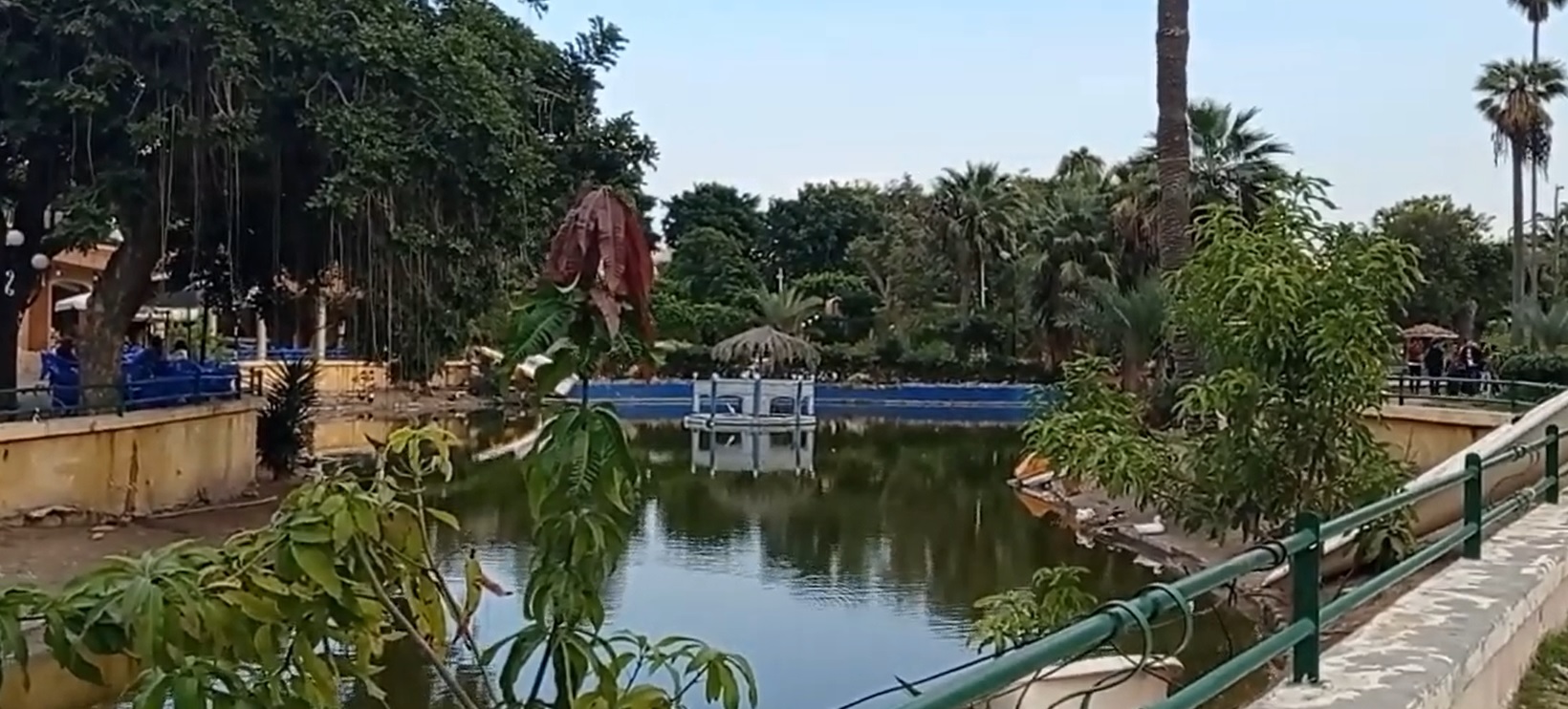
The waterfall is the reason for the name and the reason most people come. Water pours over a stacked-rock formation into the lake below, and a stone bridge crosses right over the top of it. On weekends, expect a line of people waiting to take the same photo standing on that bridge—it's that kind of spot.
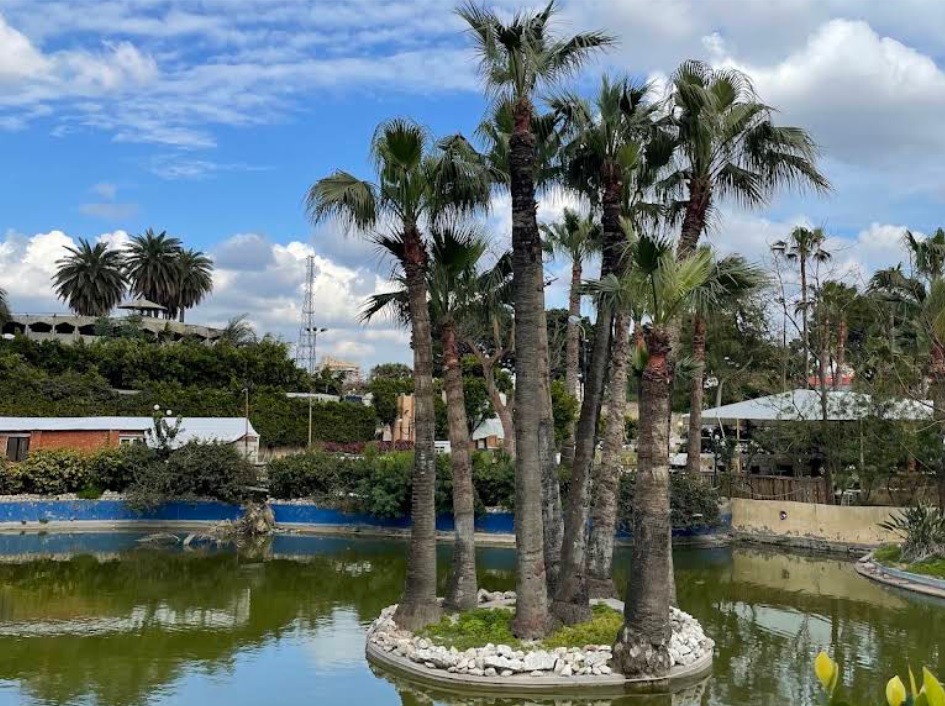
The lake itself draws the birds. Ducks, herons, and the occasional pelican hang around the water, and the peacocks that live in the park wander as freely as they please. Early morning, before the crowds, the mist off the waterfall and the light on the water make it genuinely photogenic, no filter needed.
What Else Is Inside the Park?
Beyond the waterfall, the park covers a fair amount of ground. There's a fossilized tree trunk on display—a genuine petrified forest piece found locally, millions of years old, which kids either love or ignore completely. The Al-Shohada Mosque sits inside the grounds, one of the nicer downtown mosques. Scattered along the paths you'll find ancient stone fragments, column bases, and pieces of the old city wall with informational plaques in Arabic.
And then there's the other side of the park: playgrounds, snack kiosks, popcorn carts, and the rental bikes that families circle the paths on. It's a working park, not a museum. Half the visitors are there for the history; the other half are there because it's the nicest grass in the neighborhood.
Visiting Practicalities
The park stretches along the road connecting Moharram Bek to downtown, so it's easy to reach from either side—any taxi from the city center gets you there in minutes, and it's walkable if you're already near the Roman Theatre.
Hours and Entry: The park opens morning through evening, roughly 9 AM to sunset. Entry costs a token amount—a few Egyptian pounds, sometimes free depending on current policy, which shifts now and then. Weekdays are calm; Fridays and holidays bring the full picnic crowds, which is either the fun part or the reason to avoid it, depending on your mood.
How Long to Spend: An hour covers the waterfall, the lake, and the wall sections comfortably. With kids and bikes, count on two.
Best Time: Morning is the winning slot again—the light on the waterfall, the birds on the lake, and empty paths. Late afternoon works too, and that's when the popcorn carts do their best business.
What's Nearby?
The park's position makes it a natural connector between two of the city's zones.
Alexandria Zoo: Practically next door, back toward Moharram Bek. If you're doing the zoo in the morning, the park is an easy green stop on the way back.
Downtown and the Roman Theatre: Head the other way and you're walking distance from Kom El Dikka, Attarine Souq, and the historic core.
The Corniche: A short walk west puts you on the sea, with the whole Corniche stretch opening up from there.
Is It Worth Visiting?
For what it costs—almost nothing—and where it sits, yes, it's an easy yes. It's the best free-adjacent green space in central Alexandria, it holds real pieces of the ancient city walls, and the waterfall is genuinely one of the nicer photo spots in town.
Families get the most out of it, especially combined with the zoo next door. If you're building a day around the downtown sites, it makes a relaxed lunch stop. And if you'd rather have someone handle the routing between the park, the zoo, and the Corniche, Aten Tours' Alexandria day tours fold it all into one loop with a guide who knows where the wall remnants actually are.