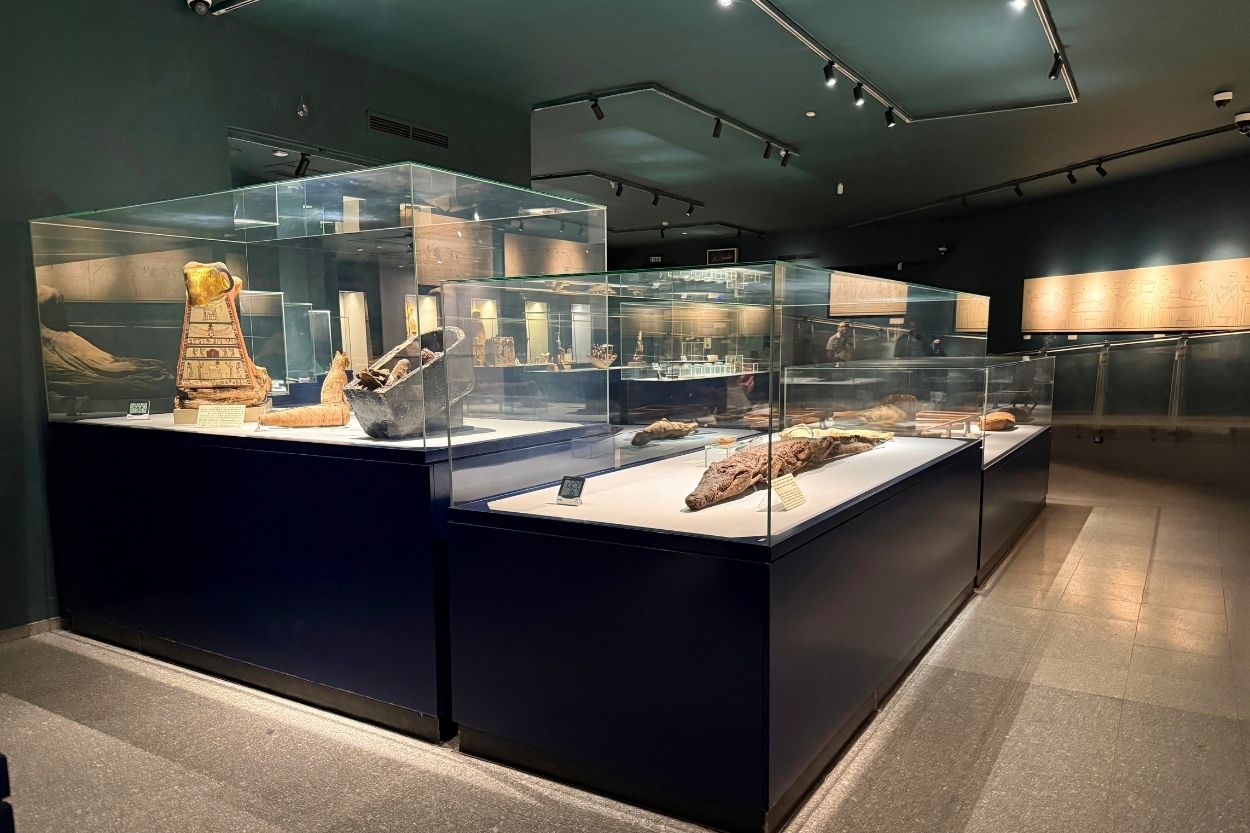
Display cases with mummies and ancient Egyptian artifacts inside Luxor Mummification Museum.

Mummification Museum, Luxor: What's Inside and Is It Worth Your Time

The Mummification Museum sits on Luxor's Nile Corniche, dedicated entirely to how ancient Egyptians preserved the dead for the afterlife. Inside are r...

Ancient Egyptian coffins, canopic jars, and artifacts displayed at Luxor Mummification Museum.

Mummification Museum, Luxor: What's Inside and Is It Worth Your Time

Decorated ancient Egyptian sarcophagus displayed at Luxor Mummification Museum in Luxor.

-What Is the Mummification Museum in Luxor?

The Mummification Museum opened in 1997 on Luxor's Nile Corniche, just north of Luxor Temple. It's one of the only museums in the world built around a single subject: how ancient Egyptians preserved bodies for the afterlife. Unlike Luxor Museum or the Egyptian Museum in Cairo, which spread their collections across dynasties and themes, this museum stays narrowly focused. Every case, every wall panel, every mummy on display exists to answer one question: what actually happened during embalming, and why did it matter so much to the people who practiced it?

The building sits partly below street level, and the lighting inside is deliberately dim, meant to echo the atmosphere of a tomb. It's small by Luxor standards, but the focus works in its favor. There's no wandering through unrelated galleries to find the mummies. You walk in, and the subject is right there.

-Ancient Egyptian Mummification: The Beliefs Behind the Technique

Mummification tied directly into Egyptian beliefs about what happens after death. The process, refined over centuries, typically took about 70 days. Embalmers removed the internal organs, except the heart, which was left in place because Egyptians believed it held a person's intelligence and emotion. They then dried the body using natron, a naturally occurring salt that drew out moisture and prevented decay.

The god Anubis, shown with the head of a jackal, oversaw this process in Egyptian mythology, guiding the dead through embalming and into the afterlife. Osiris, ruler of the underworld, represented the resurrection every mummified body was meant to achieve. The religious belief and the physical technique functioned as one act, not two separate things layered together. Preserving the body correctly was what made eternal life possible, at least in the Egyptian worldview. The museum's exhibits walk through this sequence step by step, pairing the physical tools with the mythology that gave them meaning.

-What You'll See Inside

Canopic Jars and Embalming Tools

The museum displays an unusually complete set of embalming instruments: bronze hooks used to remove organs, knives for the initial incision, and spoons for packing the body cavity with natron and linen. Alongside these sit canopic jars, the containers used to store the liver, lungs, stomach, and intestines separately from the body. Each jar's lid traditionally represented one of the four sons of Horus, and each organ was believed to need its own divine protector during the journey to the afterlife. Seeing these tools in person, rather than reading about them, makes the physical reality of the process much harder to abstract away.

Human and Animal Mummies

The collection includes several human mummies, among them a well-preserved high priest of Amun, alongside animal mummies that reveal a different side of Egyptian religion. Cats, associated with the goddess Bastet, crocodiles linked to Sobek, and even fish and birds were mummified as offerings or as sacred animals in their own right. The animal mummies tend to surprise first-time visitors. Most people arrive expecting only human remains and don't realize how central animal worship was to daily Egyptian religious life.

Coffins and Funerary Objects

Painted coffins, funerary masks, and protective amulets round out the collection. Many of these objects were placed with the body specifically to ward off harm during the journey through the underworld. The artistry on display, including detailed hieroglyphic inscriptions and symbolic imagery of gods and protective spells, shows how much skill and resources went into a single burial. These weren't mass-produced items; each one reflects real religious conviction about what the dead would need.

-Location, Hours & Tickets

The museum sits on Corniche El Nil on Luxor's East Bank, a five- to seven-minute walk north from Luxor Temple along the river. According to Egypt's Ministry of Tourism and Antiquities, it's open daily from 9:00 AM to 2:00 PM, with the ticket window closing at 1:00 PM, and again from 5:00 PM to 9:00 PM, with the ticket window closing at 8:00 PM. As of 2026, foreign adult tickets run around EGP 220, with reduced pricing for students. Children under 6, along with a few specific visitor categories, enter free.

One detail worth flagging before you go: some recent visitor reports note that guides aren't permitted to accompany groups inside the exhibit halls, so you may need to explore independently even if you've booked a guided package. It's worth confirming this with your tour operator, since museum rules can shift. Ticket prices and hours are also worth double-checking directly with the museum or your operator close to your travel date, since Egyptian museum pricing has changed more than once in recent years.

-Is It Worth the Visit?

Yes, for the right traveler. Anyone who's spent a morning at Karnak or Luxor Temple marveling at scale, the columns, the statues, the sheer size of it all, will find something different here: a close, almost intimate look at the human side of ancient Egyptian belief. Most visitors move through it in 45 minutes to an hour.

That's also its main limitation. If you're hoping for a sprawling collection or hours of material, look elsewhere. If you want to understand why Egyptians built the tombs and temples the way they did, the belief system underneath the architecture, this museum fills that gap better than almost anywhere else in Luxor. It rewards visitors who are genuinely curious about the "why," not just the "wow."

-Planning Your Visit

The museum works best paired with other East Bank sites rather than as a standalone destination. Visiting in the morning, ideally between 9:00 and 11:30 AM, means cooler temperatures and smaller crowds. Because it sits so close to Luxor Temple, many visitors combine the two in a single outing. Walk the temple first, then head north along the Corniche to the museum afterward, or reverse the order if you'd rather start with something quieter before the temple's crowds build up later in the day.

If you're staying in Luxor for more than a day, it's also worth combining this visit with Luxor Museum, about ten minutes further south along the Corniche. The two collections complement each other well: one shows the broader sweep of Luxor's history, the other zooms in on a single, defining ritual.
Why Choose Aten Tours

Choose Aten Tours for unforgettable journeys, carefully curated itineraries, and premium travel experiences. We combine local expertise with world-class service to make every trip exceptional.

Secure Online Payment

Enjoy safe and secure online payments with full protection of your personal and financial information. Book your trips with confidence anytime, anywhere.

Help & Support

Travel with confidence knowing that our Help & Support team is always here for you. From booking to your return, we’re just one message away.

Tailored Travel Experiences

Your journey, your way. We design tailored experiences that match your style, ensuring comfort, flexibility, and unforgettable moments in every destination.

Client Testimonials

At Aten Tours, we are proud to create experiences that leave lasting memories. Read genuine feedback from travelers who explored Egypt’s wonders, enjoyed luxury holidays, and discovered the world with confidence and ease.

Traveling solo in Egypt with Aten Tour was one of the best decisions I made. As a 22-year-old female traveler, I was a little nervous before arriving, but I felt safe and well looked after from day one. Everything was well organized, my guide was knowledgeable, kind, and always happy to help, and I never had to worry about a thing. The whole trip was smooth, enjoyable, and filled with unforgettable moments. I'm so glad I chose Aten Tour and would definitely travel with them again.

Sarah
Sarah May 2026

My fiancé and I booked a private 5-day tour of Egypt with Aten Tours, covering Cairo, Aswan, Abu Simbel, and Luxor. From the moment we arrived, everything was perfectly organized. The team took care of every detail, making our trip completely stress-free. Our guides were knowledgeable, friendly, and passionate about Egypt's history, and every destination exceeded our expectations. Even after returning home, we still find ourselves talking about this unforgettable experience. We highly recommend Aten Tours to anyone looking for a well-planned and memorable trip to Egypt.

Thomas
Thomas May 2026

Traveling with Aten Tour made our vacation completely stress-free. Every hotel, transfer, and excursion was exactly as promised, and the team was always available whenever we had a question. We really appreciated the personal attention and warm hospitality throughout the trip. We came home with unforgettable memories and would definitely recommend Aten Tour to anyone planning a trip to Egypt.

Olivia
Olivia April 2026

We booked an 8-day trip with Aten Tour, and it turned out to be one of our favorite vacations. Everything was well organized from start to finish, which made traveling around Egypt really easy. We never felt rushed, the hotels were great, and the team was always helpful whenever we needed anything. Egypt had been on our bucket list for a long time, and we're so glad we chose Aten Tour for this experience.

Nicholas
Nicholas July 2026

Our family booked a tour with Aten Tour after reading several positive reviews, and they definitely lived up to our expectations. Communication before the trip was quick and helpful, and everything during the tour was exactly as described. The hotels were comfortable, the transportation was smooth, and the guides made every stop interesting with their stories and local knowledge. Egypt had always been a dream destination for us, and this trip made it even more memorable.

Emma
Emma June 2026

All FAQ about Egypt

All FAQ about Egypt

This is a point of some inconsistency depending on the season and current museum policy. Multiple recent visitor reports note that guides are not permitted to lead groups through the exhibit halls themselves, meaning visitors on a guided package may need to explore the interior independently after their guide provides context beforehand. This differs from larger sites like Karnak or the Valley of the Kings, where licensed guides typically accompany groups throughout. If having a guide inside the museum itself matters to your experience, it's worth confirming this detail directly with your tour operator before booking, since policies at Egyptian heritage sites do shift from time to time.

Most visitors complete a full walkthrough in 45 minutes to an hour. The museum's compact size works in its favor here: because the exhibits follow a clear, linear path through the mummification process, from tools and techniques to the mummies and coffins themselves, there's little wasted time wandering between unrelated sections. Visitors with a strong interest in ancient Egyptian religion and ritual practice may want to budget closer to 90 minutes to read the more detailed wall panels and take time with the canopic jars and embalming tool displays. If you're combining this visit with Luxor Temple or Luxor Museum in the same outing, an hour is generally enough to see everything without feeling rushed.

According to Egypt's Ministry of Tourism and Antiquities, the museum operates on a split daily schedule. Morning hours run from 9:00 AM to 2:00 PM, with the ticket window closing at 1:00 PM, and evening hours run from 5:00 PM to 9:00 PM, with the ticket window closing at 8:00 PM. During Ramadan, hours typically shift to a single continuous morning session, often extending to around 3:00 PM with an earlier ticket cutoff. Because seasonal adjustments and holiday schedules can affect these times, and because online booking portals sometimes list slightly different last-entry cutoffs than the official ministry page, it's a good idea to check the most current hours on the day of your visit rather than relying solely on published schedules from earlier in the year.

As of 2026, foreign adult visitors pay approximately EGP 220 for a standard ticket, with reduced pricing available for foreign students who can show valid identification. Egyptian and Arab visitors typically pay a significantly lower rate, in line with pricing policy across most Egyptian state-run museums and monuments. Several visitor categories qualify for free entry, including children under 6, Egyptians and Arabs aged 60 and over, individuals with disabilities, orphaned children, and organized public school trips. Because ticket prices at Egyptian antiquities sites have changed more than once in recent years, it's worth confirming the current rate directly with the museum, your hotel concierge, or your tour operator shortly before your visit.

For travelers who are interested in ancient Egyptian history, yes. The museum offers something genuinely different from the temples and tombs that dominate most Luxor itineraries: instead of scale and grandeur, it focuses tightly on one specific ritual and the belief system behind it. If you've already spent time at Karnak or Luxor Temple admiring architecture and inscriptions, this museum answers a question those sites rarely address directly, which is how the embalming process actually worked and why Egyptians considered it essential for reaching the afterlife. That said, it's a small museum, so travelers expecting a large, sprawling collection similar to the Egyptian Museum in Cairo may find it modest by comparison. It's best understood as a focused, specialized stop rather than a major must-see on the scale of Karnak or the Valley of the Kings.

94%
WhatsApp Call