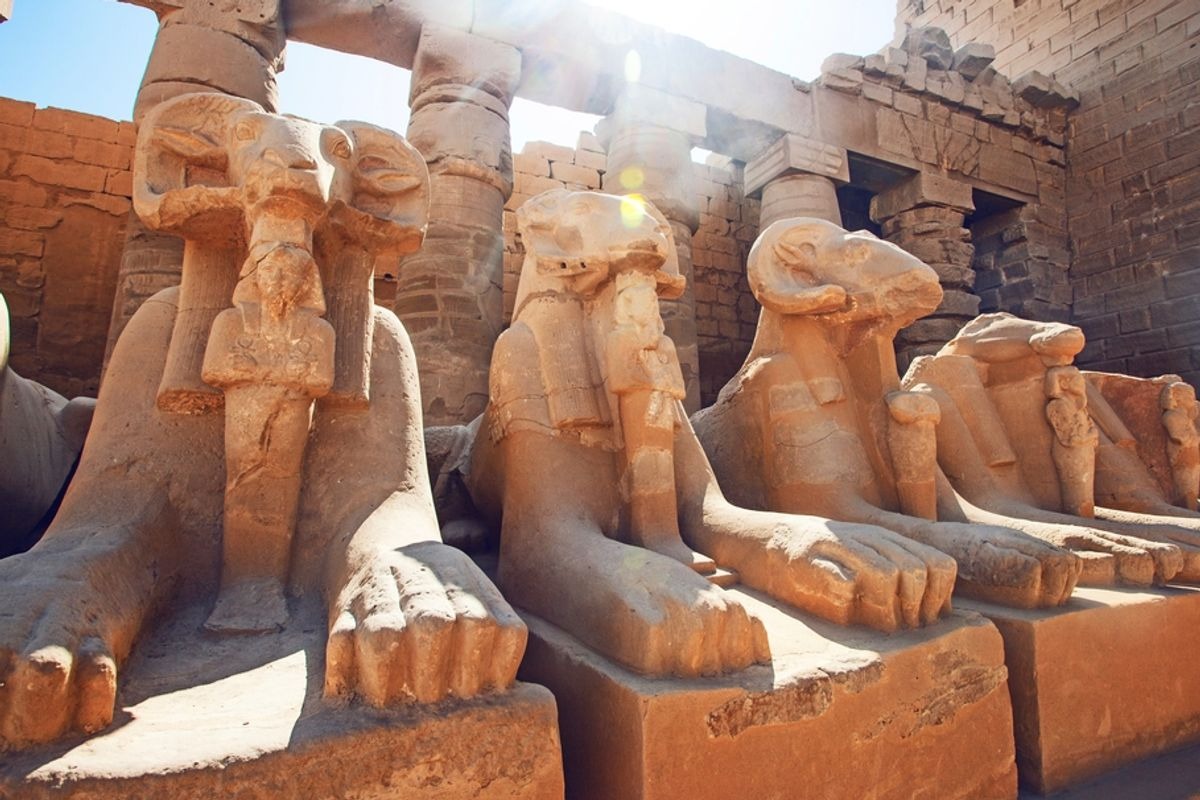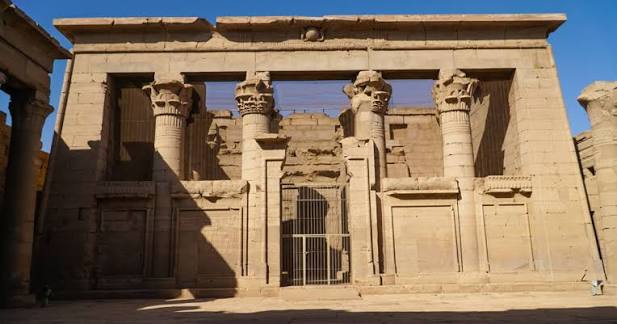
.jpg "Monumental Entrance of Kalabsha Temple")
.jpg "Templo de Kalabsha en Asuán, Egipto")
Kalabsha Temple: Aswan's Overlooked Temple on Lake Nasser
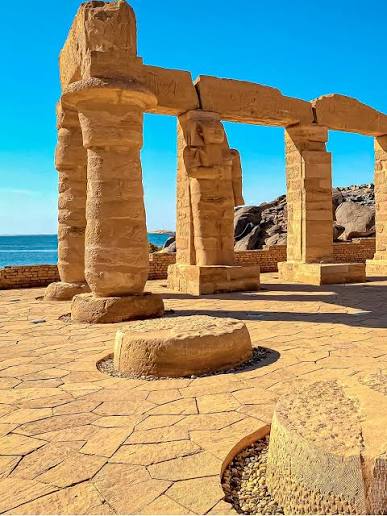
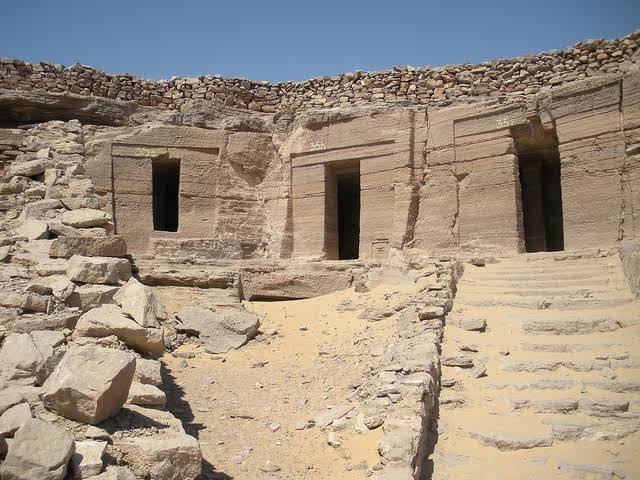
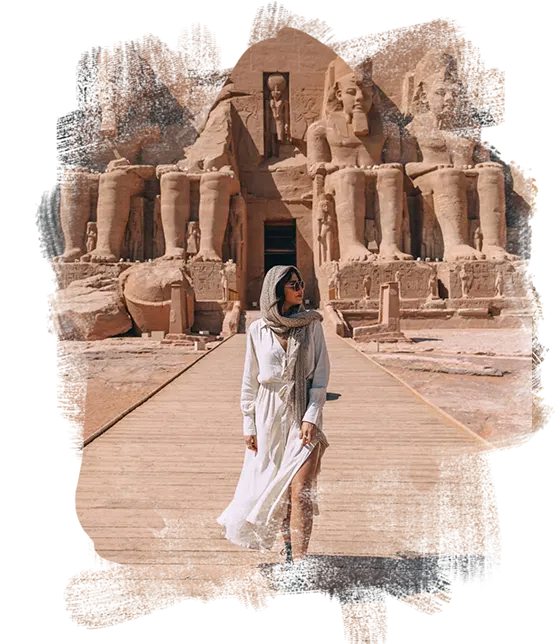
.jpg "Historic Architecture of Kalabsha Temple")
.jpg "Ancient Ruins of Kalabsha Temple")
Arriving at Kalabsha Temple
The approach is part of the point. Most people reach Kalabsha by motorboat from the jetty near the Aswan High Dam, and the temple doesn't announce itself right away — you're crossing open water, desert on both sides, before the sandstone pylon comes into view across Lake Nasser. No queue, no crowd at the dock. Often just one boatman and whoever else happens to be going the same way that morning.
That's the first thing worth knowing about Kalabsha: it's one of the largest free-standing temples in Nubia, and one of the least visited. Built around 30 BC under Emperor Augustus to honor Mandulis, a Nubian sun god, it replaced a sanctuary that had stood on the same ground since Amenhotep II — roughly 1,400 years earlier. Isis and Osiris were worshipped here too, alongside Mandulis, which was fairly normal for temples in this stretch of Egypt.
It isn't standing where it was built, though. The original site sat about 50 km south of Aswan, near the Sudanese border. When the Aswan High Dam rose in the 1960s and Lake Nasser began swallowing the land around it, UNESCO and a German engineering team dismantled the whole structure, numbered every block, and rebuilt it here — on New Kalabsha Island, next to the dam.
A Temple That Outlasted Three Religions
Most of what's carved into Kalabsha's walls predates the flood rescue by close to two thousand years, and it doesn't all agree with itself.
There's hieroglyphic text tied to the original temple ritual. Greek inscriptions from the Roman period, including one from around 250 AD — attributed to a governor named Aurelius Besarion — banning pigs from the temple grounds. A fragment of Meroitic script, the language of the Kushite kingdom to the south, which almost never survives on stone. And then, layered on top of all of it, a 5th-century Greek inscription from a Nubian king named Silko, boasting of two victories over a rival people called the Blemmyes and calling himself "chieftain of the Nobatae and all Ethiopians."
Nobody agrees on exactly when Silko reigned — estimates span nearly a century. What's not in dispute is what he left behind: a kingdom that barely appears anywhere else in the historical record, known to us mostly through one confident paragraph carved into someone else's temple.
Not long after Silko, parts of Kalabsha became a Christian church. Some of the older religious imagery was defaced or reworked into Christian symbolism — the same thing happened at Philae. A Roman temple, a Nubian war record, and a church, stacked on the same walls.
In 1971, Egypt gave the temple's original gate to West Germany as thanks for the rescue effort. It's stood in Berlin's Egyptian Museum ever since — a piece of Kalabsha, on permanent display a continent away from the rest of it.
Walking Through: The Layout
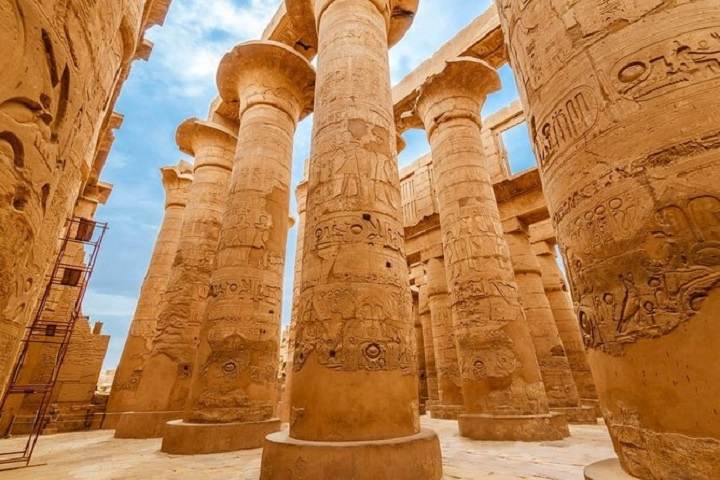
A stone causeway leads from the water to the first pylon, a gateway 9.7 meters high, carved with Roman emperors making offerings to Egyptian gods. Past that: an open colonnaded courtyard, then a hypostyle hall where most of the original columns still stand. Behind the hall sits the sanctuary itself — three rooms, one after another, the innermost being the most sacred.
A staircase climbs to the roof. From up there, Lake Nasser stretches out on every side, desert beyond it, and — most of the year — nobody else up there with you.
Nearby, two smaller monuments made the same journey out of the floodwaters. Beit el-Wali, a rock-cut temple from the reign of Ramesses II, decorated with painted reliefs of military campaigns. And the Kertassi Kiosk, a small roofless structure with a handful of columns, originally dedicated to Isis — barely a few minutes to see, but worth the stop between the other two.
Before You Go
-
Bring water and sun protection. No shop, no shade, nowhere to wait it out.
-
Agree on the boat price before boarding, whether you're arranging it yourself or through a hotel.
-
Best months are October through March. Kalabsha's courtyard has almost no shade, and Aswan's summer heat doesn't forgive that.
-
Read up beforehand, or bring a guide. The multilingual inscriptions are easy to walk straight past without context.
-
Pair it with the High Dam. The jetty sits right next to it, so most people see both in one trip.
If you're planning a fuller Aswan itinerary, our [Things to Do in Aswan] guide covers how Kalabsha fits alongside the city's other sites.