Top Things to Do in Hurghada: Beaches, Diving & More
Relax on the beautiful beaches & luxury resorts of Hurghada
There are places shaped by history, and others shaped by geography. Hurghada belongs to the latter. Its character is not defined by monuments or ruins, but by elements that existed long before the city itself: saltwater, coral, wind, and desert rock. Stand anywhere along the coast and you feel it immediately the sense that the landscape is doing most of the storytelling.
The Red Sea stretches outward in flat planes of blue that shift almost hourly. Turn inland and the terrain rises into dry, uneven mountain ridges, stripped of vegetation and softened only by distance. The city rests between these two forces. It does not dominate them; it exists because of them.
The Coastal Experience
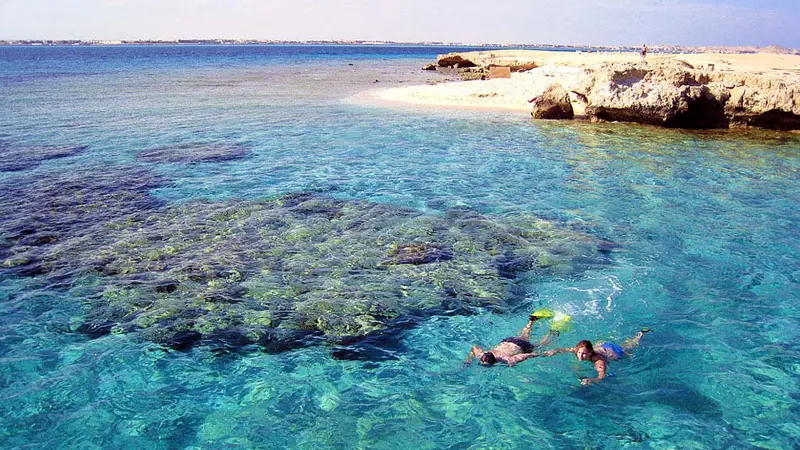
Hurghada’s shoreline is not uniform. Some sections are narrow and intimate, others wide and exposed. The water remains unusually transparent, revealing darker patches where reef systems begin close to land. Even without entering the sea, you sense that something complex exists beneath the surface.
Morning brings stillness. Fishing boats move slowly beyond the breakwater. Light falls directly onto the water, flattening it into a sheet of brightness. By late afternoon, the color deepens and shadows appear along the sand. The day feels long here, not because of activity, but because of clarity.
South of the city center, areas such as Makadi Bay and Sahl Hasheesh feel spatially open. Development is more measured, and the coastline seems to breathe more easily. Closer to the marina, the rhythm changes. Dive vessels prepare for departure. Conversations spill out from cafés. The waterfront becomes transitional a place of movement rather than pause.
Yet even in its busiest moments, Hurghada rarely feels compressed. The sea prevents that. It creates a visual horizon that keeps the landscape expansive.
Underwater Topography
To understand Hurghada fully, you have to leave the surface.
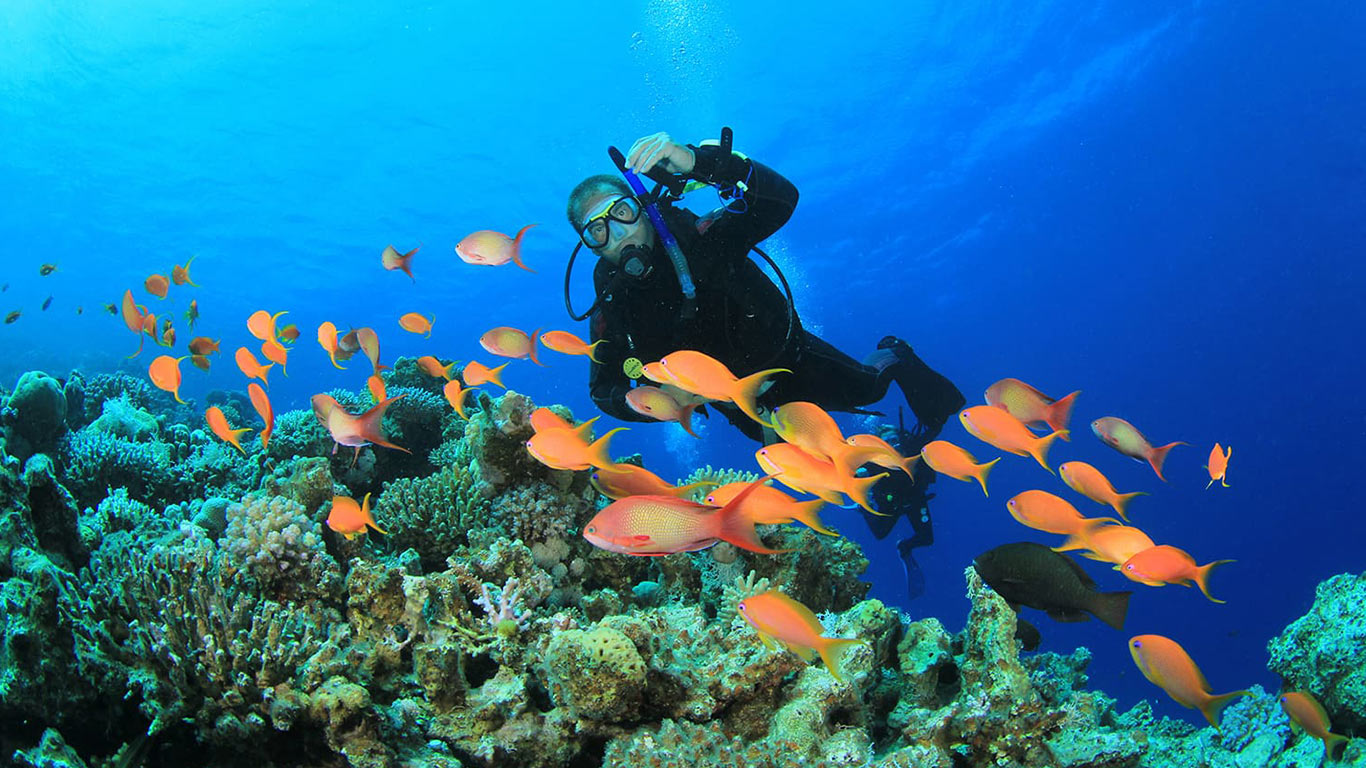
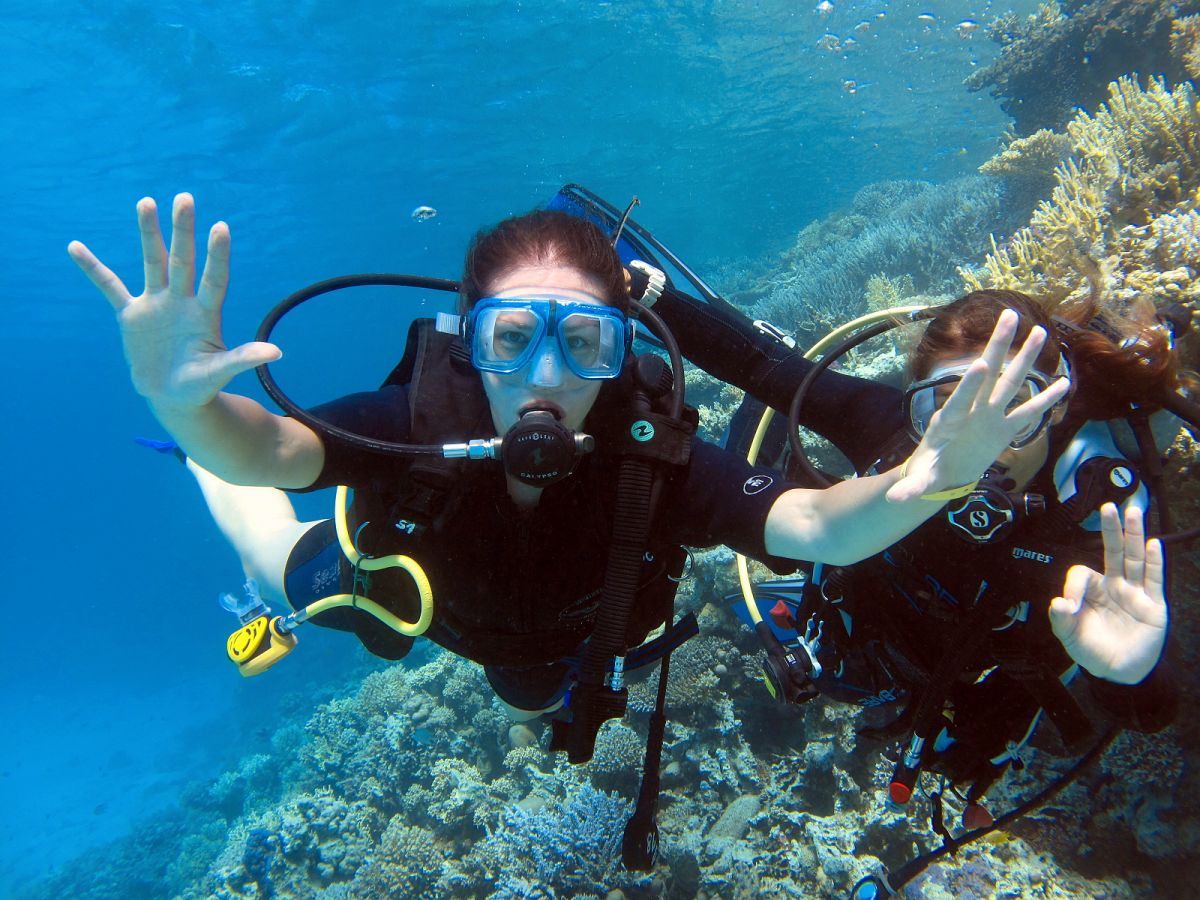
The Red Sea is not simply clear; it is structured. Coral growth forms elaborate underwater architecture shelves, ridges, slopes each supporting different patterns of marine life. The first descent into this environment can be disorienting. Sound disappears. Light fractures into shifting beams. Movement slows.
Fish do not scatter in panic; they reorganize. Small species hover near coral branches, while larger ones maintain quiet distance in open water. The ecosystem functions with a logic that feels precise rather than chaotic.
Giftun Island lies offshore as part of a protected marine zone. Boats anchor at designated points, and swimmers enter water that feels almost magnified in clarity. The island itself is spare sand, low vegetation, uninterrupted sky. Its significance is less about what stands on it and more about what surrounds it below sea level.
For divers, depth introduces another dimension. Certain sites reveal steep underwater walls where color gradually drains into darker blue. Others expose remnants of wreckage that have been absorbed into reef systems over time. Metal structures become frames for coral growth. The artificial and natural merge quietly.
What lingers after these experiences is not spectacle, but perspective a recalibration of scale and sound.
Inland Silence
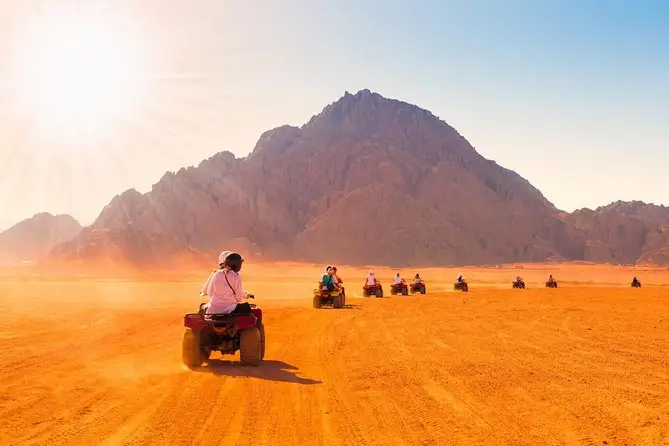
Travel a short distance west and the environment changes with abrupt decisiveness. Moisture disappears from the air. The horizon sharpens. The Eastern Desert unfolds in muted gradients of sand and stone.
Unlike the fluidity of the sea, the desert feels fixed. Its surfaces appear motionless, yet closer inspection reveals subtle shaping by wind. Ridges cut across the landscape. Valleys form shallow channels between rock formations. Nothing is ornamental; everything is structural.
Excursions into this terrain often involve mechanical movement engines crossing sand or climbing uneven paths but the most striking moments occur when the engines stop. Without artificial sound, the silence feels almost dimensional.
Late afternoon alters the scene again. The sun lowers and begins to define edges more clearly. Rock faces gain contrast. The ground reflects less glare and more shadow. The temperature shifts, and with it, the pace of everything.
In some desert camps, tea is brewed slowly while the sky transitions toward evening. There is no spectacle required. The absence of distraction becomes the central experience.
Offshore and After Dark
Beyond the main coastline, smaller islands such as Orange Bay and Mahmya appear almost minimalistic. Their appeal lies in reduction. Fewer structures. Fewer interruptions. Water that shifts between blue and green depending on depth and light. Time passes without obvious markers.
Back at the marina, the tone changes but remains measured. Boats align in rows. Reflections stretch across dark water. Conversations replace daytime motion. Restaurants face the harbor, but the atmosphere is less theatrical than in larger Mediterranean ports. The scale remains contained.
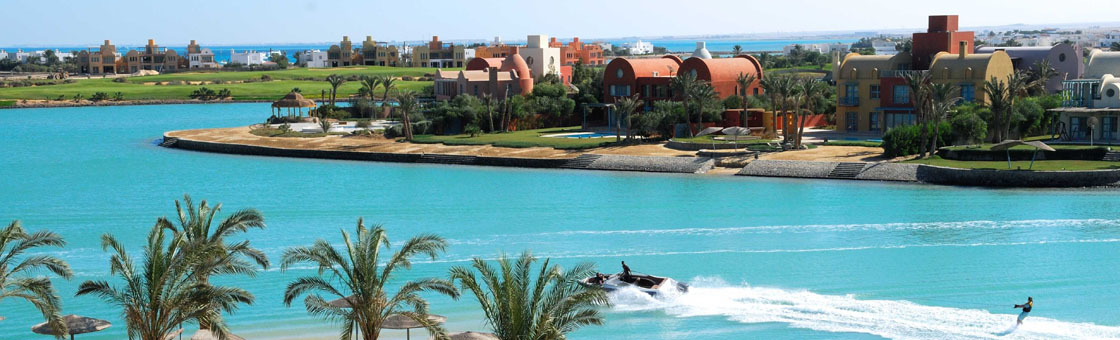
Northward, El Gouna presents a different spatial idea a network of lagoons and planned streets. It contrasts with Hurghada’s more linear coastal spread, offering another interpretation of how settlement meets sea.
A Geography of Contrast
Hurghada’s distinctiveness lies in proximity. Reef and desert exist within the same frame of reference. You can move from suspended underwater silence to arid mountain stillness within a single day. Few destinations compress such environmental extremes into such short distance.
This duality prevents the city from feeling singular in identity. It is neither purely maritime nor entirely desert bound. Instead, it operates in tension between the two. The sea introduces movement and color. The desert imposes scale and restraint.
That interplay is what defines the experience. Not luxury. Not nightlife. Not even recreation. But geography itself elemental, contrasting, and quietly powerful.
Hurghada does not demand attention. It reveals itself gradually, through light, texture, and space. And for those attentive to landscape rather than spectacle, that revelation is lasting.

.jpg "Hurghada Marina")