Best Shopping Spots in Alexandria: From Ottoman Bazaars to Modern Malls

Most visitors arrive in Alexandria with a mental image of the city borrowed from Lawrence Durrell novels — European cafés, crumbling palaces, sea breezes. They don't usually come here to shop. That's a mistake, because the city has a retail culture that's genuinely different from Cairo's, and it tells you as much about the place as any museum visit would.
Alexandria's shopping divides neatly into two worlds. There are the traditional markets — the souks and street bazaars that have operated in the same neighbourhoods for generations, selling everything from antiques and spices to fabrics and costume jewellery. And then there are the modern malls — air-conditioned, multi-storey complexes with international brands, food courts, and cinemas. Both have their place. The trick is knowing which ones are worth the trip and which ones are just filling space on a tourist itinerary.
This guide covers the markets and malls that actually matter, plus what to buy and how to avoid the common pitfalls.
The Traditional Markets
Souk El Attarine
This is the one that most guidebooks mention first, and unlike some tourist-list regulars, it actually deserves the attention. Souk El Attarine sits in the old city centre, near the Attarine Mosque and not far from Midan El Raml. The name comes from the Arabic word for perfumers, and while the market has expanded well beyond its original speciality, you can still find stalls selling essential oils, attar, and traditional perfumes alongside everything else.
What makes Souk El Attarine worth visiting is the variety. You'll find antique dealers selling old coins, vintage postcards, and brassware. There are shops with papyrus prints, alabaster figurines, and cartouche necklaces. The quality varies considerably — some stalls stock genuine pieces, others sell mass-produced souvenirs shipped in from elsewhere. Part of the experience is figuring out which is which. If you're looking for Egyptian cotton scarves or shisha pipes, this is one of the better places in the city to browse.
The market is loosely organised rather than strictly zoned. You'll wander through narrow alleyways where a spice merchant shares a wall with a mobile phone repair shop, which shares a wall with a man selling nothing but prayer beads. It's chaotic in the way that old markets tend to be, and that's part of the appeal. Come here with time to spare and without a rigid shopping list. The best finds are usually the ones you stumble on.
Zan'et El Sitat
The name translates roughly to "women's cramped alleyway," and that's more or less what it is — a dense, bustling market in the Moharram Bey district that's primarily geared toward women's fashion and accessories. Zan'et El Sitat is where Alexandrian women actually shop for everyday clothing, fabrics, silk, bridal accessories, costume jewellery, and cosmetics. It's not a tourist market in the traditional sense; you'll see very few foreign faces here, which is precisely what makes it interesting.
The stalls are packed tightly together, and the range of goods is enormous. You can find everything from bulk fabric sold by the metre to ready-made dresses, handbags, shoes, and hair accessories. Prices are considerably lower than what you'd pay in the tourist-oriented markets or the malls, and haggling is expected. If you're a woman travelling with female companions and want to see where locals actually buy their clothes, this market offers an unfiltered look. It gets particularly busy in the evenings and on Fridays.
Souq Al Khreit (Flea Market)
If you enjoy the unpredictability of flea markets, Souq Al Khreit is worth a detour. Located near the Stanley Bridge area, this is where Alexandrians come to buy and sell second-hand goods — old furniture, vintage clothing, used electronics, books, and assorted bric-a-brac. The quality is hit or miss, as flea markets tend to be, but digging through the stalls can turn up genuine finds: old Egyptian film posters, mid-century brassware, out-of-print Arabic books.
This is not the place to come with a specific shopping list. It's the place to come with patience and an eye for the unusual. Most of the vendors are casual sellers rather than full-time merchants, and the stock rotates frequently. If you're staying in the Stanley area, it's an easy walk and an interesting way to spend an hour. If you're elsewhere in the city, it's probably only worth the trip if you have a genuine interest in second-hand markets and vintage finds.
The Fish Market Area (Halaket Al Asmaak)
This one needs a caveat upfront: the fish market itself is exactly what it sounds like — a working wholesale and retail fish market near the waterfront. It's loud, it smells strongly of seafood, and it's not a shopping destination in the conventional sense. But the surrounding streets have developed into a small cluster of souvenir shops and bazaar-style stalls that cater to visitors walking between the Corniche and the Qaitbay Citadel.
The souvenirs here are standard Egyptian tourist fare — papyrus, miniature pyramids, scarabs, galabiya shirts. The advantage of shopping here over the more established markets is that prices tend to start lower, and there's less aggressive haggling pressure because the vendors see a steady stream of foot traffic. It's convenient rather than essential. If you're walking past on your way to the citadel, it's worth a browse. If you're specifically looking for quality antiques or authentic crafts, Souk El Attarine is the better choice. For more on the waterfront area, see our guide to Alexandria at night.
The Modern Malls
San Stefano Grand Plaza
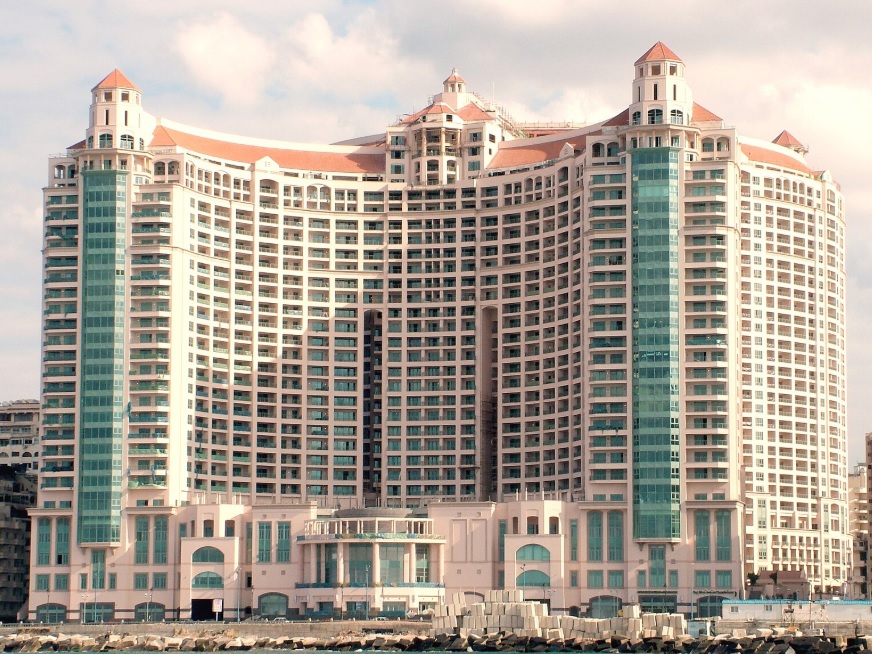
This is the most upscale shopping mall in Alexandria, and it's not close. Located in the San Stefano neighbourhood on the eastern end of the Corniche, the Grand Plaza is a four-storey complex attached to the Four Seasons Hotel, with a marina view and a roster of international and regional brands that no other mall in the city can match. Think Zara, Mango, Adidas, Levi's, and a long list of Middle Eastern and Egyptian brands like Mobaco and Dalydress.
The mall is clean, well-maintained, and genuinely pleasant to walk around — which sounds like a low bar, but it matters in a city where air conditioning is not a given in the summer. There's a food court, a cinema, and several sit-down restaurants. Prices are higher than at other malls, partly because of the location and partly because of the brand mix. If you need to do some serious shopping — replace a broken pair of sunglasses, buy a proper gift, or just escape the heat for a couple of hours — this is where you go. The location on the Corniche also means you can combine a shopping trip with a sea walk. For suggestions on where to stay nearby, see our where to stay in Alexandria guide.
City Centre Alexandria
If San Stefano is the premium option, City Centre is the practical one. It's centrally located on the Cairo-Alexandria desert road near the Smouha district, and it has the broadest range of shops of any mall in the city. The brand mix is mid-range — international names alongside Egyptian chains, with prices that are more accessible than San Stefano's. It's the kind of place you go to when you need something specific and want to find it without driving across the city.
City Centre is also one of the busier malls, particularly on weekends and in the evenings. The food court gets crowded, and parking can be a challenge during peak hours. But for straightforward, no-fuss shopping — clothes, shoes, electronics, household goods — it does the job well. There's a Carrefour hypermarket on the ground floor, which is useful if you need to stock up on snacks, drinks, or basic supplies for your hotel room.
Green Plaza Mall
Green Plaza is an open-air shopping complex on the 14th of May Bridge Road in the Smouha district. With over 350 stores, it's one of the largest retail spaces in Alexandria, though the shopping experience feels more like a traditional high street than the enclosed, climate-controlled environment of San Stefano or City Centre. The stores are a mix of Egyptian brands, smaller independent shops, and a few international names. There's a food court and entertainment options, but the overall atmosphere is more relaxed and less polished than the other two malls.
Green Plaza is popular with locals for everyday shopping — clothing, shoes, mobile phone accessories. For visitors, it's probably the least essential of the three main malls unless you're staying in the Smouha area or you specifically want to browse Egyptian high-street brands at local prices. It's worth knowing about, but it shouldn't be your first shopping stop unless you're in the neighbourhood.
Orouba Mall
A smaller, more neighbourhood-oriented mall in the Sporting area. Orouba doesn't have the brand range of San Stefano or the scale of City Centre, but it has a decent selection of mid-range shops, a few cafés, and a less crowded atmosphere. It's the kind of place locals go for a quick shopping trip rather than a destination visit. If you're in the area — the Sporting district is near several hotels — it's convenient. Otherwise, you're not missing anything significant by skipping it.
What to Buy in Alexandria
Egyptian souvenirs are the same whether you buy them in Cairo, Luxor, or Alexandria, but Alexandria has a few particular strengths worth knowing about.
Antiques and Vintage Items. Alexandria's cosmopolitan history means there's a genuine antique market here — old coins, Ottoman-era brassware, vintage jewellery, and early 20th-century postcards and photographs. Souk El Attarine has the highest concentration of antique dealers, but the quality varies enormously. Genuine antiques exist alongside convincing reproductions. If you know what you're looking for, there are real finds to be had. If you don't, buy what you like the look of and don't worry too much about authenticity.
Egyptian Cotton. Egypt produces some of the finest cotton in the world, and while the very best quality tends to be exported, you can still find good cotton scarves, bed linen, and towels in the markets. Souk El Attarine and the smaller textile shops around the city centre are good places to look. Check the label — if it says "100% Egyptian cotton," it's probably genuine. If it just says "cotton" without specifying, it may be imported.
Perfumes and Essential Oils. The attar tradition runs deep in Alexandria. Small shops in Souk El Attarine and elsewhere sell essential oils — lotus, jasmine, sandalwood — in small glass bottles. Some of these are genuinely good; others are diluted with carrier oils. The price is usually a clue: a tiny bottle of pure essential oil shouldn't cost next to nothing. If you want something that smells genuinely Egyptian, this is a better souvenir than yet another papyrus print.
Spices. Alexandria's spice market, particularly around the Souk El Attarine area, stocks a wide range of dried spices, herbs, and tea blends. Saffron, cumin, coriander, hibiscus for karkade tea, chamomile — the quality is generally good and the prices are low compared to what you'd pay for the same products in Europe or North America. Pack them in your checked luggage to avoid issues at airport security.
Papyrus and Alabaster. These are the standard Egyptian souvenirs, and you'll find them everywhere. Genuine hand-painted papyrus does exist, but so does machine-printed paper made to look like papyrus. Alabaster figurines range from hand-carved to factory-moulded. Both are available at the markets and in souvenir shops throughout the city. The key difference is price and feel — real papyrus has a textured, fibrous surface, and real alabaster is cold to the touch and slightly translucent.
Practical Tips
- Haggling in markets: Expected everywhere in the traditional souks. Start at roughly half the asking price and negotiate from there. In malls, prices are fixed.
- Cash vs card: The markets are cash-only. Most malls accept cards, but smaller shops within them may not. Carry Egyptian pounds.
- Best times: Markets are busiest in the late afternoon and evening. Morning visits are quieter and better for browsing. Malls are air-conditioned, so time of day matters less — though they're also busiest on weekend evenings.
- Avoiding tourist traps: If a shop near a major tourist site has nothing but mass-produced souvenirs with printed price tags in multiple currencies, you're in a tourist trap. The real deals are in the stalls deeper in the markets where locals actually shop.
- Prices: In traditional markets, a cotton scarf might cost EGP 50 to 150, a small bottle of essential oil EGP 80 to 200, and a set of spice packets EGP 30 to 80. Mall prices for clothing start around EGP 200 to 500 for mid-range brands. All prices are approximate and may vary.
- Language: In the markets, Arabic is the default. Some vendors speak basic English. In malls, English is widely understood. A few words of Arabic ("kam da?" for "how much?") go a long way in the souks.
For planning the rest of your trip, see our guides on things to do in Alexandria and the best time to visit Alexandria. If you're coming from Cairo, check our guide on how to get from Cairo to Alexandria.