Pompey's Pillar in Alexandria: Why Is It Called That If It Has Nothing to Do With Pompey?
What Is Pompey's Pillar?
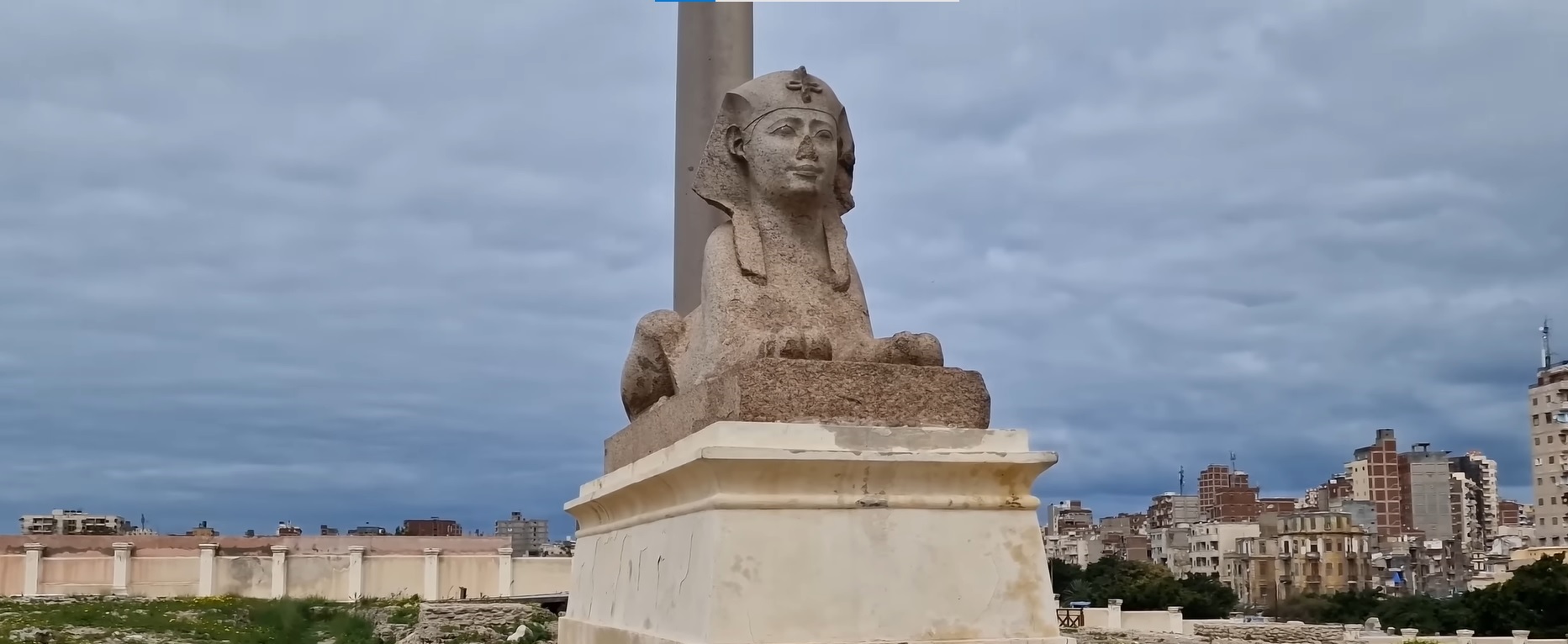
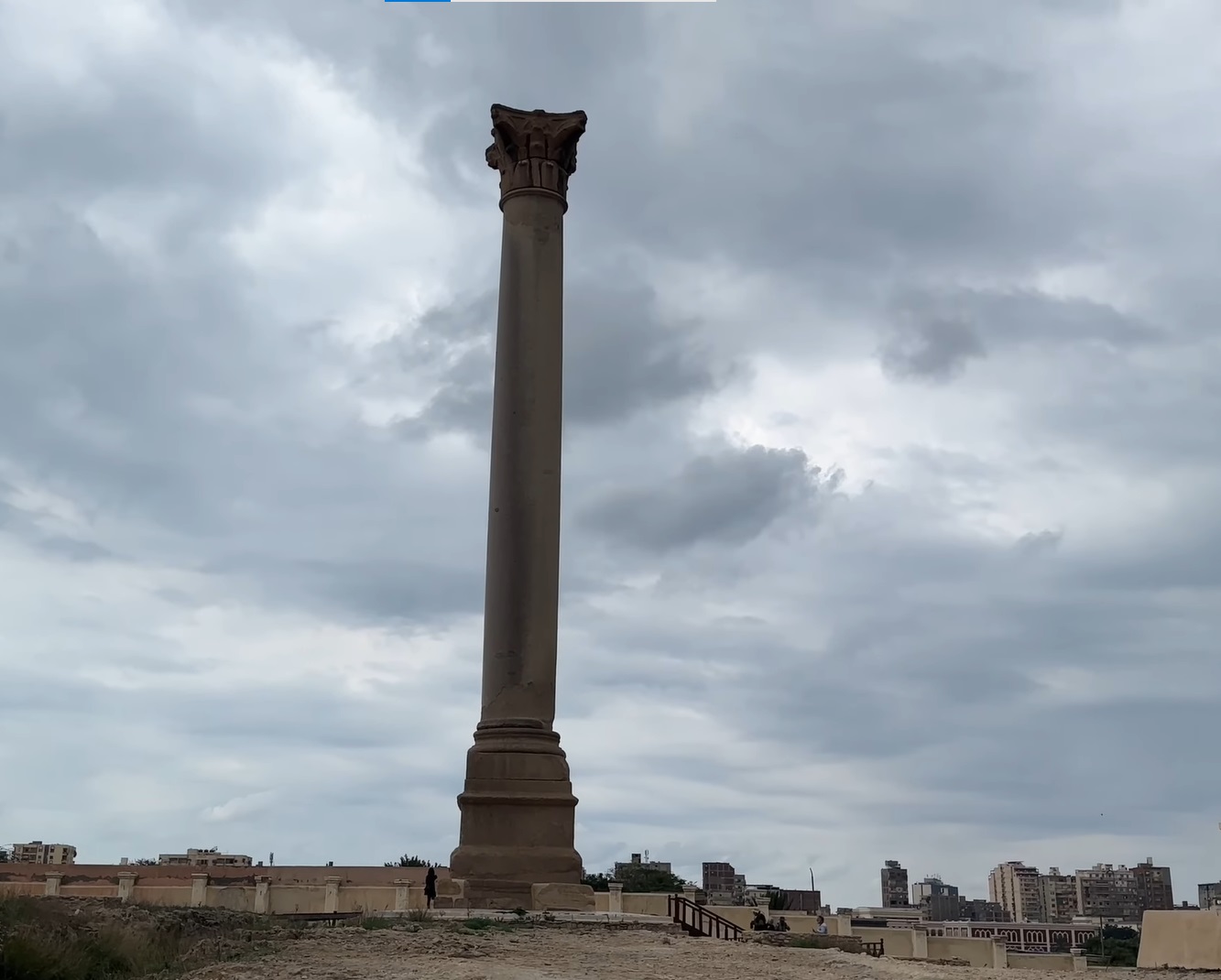
Pompey's Pillar is a Roman triumphal column standing in Alexandria, Egypt, carved from a single block of red Aswan granite. Measured base to capital, it comes out to roughly 26.85 meters, and it's the only ancient monument in Alexandria that's never been moved from where it was originally built. Despite the name, it has no connection to the Roman general Pompey.
The granite shaft alone runs about 20.75 meters. Add the 6-meter base and it reaches 26.85 meters as it stands today. With Diocletian's statue still on top, the whole thing would have topped 33 meters originally.
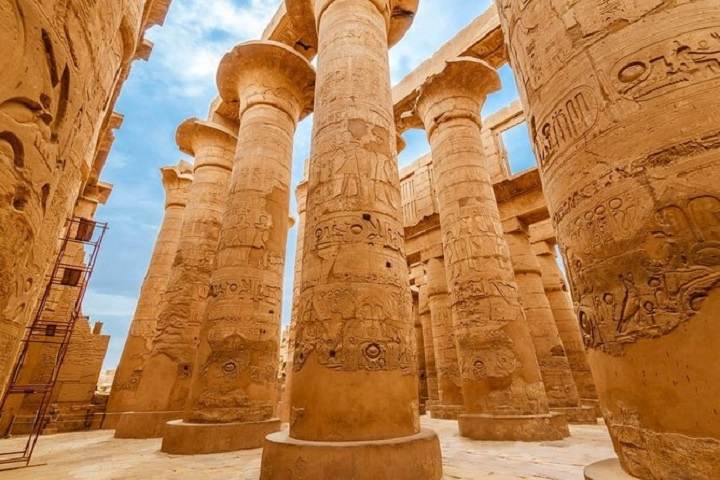
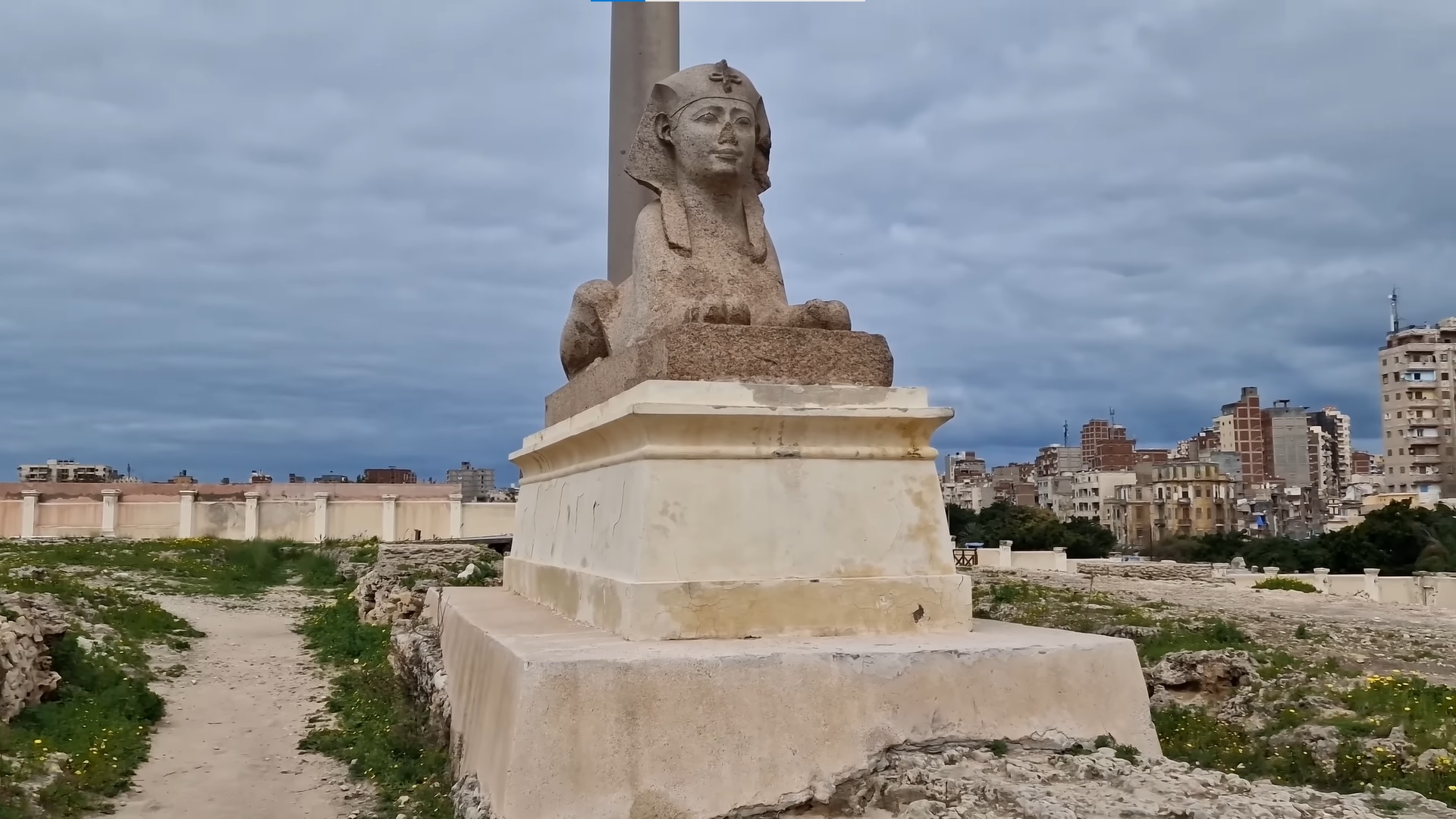
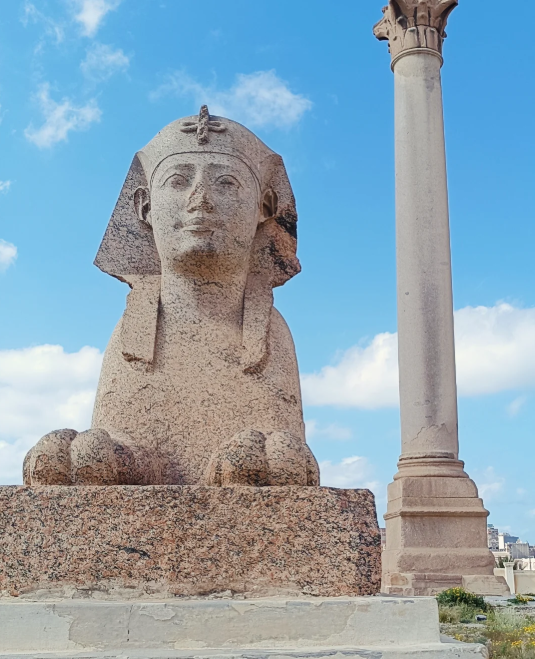
The column marks the eastern edge of the Serapeum of Alexandria, a temple complex built for the god Serapis under Ptolemy III and destroyed in the 4th century AD. A few granite sphinxes still sit around the base, and low walls trace roughly where the temple once stood. It's not much to look at compared to Karnak or Luxor — one column, some sphinxes, a scatter of stone — but very little from Roman-era Alexandria survived at all, which is what makes it worth the stop.
Why Is It Called "Pompey's Pillar"?
The name is a mistake that stuck for centuries. Pompey the Great, the Roman general, died in Egypt in 48 BC — nearly 350 years before this column was built. Medieval Crusaders visiting Alexandria assumed the towering pillar marked his grave, and some believed his severed head was buried at its top. The name never got corrected.
The column actually honors Emperor Diocletian — his name is right there in a Greek inscription on the shaft, for anyone who stops to look.
What Does "Amud El-Sawari" Mean?
Locally, 'Amud El-Sawari — roughly "Column of the Horsemen" — is the name most Egyptians actually use for the site. Nobody's fully settled where it comes from. One theory points to Ottoman-era cavalry stables that used to sit nearby; another says the name predates that entirely and isn't really about horsemen in a literal sense at all.
Either way, the name has no connection to Pompey or Diocletian at all — it's from somewhere else entirely, unrelated to whatever confusion European visitors were dealing with centuries later. Ask a taxi driver in Alexandria for "Pompey's Pillar" and some will know exactly what you mean. Others will only know it as 'Amud El-Sawari, so it helps to have both names ready.
Diocletian, the Siege, and the Serapeum
Alexandria rebelled against Roman rule in 297 AD, and Diocletian laid siege to the city. Nobody's pinned down exactly how long the siege dragged on — the sources disagree, and none of the specific figures floating around quite match each other. What's better documented is what came after: Diocletian eased grain taxes and helped the city recover from the famine the siege had caused. The column went up between 298 and 302 AD as thanks, its Corinthian-capped shaft once topped by a giant porphyry statue of the emperor in armor.
The pillar stood at the edge of the Serapeum, Alexandria's temple to Serapis, first built under Ptolemy I and expanded under Ptolemy III. The temple grounds are said to have held a "daughter library" too, a smaller offshoot of the Library of Alexandria. Both were casualties of the same event: a 391 AD imperial edict against pagan religion, followed by a wave of destruction that swept through the city's temples. The rest of that temple complex didn't make it. What you're looking at today is the one piece that outlasted everything around it.
Excavations and What We Know Today
A lot of what's known about the site comes from digging, not from written history — meaning nobody actually knew what this place was for over a thousand years. The twin red granite sphinxes weren't always visible — they came out of the ground in 1906, close to the spot where the Serapeum's gateway would have stood. They're actually older than the column itself — most estimates place them under Ptolemy VI Philometor, sometime in the mid-second century BC. So visitors walking past today are looking at objects older than the column they came to see.
More digging followed after World War II, when Egypt's Antiquities Organization moved in to clear out accumulated rubble. They turned up sections of enclosure wall from both the Ptolemaic and Roman phases of the temple, along with inscribed foundation plaques that had been buried for centuries. One of the odder finds — a basalt statue of the Apis bull, carved under Hadrian and inscribed with his name — sits in the Greco-Roman Museum now instead of on site, which is a shame if you're the type who likes seeing things where they were found. There's a Nilometer close by too, once used to gauge how high the Nile would flood each year. Some of it, honestly, is still being figured out a century later.
What You'll See on Site Today
The site centers on the pillar itself, still standing amid a scatter of red granite sphinxes that once flanked the temple approach. Most are damaged now, missing heads or paws, but you can still make out how the processional route would have looked.
There's a way down into a few narrow, unlit chambers connected to what used to be the temple's daughter library. Nothing to read down there anymore, just bare rock and cramped passages, but it's worth the few minutes it takes. Above ground, a few relocated statues sit around the grounds, including a headless granite figure of Ramesses II that was moved here from elsewhere in Egypt rather than originally placed at the site. Low stone walls trace where the Serapeum's main buildings once stood, though most of it is gone — you're mostly reading the outline, not the building.
Best Time to Visit and Photography Tips
Go between October and April if you can. Alexandria gets properly hot in summer, and there's zero shade anywhere on the grounds — even a quick visit starts to feel long by the halfway mark.
Morning light works better than midday for photos; the granite picks up more color and the shadows give the pillar some depth instead of flattening it out completely. Tour groups tend to show up later in the day, so an early visit usually means having the place mostly to yourself. Regular photography is fine. Drones aren't, unless you've sorted permission beforehand — and that's not something to leave until you're standing at the gate.
Visiting Practicalities
Pompey's Pillar is open daily from 9:00 AM to 5:00 PM, with last entry around 4:00 to 4:30 PM. According to Egypt's Ministry of Tourism and Antiquities, foreign adults pay 150 EGP to get in, and foreign students pay 75 EGP with a valid international student ID. Egyptian and Arab visitors pay 20 EGP as adults, 5 EGP as students. Prices like these move around more than you'd expect, especially near public holidays, so don't lock this number in — check closer to your visit.
Bring cash. The card machine at the gate is one of those things that works some days and not others, and you don't want to find that out mid-queue.
Plan for 30 to 45 minutes on site. That's enough to take in the pillar and the sphinxes at a normal pace, plus a quick look through the underground chambers. The ground gets uneven in spots, and the stairs into the underground section are narrow, so it's genuinely not a good fit for wheelchairs or anyone with limited mobility. There's no visitor center or café either, so bring water. Alexandria's summer heat has a way of catching people off guard, and there's not a scrap of shade near the pillar itself.
Getting There and Nearby Sites to Pair With It
Pompey's Pillar sits in Karmouz, in western Alexandria, a bit inland from the Corniche. Coming from Cairo, it's about a two-hour drive along the Cairo–Alexandria Desert Road, or roughly the same by train from Ramses Station. Once you're in Alexandria, just grab a taxi — the pillar isn't on a direct tram line, and walking from the city center is further than it looks on a map.
It sits close enough to two other Roman-era sites that most people just do all three in one go: the Catacombs of Kom el-Shoqafa, an underground Greco-Roman necropolis a few minutes away, and the Roman Amphitheater, a bit further toward the center. If you've only got a day in Alexandria, this trio covers the city's Roman history without much extra driving between stops — which, given Alexandria traffic, is worth something.
Is It Worth Visiting?
Depends what you're after. If you want something on the scale of Karnak or the Pyramids, this isn't it. It's one column, a handful of sphinxes, and a few underground rooms, and you'll see all of it in under an hour.
It's worth the stop if you care about Roman Egypt or like the kind of story where a monument gets the wrong name for eight centuries and nobody bothers to fix it. If you're tight on time and have to cut one site from an Alexandria day, this is the one to cut before the Catacombs — there's simply more to walk through down there. What actually makes it worth the detour is the story behind it — a siege that nearly starved the city, followed by an emperor's apology carved into stone. Most visitors walk right past without knowing any of that.
Most people fold it into a stop alongside the Catacombs of Kom el-Shoqafa and the Roman Amphitheater rather than visiting it on its own. If juggling taxis and timing between them sounds like more hassle than you want, Aten Tours runs a private Alexandria day tour covering all three, with a guide who can walk you through the Diocletian story on-site instead of you piecing it together from a plaque.