Ras El Tin Palace: Alexandria’s Oldest Royal Residence and Presidential Summer House
What Is Ras El Tin Palace?
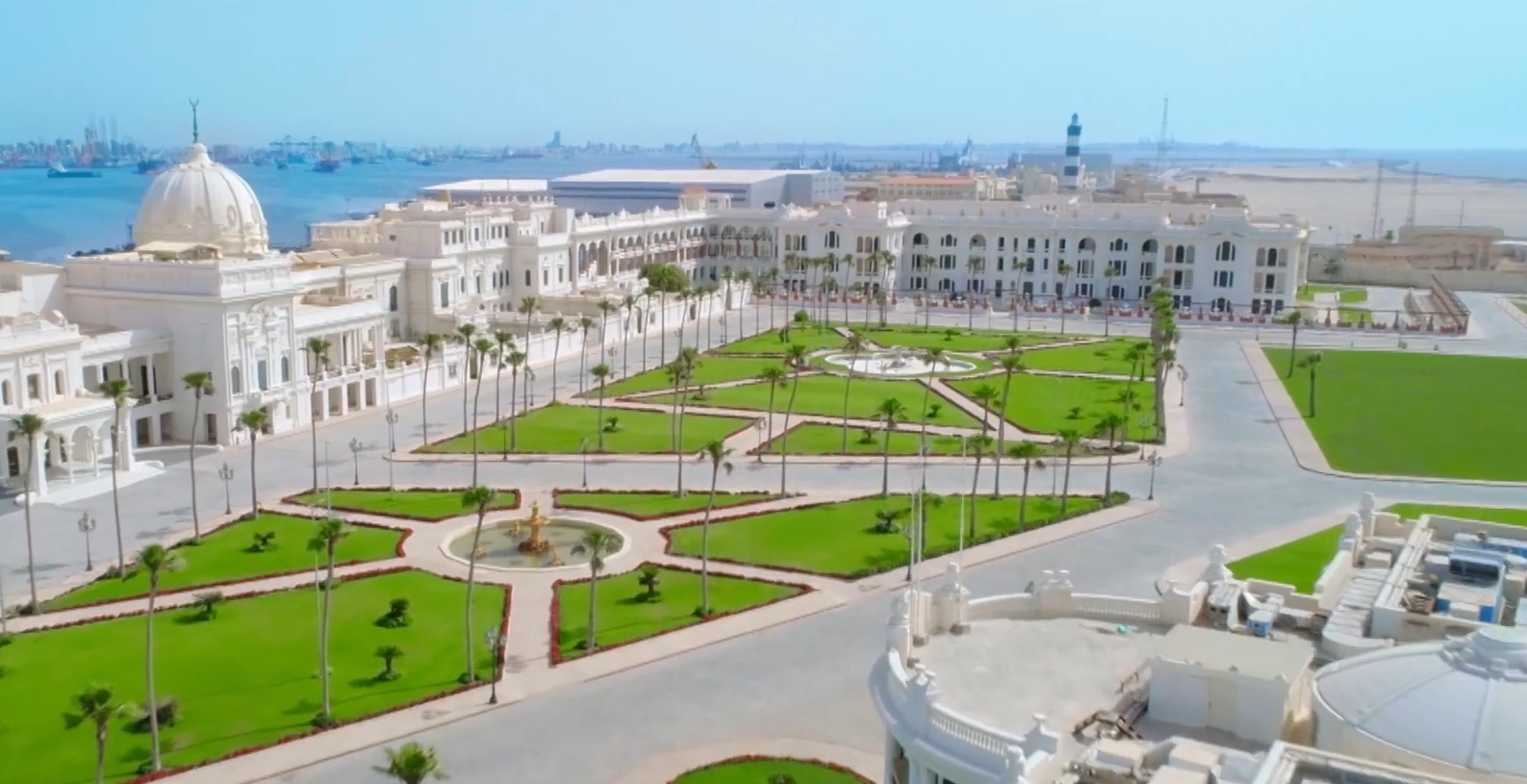
It’s a massive waterfront palace on the western edge of Alexandria, right where the Mediterranean meets the Anfoushi neighborhood. Built starting in the 1830s by Muhammad Ali Pasha, the founder of modern Egypt, it holds the title of the city’s oldest royal palace. While Montaza up the coast was built for leisure, Ras El Tin was built for power. Muhammad Ali wanted a headquarters close to his naval dockyards, and he picked this spot specifically so he could watch his fleet from his windows.
Today, it’s no longer a royal home. When the monarchy ended in 1952, it became the official summer residence of the Egyptian president. That status is exactly why you can’t just walk through the front door, but we’ll get to that.
The History: From Muhammad Ali to the Presidency
Muhammad Ali didn’t originally plan a palace here. He started with a small fort and a shipyard in the 1820s to keep his navy close. But the man liked his comfort, so within a decade, that fort started growing into a full-blown palace. He brought in Italian and French architects, and they essentially built a Mediterranean villa on steroids arched loggias, sprawling wings, and terraces facing the sea so he could sit and watch his ships sail in.
The palace didn’t stop with Muhammad Ali. Every ruler after him tweaked it. Ismail Pasha, the one who built the Suez Canal, expanded the gardens and added the iconic cylindrical towers that give the palace its distinct silhouette today. King Farouk was the last monarch to actually live here, and he’s the one who turned the interior into the lavish, wood-paneled space people imagine when they think of Egyptian royalty. When the 1952 revolution swept the monarchy out, the new government didn’t touch the palace they just swapped the king’s furniture for the president’s desk. It’s been the official summer seat of the Egyptian presidency ever since.
Architecture and Design
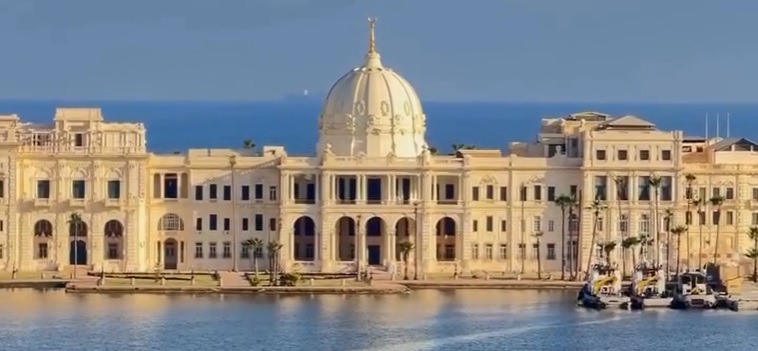
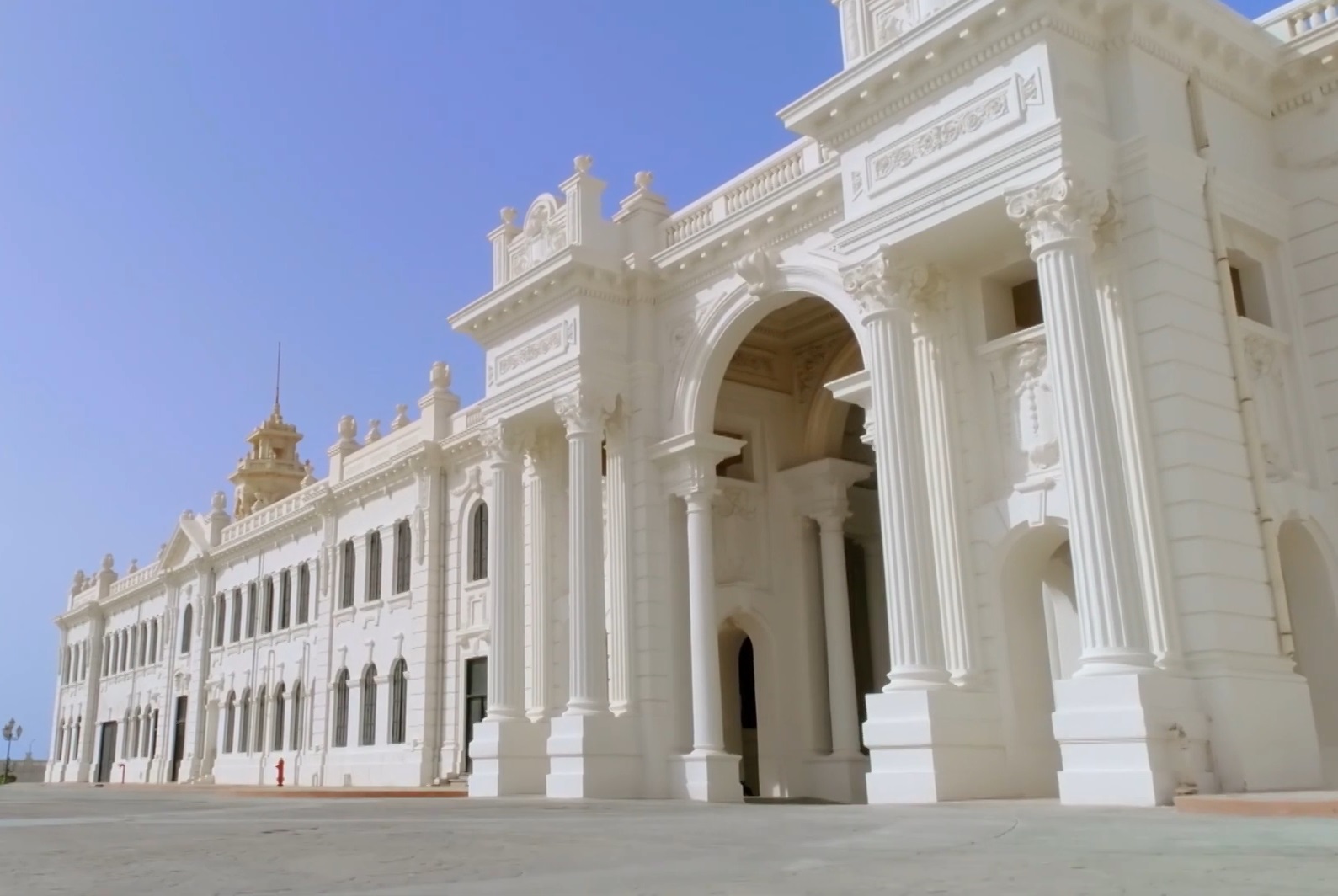
From the outside, Ras El Tin doesn’t look like a typical Egyptian building, and that’s the point. Muhammad Ali wanted something that felt European, something that wouldn’t look out of place on the Italian Riviera. The main facades are long, symmetrical, and covered in arched loggias those open-air galleries that let the sea breeze cut through the building without needing air conditioning.
The most recognizable feature is the pair of cylindrical towers at the corners. Ismail Pasha added those later, and they break up what would otherwise be a very long, flat building. From the water, the palace looks like a fortress trying to be a villa, or maybe a villa trying to be a fortress.
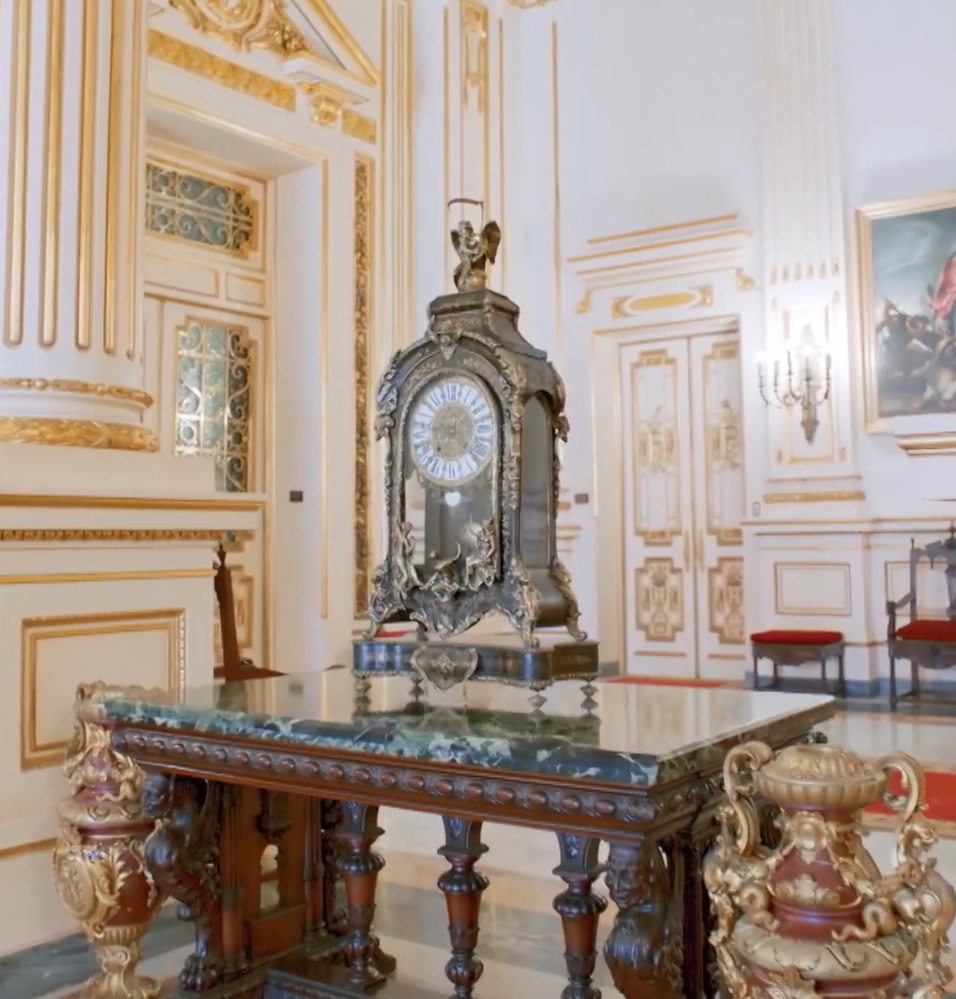
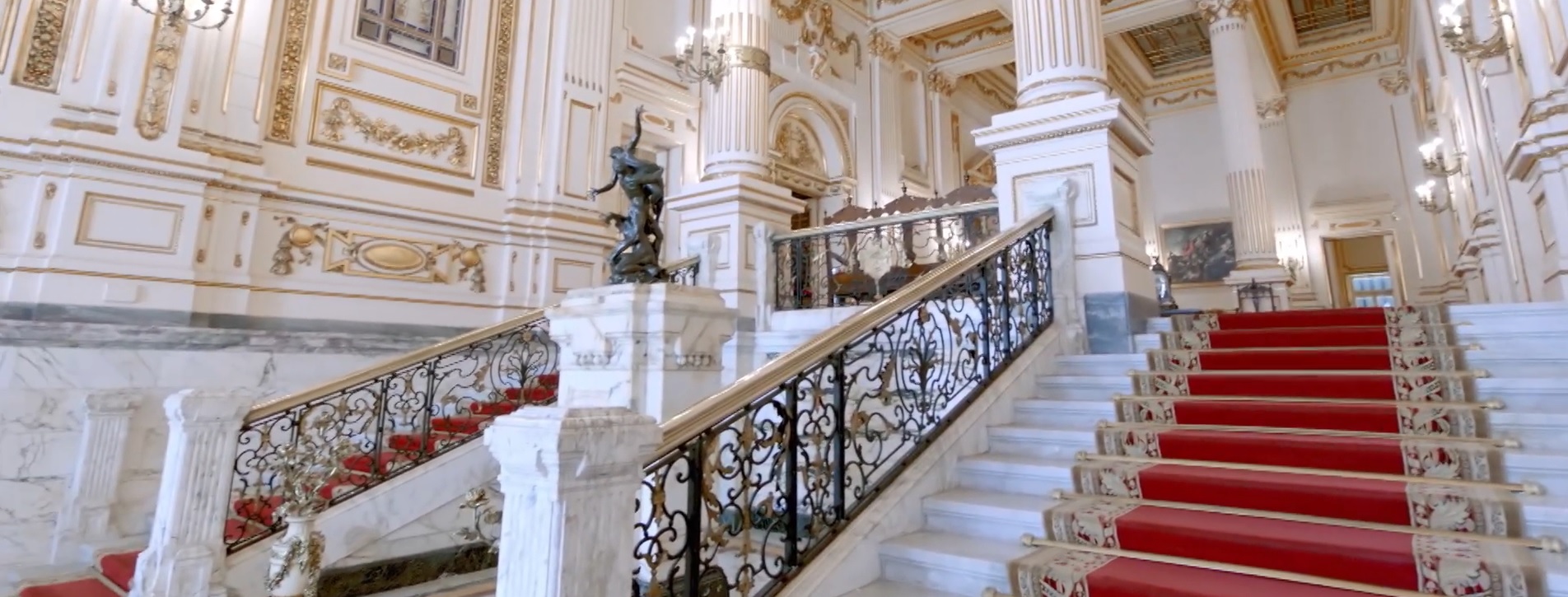
Inside, the layout is split into the main palace building and a separate wing for guests and staff. The state rooms where the president actually hosts people are covered in rare wood paneling, heavy crystal chandeliers, and the kind of oversized furniture that makes you feel like you’ve walked into an early 20th-century diplomatic reception. You won’t see any of this as a tourist, but it’s worth knowing what’s behind the closed doors: the Salah Eldin Hall, the Green Salon, and a private mosque that serves the residents. The gardens, though, you can see, and they’re massive stretching out with palm-lined paths right down to a private sea wall.
Can You Visit Ras El Tin Palace?
Here’s the short answer: you cannot go inside. Because it’s an active presidential residence, the interior is strictly off-limits to the public. There are no tickets, no tours, and no exceptions. If the president is in town, security tightens even further and the immediate perimeter gets locked down.
But that doesn’t mean a trip here is useless. You can walk along the sea wall right outside the palace walls. The views from there looking up at those cylindrical towers and the arched loggias with the Mediterranean in the foreground are actually better than anything you’d see from inside the gardens. It’s also one of the quietest stretches of the Corniche, mostly because the heavy security presence keeps the usual crowds away.
If you want to see the gardens, access is sporadic. Historically, the gardens were open to the public on certain days, but security protocols change frequently. Sometimes the gates are open and you can walk the palm-lined paths; sometimes they’re firmly shut. Don’t plan your whole day around getting in. Treat it as a bonus if the guards wave you through, and stick to the exterior sea walk as your guaranteed sight.
Ras El Tin vs. Montaza: What’s the Difference?
Visitors constantly mix these two up, which is understandable since they’re both massive waterfront palaces with royal histories. But functionally, they couldn’t be more different.
Ras El Tin is a working government building. It’s where the Egyptian president spends the summer, which means heavy security, closed doors, and an exterior-only experience for tourists. It’s older, more fortress-like, and sits on the western side of the city near the old naval base.
Montaza, on the other hand, was built purely as a playground. It sits on the eastern edge of the city, its gardens are a public park where families go to picnic on weekends, and part of the palace itself was even converted into a luxury hotel. You can freely walk the grounds, rent a bike, and sit by the water without anyone asking for your ID.
If you want to see how Egyptian royalty actually lived and you’re happy just admiring the architecture from the outside, go to Ras El Tin. If you want a place to stretch your legs, grab a coffee, and enjoy a few hours by the sea with the palace as a backdrop, Montaza is the obvious choice.
What's Nearby?
Ras El Tin sits on the western side of the city, away from the central tourist cluster around the Corniche and Qaitbay. It’s closer to the old naval base and the Anfoushi neighborhood, so the vibe here is more local and less polished than the areas you might be used to.
The Corniche Stretch: The walk along the sea wall right outside the palace is one of the best in the city for sheer quiet. Because the security presence keeps vendors and touts away, you can actually hear the water. It’s a short walk from here to the area around Qaitbay Citadel if you want to keep strolling, though it’s a good 20 to 30 minutes on foot.
Qaitbay Citadel: If you’re making a day of it on this side of the city, the citadel is a natural pairing. You can take a quick taxi ride from Ras El Tin straight to the citadel, see the lighthouse ruins, and then walk to the Abu Al-Abbas Al-Mursi Mosque right next door. It packs three completely different eras of Alexandria into one afternoon.
Stanley Bridge: It’s on the opposite side of the Corniche from Ras El Tin, so it’s not a walking trip. But if you want to see the modern face of the city after looking at 19th-century palaces and medieval forts, a taxi to Stanley Bridge for a late-afternoon coffee is an easy pivot.
Is It Worth Visiting?
That depends entirely on what you expect. If you’re hoping to walk through grand state rooms and see how Egyptian royalty lived, you’ll be disappointed the doors are closed, and they stay closed.
But for those interested in seeing a city's power centers up close, even from the outside, it delivers. Ras El Tin is a striking building, the sea walk is peaceful, and there’s something undeniably fascinating about standing next to a wall that Muhammad Ali Pasha built, knowing the president of Egypt is probably just on the other side of it. It’s also a useful stop if you’re already heading to Qaitbay Citadel and want to see the western end of the Corniche without doubling back.
If you’d rather not figure out which parts of the Corniche are walkable and which require a taxi, Aten Tours’ Alexandria day tours handle the routing. A private guide knows exactly where you can and can’t walk around the palace, and can seamlessly steer you from here to the citadel and the mosque without wasting time on locked gates.