The Roman Theatre of Kom El Dikka: Egypt's Only Surviving Roman Theatre
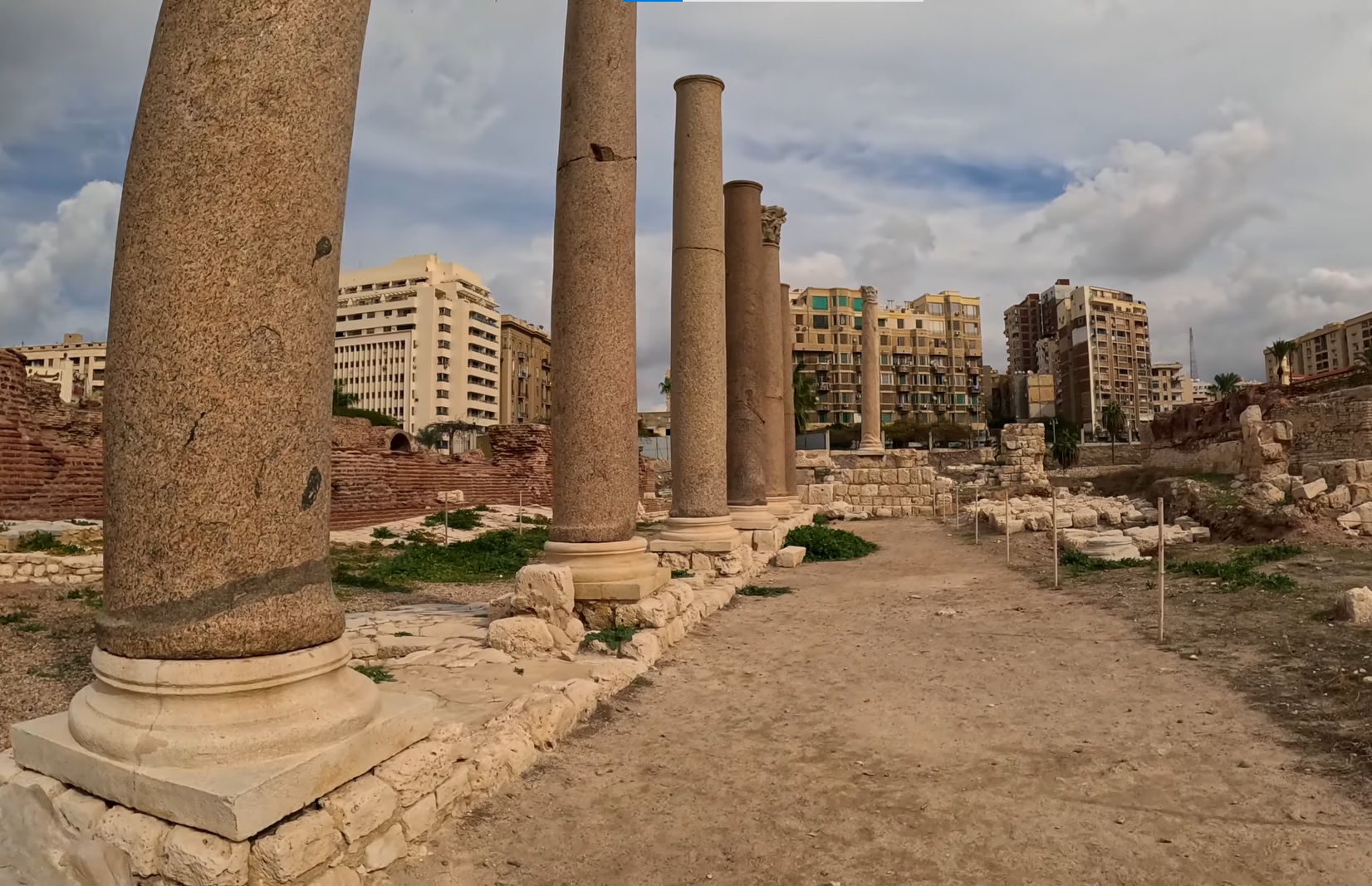
What Is the Roman Theatre of Kom El Dikka?
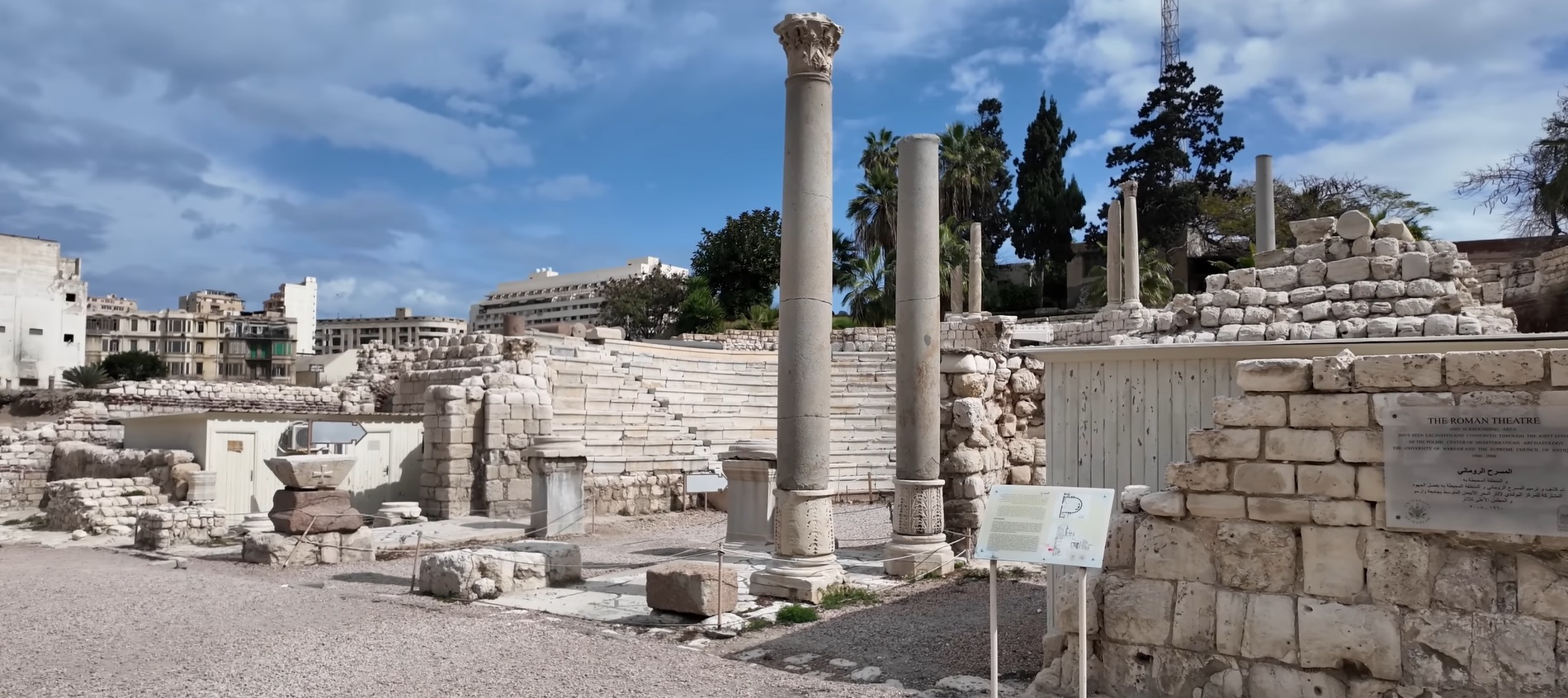
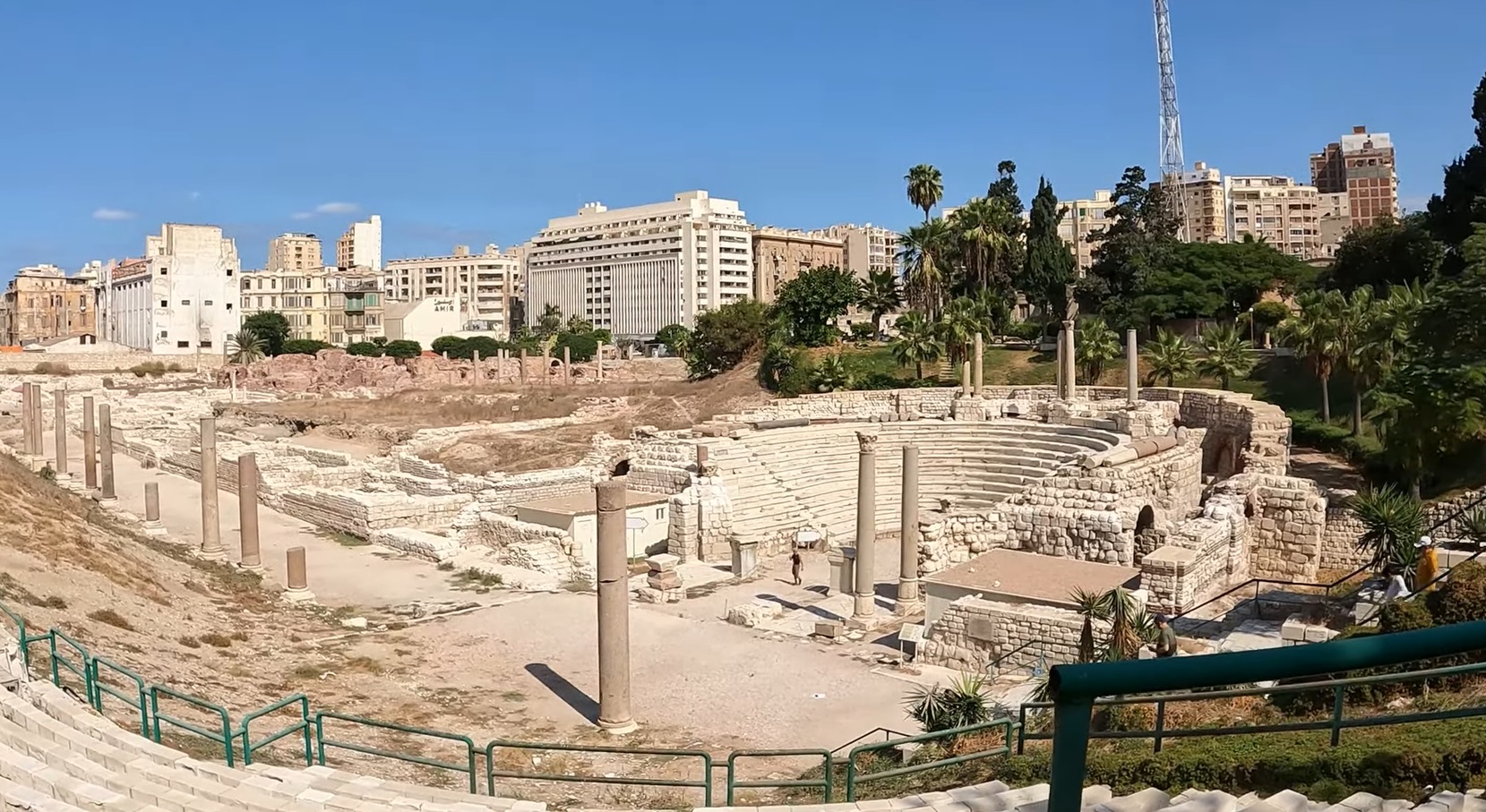
The Roman Theatre of Kom El Dikka is the only surviving Roman theatre in Egypt, sitting in the center of Alexandria a short walk from the main train station. Nobody agrees on exactly when it went up — estimates range from the 2nd century AD to the early 4th, and both dates show up in serious sources. It started out as a semicircular auditorium about 42 meters across, then got rebuilt smaller after damage at some point in its history.
Thirteen curved rows of seating survive today, cut from white and gray marble except for the front row, which is red granite instead. Get close to the steps and you can still spot Roman numerals carved into the stone, likely seat markers. It's a small theatre by Roman standards — built to seat a few hundred people, not the tens of thousands that packed amphitheaters elsewhere in the empire.
What Does "Kom El Dikka" Mean?
"Kom El Dikka" translates roughly to "Mound of Rubble" in Arabic, and it's not a poetic exaggeration. The neighborhood really does sit on an artificial hill, one that climbs several meters above sea level, built up over centuries from the debris of demolished buildings piled on top of each other.
The name existed long before anyone knew what was underneath it. Locals were calling it the rubble mound for generations before archaeologists found a Roman theatre buried in it.
How It Was Discovered (and a Common Misconception)
One travel site claims the theatre turned up while a Polish mission was hunting for Alexander the Great's tomb in 1960. That version doesn't hold up. Every other source, including Egypt's own Ministry of Tourism and Antiquities, describes something far less dramatic: workers clearing land for the foundations of a government building hit something solid underground, and it turned out to be a Roman theatre.
The excavation was led by Polish archaeologist Kazimierz Michałowski, sponsored by the University of Warsaw and carried out with Alexandria's Greco-Roman Museum. Fully uncovering the site took roughly three decades. Researchers are still working through parts of it now.
Life and Decline of the Theatre
The theatre likely served as a performance and gathering space through most of the Roman period, until an earthquake hit the region in 535 AD and damaged the structure. The Byzantines didn't tear it down afterward. What was left got repurposed into some kind of meeting hall, possibly for local officials handling civic business rather than an audience watching a show.
A cluster of lecture halls went up nearby later, each one a modest rectangular room fitted with built-in stone seating for students. Historians think the whole complex functioned as a school or center of higher learning by the 6th century, with the old theatre folded into a working academic quarter of the city.
What Else Is on Site
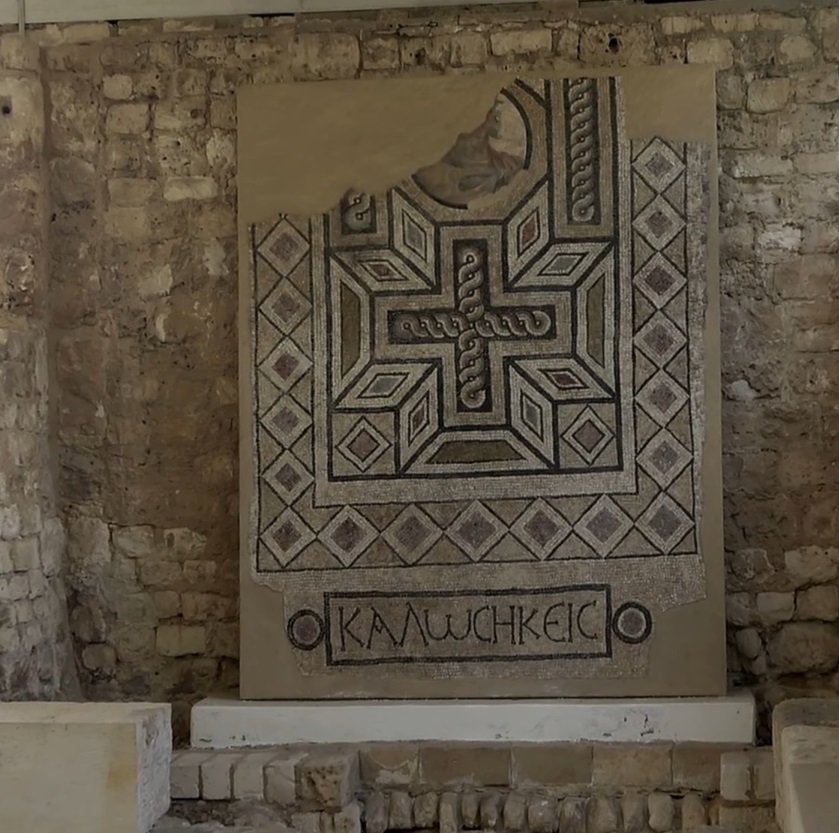
Beyond the theatre, the Villa of the Birds is one of the site's real highlights: a Roman house with floor mosaics showing birds and geometric patterns, dating to around the time of Emperor Hadrian in the early 2nd century AD. It's one of the few places in Egypt where mosaics this intact are still sitting in their original setting instead of behind museum glass.
The site also holds the remains of a large Roman bath complex, including a hypocaust system — an underfloor setup that circulated hot air beneath the floor to heat the rooms above. You can see the actual mechanics of it on-site, not just a diagram explaining how it worked.
Visiting Practicalities
The site is open daily from 9:00 AM to 4:00 PM, with last entry at 4:00 PM. According to Egypt's Ministry of Tourism and Antiquities, foreign adults pay 200 EGP to get in, and foreign students pay 100 EGP. Egyptian and Arab visitors pay considerably less — 20 EGP for adults, 10 EGP for students. Entry is free for children under 6, Egyptian seniors over 60, and Egyptians with disabilities. Phone photography on-site doesn't cost anything extra either.
Give it 30 to 45 minutes to see the theatre, villa, and baths without rushing. Parts of the ground are uneven ancient stonework, so flat, sturdy shoes make a real difference here.
What's Nearby
Kom El Dikka sits right in central Alexandria, close enough to the main train station that most downtown hotels are within walking distance. Abu Al-Abbas Al-Mursi Mosque, one of the city's most important mosques, is a short trip away, and both Pompey's Pillar and the Catacombs of Kom El Shoqafa are reachable in a similarly short drive.
Because it's downtown rather than out along the Corniche, this is one of the easier Alexandria sites to fold into a regular afternoon of walking around the city center, no special trip required.
Is It Worth Visiting?
If you've only got time for one Roman-era site in Alexandria, this is a strong pick. It's the only Roman theatre in the entire country, and most visitors have no idea that fact until they're standing in front of it. The mosaics at the Villa of the Birds are worth the stop on their own if you care about Roman art at all.
It's a modest site, though. Anyone expecting something on the scale of the Colosseum will be let down — this seats a few hundred people, not fifty thousand. What it offers instead is rarity: a real piece of Roman civic life sitting in the middle of a modern Egyptian city, which isn't something you can say about many other places here.
Most people pair Kom El Dikka with other central Alexandria sites rather than visiting it alone. Aten Tours' Alexandria day tours can include a stop here alongside other downtown and Corniche sites, with a guide who can walk you through the theatre's discovery story and its second life as a Byzantine meeting hall.