Taposiris Magna: The Temple Site Where Archaeologists Hunt for Cleopatra
What Is Taposiris Magna?
Taposiris Magna sits 45 kilometers west of Alexandria, near the small town of Abusir. It's a massive temple enclosure from the Ptolemaic era, over two thousand years old. What's on site: a great temple of Osiris, city walls, a Roman-era lighthouse, underground galleries, cemeteries. And since 2005, it's been the location of the excavation that put it in the world news, the search for the lost tomb of Cleopatra VII.
Most tourists who visit Alexandria never make it out here. The tower alone is worth the drive. And if the Cleopatra theory turns out to be right, this becomes the most important burial discovery in the history of archaeology.
The Temple of Osiris: What the Site Was
Taposiris Magna means "the great tomb of Osiris," and the temple at its center was dedicated to that god. It was founded in the Ptolemaic period, likely under Ptolemy II in the 3rd century BC. A city grew around the complex, a trading town with its own harbor on the Mediterranean. The position helped. It sat on the route between Alexandria and the western Delta, close to Lake Mariout, and the famous Alexandria wine trade came through here.
The site stayed active through the Roman period and into late antiquity. A lighthouse was built here in Roman times, a smaller version of the great Pharos in Alexandria, and parts of the city kept functioning for centuries. Then the site declined and the sand came over it, until modern archaeologists arrived.
The Cleopatra Theory: Why the World Started Watching
In 2005, the Dominican archaeologist Kathleen Martinez proposed an idea that most of the field considered a long shot. Cleopatra VII and Mark Antony, defeated by Octavian in 30 BC, were not buried in the mausoleum in Alexandria where ancient sources say they were laid to rest. Martinez argued they were hidden at Taposiris Magna instead, inside the temple of Osiris, protected from Roman revenge.
Her reasoning was religious. Cleopatra identified herself with the goddess Isis, wife of Osiris. A burial inside the temple of Osiris, in a location the Romans never excavated, matched the queen's beliefs and the political reality after her defeat.
The Egyptian authorities gave her an excavation license, and she's been digging at Taposiris ever since. The site turns up in the world's archaeology news every season, and each discovery makes headlines.
What's Been Found So Far
The dig has turned up a lot, and none of it is Cleopatra. Yet. But the finds are remarkable on their own.
Mummies, hundreds of them, in the cemeteries around the temple, suggesting important people wanted to be buried close to the god. Coins bearing the face of Cleopatra herself. A bust believed to represent the queen. Foundation deposits, pottery, jewelry. And in 2020, the discovery that made global news: a long tunnel carved through the rock, running about 1,300 meters underground from the temple toward the Mediterranean, compared in the press to the Tunnel of Eupalinos in Greece.
The tunnel's purpose is still debated. It could be a water channel. It could lead somewhere. The excavation continues, and every season brings new finds.
What You'll Actually See Today
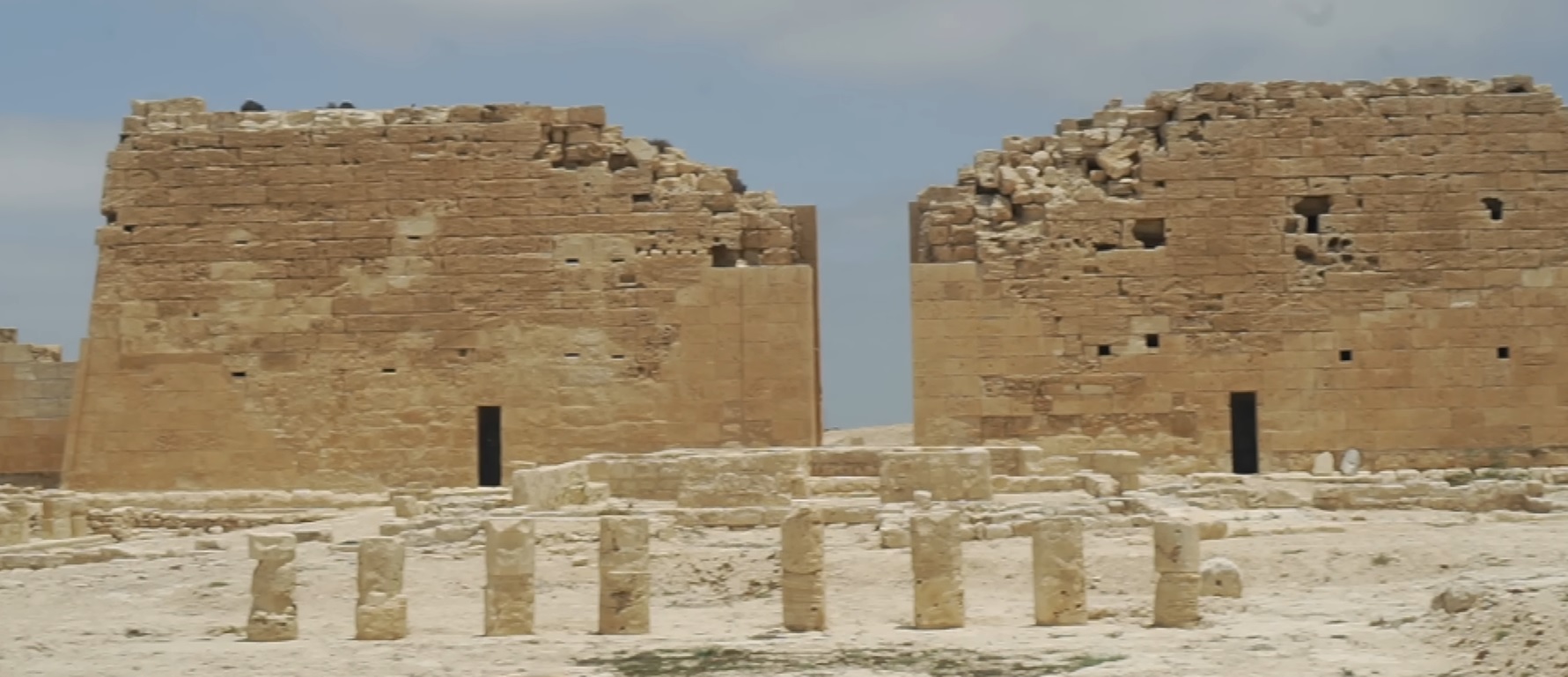
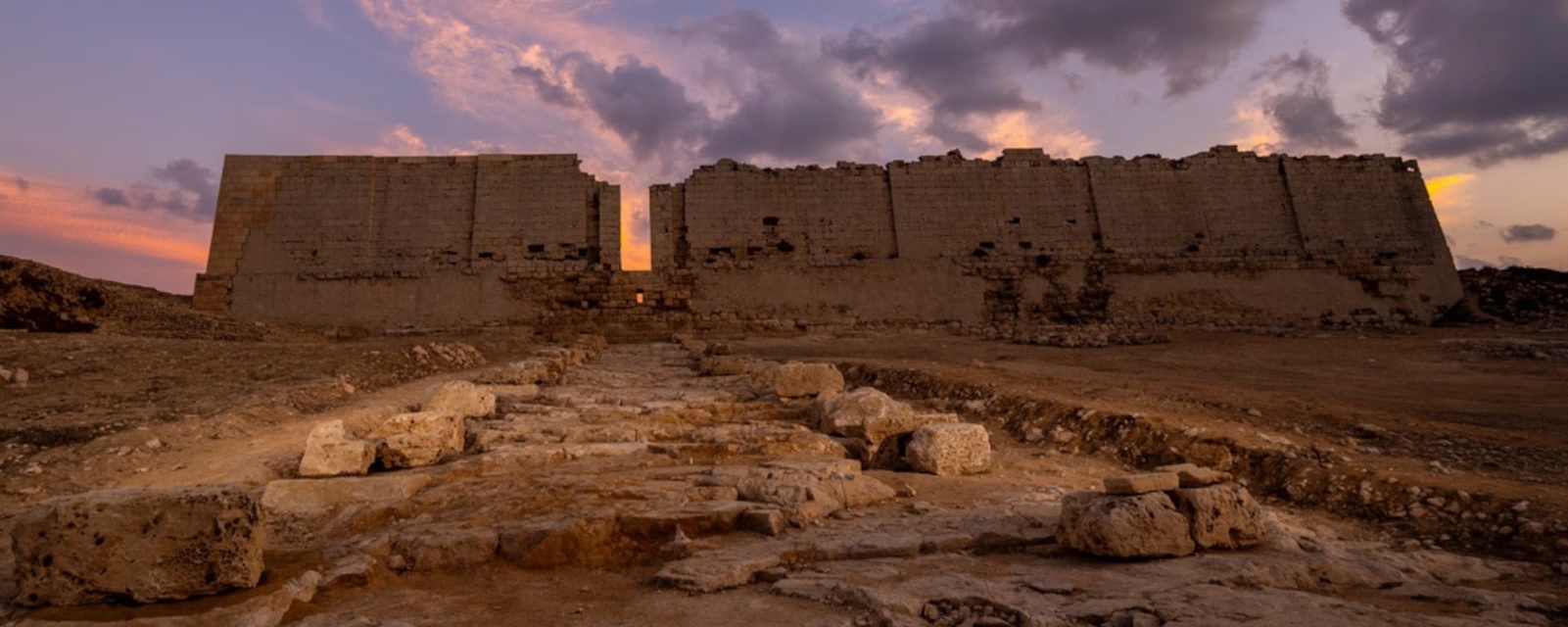
The site is large and largely open air. The temple enclosure walls still rise in places, and the foundations of the great Osiris temple are laid out across the center. The most striking structure is the giant stone tower at the edge of the complex, part of the Roman lighthouse complex, standing several stories high with a staircase inside you can climb for views over the whole site and the Mediterranean beyond.
Underground galleries cut into the rock hold burial chambers, some decorated, and the excavation trenches are visible in working order, with sections still actively being dug depending on the season. The famous tunnel can't be entered by visitors, but parts of it have been displayed through the excavation reports and site displays.
The site is quiet. You'll share it with the odd guard, a few archaeologists if the dig is in season, and almost no tourists. That's part of its appeal.
Visiting Practicalities
Taposiris Magna sits near the town of Abusir, about 45 kilometers west of Alexandria along the coast road, roughly an hour by car.
Hours and Entry: The site opens during daytime hours, generally mornings through afternoon, with a small entry fee. As always in Egypt, hours can shift, so a quick check locally is wise.
How Long: An hour to ninety minutes covers the tower, the temple foundations, and the galleries comfortably.
Getting There: There's no public transport worth relying on, so it's a taxi, a hired car, or a tour. The coastal road from Alexandria is straightforward.
Best Combined With: The El Alamein direction, further along the same road, if you're making a day of the western coast.
What's Nearby?
The Mediterranean coast: The site sits close to the sea, with beaches along the road in both directions.
El Alamein: Further west, the World War II battlefield, cemeteries, and museum, about an hour more down the same road.
Back to Alexandria: The city and all its sites, an hour back the way you came.
Is It Worth Visiting?
For travelers with any interest in archaeology, ancient Egypt beyond the pharaohs of Luxor, or the Cleopatra story, yes, without hesitation. It's a real, active, working excavation, which is a rare thing to stand inside, and the possible connection to history's most famous queen gives every corner a story.
For pure sightseers with a single day in Alexandria and no interest in archaeology, it's a stretch, an hour out and an hour back for ruins without the polish of the city sites.
The practical note: the site is far from downtown, needs a car or tour, and pairs naturally with the western coast direction. Aten Tours' Alexandria day tours can build Taposiris into a full day, the temple, the tower, the Cleopatra theory told properly, possibly combined with the coast or El Alamein, so the story of the search for the queen's tomb gets told where it's actually happening.