Baron Empain Palace: Inside Cairo's Haunted Hindu-Style Palace in Heliopolis
What Is Baron Empain Palace?
Baron Empain Palace is a private mansion turned public museum in Heliopolis, a district northeast of central Cairo. It was built between 1907 and 1911 for Édouard (Baron) Empain, a Belgian industrialist who developed Heliopolis itself as a new residential suburb at the turn of the 20th century. The palace was his own home.
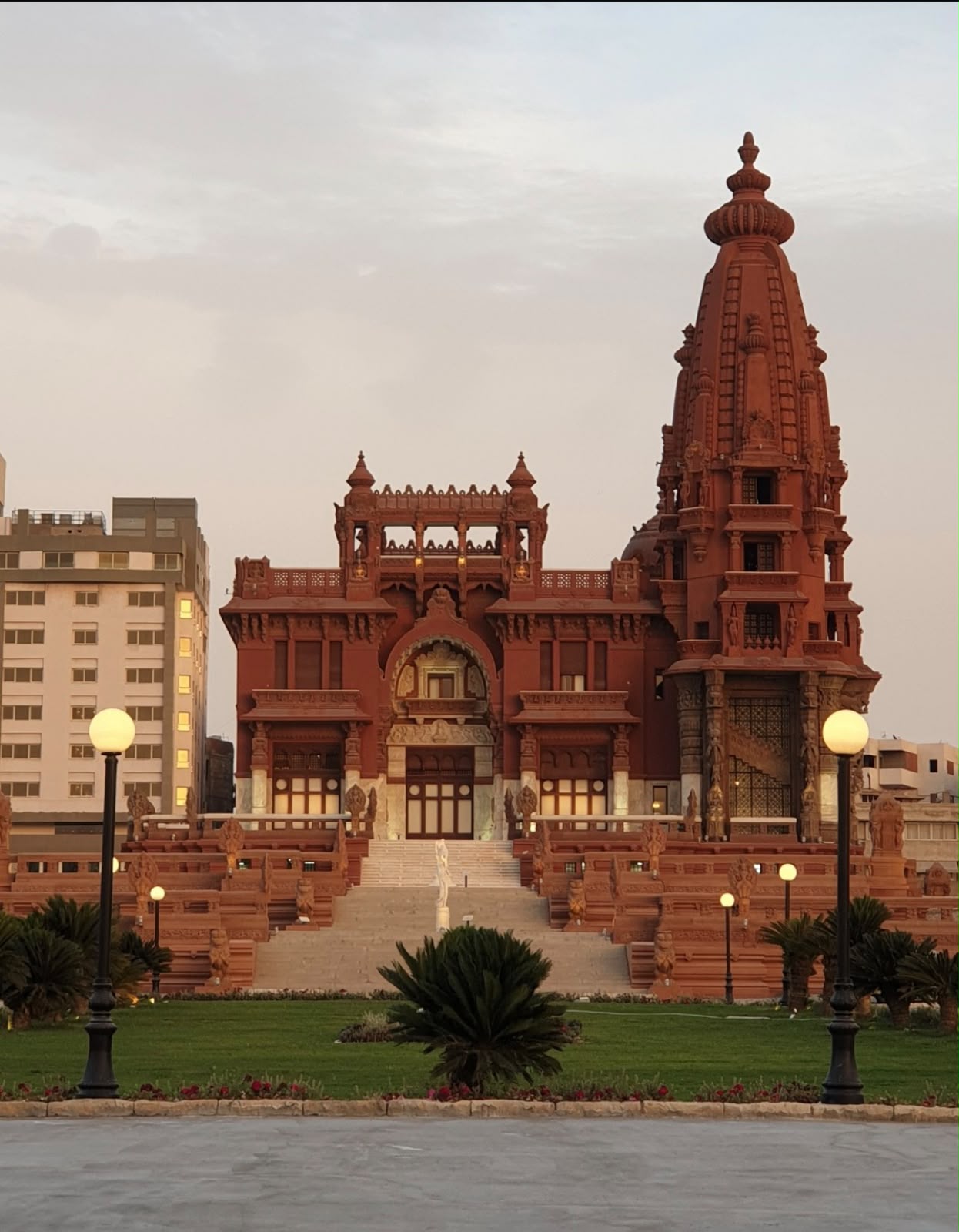
Cairo has bigger palaces. What it doesn't have much of is this style: instead of the European or Ottoman influences you'd expect from a wealthy foreigner building in Egypt at the time, Empain built something closer to a Hindu temple, with a tower that once rotated so he could see the surrounding city from his seat without moving. The palace has three levels—a basement, ground floor, and first floor—surrounded by gardens. Most people who visit are there specifically for the architecture, not the history around it.
Who Was Baron Empain, and Why Did He Build It Here?
Édouard Empain arrived in Egypt in 1904, already wealthy from railway and tram projects across Europe. Heliopolis was his commercial project — a planned suburb northeast of Cairo meant to draw residents with wide streets, modern infrastructure, and a climate marketed as healthier than the city center. He got the title "Baron" from the King of Belgium for his business record, not for anything Egyptian.
The palace grew out of that project. Empain had traveled through India and Cambodia before settling in Egypt, and the temples he saw there—Angkor Wat especially—stayed with him enough that he hired the French architect Alexandre Marcel to build something similar as his own house, in the middle of the suburb he was developing. Whether he intended the palace to draw attention to Heliopolis or simply built the home he wanted isn't something the historical record settles either way.
The Architecture: A Hindu Temple in the Egyptian Desert
The palace was built using reinforced concrete, an unusual choice for 1907, when most buildings of this scale in Egypt still relied on stone and traditional masonry. The material let Marcel and his team shape the elaborate curves and carved details the design called for—something harder to pull off with brick or cut stone. Interior decoration was handled by Georges-Louis Claude, working alongside Marcel to bring the Hindu-temple concept into the finished rooms.
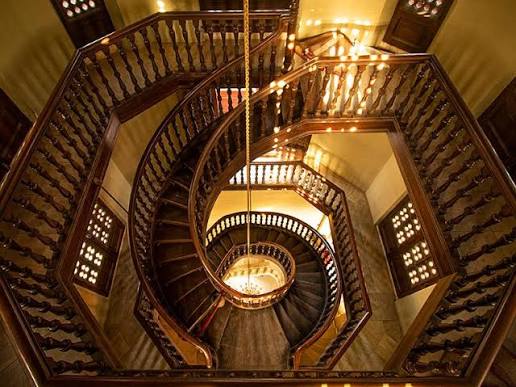
The building has a basement, ground floor, and first floor. The ground floor originally held the reception rooms, a dining room, and a billiards room; the upper floor had bedrooms with attached balconies. The most distinctive feature is the spiral staircase connecting all the levels, carved and ornate enough that most tour guides linger there. At the top sits the tower, built on a base that once rotated so the room could face different views of the surrounding city—it no longer turns, but the shape alone is what gives the palace its skyline silhouette.
The Ghost Stories Behind Cairo's "Haunted Palace"
Baron Empain Palace has a reputation as one of Cairo's most haunted buildings, and the stories predate its restoration by decades. The most common version involves a woman in the Empain family—accounts differ on whether it was Baron Empain's sister, wife, or daughter—who reportedly died after falling from the palace's tower or staircase. Some versions call it an accident. Others call it something darker. No source agrees on the details, and none of it is documented history—it's local folklore that's been retold and altered for over a century.
The reputation grew heaviest during the decades the palace sat empty, after the Empain family left Egypt and the building was abandoned following the 1952 revolution. With no owner and no real security, it became the kind of place people break into at night, and Cairo residents reported flickering lights, strange noises, and — by the 1990s — rumors of occult gatherings inside. None of that has anything to do with the Baron himself; it's the natural result of a beautiful, empty building sitting untouched for half a century. Whether you find the stories eerie or just entertaining, they're part of why the palace stayed in public memory even while it was falling apart.
What to Expect When You Visit Today
The palace reopened to the public in 2020 after a restoration carried out with the Armed Forces Engineering Authority and the Arab Contractors Company. It now operates as a museum focused on the history of Heliopolis and the Empain family, rather than as a recreation of how the palace looked when it was lived in. Rooms that were once private living spaces now hold photographs, documents, and exhibits tracing how the neighborhood grew from Empain's original plans.
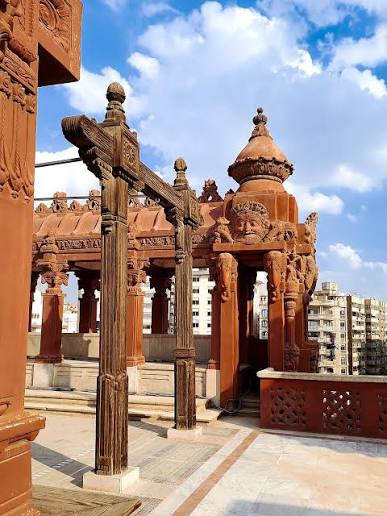
It's open daily, generally from morning until mid-afternoon, so it's worth checking the current hours before you go since museum schedules in Cairo shift more often than you'd expect. Visit length varies depending on how much time you spend on the exhibits versus just the architecture, but plan for somewhere between one and two hours. The rooftop, when accessible, is usually the highlight: it's the closest thing to seeing the palace the way Empain designed it to be seen, looking out over Heliopolis instead of up at it.
Getting to Baron Empain Palace from Central Cairo
The palace sits on Al-Orouba Street in Heliopolis, close to the Salah Salem Highway, which makes it reachable by taxi or rideshare from most parts of central Cairo—exact travel time depends heavily on Cairo traffic, so it's worth checking a map app before you leave rather than assuming a fixed duration. There's also a metro station within walking distance, which works well if you're avoiding traffic during peak hours.
Because Heliopolis itself has plenty to look at — older Empain-era buildings, tree-lined streets, and a noticeably different feel from downtown Cairo — it's worth treating the palace as the anchor of a slower morning or afternoon rather than a quick stop. Nearby cafés and restaurants make it easy to turn the visit into a half-day out rather than a rushed detour.