Cairo Tower: What to Know Before You Visit Egypt's Iconic Skyline Landmark
What Is Cairo Tower and Why It's Worth Visiting
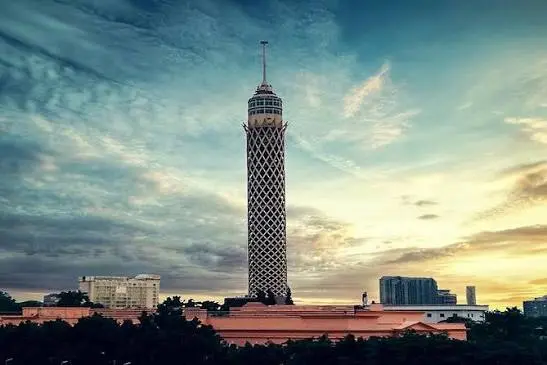
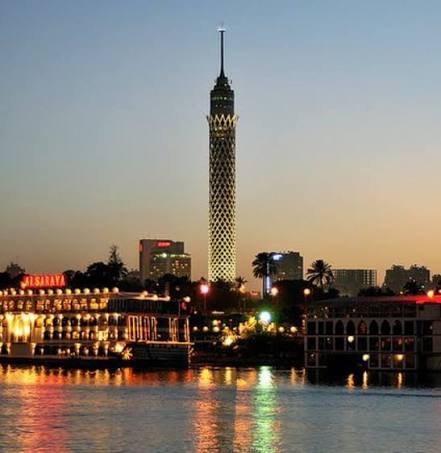
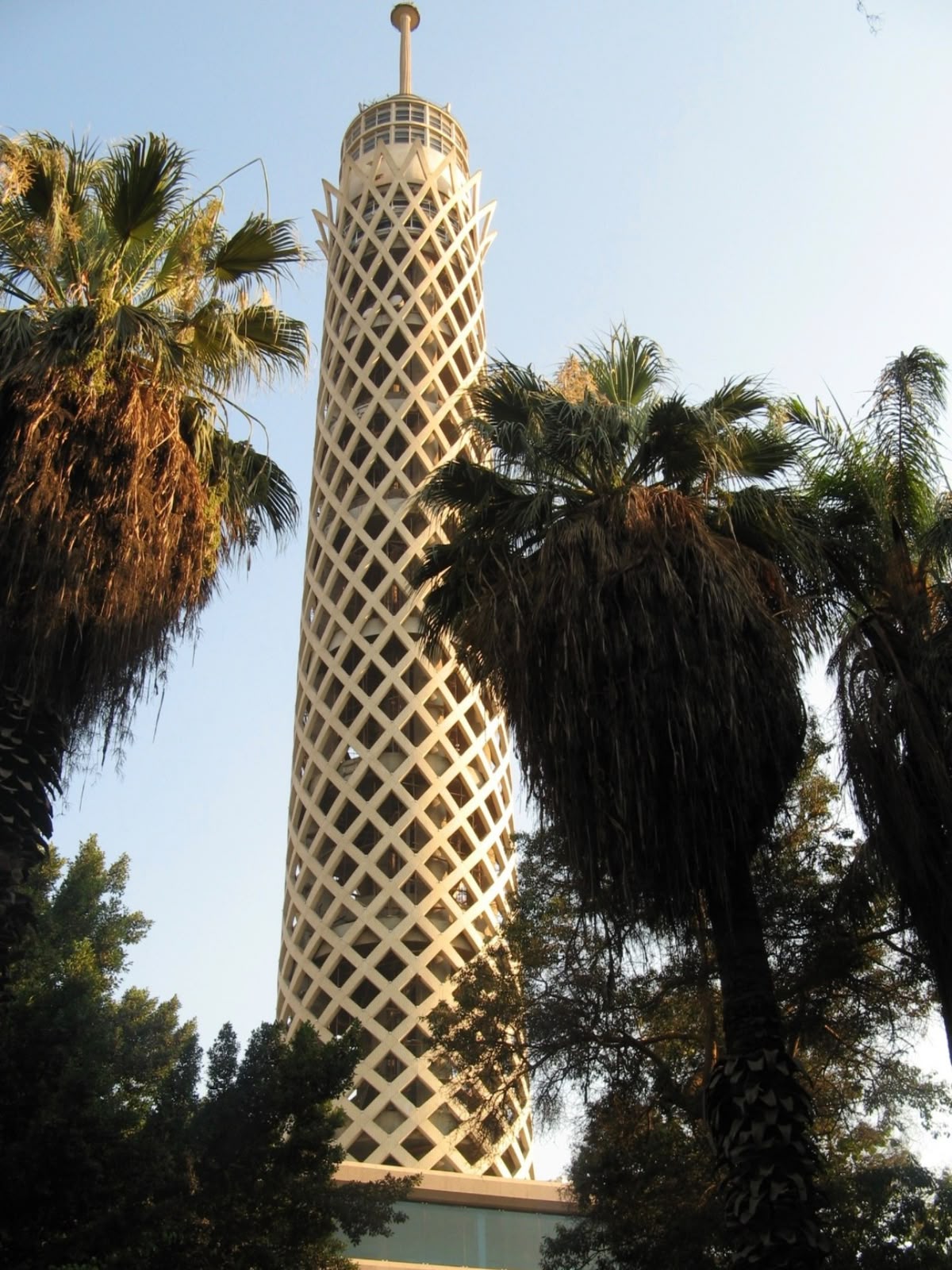
The Cairo Tower is a 187-meter reinforced concrete and steel lattice tower standing on Gezira Island in the Zamalek district, in the middle of the Nile River in central Cairo. Completed in 1961, it was built during President Gamal Abdel Nasser's era as a national landmark and communications tower, and its lattice shell is shaped to evoke a lotus flower—one of ancient Egypt's most recognizable symbols, deliberately tying a modern structure to a much older visual language.
Most visitors come for one reason: the view. Cairo is a flat, dense city with few tall structures, which means Cairo Tower's observation deck offers something genuinely rare here — a 360-degree vantage point over the entire metropolitan area at once, rather than a single skyline angle. From the top you can trace the Nile's path through the city, pick out the bridges connecting its banks, and on a clear day, see as far as the Giza Plateau to the west.
It's worth being upfront about the trade-off: this is a modern landmark, not an ancient one. If you're expecting the gravity of a pharaonic monument, Cairo Tower won't deliver that—its value is orientation and perspective, not archaeology. For travelers trying to understand how Cairo's neighborhoods, the Nile, and its ancient and Islamic-era landmarks fit together spatially, though, few stops in the city do that job as efficiently.
History and Design: A Modern Egyptian Landmark
The Cairo Tower was designed by Egyptian architect Naoum Shebib, who also worked as the project's structural engineer and main contractor—a rare combination that let him push reinforced concrete construction further than most buildings of the era attempted. Construction began in 1954, was suspended for nearly three years during the Suez Crisis, and resumed before the tower's official inauguration in April 1961. Shebib built the tower's shell around a diamond-pattern concrete lattice designed to echo the unfolding petals of a lotus flower, a symbol of rebirth in ancient Egyptian mythology—a deliberate link between a modern communications tower and Egypt's much older visual heritage. The project was closely tied to Nasser-era Egypt, conceived as a symbol of the country's modern ambitions during a politically charged period.
Structurally, the tower rests on a reinforced concrete slab anchored to bedrock roughly 25 meters below ground, with a central concrete core supported by peripheral columns—engineering choices that let the tower's exterior appear light and almost transparent despite its scale and that made it one of the more technically ambitious construction projects in Egypt at the time.
What to Expect at the Top: Observation Deck and Revolving Restaurant
The tower's open-air observation deck sits roughly 143 meters above ground, reached by a high-speed elevator that takes about 45 seconds. The platform wraps fully around the tower, giving an unobstructed 360-degree view rather than a single fixed angle—walk the full loop and you'll pass over the Nile, downtown Cairo, and the western horizon in one continuous circuit. The deck is open-air, so wind is noticeable, especially in the evening; a light layer is worth having even on a warm day.
Above the observation deck, Cairo Tower's revolving restaurant completes a full rotation in around 70 minutes, letting diners watch the entire city pass by over the course of a meal without needing to move from the table. It's an enclosed, unhurried alternative to the open deck below, better suited to travelers who want to linger over the view rather than snap a few photos and head back down. The restaurant serves a mix of Egyptian and international dishes, and reservations are worth making ahead around sunset and on weekends, when demand is highest.
Between the two, the observation deck is the faster, more affordable way to see the city, while the revolving restaurant suits anyone building a full evening around the visit.
Best Time to Visit (Sunset, Night, Early Morning — Trade-offs)
Cairo Tower's opening hours shift seasonally: roughly 9 AM to 1 AM in spring and summer and 8 AM to midnight in autumn and winter, with the last ticket sold about an hour before closing. Within that window, three times of day each offer a distinct experience, and the right one depends on what you're prioritizing.
Early morning is the practical choice for clarity and quiet. Cairo's haze tends to build through the day, so skies are usually clearest before mid-morning, and crowds are thinnest—this is your best shot at spotting the Pyramids of Giza on the western horizon. Sunset is the busiest and most popular slot, and for good reason: the city shifts from daylight haze to a lit skyline over roughly half an hour, which is dramatic but draws the largest crowds of the day. Night visits trade the skyline transition for a calmer, more spacious platform and a fully lit city below—a good option if you'd rather avoid the sunset crowd but still want the illuminated view.
One honest trade-off worth flagging: sunset is the most photographed and most recommended time online, but it's also when queues run longest, since it's the single most popular window in the day. If your schedule allows it, arriving an hour before sunset lets you catch the daylight view first, then stay through the transition without joining the peak-time line.
How to Get There (Location, Metro, Traffic Realities)
The Cairo Tower sits on Gezira Island in Zamalek, in the middle of the Nile and close to downtown Cairo—a location that puts it within easy reach of most central Cairo neighborhoods without requiring a long trip out of the city.
The closest metro stop is Opera station on Line 2, followed by a walk of roughly 10–15 minutes to the tower. For a city where road traffic can be unpredictable, the metro is often the more reliable option for keeping to a schedule, particularly if you're timing your visit around sunset and don't want traffic to cost you the light. Taxis and ride-hailing apps are the more common way most visitors arrive, dropping you close to the entrance without the walk, though travel time varies significantly with Cairo's traffic patterns—a short trip on paper can take considerably longer at peak hours. Parking is available near the tower but gets tight on weekends and public holidays, so drivers should plan for extra time.
Build in more buffer than a map estimate suggests, especially for a sunset visit—arriving later than planned means arriving during the tower's busiest, slowest-moving window.
What You Can See From the Tower (Pyramids, Nile, Islamic Cairo)
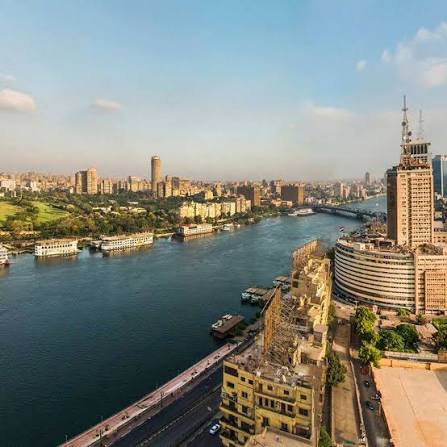
From the observation deck, the Nile River is the clearest orientation point — you can trace its path through the city and pick out the bridges connecting Zamalek to both riverbanks. Looking west and south, Islamic Cairo comes into view: the dense, historic district home to the city's medieval mosques and the Citadel of Saladin, the hilltop fortress built in the 12th century that has anchored Cairo's skyline for centuries. To the east, downtown Cairo's grid of streets and landmark buildings spreads out below, including the area around Tahrir Square.
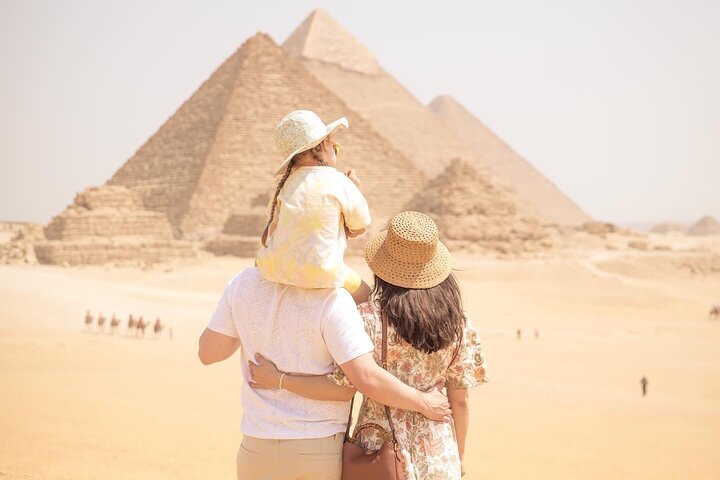
The view most visitors come for, though, is west toward the Giza Plateau, where the Pyramids are visible on clear days—typically early morning or after rain, when Cairo's haze has lifted. This isn't guaranteed on every visit; midday haze and dust are common enough that the Pyramids may be faint or invisible, particularly in summer. Anyone planning a visit specifically to see them from the tower should treat that as a possibility, not a promise.
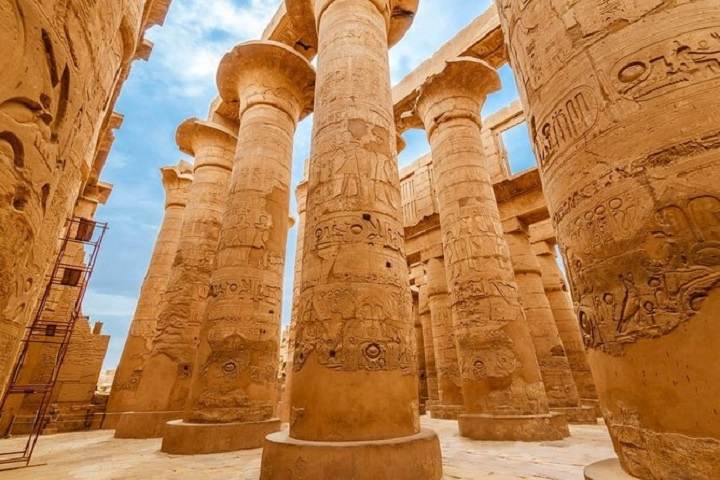
Together, these sightlines are what make the tower useful beyond photography: in a single rotation of the deck, you can see how Cairo's ancient, Islamic-era, and modern layers sit next to each other geographically—a spatial context that's hard to get anywhere else in the city.
Practical Tips (Crowds, Haze, Accessibility, What to Bring)
Security checks are standard at the entrance, and bags may be inspected before you're allowed in—build a few extra minutes into your arrival time for this, especially during busier periods. Elevators and ramps make the tower accessible to visitors using wheelchairs or with limited mobility, covering both the entrance and the observation deck.
For crowds, weekday visits are consistently calmer than weekends and public holidays, when both the elevator queue and the observation deck itself fill up faster. Seasonally, October through April brings milder temperatures and clearer skies overall, which also improves your odds of a good Pyramids view on the day.
A few items make the visit smoother: a light jacket or sweater for the breeze at height, especially after dark; a camera or phone with a wide-angle option for the panoramic views; and comfortable shoes if you're planning to walk the full loop of the deck rather than stay in one spot. Cairo's haze — a mix of smog and desert dust — can vary day to day regardless of season, so checking that morning's conditions is a better guide than planning weeks in advance around a "guaranteed clear day."
Nearby Attractions Worth Pairing With Your Visit
Cairo Tower's central location on Gezira Island makes it easy to combine with other stops in the same trip. The Egyptian Museum, home to one of the world's largest collections of ancient Egyptian artifacts, sits a short drive away in downtown Cairo, on the edge of Tahrir Square—a natural pairing if you're spending a day moving between ancient and modern Cairo. Khan el-Khalili, the city's historic bazaar, is further east in Islamic Cairo but works well as a second stop later in the day, particularly after an early tower visit.
Closer still, Zamalek itself — the leafy island district surrounding the tower — rewards a walk before or after your visit. It's known for a quieter pace than downtown, with cafes, art galleries, and tree-lined streets that make for an easy stroll once you're back at ground level. A felucca ride along the Nile is another common pairing, especially around sunset, letting you see the tower itself from the water rather than only looking out from the top of it.
None of these require a rigid itinerary—the tower's location makes it flexible enough to slot in at the start, middle, or end of a day exploring central Cairo.