Mahmoud Khalil Museum, Cairo: The Villa, the Collection, and the Van Gogh That Vanished Twice
Where Is the Mahmoud Khalil Museum, and Why Is It Different From Cairo's Other Museums
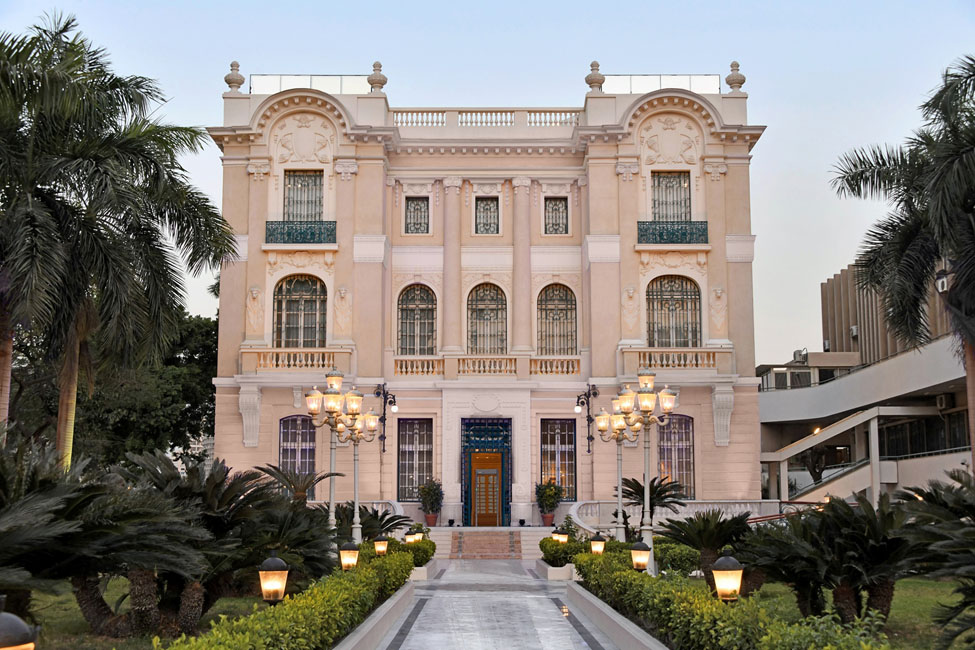
The Mahmoud Khalil Museum—officially the Mohamed Mahmoud Khalil Museum—sits at 1 Kafour Street in Dokki, Giza, a residential district on the Nile's west bank, about 15 minutes by car from downtown Cairo and roughly 30–40 minutes from the Giza Pyramids depending on traffic. Unlike the Egyptian Museum or the Grand Egyptian Museum, which are built around pharaonic antiquities, this one is a European art museum housed in a former private home: the same rooms, staircases, and garden views the Khalil family actually lived with, not a purpose-built exhibition hall.
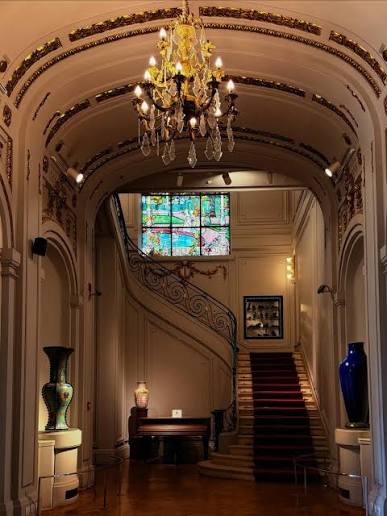
That matters for anyone planning a Cairo itinerary. Most first-time visitors spend their museum time on ancient Egypt and never realize Cairo also holds a serious Impressionist collection, one that used to travel to the Musée d'Orsay in Paris for exhibitions. The building itself is part of the appeal: a Beaux-Arts villa with gilded salons and period furnishings, overlooking the river, built when Dokki was still the edge of the city rather than the middle of it.
It's also easy to miss. The museum doesn't sit near the usual tourist cluster around Tahrir Square or the Pyramids, and there's no major signage pulling foot traffic off the street—part of why it stays quiet even on weekends.
The Man Behind the Collection — Mohamed Mahmoud Khalil and How a Private Home Became a Museum
Mohamed Mahmoud Khalil Pasha (1877–1953) was an Egyptian politician who served as prime minister twice, in 1928–1929 and again in 1937–1939, and also held posts as minister of agriculture and president of the Senate. Politics paid for the collection, but it was his time in Paris that shaped it. He married a Frenchwoman—most sources give her name as Emiline Lock—and the two spent years buying Impressionist paintings together, mostly before 1928, back when a fair number of these artists were still recent history rather than museum staples.
By the time Khalil died in 1953, the couple had assembled roughly 300 paintings and around 50 sculptures, most of it French Impressionist and Romantic work, alongside a smaller group of Egyptian pieces. Emiline outlived him by seven years, and when she died in 1960, she left the villa and everything in it to the Egyptian state — on the condition that it become a public museum bearing both their names. It opened on 23 July 1962.
That origin is worth knowing before you walk in, because it explains why the museum feels the way it does. This isn't a collection assembled by a state institution with a mandate to represent every era or every school. It's one couple's taste, built painting by painting over roughly three decades, which is why the same names—Monet, Renoir, Gauguin—turn up again and again instead of the more even spread you'd get at a national gallery.
What's Inside — The Collection
The Khalil collection runs to roughly 300 paintings and 50 sculptures, and the bulk of it is French: Impressionist and Post-Impressionist work bought mostly before 1928, when Khalil was a regular in the Paris art market. The names that recur most are Claude Monet, Auguste Renoir, and Paul Gauguin, with sculpture from Auguste Rodin, Jean-Baptiste Carpeaux, and Louis-Antoine Barye. There's also a Toulouse-Lautrec, "Singing Lesson" (1898), that tends to draw people in on its own.
The single most valuable piece is a Van Gogh—a small 1887 still life, roughly 30 by 30 centimeters, known as either "Poppy Flowers" or "Vase with Flowers." It's not the museum's biggest painting or its most typical, but it's the one with a story attached (more on that below), and it's the piece most people ask about at the front desk.
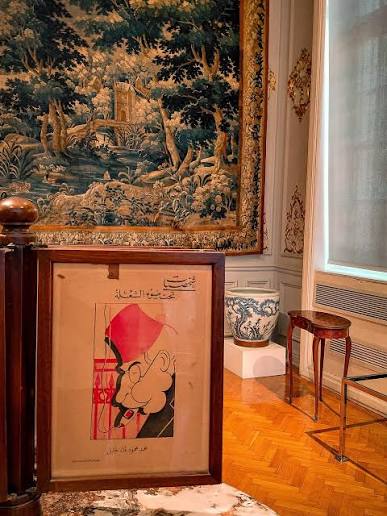
The museum also holds a smaller collection of decorative art from outside the French core: French, Chinese, and Japanese porcelain vases; and a set of small Japanese-style boxes worked in precious stones and crystal—pieces kept from Khalil and his wife's personal decor rather than acquired specifically for a museum collection.
None of this is arranged like a modern museum with wall text explaining each movement. It's closer to walking through a home where someone happened to own extraordinary paintings—which, room to room, is basically the point.
Why the Museum Closed for a Decade: The Van Gogh That Was Stolen Twice
A Van Gogh has been stolen from this museum twice. The first time was in 1977 or 1978, depending on the source; it turned up two years later in Kuwait, under circumstances nobody has fully explained, and there were quiet rumors at the time that the museum got back a copy rather than the original.
The second theft happened in broad daylight on 21 August 2010. A thief cut the small canvas — worth an estimated $50 million — straight out of its frame with a box cutter and walked out. Egypt's chief prosecutor later said the investigation found none of the museum's alarms working and only seven of its 43 security cameras functioning at the time. The painting has never been recovered.
The museum closed after the theft and stayed closed for renovation work, including new security systems, from around 2014 until it reopened to the public on 4 April 2021 — free of charge for visitors during the reopening month. It's open again now, but Van Gogh's spot on the wall is empty, and it's likely to stay that way.
It's a genuinely strange thing to know before you visit: you're walking through a museum that lost, and never got back, one of its most valuable paintings—twice.
Visiting the Museum — Tickets, Hours, and Getting There
Ticket prices and opening hours for the Mahmoud Khalil Museum vary depending on the source, and none of the listings agree closely enough to state a firm number here—treat any published price as a starting point and confirm at the ticket window or on the museum's own channels before you go. What's consistent across sources: there are separate rates for Egyptians and foreign visitors, with a further discount for students, and the museum has historically operated six days a week with one closure day, generally in the 10am–5pm range.
The museum sits in Dokki, Giza, on the Nile's west bank. From downtown Cairo or Zamalek, a taxi or ride-share (Uber and Careem both work reliably here) takes roughly 15–20 minutes outside rush hour. From the Pyramids or central Giza, plan for 30–40 minutes depending on traffic, which in Cairo is rarely predictable. There's no metro station within easy walking distance, so a car is the practical option for most visitors.
Experiences with staff and signage vary. Some visitors describe printed maps and accurate English translations; others have reported staff with limited English and at least one unannounced closure on a day the museum was supposed to be open. It's worth calling ahead or checking recent reviews the same week you plan to go, rather than relying on any single source—including this one—for exact hours. Photography rules can also vary by gallery, so ask staff on arrival rather than assuming.
Is the Mahmoud Khalil Museum Worth Visiting
For most travelers building a first Cairo itinerary around the Pyramids and the Egyptian Museum, the honest answer is it depends on what you're already tired of. If you've spent two or three days moving through pharaonic sites, the Khalil Museum is a genuine change of pace—European art, a quiet villa, no crowds, maybe an hour of your time. If you have one day in Cairo and haven't seen the Pyramids yet, this isn't where that day should go.
It earns its place for a specific kind of visitor: people who already care about art, or who want one stop in Cairo that isn't ancient Egypt, or who've heard the Van Gogh story and want to stand in the room it happened in. It's not a must-see on the level of the Grand Egyptian Museum, and it doesn't try to be. What it offers instead is depth in one narrow area — French Impressionism — that nowhere else in Egypt can match.