Souq Al Fustat: Cairo's Handicraft Market in Old Cairo
What Is Souq Al Fustat?
Souq Al Fustat is a purpose-built handicraft market in Old Cairo, opened in 2002 on a plot that had previously been used as a rubbish dump. The Cairo Governorate and the Tourism Development Authority redeveloped the site to give traditional Egyptian artisans a permanent, protected space to sell their work—crafts that were losing ground to factory-made alternatives.
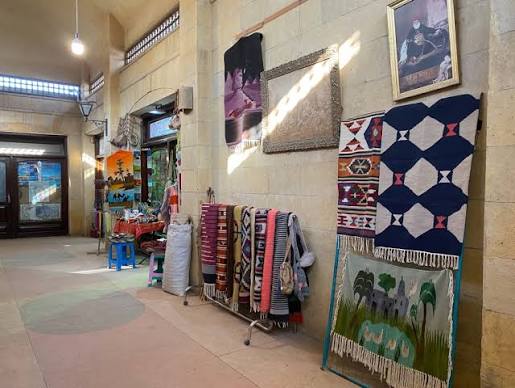
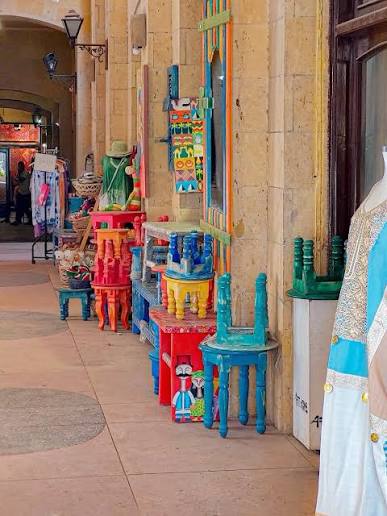
Today the market holds more than 40 galleries under one covered roof, air-conditioned and laid out in wide corridors rather than the narrow alleys typical of older souqs. Each shop belongs to the artisan or cooperative that makes the goods sold there, so buying something usually means talking directly to the person who built it. The market sits inside the Coptic Cairo area, within walking distance of some of Egypt's oldest religious sites—close enough to combine with a visit to those landmarks, though many visitors come specifically for the shopping itself.
What You'll Find at Souq Al Fustat
The market groups dozens of independent workshops, and the range of crafts is wide enough that most visitors need at least an hour to see it properly. Pottery and ceramics dominate several galleries, from traditional Nile-clay pieces to hand-painted decorative plates. Leatherwork is another strength — bags, journals, and small accessories stitched by hand rather than machine-assembled.
Copperwork and metal crafts fill out a number of shops, including pieces inspired by Islamic geometric patterns and Pharaonic motifs like the Ankh and the Eye of Horus. Bedouin embroidery — heavily stitched textiles and cushion covers rooted in Sinai and Western Desert traditions — sits alongside jewelry made from silver, copper, and semi-precious stones, much of it designed by the shop owners themselves rather than mass-produced. Beyond that, the market carries glasswork, woodcarving, batik-printed textiles, natural soaps and oils, and recycled-material crafts made by residents of Cairo's Garbage City communities, sold through cooperative galleries that route profits back to the makers.
Because each gallery belongs to its maker, quality and style vary shop to shop rather than following a single house look—part of what separates this market from more uniform souvenir stalls elsewhere in Cairo.
Souq Al Fustat vs. Khan el-Khalili
Visitors planning a Cairo shopping stop often ask which market to prioritize, and the honest answer depends on what kind of experience they want. Khan el-Khalili is Cairo's historic bazaar in Islamic Cairo—loud, crowded, and built around haggling as a cultural ritual, with prices that start high and drop through negotiation. Souq Al Fustat runs on the opposite model: fixed, clearly marked prices, air-conditioned corridors, and no expectation to bargain.
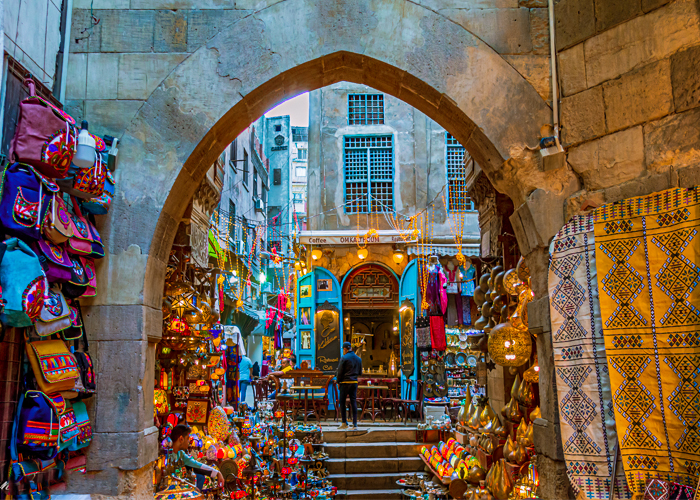
The products differ too. Khan el-Khalili mixes genuine crafts with imported, mass-produced souvenirs, and sorting one from the other takes a practiced eye. At Souq Al Fustat, everything on the shelves was made by the shop's own artisan or cooperative, so that distinction mostly disappears. What Khan el-Khalili offers instead is atmosphere and history—it's a working bazaar that's been operated since the 14th century, not a purpose-built craft center.
Neither replaces the other. Travelers who want the sensory chaos of a historic Cairo bazaar, spices and all, should still see Khan el-Khalili. Those who want a calmer, more curated stop focused on buying something genuinely handmade tend to prefer Souq Al Fustat — and pairing both on the same Cairo trip gives a fuller picture of how Egyptians shop, old and new.
Where Souq Al Fustat Is and What's Nearby
Souq Al Fustat sits in the Coptic Cairo district, in the Al Kafour area of Old Cairo — the part of the city built on the site of Fustat, Egypt's first Islamic capital, founded in 641 AD before Cairo itself existed. That history is part of why the market's location works so well for visitors: it's surrounded by some of the country's oldest religious monuments, all reachable on foot.
The Hanging Church, one of Egypt's oldest churches dating to the 3rd century AD, sits just outside the market, built above a gatehouse of the old Roman Babylon Fortress. The Amr ibn al-As Mosque, Egypt's first mosque, and the Ben Ezra Synagogue, tied to the Cairo Geniza discovery, are both within a short walk. The National Museum of Egyptian Civilization, which houses the Royal Mummies Hall, is also nearby, making this stretch of Old Cairo walkable across faiths and eras in a single visit.
Getting there from central Cairo takes roughly 20–30 minutes by car or taxi, depending on traffic, and the Mar Girgis metro station on Line 1 sits close to the Coptic Cairo cluster for visitors without a driver.
Practical Tips for Visiting Souq Al Fustat
Entry to Souq Al Fustat is free, and there's no set closing time posted consistently across sources, so it's worth checking current hours locally before visiting—most shops tend to be open through the afternoon and evening. Prices are fixed and marked on tags, applied equally to Egyptian and foreign visitors, so bargaining isn't part of the culture here the way it is at older bazaars.
Cash is the safer bet. Some galleries take cards, but plenty of the smaller, independent shops don't, so carrying Egyptian pounds avoids running into a shop you like that can't process a card. Many artisans are happy to talk about how a piece was made if asked, and a few shops have hosted live demonstrations—pottery throwing, marbling, and embroidery—during slower afternoon hours, though this varies day to day and isn't guaranteed.
The covered, air-conditioned design keeps the market noticeably cooler than outdoor markets, which makes it a comfortable stop even in Cairo's peak summer heat. A restaurant on site means the visit can stretch into a longer break rather than a quick walkthrough.
Best Time to Visit Souq Al Fustat
Late afternoon is generally the best window, once the midday heat has eased and the market fills with a mix of tourists and local shoppers. The covered design keeps temperatures manageable at any hour, but the atmosphere picks up noticeably later in the day, when more shops are staffed and active.
Weekdays tend to be quieter than weekends, which suits visitors who want time to browse and talk with artisans without feeling rushed. Since Souq Al Fustat sits inside a cluster of major Coptic Cairo sites, it pairs naturally with a half-day exploring the Hanging Church, Amr ibn al-As Mosque, and Ben Ezra Synagogue—most visitors treat the market as one stop within that broader walk rather than a separate trip.
Given the concentration of sites in this part of Old Cairo—religious landmarks spanning three faiths alongside a working artisan market—this is exactly the kind of area where a private, guided tour of Coptic Cairo makes practical sense: it saves the back-and-forth of navigating the cluster independently and adds context that's easy to miss walking through alone.