The Cave Church, Cairo: Inside the Monastery of Saint Simon the Tanner
1. What Is the Cave Church?
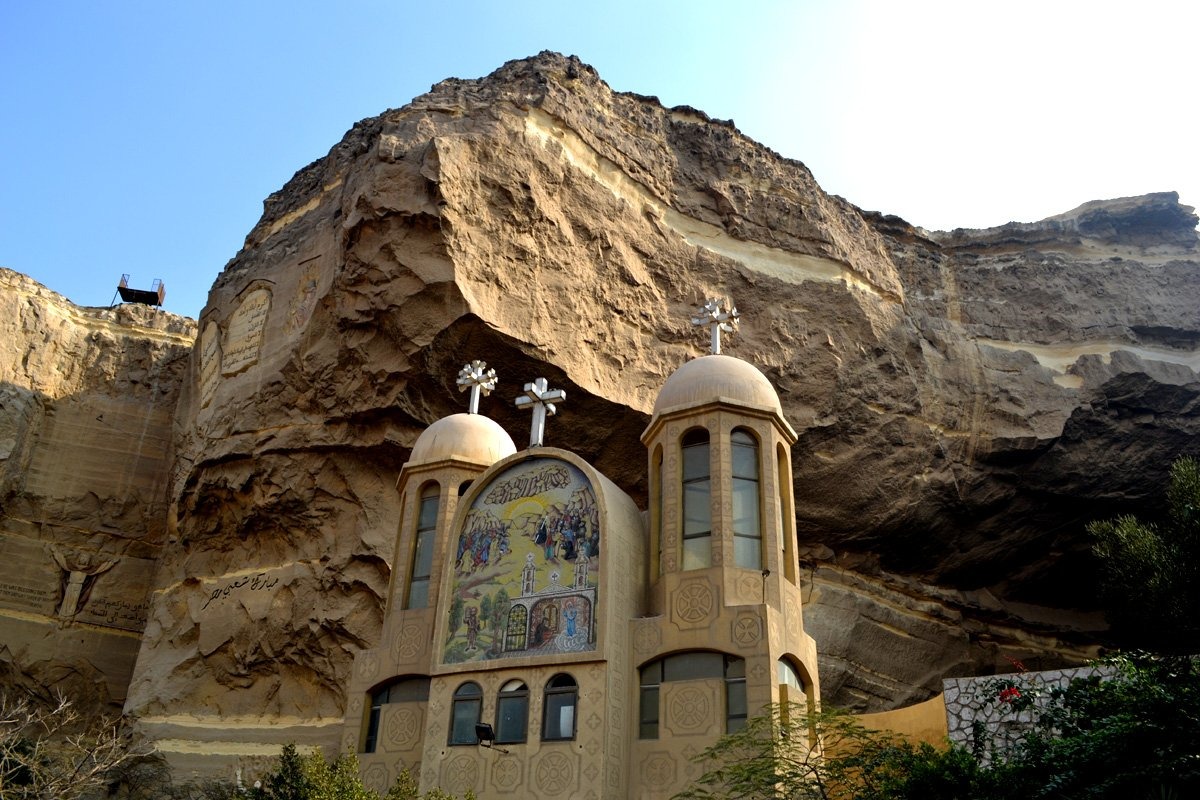
The Cave Church, officially the Monastery of Saint Simon the Tanner, is a complex of churches carved into the limestone cliffs of the Mokattam Hills in southeastern Cairo. Named after Simon the Tanner, a 10th-century Coptic saint, it sits within Manshiyat Naser, the district most visitors know as Garbage City. The complex includes several churches cut into the rock, among them St. Simon the Tanner's Hall and St. Mark's Church, discovered inside a natural cave in 1974.
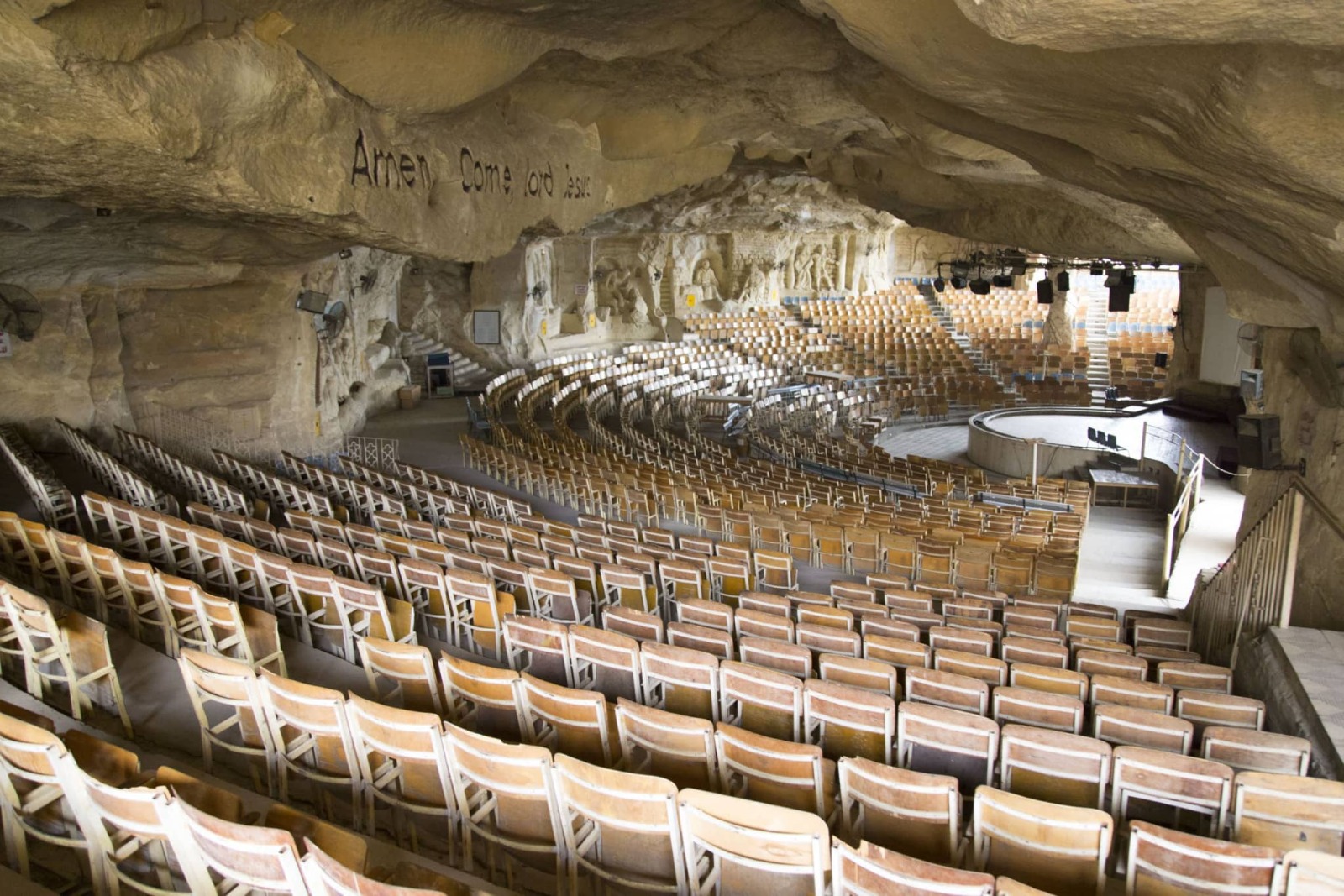
The Zabbaleen, Cairo's Coptic Christian garbage collectors, carved and decorated the church themselves, turning an abandoned quarry cave into one of the largest places of worship in the region. The main hall seats several thousand people. Walls throughout the complex are engraved with scenes from the Bible, cut directly into the rock rather than painted or built as separate structures.
2. The Story Behind Simon the Tanner and the Moving of the Mountain
The monastery's name comes from a story tied to the 10th century, during the rule of the Fatimid Caliph Al-Mu'izz li-Din Illah. According to Coptic tradition, the caliph challenged Cairo's Christian community to prove a passage in the Bible—the verse about faith being able to move mountains—or face persecution. The Coptic Pope of the time, Abraham the Syrian, was told of a one-eyed tanner named Simon who lived a life of quiet devotion, and Coptic tradition holds that through his prayer, the Mokattam Mountain was seen to move.
Whether read as literal history or religious tradition, this is why the site carries his name today. Simon is also referred to in some sources as Simon the Shoemaker or Simon the Cobbler—tanning, cobbling, and shoemaking were closely related trades, and Coptic accounts use the names somewhat interchangeably.
3. Inside the Monastery: What You'll See
The monastery complex holds several distinct churches and halls carved into the rock, connected by stairways and open passages cut into the mountainside. St. Simon the Tanner Hall is the largest, an amphitheater-style space with tiered stone seating facing a central platform. Its walls are covered in reliefs depicting biblical scenes—the Last Supper, the Nativity, and episodes from the life of Christ—carved directly into the limestone rather than painted on.
Smaller chapels branch off from the main hall, including St. Mark's Church and St. Paul's Church, each carved into a separate section of rock with its own set of biblical reliefs. Some sections of the complex are open to the sky, so light falls directly onto the rock walls at different times of day. Visitors typically move between the halls on foot, following stone paths built into the cliff face, with views opening up over the surrounding Mokattam Hills and the edge of Manshiyat Naser below.
4. Understanding Manshiyat Naser ("Garbage City") and the Zabbaleen
Reaching the Cave Church means passing through Manshiyat Naser, a district on the lower slopes of the Mokattam Hills known informally as Garbage City. It's home to the Zabbaleen, a Coptic Christian community that has collected and sorted Cairo's household waste for decades, running an informal recycling system built around family-run workshops. Streets are narrow, and workshops sit at ground level, often with sorted materials—plastic, paper, and metal—stacked outside.
The area isn't a staged attraction; it's a working neighborhood where people live and earn a living. Visitors who pass through are generally welcome, but the same courtesy applies here as anywhere: keep a respectful distance from people's homes and workspaces, ask before photographing individuals, and avoid treating the walk through as a spectacle. Some tours combine a stop at a recycling workshop with the church visit, which can add context on how the Zabbaleen livelihood works, though this isn't necessary to see the Cave Church itself.
5. How to Get to the Cave Church
The Cave Church is about 20 to 25 minutes by car from downtown Cairo, depending on traffic, reached via the Salah Salem Highway toward the Mokattam area. Taxis and ride-hailing apps can take you directly to the complex, though drivers unfamiliar with the area sometimes need a few extra minutes to find the right entrance—it helps to share the location pin in advance rather than relying on the driver knowing it by name.
There's no public transport route that goes directly to the church, so a taxi, ride-share, or organized tour is the practical option for most visitors. Some travelers walk the final stretch through Manshiyat Naser rather than driving all the way to the entrance, which gives a closer look at the neighborhood but adds time and isn't necessary to reach the church. A private guide isn't required to enter the monastery itself, though one is useful if you want to explore the surrounding streets or visit a recycling workshop.
6. Practical Tips: Cost, Dress Code, and Best Time to Visit
Entry to the Cave Church is free, with no ticket booth or admission fee at the complex. As with any active church in Egypt, modest dress is expected: shoulders and knees covered for all visitors, and women may want to bring a scarf in case a head covering is requested, though this varies by section of the complex.
Early morning is the most comfortable time to visit, before the midday heat sets in and before tour groups tend to arrive. The site is mostly outdoors and uncovered in parts, so shade is limited during the middle of the day. Some pathways involve uneven stone steps and open ledges, so flat, closed shoes are more practical than sandals. Sunday mornings often have an active mass in progress, which visitors are welcome to observe quietly from the back of the hall, though this is also when the site is busiest.
7. Is It Safe to Visit?
The Cave Church itself is a safe, welcoming site—it's an active place of worship that receives visitors, including foreign tourists, throughout the week. The main safety consideration isn't the church but the route through Manshiyat Naser: the streets are narrow, sometimes crowded with carts and traffic, and the ground can be uneven, so watching your footing matters more than any security concern.
It's worth checking current government travel guidance for the wider Manshiyat Naser area before visiting. Beyond that, the usual precautions for a dense urban neighborhood apply: keep valuables secure, stay aware of your surroundings, and consider a taxi or organized tour if you'd rather not navigate on your own. Going with a driver or guide who knows the area removes most of the friction, particularly for a first visit.