The Aga Khan Mausoleum in Aswan: History, Burials and Visiting Guide
What is the Aga Khan Mausoleum?
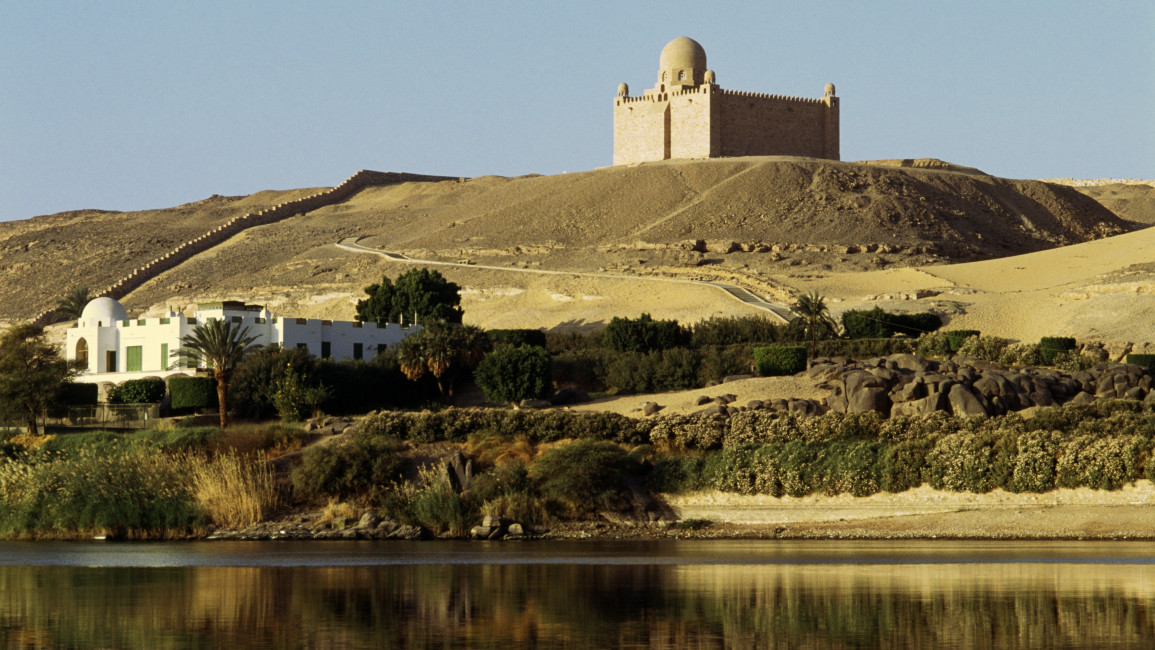
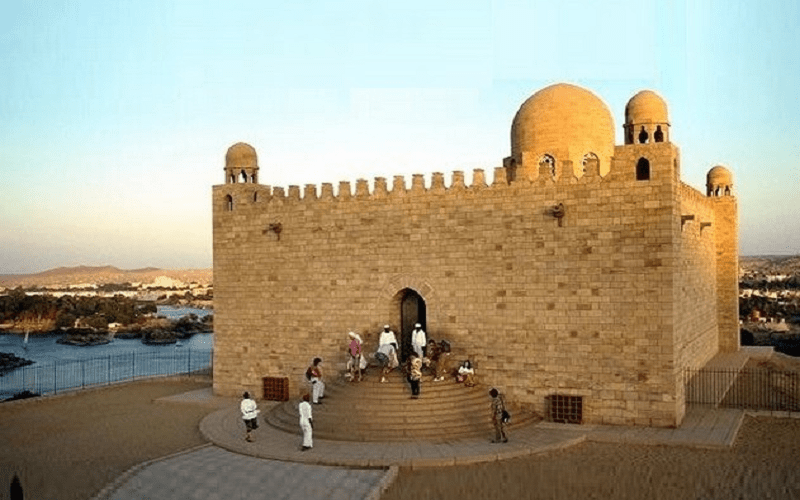
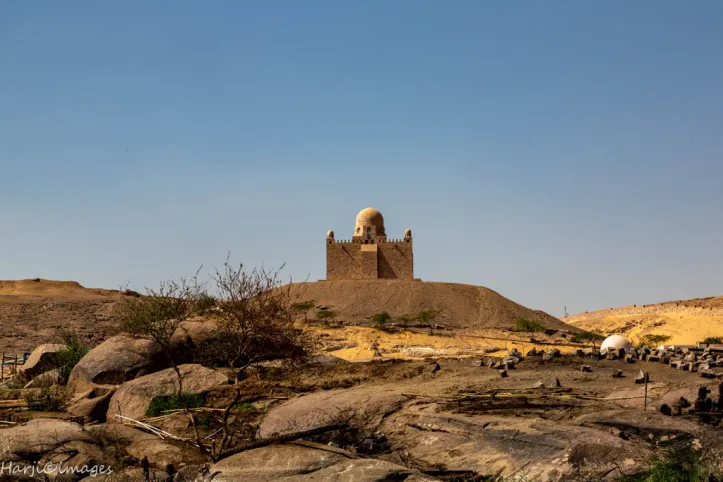
The Aga Khan Mausoleum is the burial site of Sir Sultan Muhammed Shah, Aga Khan III, the 48th hereditary imam of the Nizari Ismaili Muslims. It sits on a hilltop on Aswan's west bank, directly across the Nile from the Old Cataract Hotel, and is built from pink granite and limestone in a style modeled on the Fatimid tombs of Cairo. The site includes the domed mausoleum itself and Villa Nour El Salam, the family's former winter residence, designed by architect Hassan Fathy and standing just below the tomb on the same hillside.
The history behind the mausoleum
Aga Khan III and his connection to Aswan
Aga Khan III first came to Aswan in 1954 seeking relief from rheumatism and bone pain. Local Nubian tradition held that burying the lower body in warm river sand for a set period each day could ease joint pain, and he stayed at the Old Cataract Hotel while undergoing this treatment. The dry climate and the Nile views drew him back every winter afterward, and before his death in 1957 he asked to be buried on the hill overlooking the river.
Building the mausoleum
Construction began in 1956, a year before Aga Khan III's death, and was completed in 1960 under his widow, Begum Om Habibeh, also known as Mata Salama. His body was first buried in Switzerland and reinterred in Aswan on February 20, 1959, in a ceremony attended by more than 2,000 guests, including his successor Aga Khan IV. The design deliberately echoes the Fatimid funerary architecture of Cairo, connecting the site to Egypt's medieval Islamic history rather than to Aswan's Pharaonic monuments.
Who is buried in the Aga Khan Mausoleum
Three people rest inside the mausoleum today. Aga Khan III, who led the Ismaili community for 72 years, was buried here in 1959. His wife, Begum Om Habibeh, a former Miss France named Yvette Labrousse before her conversion to Islam, was buried beside him after her death in 2000. In February 2025, Prince Karim Aga Khan IV, the 49th Ismaili imam who died in Lisbon, was brought to Aswan and interred in the same tomb following a private ceremony attended by his successor, Prince Rahim Aga Khan V, and Ismaili community leaders from around the world.
The story of the daily red rose
For decades, Begum Om Habibeh placed a fresh red rose on her husband's white marble tomb every day she was in Aswan, a personal ritual that continued until her own death in 2000. Caretakers at the mausoleum have maintained the tradition since then, placing a fresh rose in a silver vase at the head of the sarcophagus each day. It remains one of the few details that turns a formal burial site into a lasting, human story, and it is often the detail visitors remember most after seeing the building itself.
Architecture and design
The mausoleum combines pink granite and calcareous sandstone on the exterior with a white Carrara marble tomb inside, a contrast meant to soften the solemnity of the structure. Its central dome and octagonal transition zone follow Fatimid conventions, and the tomb faces a mihrab set into the eastern wall. Reaching the entrance involves a stepped path up the hillside, ending at an esplanade with sweeping views over the Nile and central Aswan. Local architect Farid El Shafie designed the building on land granted by President Gamal Abdel Nasser.
Can you visit the Aga Khan Mausoleum?
This is the part most travel guides get wrong or leave out entirely. The mausoleum's interior has been closed to public entry since 1997, when Begum Om Habibeh restricted access to preserve the site's privacy, and that restriction has remained in place through the recent burials. The exterior grounds and gardens, however, are generally open daily from around 9 AM to 5 PM, with no official entrance fee, and this is where almost all visitor experiences actually happen: walking the stepped path, viewing the building up close, and taking in the Nile from the hilltop. Because access rules at religious and family sites can change without notice, especially after a recent burial, it is worth confirming current status locally or with a guide before planning a stop here.
How to get there
Most visitors reach the mausoleum by crossing the Nile from Aswan's east bank corniche, either by private motorboat or a traditional felucca sailboat, a crossing that takes roughly 20 to 30 minutes and offers some of the best views of the building from the water. From the west bank landing, it is a short walk or taxi ride up to the site. Travelers coming by road can also reach the west bank via the Old Aswan Dam route, a drive of around 15 to 20 minutes from central Aswan, though the boat crossing remains the more scenic and traditional approach.
Best time to visit
Aswan's climate makes timing matter more than at many other Egyptian sites. The cooler months, from October through April, keep daytime temperatures in a comfortable range for the uphill walk to the mausoleum, while summer afternoons regularly climb well past what most travelers find manageable outdoors. Early morning is the best window year round, before the heat builds and while the low light picks out the pink stone and white marble clearly. Sunset crossings by felucca are also popular, particularly for the views back toward Aswan rather than for the mausoleum itself.
Nearby attractions on Aswan's west bank
The Aga Khan Mausoleum sits close to several other west bank sites that pair naturally into a single half day itinerary. The Monastery of St. Simeon, a fortified sixth century Coptic monastery, lies a short distance north and is often visited by camel or on foot. The Nubian village and the tombs of the Nobles are also on the west bank, while Philae Temple, though reached from a different departure point near the Aswan High Dam, is commonly combined with a west bank morning on multi site Aswan itineraries. Aten Tours builds these stops into its private Aswan day tours, sequencing the crossing, the mausoleum viewpoint, and nearby sites around each traveler's pace rather than a fixed group schedule.