Ancient Egyptian Medicine: Facts, Papyri, and the World's First Doctor
What Made Ancient Egyptian Medicine So Advanced?
Ancient Egyptian medicine was practiced continuously from roughly 3000 BC until the Persian invasion of Egypt in 525 BC, making it one of the oldest documented medical traditions in the world. Egyptian physicians set broken bones, performed minor surgical procedures, practiced dentistry, and built up an extensive body of pharmaceutical knowledge — treatments recorded in enough detail that modern researchers can still identify many of the plants and minerals used.
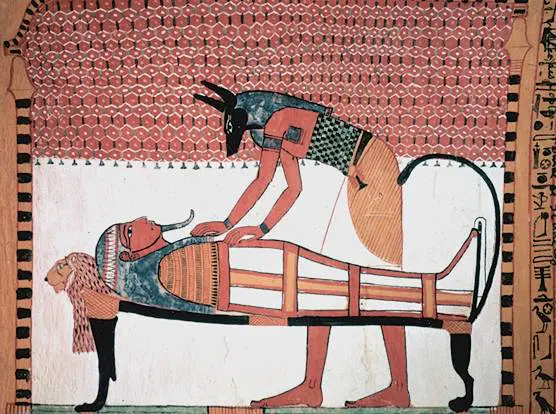
Much of this knowledge came from an unusual source: embalming. Because mummification required removing internal organs, Egyptian priests and physicians developed a working knowledge of human anatomy that most ancient cultures lacked. This didn't make Egyptian medicine scientific in the modern sense — physicians still believed disease could come from evil spirits or an angry god — but it did give them a practical, hands-on understanding of the body that shaped how they treated injury and illness for over two thousand years.
Imhotep — The First Named Physician in History
Imhotep served as vizier and high priest to Pharaoh Djoser during Egypt's Third Dynasty, around 2650–2600 BC, and is best known today as the architect of the Step Pyramid at Saqqara — the oldest large-scale stone structure in the world. He was also a physician, and centuries after his death, Egyptians began worshipping him as a god of medicine and healing, eventually equating him with the Greek god Asclepius.
Imhotep is often credited as the earliest physician known by name in recorded history, though no medical writings survive that can be confirmed as his own. His reputation rests partly on later tradition: the Edwin Smith Papyrus, written centuries after he lived, is believed by many Egyptologists to preserve material based on his teachings. Temples dedicated to Imhotep, particularly around Saqqara, became sites where the sick would pray and sleep in the hope of receiving a cure or a diagnosis through dreams.
The Medical Papyri: Ebers, Edwin Smith, and What They Reveal
Almost everything known about how Egyptian doctors actually practiced comes from a small number of surviving papyri, most written around 1550–1600 BC but believed to copy earlier source material. Two stand out for their scope and condition.
The Ebers Papyrus
The Ebers Papyrus, dated to around 1550 BC and roughly 20 meters long, is the most extensive surviving Egyptian medical text. It contains more than 700 remedies and incantations covering an enormous range of conditions: digestive disorders, skin disease, eye problems, gynecology, contraception, dentistry, and the surgical treatment of abscesses and burns. It also outlines an early "channel theory" of the body, describing vessels that carry blood and other fluids from the heart to every limb — a concept that later influenced Greek and medieval medical thought. The papyrus is held today at the University of Leipzig Library in Germany.
The Edwin Smith Papyrus
The Edwin Smith Papyrus is markedly different in character. Dated to around 1600 BC but believed to be a copy of a much older text, it is the oldest known surgical treatise in the world. Unlike the Ebers Papyrus, it is almost entirely free of magic and incantation, instead following a rational structure of examination, diagnosis, treatment, and prognosis. It documents 48 individual case studies of injuries — mainly wounds, fractures, and dislocations consistent with battlefield or construction accidents — moving systematically from the head down to the chest. Each case is sorted into one of three categories: an ailment the physician can treat, one he can attempt to fight, or one beyond treatment. The papyrus is now held at the New York Academy of Medicine.
How Ancient Egyptian Doctors Diagnosed and Treated Disease
Egyptian physicians followed a diagnostic process that would look familiar in outline today. They questioned the patient about symptoms, examined the body by touch and smell, checked the pulse, and in some cases inspected urine, feces, or saliva. Based on this, the physician reached one of the three prognoses described in the Edwin Smith Papyrus.
Treatment blended practical remedies with religious ritual. Wounds were commonly treated with honey, resin, and raw meat — honey in particular has genuine antibacterial properties, which likely contributed to real recovery rates. At the same time, physicians — many of whom were also priests — recited incantations and invoked specific gods depending on the ailment: Serket for scorpion stings, for instance, or Bes during childbirth. Egyptians did not draw a sharp line between medicine and magic; both were seen as legitimate tools against the same underlying problem, whether that problem was physical or spiritual.
Surgery, Dentistry, and Medical Specialization
By the Sixth Dynasty, Egyptian medicine had already become specialized. Some physicians served specific roles within the royal household — Egyptologists have identified tomb inscriptions belonging to court doctors who held titles such as "chief dentist" or "overseer of physicians," and one recently discovered Saqqara tomb, belonging to a doctor named Tetinebefou, describes him as an expert in medicinal plants, dentistry, and the treatment of venomous bites.
Physical evidence of surgical practice survives directly on tomb walls. The tomb of the official Ankhmahor at Saqqara, often called the "Physician's Tomb," contains relief carvings showing a circumcision procedure in progress, complete with hieroglyphic captions recording dialogue between the surgeon and his assistant. It remains one of the clearest visual records of a medical procedure from the ancient world, and it dates to roughly 2400 BC — centuries before either of the major surviving medical papyri were written.
Where You Can See This History Today
Much of this history is still visible in Egypt rather than confined to museum texts. The Saqqara necropolis, where Imhotep built the Step Pyramid and where his cult later centered, is also home to the Tomb of Ankhmahor and its surgical reliefs, along with other tombs belonging to physicians of the royal court. The Egyptian Museum in Cairo and the Grand Egyptian Museum both hold artifacts connected to this period of medical history, from surgical tools to inscribed offerings left at healing shrines.