Stone relief showing Egyptian deities and hieroglyphic inscriptions on a temple wall

Clever Inventions of Ancient Egypt: 7 Ideas Still Used Today

Long before modern laboratories existed, the people of the Nile Valley were already solving problems most cultures hadn't faced yet. They wrote on a m...

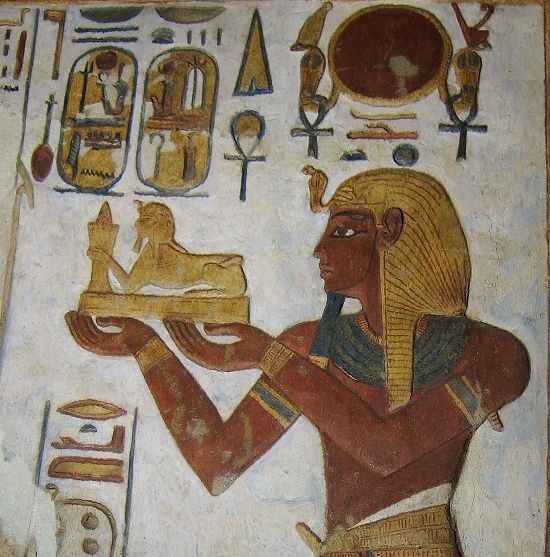
Ancient Egyptian mural showing a figure presenting a sphinx beneath hieroglyphs

Clever Inventions of Ancient Egypt: 7 Ideas Still Used Today

Gold Egyptian funerary mask with detailed headdress and cobra ornament

Papyrus: A Writing Material That Outlasted Empires

Ancient Egyptians developed papyrus around 3000 BCE by slicing the pith of the papyrus plant, laying the strips in crossed layers, and pressing them into sheets. It replaced clay tablets and animal skin as a lighter, cheaper writing surface, and it became Egypt's main export to Greece and Rome for over a thousand years. The word "paper" comes directly from "papyrus." Surviving scrolls, including medical and administrative texts, are now held in museums such as the Egyptian Museum in Cairo, giving historians a direct record of daily life along the Nile.

The 365-Day Calendar Egypt Gave the World

Egyptian priests linked the solar year to the annual flooding of the Nile and the rising of the star Sirius, dividing the year into 12 months of 30 days plus five extra festival days. This 365-day structure, developed by around 2500 BCE, is the direct ancestor of the calendar used across most of the world today. It allowed farmers to predict flooding, planting, and harvest seasons with accuracy that earlier lunar calendars could not match.

Surgery and Medicine Recorded on Papyrus

The Edwin Smith Papyrus, dated to roughly 1600 BCE but likely copied from a much older source, describes 48 real surgical cases involving wounds, fractures, and even brain injuries, using close observation rather than magic. Egyptian doctors set broken bones with splints, stitched wounds, and are known from archaeological evidence to have fitted at least one prosthetic toe, found on a mummy and functional enough to have been worn during life. Their approach mixed practical treatment with ritual, but the surgical case notes remain some of the oldest medical documentation in existence.

The Shadoof and Egypt's First Irrigation Engineering

Farming along the Nile depended on moving water uphill from the river to the fields, a problem Egyptians solved with the shadoof, a pivoting pole with a bucket on one end and a counterweight on the other. Introduced by around 1700 BCE, it let a single farmer lift and redirect far more water than by hand, and simplified versions of the same tool are still used in parts of rural Egypt and South Asia today. It worked alongside canals and basin irrigation to extend the growing season beyond the annual flood.

Kohl, Perfume, and an Early Cosmetics Industry

Ancient Egyptians ground galena and other minerals into kohl, worn by both men and women to reduce sun glare and, evidence suggests, to lower eye infections thanks to its antibacterial properties. They also produced some of the earliest documented perfumes and skin creams from oils, resins, and plant extracts, with recipes recorded on temple walls at sites like Edfu. Cosmetic containers and applicators found in tombs, now displayed in collections such as the Egyptian Museum, show how central grooming was to both religious ritual and daily life.

The Pin Tumbler Lock: Security Before Metal Keys

Egyptian carpenters built the earliest known pin tumbler lock around 2000 BCE, a wooden mechanism using pins that dropped into holes to block a bolt until a matching wooden key lifted them clear. The same basic pin-and-tumbler principle underpins most modern door locks, making this one of ancient Egypt's most directly traceable inventions. Full-size wooden examples of the mechanism have survived and are occasionally reconstructed for museum displays.

The Royal Cubit and the Math Behind the Pyramids

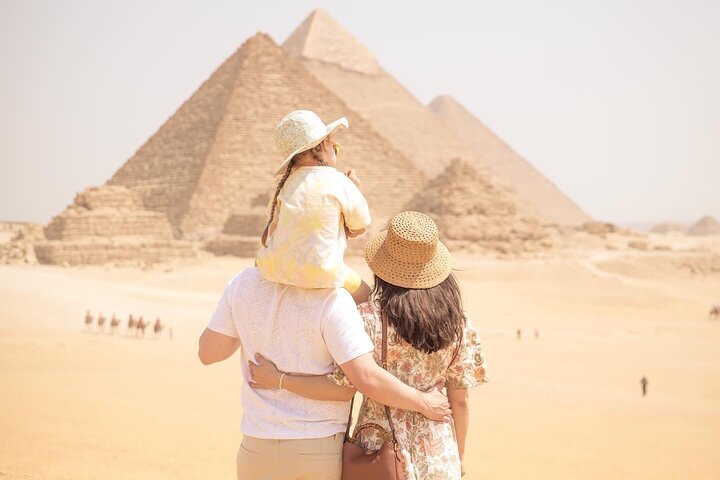
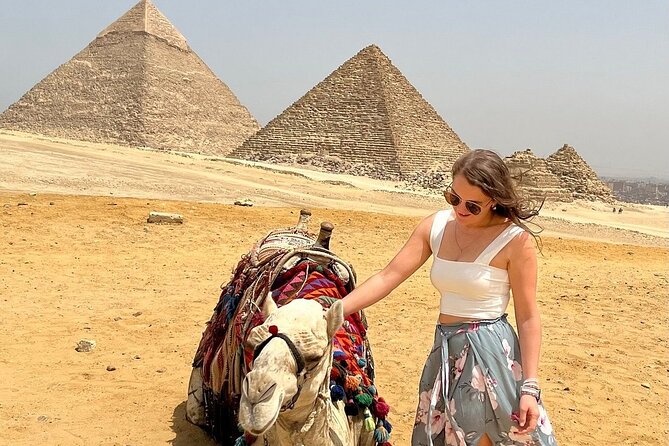
Egyptian builders measured with the royal cubit, standardized at roughly 52.4 centimeters and subdivided with remarkable consistency across construction sites. That precision, combined with an understanding of ratios and right angles, allowed the Great Pyramid of Giza to be aligned to true north within a fraction of a degree, an accuracy still studied by engineers today. Visitors who stand at the base of the pyramids at Giza can see that same measuring system reflected in the scale and symmetry of the structure, a detail an Aten Tours private Giza Pyramids and Egyptian Museum tour points out on site with context most guidebooks skip.
 

Why Choose Aten Tours

Travel with confidence with Aten Tours, where local expertise meets exceptional service. From carefully curated itineraries and handpicked experiences to seamless planning and dedicated support, we create personalized journeys designed around what matters most—comfort, quality, and unforgettable experiences across Egypt and beyond.

Secure Online Payment

Enjoy safe and secure online payments with full protection of your personal and financial information. Book your trips with confidence anytime, anywhere.

Help & Support

Travel with confidence knowing that our Help & Support team is always here for you. From booking to your return, we’re just one message away.

Tailored Travel Experiences

Your journey, your way. We design tailored experiences that match your style, ensuring comfort, flexibility, and unforgettable moments in every destination.

Client Testimonials

At Aten Tours, we are proud to create experiences that leave lasting memories. Read genuine feedback from travelers who explored Egypt’s wonders, enjoyed luxury holidays, and discovered the world with confidence and ease.

Traveling solo in Egypt with Aten Tour was one of the best decisions I made. As a 22-year-old female traveler, I was a little nervous before arriving, but I felt safe and well looked after from day one. Everything was well organized, my guide was knowledgeable, kind, and always happy to help, and I never had to worry about a thing. The whole trip was smooth, enjoyable, and filled with unforgettable moments. I'm so glad I chose Aten Tour and would definitely travel with them again.

Sarah
Sarah May 2026

My fiancé and I booked a private 5-day tour of Egypt with Aten Tours, covering Cairo, Aswan, Abu Simbel, and Luxor. From the moment we arrived, everything was perfectly organized. The team took care of every detail, making our trip completely stress-free. Our guides were knowledgeable, friendly, and passionate about Egypt's history, and every destination exceeded our expectations. Even after returning home, we still find ourselves talking about this unforgettable experience. We highly recommend Aten Tours to anyone looking for a well-planned and memorable trip to Egypt.

Thomas
Thomas May 2026

Traveling with Aten Tour made our vacation completely stress-free. Every hotel, transfer, and excursion was exactly as promised, and the team was always available whenever we had a question. We really appreciated the personal attention and warm hospitality throughout the trip. We came home with unforgettable memories and would definitely recommend Aten Tour to anyone planning a trip to Egypt.

Olivia
Olivia April 2026

We booked an 8-day trip with Aten Tour, and it turned out to be one of our favorite vacations. Everything was well organized from start to finish, which made traveling around Egypt really easy. We never felt rushed, the hotels were great, and the team was always helpful whenever we needed anything. Egypt had been on our bucket list for a long time, and we're so glad we chose Aten Tour for this experience.

Nicholas
Nicholas July 2026

Our family booked a tour with Aten Tour after reading several positive reviews, and they definitely lived up to our expectations. Communication before the trip was quick and helpful, and everything during the tour was exactly as described. The hotels were comfortable, the transportation was smooth, and the guides made every stop interesting with their stories and local knowledge. Egypt had always been a dream destination for us, and this trip made it even more memorable.

Emma
Emma June 2026

All FAQ about Egypt

A shadoof is a hand-operated tool with a pivoting pole, bucket, and counterweight used to lift water from the Nile into irrigation channels. It appeared in Egypt by around 1700 BCE and simplified versions are still used in parts of Egypt and Asia today.

Yes. The Edwin Smith Papyrus, dated to around 1600 BCE, documents 48 surgical cases including wound treatment, bone-setting, and observations on brain injuries, based on physical examination rather than only ritual. A functional prosthetic toe found on an Egyptian mummy shows the practical side of this medical knowledge.

Papyrus was used as a writing surface for religious texts, medical records, government administration, and personal letters. Made from the papyrus plant's pith, it was lighter and cheaper than earlier materials and became Egypt's major export for over a thousand years.

Ancient Egyptian priests developed a 365-day solar calendar around 2500 BCE, based on the Nile flood cycle and the star Sirius. This structure directly influenced the Roman Julian calendar and, through it, the Gregorian calendar most of the world uses now.

Ancient Egyptians are credited with papyrus paper, a 365-day calendar, early surgical techniques recorded in the Edwin Smith Papyrus, the shadoof irrigation tool, cosmetics such as kohl eyeliner, and the pin tumbler lock, an ancestor of the modern door lock.

94%
WhatsApp Call