Daily Life in Ancient Egypt: Customs, Habits and Social Norms
Ancient Egyptian civilisation lasted more than 3,000 years, and daily habits changed a great deal across that span. Even so, a clear pattern of norms ran through almost every era: the Nile set the rhythm of work, family held society together, and a sense of order shaped how people behaved, ate, dressed and worshipped. This guide looks at how ordinary Egyptians lived, not only pharaohs and priests.
Life on the Nile: A Year in Three Seasons
Egyptians divided the year into three seasons tied to the river: Akhet (the flood), Peret (the growing season) and Shemu (the harvest). Most people were farmers, so the calendar decided almost everything. When floodwater covered the fields, many farmers were called up by the state to quarry stone, haul blocks and work on temples and monuments.
Homes, Food and Everyday Habits
Families lived in mud-brick houses with small windows and flat roofs, where people often slept during hot nights. Bread and beer were the daily staples for rich and poor alike. Onions, lentils, fish, figs and dates filled out the table, while meat was kept for festivals and wealthier households. Ancient Egyptian beer was thick and low in alcohol, and it was even used to pay workers.
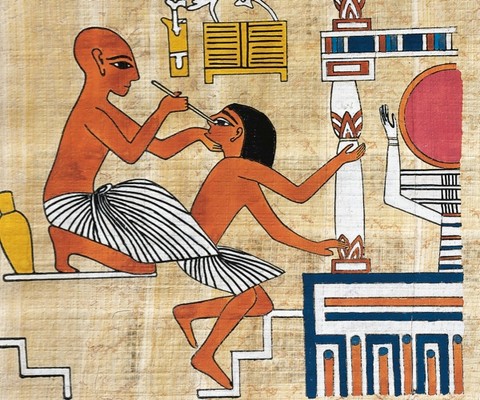
Personal care mattered. Egyptians washed often, used natron as a cleanser and rubbed oils into the skin against the dry heat. Men and women both wore kohl around the eyes, partly as protection from the glare and partly for style. Clothes were made of linen in white or pale tones, hair was kept short or shaved, wigs appeared on formal occasions, and young children were often shown with a side lock of hair.
Family, Women and Social Order
The family was the core of society. Marriage was a practical household agreement rather than a religious ceremony, and most couples were monogamous. Women held legal rights that were unusual in the ancient world: they could own and inherit property, run businesses, appear in court and ask for a divorce. Public power stayed mostly in male hands, yet women managed households, trades and temple roles.
Society worked like a pyramid, with the pharaoh at the top, followed by priests, officials and scribes, then craftsmen and farmers. Scribes enjoyed the most respected career outside the royal family, because reading and writing were rare skills. The workmen of Deir el-Medina, who built the royal tombs in the Valley of the Kings, followed a ten-day week with rest days. Around 1157 BC they stopped work when their grain rations arrived late, in what is considered one of the earliest recorded strikes in history.
Beliefs, Leisure and Celebration
Religion was part of daily life, not a separate activity. Homes had small shrines, people wore protective amulets, and the god Bes watched over families and childbirth. The guiding principle was maat: truth, balance and justice. Egyptians believed the heart would be weighed against a feather after death, so honest conduct mattered in this life and the next.
Leisure was taken seriously. Families played board games such as senet, hosted banquets with music and dancing, fished and hunted birds in the marshes, and kept cats, dogs and monkeys as pets. Major festivals, including Opet in Thebes and the new-year celebrations that marked the flood, brought entire towns into the streets.
Seeing Ancient Egyptian Life Today
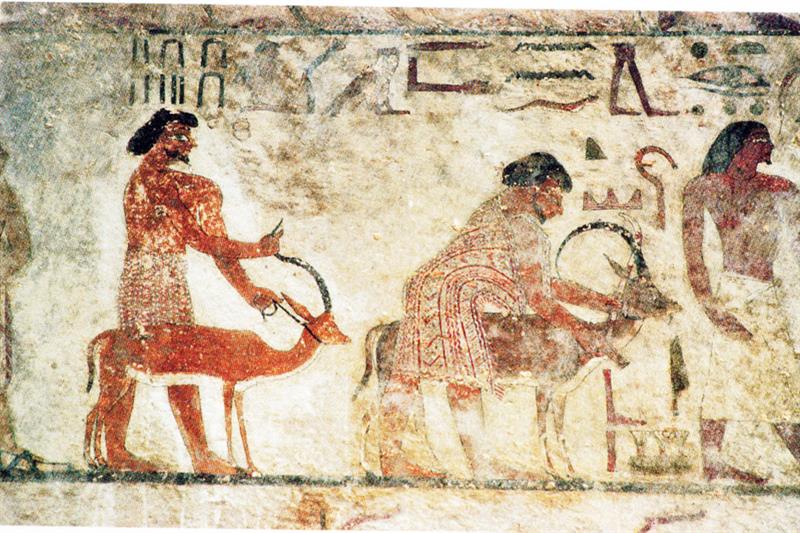
Tomb paintings, tools, toys and papyri still show these habits in remarkable detail. The Egyptian Museum in Cairo, the Grand Egyptian Museum, Saqqara, Luxor and Deir el-Medina are the strongest places to see them. Alexandria adds a later chapter, where pharaonic traditions met Greek and Roman culture, and it combines easily with a day trip from Cairo. Aten Tours arranges private itineraries with licensed Egyptologist guides, so every temple and tomb scene comes with the story behind it.