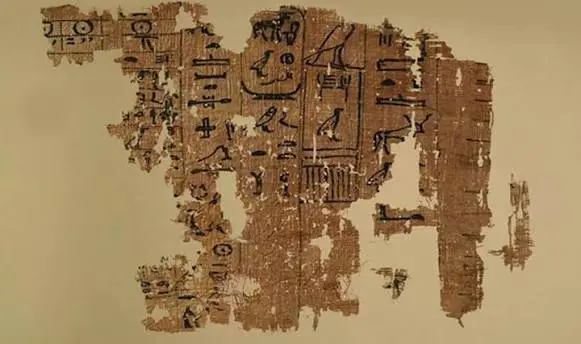
Ancient Egyptian papyrus fragment with hieroglyphic writing

The Diary of Merer: The 4,500-Year-Old Papyrus That Reveals How the Great Pyramid Was Built

In 2013, a French archaeological team digging near an ancient harbor on Egypt's Red Sea coast uncovered something no one expected to survive 4,500 yea...

Statue of Queen Meret from ancient Egypt

The Diary of Merer: The 4,500-Year-Old Papyrus That Reveals How the Great Pyramid Was Built

Ancient Egyptian papyrus fragment from the Diary of Merer

What Is the Diary of Merer?

The Diary of Merer is a set of papyrus logbooks written around 2565 BCE, during the 27th year of Pharaoh Khufu's reign. It was kept by Merer, an official titled sehedj, or "inspector," who led a crew of about 200 men. The logs cover roughly three months of daily work, mostly transporting limestone by boat from the Tura quarries to Giza.

Some call it the Red Sea Scrolls, after where it was found. But it isn't a royal or religious text — it's paperwork, kept by someone with no idea his notes would outlast the pyramid's original casing stones.

Wadi al-Jarf: Egypt's Oldest Harbor

Merer's logbook surfaced at Wadi al-Jarf, a Red Sea harbor older than any other known port in the world. British traveler John Gardner Wilkinson noted the ruins in 1823 but misread them as a Greco-Roman cemetery. French Egyptologist Pierre Tallet confirmed the site's true age after resuming excavations in 2008.

Tallet's team found that Wadi al-Jarf operated under Sneferu and into Khufu's reign, supporting expeditions across the Red Sea to the copper and turquoise mines of Sinai. In 2013, while excavating limestone galleries once used to store boats, the team found papyrus fragments sealed in the walls when the harbor closed.

Inside Merer's Logbook

The find isn't one continuous diary — it's several documents, each covering a different job.

Papyrus A and B log the core assignment: ferrying limestone from Tura to Giza, roughly 15–20 km away, in a two-column, day-by-day format that even names an artificial harbor at Giza, Ro-She Khufu.

Papyrus E covers about six months of Red Sea crossings, moving workers, food, and copper from Sinai — tying Merer's crew directly to Wadi al-Jarf itself.

Papyrus H tracks rations paid to the crew — bread, beer, grain — laid out like a modern spreadsheet of what was owed and delivered.

What the Diary Reveals About Building the Great Pyramid

One question comes up constantly: were the pyramids built by slaves? Merer's diary is strong evidence against that.

His crew were salaried state workers, tracked and paid in rations, rotated between quarry runs, harbor duty, and sea crossings rather than fixed to one grinding task. The logbook's careful accounting reads like bureaucracy, not forced labor. That matches other Giza evidence, including worker cemeteries showing signs of medical care. What Merer adds is a first-person account of an ordinary workday, from someone who lived it.

Ankh-haf: The Man Who Managed the Pyramid

Merer's logbook names his superior: Ankh-haf, Khufu's half-brother, recorded elsewhere as "head of all the king's works" — close to a modern project director. One entry notes Merer spending a day working "with the noble Ankh-haf, director of Ro-She Khufu," a rare firsthand glimpse of a named official actively overseeing the pyramid's final construction stages.

Why This Discovery Matters

Zahi Hawass, Egypt's former chief inspector of the Giza plateau, called it one of the most significant finds made in Egypt this century — not just for its age, but for what that age makes possible.

Royal inscriptions tell the pyramid's story from the pharaoh's side: triumphant, permanent by design. Merer's logbook tells it from underneath — the quarry schedules and ration counts that actually moved the stone. It's the monument's supply-chain paperwork, something historians rarely get for a building this old.
Why Choose Aten Tours

Travel with confidence with Aten Tours, where local expertise meets exceptional service. From carefully curated itineraries and handpicked experiences to seamless planning and dedicated support, we create personalized journeys designed around what matters most—comfort, quality, and unforgettable experiences across Egypt and beyond.

Secure Online Payment

Enjoy safe and secure online payments with full protection of your personal and financial information. Book your trips with confidence anytime, anywhere.

Help & Support

Travel with confidence knowing that our Help & Support team is always here for you. From booking to your return, we’re just one message away.

Tailored Travel Experiences

Your journey, your way. We design tailored experiences that match your style, ensuring comfort, flexibility, and unforgettable moments in every destination.

Client Testimonials

At Aten Tours, we are proud to create experiences that leave lasting memories. Read genuine feedback from travelers who explored Egypt’s wonders, enjoyed luxury holidays, and discovered the world with confidence and ease.

Traveling solo in Egypt with Aten Tour was one of the best decisions I made. As a 22-year-old female traveler, I was a little nervous before arriving, but I felt safe and well looked after from day one. Everything was well organized, my guide was knowledgeable, kind, and always happy to help, and I never had to worry about a thing. The whole trip was smooth, enjoyable, and filled with unforgettable moments. I'm so glad I chose Aten Tour and would definitely travel with them again.

Sarah
Sarah May 2026

My fiancé and I booked a private 5-day tour of Egypt with Aten Tours, covering Cairo, Aswan, Abu Simbel, and Luxor. From the moment we arrived, everything was perfectly organized. The team took care of every detail, making our trip completely stress-free. Our guides were knowledgeable, friendly, and passionate about Egypt's history, and every destination exceeded our expectations. Even after returning home, we still find ourselves talking about this unforgettable experience. We highly recommend Aten Tours to anyone looking for a well-planned and memorable trip to Egypt.

Thomas
Thomas May 2026

Traveling with Aten Tour made our vacation completely stress-free. Every hotel, transfer, and excursion was exactly as promised, and the team was always available whenever we had a question. We really appreciated the personal attention and warm hospitality throughout the trip. We came home with unforgettable memories and would definitely recommend Aten Tour to anyone planning a trip to Egypt.

Olivia
Olivia April 2026

We booked an 8-day trip with Aten Tour, and it turned out to be one of our favorite vacations. Everything was well organized from start to finish, which made traveling around Egypt really easy. We never felt rushed, the hotels were great, and the team was always helpful whenever we needed anything. Egypt had been on our bucket list for a long time, and we're so glad we chose Aten Tour for this experience.

Nicholas
Nicholas July 2026

Our family booked a tour with Aten Tour after reading several positive reviews, and they definitely lived up to our expectations. Communication before the trip was quick and helpful, and everything during the tour was exactly as described. The hotels were comfortable, the transportation was smooth, and the guides made every stop interesting with their stories and local knowledge. Egypt had always been a dream destination for us, and this trip made it even more memorable.

Emma
Emma June 2026

All FAQ about Egypt

Ankh-haf was Khufu's half-brother and, according to other Egyptian sources, held the title "head of all the king's works." Merer's logbook names him as director of Ro-She Khufu, identifying him as a key figure overseeing the final stages of the Great Pyramid's construction.

It was found at Wadi al-Jarf, an ancient harbor on Egypt's Red Sea coast, during a 2013 excavation led by French Egyptologist Pierre Tallet. The papyri were hidden in man-made limestone storage galleries originally used to shelter boats.

The diary shows Merer's crew were organized, salaried state workers who were paid in rations and rotated between assignments, not forced laborers. This supports other archaeological evidence from Giza, including worker cemeteries with signs of medical care, that points away from the slave-labor theory.

The Diary of Merer is a set of ancient Egyptian papyrus logbooks discovered at Wadi al-Jarf in 2013. It records the daily activities of a work crew hauling limestone blocks from the Tura quarries to the Great Pyramid construction site at Giza, making it the oldest papyrus ever found with legible writing.

Merer was a mid-level Egyptian official who held the title "inspector" (sehedj) during the final year of Pharaoh Khufu's reign, around 2565 BCE. He led a crew of about 200 workers who transported limestone blocks for the construction of the Great Pyramid.

94%
WhatsApp Call