El Alamein Military Museum and War Cemetery: A Complete Visitor's Guide
Where Is El Alamein and Why It Matters
El Alamein lies on Egypt's Mediterranean coast in Matrouh Governorate, roughly 106 kilometers (about 1.5 hours by car) west of Alexandria and 240 kilometers (around 2.5 to 3 hours) northwest of Cairo. The name refers to both the modern coastal town and the WWII battlefield stretching along the old desert highway between Alexandria and Marsa Matrouh.
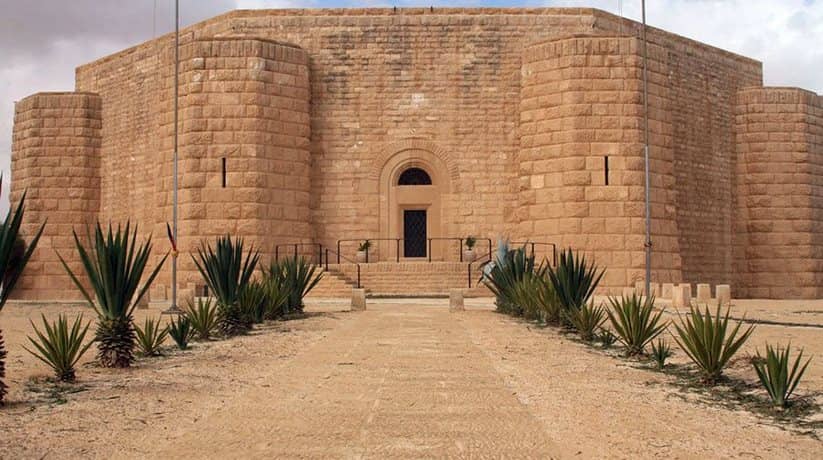
What makes El Alamein different from Egypt's other historical sites is that it isn't ancient — it's 20th century. In 1942, this stretch of desert became the setting for one of the Second World War's most decisive campaigns, and the area still holds the physical evidence: a military museum built on the battlefield, a Commonwealth war cemetery, and separate German and Italian memorials, each maintained by the nation whose soldiers are buried there. Visitors typically combine two or more of these sites in a single trip, since they sit within a short drive of each other along the coastal road.
The Battle of El Alamein: Why This Desert Mattered
The Battle of El Alamein was fought in two phases between July and November 1942, between the British Commonwealth's Eighth Army, led by General Bernard Montgomery, and German-Italian forces under Field Marshal Erwin Rommel. The battle stopped the Axis advance toward Alexandria, Cairo, and the Suez Canal.
Rommel's forces had pushed east across Libya into Egypt, and by mid-1942 they were within striking distance of the Nile Delta. The First Battle of El Alamein in July stalled that advance. The Second Battle, launched by Montgomery in October 1942, forced a full Axis retreat back across Libya. Winston Churchill later summarized its significance directly: before El Alamein, the Allies had never had a victory; after El Alamein, they never had a defeat. The campaign involved close to 400,000 combined troops and cost tens of thousands of lives on both sides — the reason the town today holds cemeteries for four different nations rather than one.
El Alamein Military Museum: What You'll See Inside
The El Alamein Military Museum, established by presidential order in 1965 and opened in 1966, sits on the actual battlefield and is organized by nation rather than by chronology. Egypt's Ministry of Defence has managed and expanded it since, including a major renovation for the battle's 50th anniversary in 1992.
The museum is divided into five main halls. The Egyptian Hall covers Egypt's logistical role supporting the Allies. The Commonwealth Hall displays British and Allied weapons, maps, and uniforms. The Italian and German Halls each present the equipment and personal effects of those forces, including uniforms and field gear. The Mixed Hall is often singled out as the most useful stop for first-time visitors, since it lays out the battle itself through maps and models showing both sides' positions. Outside, an open-air exhibition holds the tanks, artillery pieces, and armored vehicles used in the fighting — including captured German and Italian equipment alongside Allied hardware.
Opening hours are generally listed as 9:00 AM to 4:00 PM daily, and an entrance fee applies (past visitor reports cite figures in the 300–400 EGP range, though this should be confirmed before travel since museum pricing in Egypt changes periodically). Signage inside is translated into English, Italian, German, and Arabic, but there's no audio guide system, so a guide adds real value here if you want the full context behind each hall.
El Alamein War Cemetery: The Commonwealth Memorial
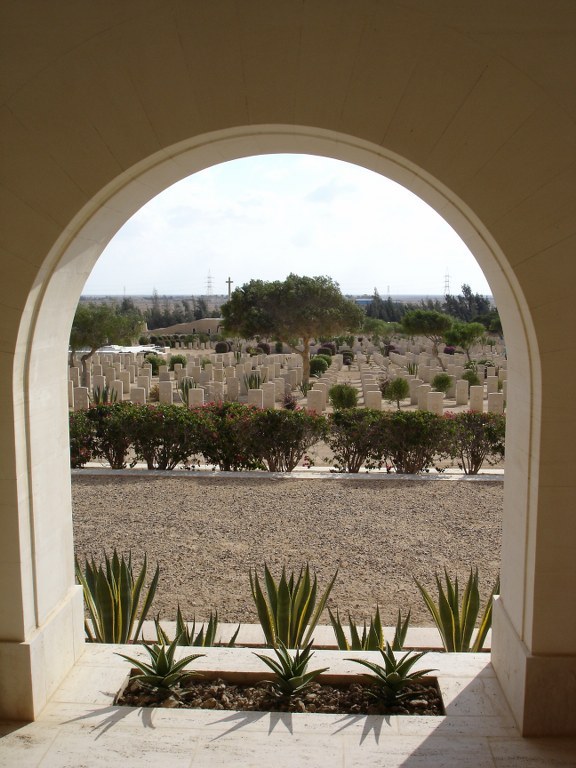
El Alamein War Cemetery, maintained by the Commonwealth War Graves Commission (CWGC), holds 7,240 Commonwealth burials from the Second World War, of which 815 remain unidentified, along with 102 graves of other nationalities. It's one of the largest CWGC cemeteries outside Europe.
The cemetery's entrance is formed by the Alamein Memorial, which commemorates more than 8,500 Commonwealth land forces and over 3,000 airmen who died in the Egypt, Libya, and wider Middle East campaigns and have no known grave — their names are inscribed on stone panels within a cloistered walkway. A separate structure, the Alamein Cremation Memorial, honors more than 600 men whose remains were cremated in accordance with their faith. Rows of rose beds front the memorial, an unexpected note of color against the surrounding desert, kept alive by an irrigation system built specifically for the site. The cemetery is open daily from around 7:00 AM to 5:00 PM, and entry is free. Most visitors describe it as a quiet, contemplative stop — deliberately unlike the museum's more active, exhibit-driven pace.
The German and Italian Memorials Nearby
Beyond the Commonwealth cemetery, two national memorials sit a short drive further along the coast road, each built and maintained by the respective country rather than Egypt.
The German War Cemetery, opened in 1959 and designed by architect Robert Tischler, holds around 4,200 German soldiers from the Second World War and a smaller number from the First. It's built in a fortress-like style — a design Tischler used for several German war cemeteries across Europe — giving it a noticeably different atmosphere from the open Commonwealth grounds.
A few kilometers beyond it, on a rise called Tel el-Eisa overlooking the Mediterranean, stands the Italian Memorial at El Alamein, the largest single structure at the site. Built between 1954 and 1958 and driven largely by Italian veteran and engineer Paolo Caccia Dominioni, the white marble tower serves as both mausoleum and small museum, with a one-room exhibit of maps and artifacts near the entrance (labeled mostly in Italian, with limited English and Arabic translation). Together, these two sites round out the picture the Commonwealth cemetery only partly tells — that this battle was fought, and mourned, by several nations at once.
How to Get to El Alamein
From Alexandria: El Alamein is about 106 kilometers away, roughly a 1.5-hour drive along the coastal highway. Private car or taxi is the most direct option; a public bus also runs the route in around 2 to 3 hours, and a twice-daily train connects Alexandria's Moharam Bek station to El Alamein in about 2 hours.
From Cairo: The distance is about 240 kilometers, taking roughly 2.5 to 3 hours by private car via the Cairo–Alexandria Desert Road and the coastal highway. This makes El Alamein doable as a long day trip from Cairo, though most visitors who want to see the museum, cemetery, and both memorials without rushing find it more comfortable to base themselves in Alexandria and treat El Alamein as a half-day or full-day trip from there.
Because the sites are spread along several kilometers of coast road — the museum, Commonwealth cemetery, German cemetery, and Italian memorial aren't within walking distance of each other — a private vehicle or guided tour is the practical way to see more than one in a day, since public transport won't move between them.
Best Time to Visit and Practical Tips
The most comfortable months to visit El Alamein are October through April, when North Coast temperatures stay mild; summer months (June–August) bring strong desert heat with little shade at the outdoor sites. Plan for at least half a day if visiting just the museum and Commonwealth cemetery, or a full day if adding the German and Italian memorials.
Bring cash in Egyptian pounds for entrance fees, as card payment isn't reliably available on-site. Comfortable walking shoes matter more than they might seem — both the museum's outdoor exhibition and the cemetery grounds involve walking across open, uneven terrain. If visiting during Ramadan, note that many Egyptian tourist sites shift to shorter hours, so it's worth confirming times in advance. A guide isn't required at any of the four sites, but given how much of the history depends on knowing which hall or memorial belongs to which nation, a knowledgeable guide adds context that the signage alone doesn't fully cover.
Is El Alamein Worth Visiting?
For travelers with a genuine interest in WWII history, El Alamein is one of the more substantive historical stops on Egypt's North Coast — a real battlefield rather than a recreation, with cemeteries and a museum that reflect the scale of what happened there. It's a different kind of visit than the pyramids or Luxor's temples: quieter, more solemn, and best approached with some prior knowledge of the battle rather than as a casual add-on.