Sports in Ancient Egypt: Wrestling, Archery, Rowing & Games
Wrestling was the most thoroughly documented sport of ancient Egypt. At Beni Hassan, a Middle Kingdom necropolis roughly 20 kilometers south of Minya, tomb walls dated to around 2000 BCE show hundreds of paired wrestlers locked in sequential holds, throws, and grips, painted in registers that read almost like instructional diagrams. No other ancient civilization left behind this volume of technical detail on a single sport.
Archery carried both military and royal significance. Pharaohs used hunting and target shooting to display physical fitness and divine favor. Amenhotep II, who ruled during the 18th Dynasty, recorded on his Sphinx Stela near Giza that he could shoot arrows through a copper target while driving a chariot at full speed, a claim meant to reinforce his image as an athletic and capable ruler rather than a neutral sporting record.
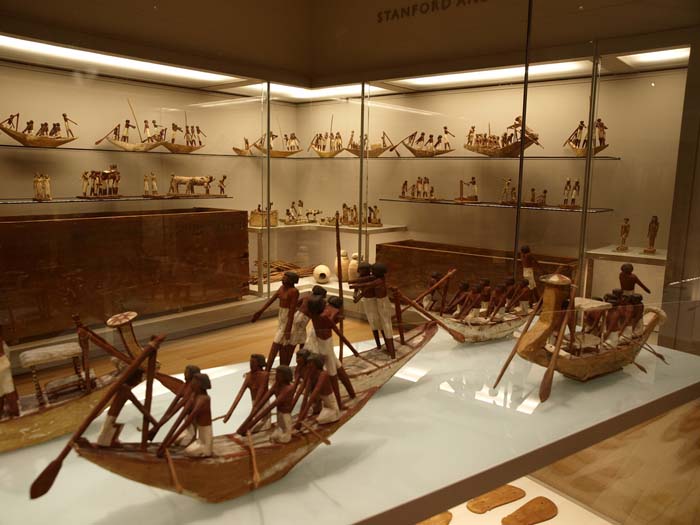
Rowing and boat handling mattered in a civilization built along a single river. Boat races appear in temple and tomb reliefs, sometimes tied to religious festivals such as those honoring the god Sobek, where competitive rowing formed part of the celebration rather than pure recreation.
Ball games, played with balls of linen or leather stuffed with straw, appear in tomb scenes and have been recovered from children's burials, particularly from Middle Kingdom sites. Some scenes show players catching balls while riding on the backs of others, suggesting a game closer to acrobatic play than a formal competitive sport.
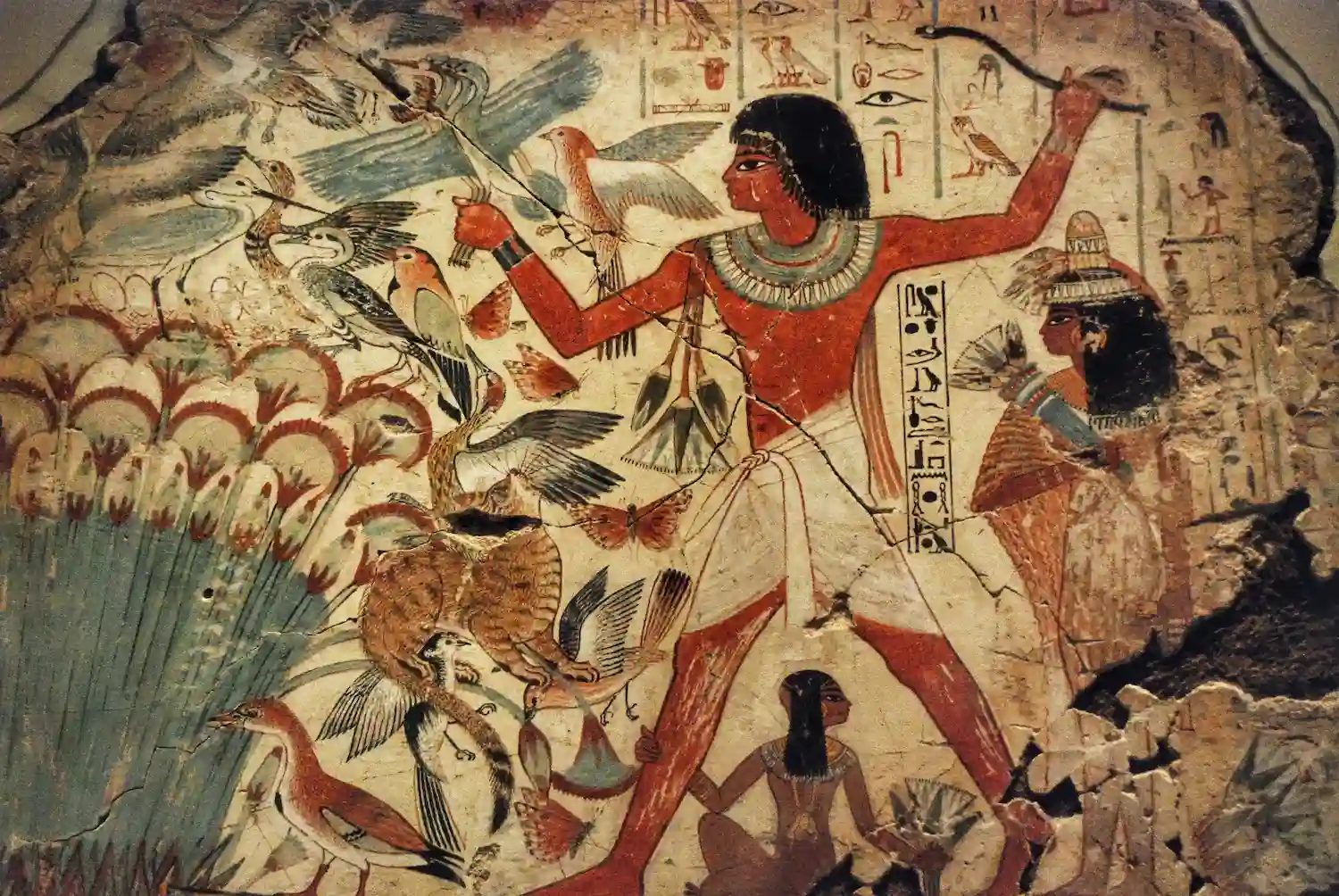
Hunting and fowling in the marshes, done with throw sticks and depicted extensively in Theban tombs such as that of Nebamun, functioned as an elite leisure activity as much as a sport. Stick fighting, tug of war, and gymnastic exercises such as high jumps also appear in tomb reliefs, most commonly at Beni Hassan and Saqqara.
Chariot racing developed later than most other sports, gaining prominence after horses were introduced during the Second Intermediate Period. By the New Kingdom, chariotry was tied closely to royal and military identity rather than casual sport.
Visitors who want to see this history directly can still view the Beni Hassan tomb paintings and the reliefs at Saqqara in person; both sites are commonly included in Aten Tours' private Egypt itineraries for travelers focused on lesser-visited archaeological sites.