Colorful wall reliefs and hieroglyphs inside the Temple of Khonsu, Luxor

Temple of Khonsu: The Small Karnak Temple Most Tour Groups Skip

Discover the Temple of Khonsu at Karnak, one of ancient Egypt's best-preserved temples. Explore its remarkable architecture, restored painted ceilings...

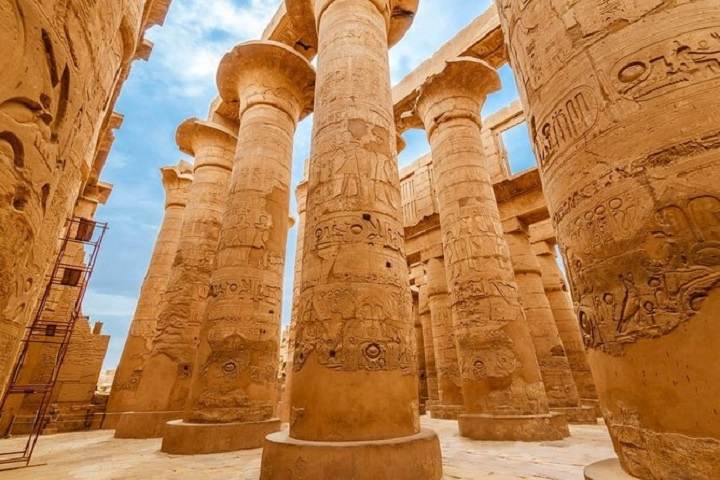
Interior courtyard with massive columns at the Temple of Khonsu in Luxor

Temple of Khonsu: The Small Karnak Temple Most Tour Groups Skip

Front entrance of the Temple of Khonsu in Karnak, Luxor

The Temple of Khonsu is a New Kingdom temple inside the Karnak complex in Luxor, Egypt, dedicated to Khonsu, the ancient Egyptian moon god. It sits in the southwest corner of the Precinct of Amun-Re, reached by its own short avenue of sphinxes — a separate approach from the one most visitors take toward the Hypostyle Hall.

Construction started under Ramesses III, around 1186–1155 BC, on the site of an earlier 18th Dynasty temple. Later rulers kept adding to it: Ramesses IV, Ramesses XI, the high priests Herihor and Pinedjem, and eventually Ptolemy III Euergetes, who built the large gateway now known as Bab el-Amara. That gateway is one of the few Ptolemaic-era enclosure structures still standing at Karnak; most of the rest was dismantled centuries ago.

Because it's a side building rather than the main attraction, most tour groups walk past it. That's actually part of why it's held up so well, less foot traffic and flash photography have left more of the original stone and paint intact than you'll find in the busier parts of Karnak.
 

Khonsu was the son of Amun and Mut, together forming Thebes' three main gods — the Theban Triad. He was linked to the moon, healing, and protection; one relief inside the temple shows him worshipped as a moon disk by eight other gods. Ramesses II reportedly sent a statue of Khonsu to a foreign king as a cure for his sick daughter — a detail that shows how far the god's reputation for healing traveled beyond Egypt itself.

The temple's layout is one of the most intact examples of New Kingdom design at Karnak. Past the Bab el Amara gateway, a peristyle court lined with 28 columns leads into a hypostyle hall, then a barque sanctuary where Khonsu's ceremonial boat was once kept. A staircase from the sanctuary climbs to a roof chapel, which still gives a clear view over the rest of Karnak.

For years, soot from oil lamps and later candle smoke hid the temple's original colors. Conservators from American, French, and Egyptian teams working together — have spent years cleaning the reliefs, and the blues, reds, and golds


"Is the Temple of Khonsu Worth Visiting?"

Yes, and it's one of the better reasons to keep walking past Karnak's main court instead of turning back toward the exit. It's smaller than the Hypostyle Hall and easy to rush through in a few minutes, but it rewards a slower look: the ceiling reliefs are some of the best-preserved at Karnak, and the walk out to the southwest corner is usually quiet even when the rest of the site is packed with tour buses.

The trade-off is real, though. There's no dramatic scale here, no forest of towering columns — if you're short on time or energy in the heat, the main Karnak temple and the Hypostyle Hall matter more. Khonsu's temple is the kind of place that rewards people who already have the big stuff covered and want to go one layer deeper.


"Visiting Info: Location, Tickets, and Hours"

The Temple of Khonsu is inside the Karnak Temple Complex, in Karnak, about 10–15 minutes by taxi from central Luxor. There's no separate ticket — entry is included in the standard Karnak admission, and once inside, it's a short walk southwest from the main court, past the Sacred Lake and the southern pylons.

Karnak is open daily from around 6:00 AM to 5:30 PM, though hours can shift seasonally, so it's worth checking the current schedule before you go. Early morning is the best time to reach the Khonsu Temple specifically: the light is softer for the reliefs, the heat is manageable, and this corner of the site tends to stay quiet even when the main court fills up later in the day.
Why Choose Aten Tours

Travel with confidence with Aten Tours, where local expertise meets exceptional service. From carefully curated itineraries and handpicked experiences to seamless planning and dedicated support, we create personalized journeys designed around what matters most—comfort, quality, and unforgettable experiences across Egypt and beyond.

Secure Online Payment

Enjoy safe and secure online payments with full protection of your personal and financial information. Book your trips with confidence anytime, anywhere.

Help & Support

Travel with confidence knowing that our Help & Support team is always here for you. From booking to your return, we’re just one message away.

Tailored Travel Experiences

Your journey, your way. We design tailored experiences that match your style, ensuring comfort, flexibility, and unforgettable moments in every destination.

Client Testimonials

At Aten Tours, we are proud to create experiences that leave lasting memories. Read genuine feedback from travelers who explored Egypt’s wonders, enjoyed luxury holidays, and discovered the world with confidence and ease.

Traveling solo in Egypt with Aten Tour was one of the best decisions I made. As a 22-year-old female traveler, I was a little nervous before arriving, but I felt safe and well looked after from day one. Everything was well organized, my guide was knowledgeable, kind, and always happy to help, and I never had to worry about a thing. The whole trip was smooth, enjoyable, and filled with unforgettable moments. I'm so glad I chose Aten Tour and would definitely travel with them again.

Sarah
Sarah May 2026

My fiancé and I booked a private 5-day tour of Egypt with Aten Tours, covering Cairo, Aswan, Abu Simbel, and Luxor. From the moment we arrived, everything was perfectly organized. The team took care of every detail, making our trip completely stress-free. Our guides were knowledgeable, friendly, and passionate about Egypt's history, and every destination exceeded our expectations. Even after returning home, we still find ourselves talking about this unforgettable experience. We highly recommend Aten Tours to anyone looking for a well-planned and memorable trip to Egypt.

Thomas
Thomas May 2026

Traveling with Aten Tour made our vacation completely stress-free. Every hotel, transfer, and excursion was exactly as promised, and the team was always available whenever we had a question. We really appreciated the personal attention and warm hospitality throughout the trip. We came home with unforgettable memories and would definitely recommend Aten Tour to anyone planning a trip to Egypt.

Olivia
Olivia April 2026

We booked an 8-day trip with Aten Tour, and it turned out to be one of our favorite vacations. Everything was well organized from start to finish, which made traveling around Egypt really easy. We never felt rushed, the hotels were great, and the team was always helpful whenever we needed anything. Egypt had been on our bucket list for a long time, and we're so glad we chose Aten Tour for this experience.

Nicholas
Nicholas July 2026

Our family booked a tour with Aten Tour after reading several positive reviews, and they definitely lived up to our expectations. Communication before the trip was quick and helpful, and everything during the tour was exactly as described. The hotels were comfortable, the transportation was smooth, and the guides made every stop interesting with their stories and local knowledge. Egypt had always been a dream destination for us, and this trip made it even more memorable.

Emma
Emma June 2026

All FAQ about Egypt

Most visitors need 15–20 minutes for a focused look at the reliefs, columns, and roof chapel. It's easy to walk through faster, but the ceiling paintings and wall carvings reward a slower pace, and the corner is usually quiet enough to take that time without crowds.

The Temple of Khonsu sits in the southwest corner of the Karnak Temple Complex, in Luxor, Egypt, reached through its own gateway (Bab el-Amara) and a short avenue of sphinxes separate from the main entrance path most visitors follow toward the Hypostyle Hall.

Khonsu was the ancient Egyptian moon god, son of Amun and Mut, and the third member of Thebes' Theban Triad. Karnak, as the main religious center of Amun, includes a dedicated temple for each member of that triad — this one, built mainly under Ramesses III, honors Khonsu specifically.

No. The Temple of Khonsu is included in the standard Karnak Temple Complex admission ticket. There is no additional fee to enter it once you're inside Karnak it's simply a short walk southwest from the main court, past the Sacred Lake and the southern pylons.

Yes. The Temple of Khonsu, in Karnak's southwest corner, is one of the best-preserved New Kingdom temples in Egypt, with recently restored ceiling reliefs rarely seen at this quality elsewhere on the site. It's smaller and less dramatic than Karnak's main Hypostyle Hall, so it suits visitors who have time to go beyond the main court rather than those in a rush.

94%
WhatsApp Call