Abu Haggag Mosque and its historic architecture in Luxor

The Abu El-Haggag Mosque luxor

In the first court of Luxor Temple, a mosque still stands on the same ground where Ramesses II once raised columns to Amun. Built in the 13th century...

Abu Haggag Mosque in Luxor illuminated at night

Abu El-Haggag Mosque: The 13th-Century Mosque Built Inside Luxor Temple

Abu Haggag Mosque with historic Islamic and Egyptian architecture

- What Is the Abu El-Haggag Mosque?

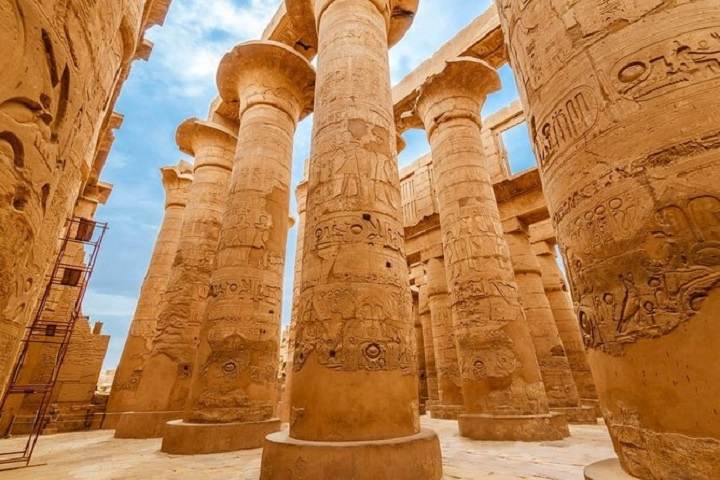
The Abu El-Haggag Mosque sits inside the walls of Luxor Temple, on the upper level of the first court, built by Ramesses II around 1250 BC. It's a working mosque with Friday prayers and a resident imam—the whole thing, not a ruin or a museum piece. That's what throws people off. You walk through a 3,000-year-old temple gate, and there's a minaret above you.

The mosque is named for Sheikh Yusuf Abu al-Haggag, a Sufi preacher who lived in the 12th and 13th centuries and eventually settled in Luxor, where he became the city's patron saint. (Accounts differ on where he was born, Damascus, Baghdad, and Morocco all appear in different sources, so we're not stating one as fact.) He's buried inside the mosque. Locals still call the building simply "Abu Haggag," and the annual festival built around his memory is one of Luxor's biggest events of the year; more on that below.

For visitors, the mosque is usually seen from outside and below, from the temple's colonnade or first court, rather than entered as part of a standard temple ticket.

- A Site of Worship Longer Than Almost Anywhere Else

Luxor Temple itself goes back to Amenhotep III, around 1400 BC, and was expanded later by Ramesses II; the court the mosque now sits in is his addition. That's the pharaonic layer. But the site didn't stop being sacred when Egypt stopped worshipping Amun.

By the late Roman period, the temple had been folded into a military camp and used for imperial cult worship. Later still, Christians built a church inside the same court; remains of it are still there, underneath and around the mosque. Then, in the 13th century, under the Ayyubid sultan As-Salih Ayyub, the mosque of Abu El-Haggag went up on top of it all.

So the short version: temple, then church, then mosque, same patch of ground. Temple, church, and mosque on the same stones, roughly 3,400 years apart in origin but standing in the same footprint today.
 

- The Moulid of Abu El-Haggag

Once a year, the mosque is the center of the loudest, most colorful few days in Luxor. The Moulid of Abu El-Haggag falls in the Islamic month of Shaaban, about two weeks before Ramadan, which means the date shifts on the Gregorian calendar every year, moving about eleven or twelve days earlier each time.

For two to three days, boats get paraded around the temple grounds, carried rather than sailed, by descendants of the sheikh's family. The route echoes something older: this is roughly the same path the sacred barks of Amun, Mut, and Khonsu took during the ancient Opet Festival, more than three thousand years earlier. Nobody claims a direct, unbroken line between the two, but the overlap in geography and timing is hard to ignore.

Alongside the religious side, chanting, Quran recitation, and a council of the sheikh's descendants held inside the mosque, the moulid also looks like any Egyptian street festival: horse races, Sufi music, stick-fighting displays, and food stalls. Muslims and Christians in Luxor both turn out for it. It's one of the few times of the year the mosque and the temple around it are genuinely packed.


-Visiting the Mosque: What to Expect

The mosque is easy to see and hard to fully enter. Most visitors experience it the way the majority of tourists do: looking up at it from the temple's first court or the colonnade, not walking through its prayer hall. It's an active mosque with a working congregation, not a stop built into the standard Luxor Temple ticket.

That said, visitors have been able to go inside; accounts from people who've entered mention removing their shoes and covering their head and shoulders at the door, the same as any working mosque in Egypt. (Flag for verification: current entry policy, hours, and any fee should be confirmed directly with Luxor Temple/Ministry of Tourism sources before publishing, since site access rules can change.)

Non-Muslims appear to be welcome to view the mosque from the temple grounds, and there's no indication of restrictions on photographing it from outside, though, as with most religious sites, it's worth checking before photographing anyone actually praying inside.


Nearby: Luxor Temple and the East Bank

The mosque doesn't stand alone; it's one stop inside a much bigger site. Luxor Temple itself is worth an hour or more beyond the mosque, and Karnak Temple, the largest religious complex built in ancient Egypt, is a short drive north along the same bank of the Nile. Both sit on Luxor's East Bank, along with the Luxor Museum and the Mummification Museum, making the area easy to cover in a single day without crossing the river.

For travelers building a Luxor itinerary around the temple, the mosque is a five-minute detour with a very different story to tell than anything else on the East Bank, worth building into the visit rather than rushing past.
Why Choose Aten Tours

Travel with confidence with Aten Tours, where local expertise meets exceptional service. From carefully curated itineraries and handpicked experiences to seamless planning and dedicated support, we create personalized journeys designed around what matters most—comfort, quality, and unforgettable experiences across Egypt and beyond.

Secure Online Payment

Enjoy safe and secure online payments with full protection of your personal and financial information. Book your trips with confidence anytime, anywhere.

Help & Support

Travel with confidence knowing that our Help & Support team is always here for you. From booking to your return, we’re just one message away.

Tailored Travel Experiences

Your journey, your way. We design tailored experiences that match your style, ensuring comfort, flexibility, and unforgettable moments in every destination.

Client Testimonials

At Aten Tours, we are proud to create experiences that leave lasting memories. Read genuine feedback from travelers who explored Egypt’s wonders, enjoyed luxury holidays, and discovered the world with confidence and ease.

Traveling solo in Egypt with Aten Tour was one of the best decisions I made. As a 22-year-old female traveler, I was a little nervous before arriving, but I felt safe and well looked after from day one. Everything was well organized, my guide was knowledgeable, kind, and always happy to help, and I never had to worry about a thing. The whole trip was smooth, enjoyable, and filled with unforgettable moments. I'm so glad I chose Aten Tour and would definitely travel with them again.

Sarah
Sarah May 2026

My fiancé and I booked a private 5-day tour of Egypt with Aten Tours, covering Cairo, Aswan, Abu Simbel, and Luxor. From the moment we arrived, everything was perfectly organized. The team took care of every detail, making our trip completely stress-free. Our guides were knowledgeable, friendly, and passionate about Egypt's history, and every destination exceeded our expectations. Even after returning home, we still find ourselves talking about this unforgettable experience. We highly recommend Aten Tours to anyone looking for a well-planned and memorable trip to Egypt.

Thomas
Thomas May 2026

Traveling with Aten Tour made our vacation completely stress-free. Every hotel, transfer, and excursion was exactly as promised, and the team was always available whenever we had a question. We really appreciated the personal attention and warm hospitality throughout the trip. We came home with unforgettable memories and would definitely recommend Aten Tour to anyone planning a trip to Egypt.

Olivia
Olivia April 2026

We booked an 8-day trip with Aten Tour, and it turned out to be one of our favorite vacations. Everything was well organized from start to finish, which made traveling around Egypt really easy. We never felt rushed, the hotels were great, and the team was always helpful whenever we needed anything. Egypt had been on our bucket list for a long time, and we're so glad we chose Aten Tour for this experience.

Nicholas
Nicholas July 2026

Our family booked a tour with Aten Tour after reading several positive reviews, and they definitely lived up to our expectations. Communication before the trip was quick and helpful, and everything during the tour was exactly as described. The hotels were comfortable, the transportation was smooth, and the guides made every stop interesting with their stories and local knowledge. Egypt had always been a dream destination for us, and this trip made it even more memorable.

Emma
Emma June 2026

All FAQ about Egypt

The Moulid of Abu El-Haggag is an annual two- to three-day festival held in the Islamic month of Shaaban, about two weeks before Ramadan, so its Gregorian date shifts earlier each year. It includes a boat procession around the temple grounds, religious chanting inside the mosque, and street festivities like horse races and sufi music, drawn from both Luxor's Muslim and Christian communities.

Yes. Like any working mosque in Egypt, visitors are expected to remove their shoes at the door and cover their shoulders and head before entering.
 

Most visitors see the mosque from outside, looking up at it from Luxor Temple's first court or colonnade, since it isn't part of the standard temple ticket. Visitors have been able to go inside outside of prayer times; entry policy, hours, and any fee should be confirmed on-site or with a guide, as access can vary.
 

The site has been used for worship continuously for roughly 3,400 yearsو first as a pharaonic temple built by Amenhotep III and expanded by Ramesses II, then as a Roman imperial cult site, then as a Coptic church, and finally, from the 13th century, a mosque. Each layer was built on top of the one before it rather than replacing the site entirely.
 

The Abu El-Haggag Mosque is an active 13th-century mosque built inside the first court of Luxor Temple in Egypt, above the remains of an earlier Coptic church. It's named after Sheikh Yusuf Abu al-Haggag, a Sufi preacher buried inside, and remains a working mosque with regular Friday prayers today.
 

94%
WhatsApp Call