Deir el-Medina
- What Is Deir el-Medina?
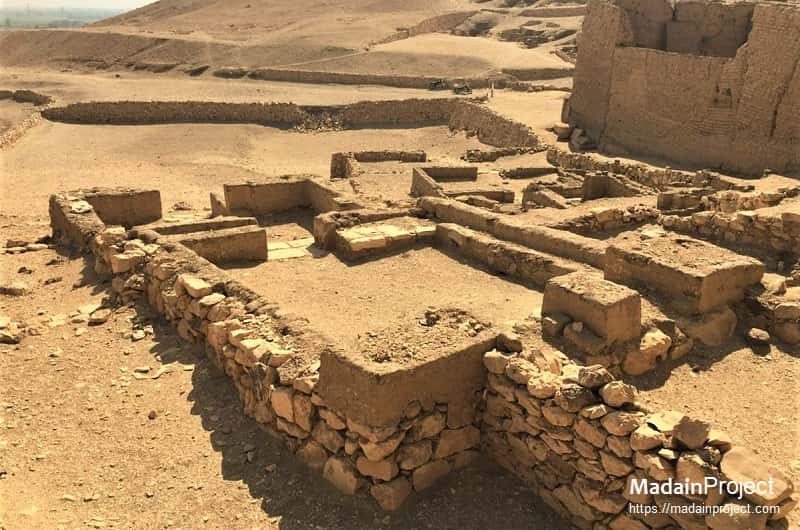
Deir el-Medina is the ancient workmen's village on Luxor's West Bank, home to the artisans who built and decorated the royal tombs in the Valley of the Kings and Valley of the Queens between roughly 1550 and 1080 BC. The site sits in a small desert hollow behind the hills that separate it from the Valley of the Kings, walled off from the rest of the Theban Necropolis on purpose — the state wanted the men who knew where the pharaohs were buried kept apart from everyone else.
The ancient Egyptians called it Set-Maat, "the Place of Truth." The name Deir el-Medina came much later, during the Christian era, when the temple of Hathor here was converted into a monastery; "deir" means "monastery" in Arabic. Today the site is part of the UNESCO World Heritage listing for Ancient Thebes with its Necropolis, and it includes the village ruins, several painted tombs, and the Ptolemaic-era Temple of Hathor.
- The Artisans Who Built Egypt's Royal Tombs
The village housed a specialized community of stonemasons, plasterers, sculptors, and painters, along with their families, who worked in shifts on the royal tombs nearby. Pharaoh Amenhotep I founded the settlement early in the 18th Dynasty specifically to house this workforce, and it stayed in use for roughly 450 years, through the reigns of Ramesses II and Ramesses III and into the 20th Dynasty.
The work schedule ran eight days on, followed by two days off, though workers regularly got extra days for illness, family matters, or simply arguing with a spouse, all recorded by the village scribe. As salaried state employees paid in grain rations, they were considered middle class by the standards of the time, and many held informal second jobs on the side. Because the same skilled hands who built the pharaohs' tombs also built their own, the artisans' tombs at Deir el-Medina are unusually well-crafted for a non-royal burial site, smaller than the tombs in the Valley of the Kings, but often just as vividly painted.
-The Tombs of Deir el-Medina
Because the site is also known as the Valley of the Artisans, its tombs are sometimes confused with the royal tombs nearby, but these belonged to the workers themselves
Tomb of Sennedjem (TT1)
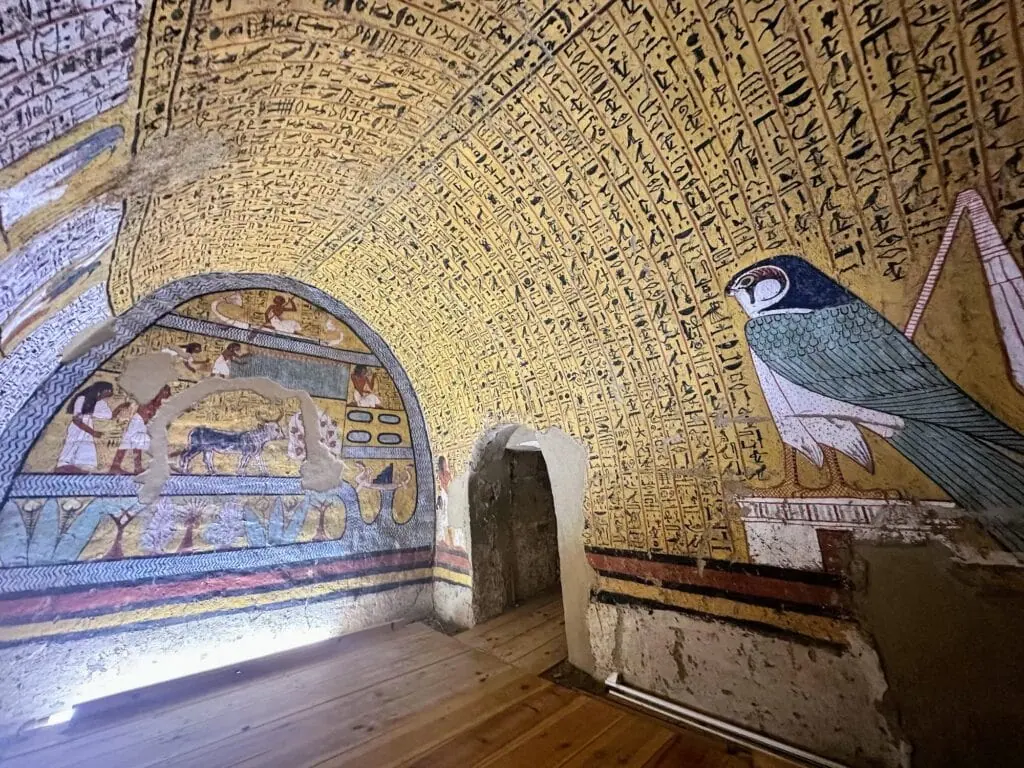
This is the smallest tomb on the site and, according to many visitors, the most beautiful. Sennedjem held the title "Servant in the Place of Truth," and his tomb's ceiling shows a vivid scene of him and his wife working in the fields of the afterlife under a bright blue sky. The entrance is steep and narrow, so only a few people can go in at a time.
Tomb of Inherkhau (TT359)
Inherkhau served as foreman of the necropolis workers during the reigns of Ramesses III and Ramesses IV. His tomb's outer chamber depicts offering scenes with his wife and son, while the inner chamber includes imagery from two funerary texts meant to guide the dead through the underworld: the Book of Gates, which maps the sun god's nightly journey through twelve divisions of the afterlife, and the Book of the Dead, the broader collection of spells and prayers placed with the deceased.
Tomb of Pashedu and the Triple Tomb
The tomb of Pashedu requires a separate ticket purchased at the same booth as the standard entry, and it's widely considered the finest of the workers' tombs currently open; a guard walks visitors up the hill to reach it. Nearby, a single entrance leads into three connected tombs built for the foreman AmenNakht and his sons, Nebenmaat and Khaemteri, all dating to the reign of Ramesses II.
- The Temple of Hathor
Near the village entrance stands a small but well-preserved temple dedicated to Hathor, the goddess of love, music, and motherhood. Built during the Ptolemaic period, centuries after the artisans' village itself had gone out of use, this is the same temple whose later conversion into a Christian monastery gave the site its modern name, as mentioned earlier.
The temple's inner chambers hold some of its best-preserved reliefs, still showing traces of their original color. Compared to the temples of Karnak or Hatshepsut, it's modest in scale, but its condition and its direct link to the site's name make it worth the short walk from the tombs.
- The First Labor Strike in History
Around 1157 BC, in the 29th year of Ramesses III's reign, the artisans of Deir el-Medina did something no workers had done before, as far as we know from written record: they put down their tools and walked out.
Their grain rations, the wages of the time, had arrived nearly a month late, on top of earlier shortages. The workers left the village and marched to the nearby mortuary temples, staging what was effectively a sit-in, refusing to leave until officials addressed their pay. Some accounts translate their protest as a cry that they were going hungry, though the exact wording depends on how the original hieratic text is read. The strike worked: officials released grain from the temple stores, and the workers eventually returned to their jobs, though similar disputes over pay flared up again decades later, under Ramesses IX and Ramesses X.
The event survives because a scribe named Amennakht recorded it on papyrus, now known as the Turin Strike Papyrus and held at the Museo Egizio in Turin. It's one of the reasons Deir el-Medina matters beyond its tombs and temple: nowhere else in ancient Egypt do we have this level of detail about ordinary workers pushing back against the state, their pay, their complaints, and the outcome, all in their own recorded words.
- Deir el-Medina vs. the Valley of the Kings
Visitors often assume Deir el-Medina and the Valley of the Kings are the same kind of site, just smaller. They're not, and knowing the difference helps set the right expectations before you go.
The Valley of the Kings holds the tombs of pharaohs: grand, deep, built on a royal scale, though some, including Tutankhamun's, the most famous of the 63 known tombs there, show more wear than visitors expect. Deir el-Medina holds the tombs of the craftsmen who built those royal tombs. They're smaller and their entrance passages narrower, but the artisans decorated their own resting places with the same skill they brought to the pharaohs' , which is why several of these tombs, particularly Sennedjem's, are often rated by visitors as more vividly preserved than what's found in the Valley of the Kings itself.
The other difference is pace. The Valley of the Kings draws the bulk of Luxor's tour groups and can get crowded, especially by mid-morning. Deir el-Medina, sitting a short distance away near Medinet Habu, sees far fewer visitors, which makes it easier to spend real time in front of a wall painting without a crowd behind you.
- How to Visit: Tickets, Hours, and Practical Tips
Deir el-Medina sits on Luxor's West Bank, close to Medinet Habu and a short drive from the Valley of the Kings, so it's easy to combine with either in a single day.
A standard ticket covers entry to the village, the Temple of Hathor, and the tombs of Sennedjem and Inherkhau. The tomb of Pashedu requires a separate ticket, bought at the same booth, and it's worth the small extra cost. (Ticket prices and opening hours change periodically, confirm current figures on the official Egyptian ticketing site or with your guide before visiting.) Tickets can also be bought online in advance, and Deir el-Medina is included in the Luxor Pass for travelers visiting several West Bank sites in one trip.
The site tends to open early morning and close mid-afternoon, and the best time to visit is right after opening or later in the afternoon, the tombs offer little shade, and the walk up to Pashedu's tomb is more comfortable outside the midday heat. Photography isn't permitted inside the tombs, so plan to spend your time looking rather than shooting.
Because Deir el-Medina works best as part of a wider West Bank day, paired with the Valley of the Kings, Medinet Habu, or the temple of Hatshepsut, it's usually more practical with a private guide who can plan the order of sites around opening times and heat, rather than trying to coordinate tickets and transport across several locations on your own. Aten Tours' Luxor Attractions private tours can include Deir el-Medina alongside these sites in a single tailored day, with an Egyptologist guide who can walk you through the tombs' inscriptions in more depth than a site plaque ever could.