Aga Khan Mausoleum, Aswan: History, Architecture, and Visitor Guide
What Is the Aga Khan Mausoleum?
The Aga Khan Mausoleum sits on a hill on Aswan's west bank, overlooking the Nile. It holds the tomb of Sir Sultan Mahomed Shah, Aga Khan III, the 48th Imam of the Nizari Ismaili Muslims, along with his wife Begum Om Habibeh. Since February 2025, it also holds the remains of his grandson, Prince Karim Aga Khan IV, the 49th Imam, who asked to be buried beside them.
Built between 1956 and 1960 in a Fatimid architectural style, the mausoleum is one of Aswan's most recognizable landmarks. You can't go inside — the interior has been closed to visitors since 1997 — but the site itself, the climb up, and the view from the top are worth the trip.
Why Aga Khan III Chose Aswan
Aga Khan III first came to Aswan in 1954, not for the scenery, but for his health. He suffered from severe rheumatism, and a doctor suggested a treatment common in the region at the time: burying yourself in hot desert sand. It worked well enough that he kept coming back, and eventually made Aswan his winter home.
He commissioned Egyptian architect Farid Shafie to build both his mausoleum and Villa Nour El Salam, his winter residence, on land granted to him near the site. The villa itself was later designed with input from Hassan Fathy, one of Egypt's most influential architects, known for reviving traditional mudbrick building techniques. Aga Khan III died in 1957, and per his wishes, was reburied in Aswan in 1959, two years after his first burial in Switzerland.
Aga Khan IV's Burial in 2025
In February 2025, the mausoleum became relevant again in a way nobody could have predicted a few years earlier. Prince Karim Aga Khan IV died in Lisbon on February 4, 2025, at age 88. His will named Aswan as his burial site, specifically requesting a place beside his grandfather and grandmother.
The funeral itself was a major event — a private service in Lisbon attended by figures including Canada's Justin Trudeau and Spain's King Emeritus Juan Carlos, followed by a ceremonial procession through Aswan on February 9. The Governor of Aswan took part personally, and the casket crossed the Nile by boat before being carried up the hill by family members. Aga Khan IV was laid to rest in the existing mausoleum, and a separate structure is reportedly planned nearby for his own tomb going forward.
For Aswan, this wasn't just a solemn moment. Local officials have been open about hoping the burial draws renewed attention to the city as a destination — and for a site that spent decades as a quiet stop on the felucca route, that's a real shift.
Architecture: Pink Granite and a Fatimid Silhouette
The mausoleum is built from pink Aswan granite and white marble, with a design that draws directly on Fatimid-era mosque architecture — the same tradition behind Cairo's Al-Azhar Mosque, founded by the Fatimids roughly a thousand years earlier. A large central dome sits on an octagonal drum with arched tracery windows, and four smaller domes mark the corners of the outer wall.
Inside, where you can no longer go, the layout centers on a tomb facing a mihrab set into the eastern wall — the architectural detail that orients any mosque-inspired structure toward Mecca. The interior was known for its calm, uncluttered feel: pale stone, minimal ornament beyond Quranic inscriptions carved into the sarcophagus, and a red carpet that's reportedly still maintained.
From the outside, the dome's white curve against the desert hillside is what most people remember. It photographs well from the river, and even better from partway up the climb.
The Red Rose Tradition
After Aga Khan III's death, his widow Begum Om Habibeh began a daily ritual: placing a single red rose on his tomb. She kept it up for over 40 years, until her own death in 2000. Caretakers at the site have continued the tradition since, and it's become one of the mausoleum's most-repeated stories among guides and visitors alike.
It's a small detail, but it's the kind of thing that sticks with people longer than the architecture does — a private gesture that turned into decades of quiet routine.
Can You Go Inside?
No. The interior of the mausoleum has been closed to the public since 1997, following incidents of visitors behaving disrespectfully inside what is, for many, a sacred site. This isn't likely to change for casual tourism — the site remains an active place of pilgrimage for Ismaili Muslims, and access decisions are made accordingly.
What you can do is walk the grounds, approach the exterior, and take in the view from the hilltop. Photography is generally fine outside; if you're unsure at the time of your visit, ask whoever's managing access that day. Visitors are expected to dress modestly and keep noise down, particularly given the site's ongoing religious significance.
Getting There
The mausoleum sits on the Nile's west bank, and the only way to reach it is by water. From the Aswan Corniche, near the EgyptAir office, you can hire a private felucca or motorboat — expect to negotiate, with round-trip prices typically somewhere in the 150–300 EGP range depending on the boat and your bargaining. Alternatively, take the public ferry to Elephantine Island and arrange a separate boat from there.
Once you land on the west bank, it's a walk uphill: a paved path past Villa Nour El Salam, then a long staircase built from the same pink granite used in the mausoleum itself. It's not technically difficult, but it's exposed to the sun and involves a real incline, so it's not ideal for anyone with mobility issues or in the middle of a hot afternoon.
Best Time to Visit
Aswan runs hot most of the year, and the exposed climb makes timing genuinely matter here — this isn't just a seasonal footnote. Between October and March, mornings and late afternoons bring temperatures around 20–28°C (68–82°F) and softer light for photos. In summer, midday heat regularly climbs past 40°C (104°F), which makes the uphill walk a lot less pleasant and, frankly, not worth attempting at noon.
Sunrise and sunset are when the site looks its best anyway — cooler air, warmer light on the pink granite, and clearer views across the Nile toward the city.
Nearby: What to Combine It With
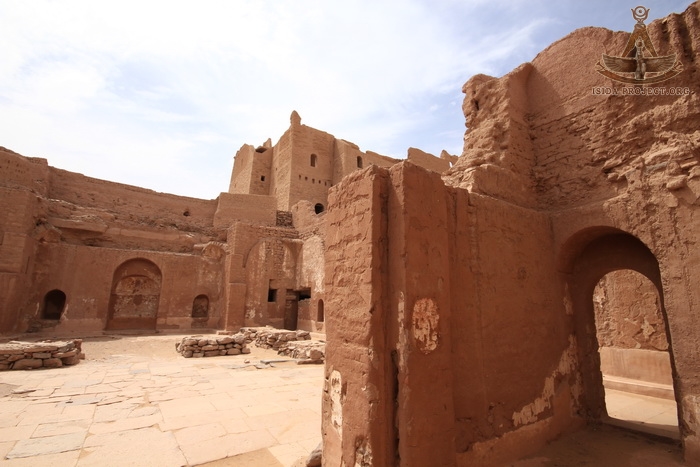
Most visitors don't make the mausoleum a standalone trip. It's usually folded into a wider look at Aswan's west bank, often alongside a felucca ride past Elephantine Island or a stop in one of the Nubian villages along the riverbank, known for their brightly painted houses and distinct culture separate from the rest of Egypt. The Aswan Botanical Garden, on Kitchener's Island, and the ruined Monastery of St. Simeon are both within reach of the same general area and pair naturally with a west-bank half-day.