.jpg "Aswan Botanical Garden on Kitchener’s Island")
Kitchener's Island: The Botanical Garden Hidden on the Nile in Aswan
.jpg "Flower Garden at Aswan Botanical Garden")
What Is Kitchener's Island
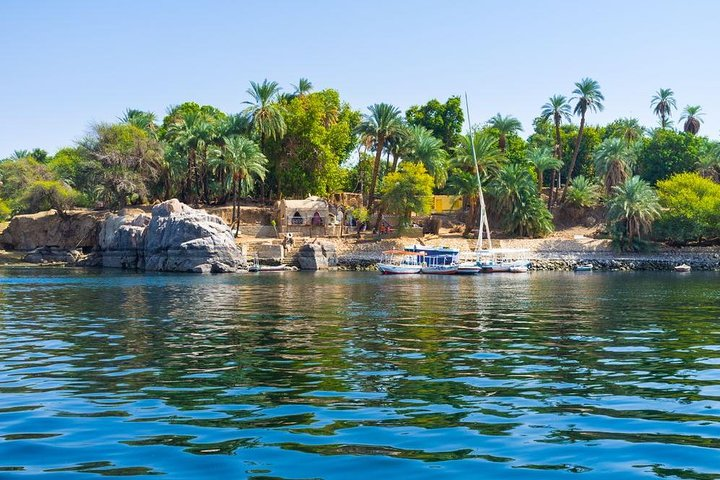
Kitchener's Island is a small, oval island in the Nile at Aswan, sitting just west of the much larger Elephantine Island. Almost the whole thing is taken up by the Aswan Botanical Garden — about 6.8 hectares, laid out in 27 square plots divided by shaded paths, dense with imported palms and tropical trees. Long before the English name stuck, the Nubians who lived nearby called it Jet Narty: the garden island.
No bridge, no road. Getting there means a felucca or motorboat from the Corniche or from Elephantine Island, and the crossing barely takes a few minutes.
Who Was Lord Kitchener
The island's name comes from Lord Horatio Kitchener, the British army commander who led Egypt's forces in the late 1890s. Around 1898 he was given use of the island and turned it into a personal retreat, shipping in plants from wherever the Empire happened to reach — palms from Madagascar and the Caribbean, flowering trees from India, species from parts of Africa he'd served in himself. People at the time apparently called it "the Lord's House."
He left Egypt in 1899 for other postings. The garden outlasted him, and so did the name.
From Private Retreat to Public Garden
In 1928 the Egyptian Ministry of Irrigation took over, and the island's job changed — less private hobby, more research station. Botanists brought in specimens from all five continents and organized the grounds into the 27-square grid still visible today, with one main avenue running its length.
That research history is why the collection feels heavier than a typical city park. Plenty of what's growing here doesn't occur naturally anywhere else in Upper Egypt — it's here because someone planted it deliberately, for study, not just for the view.
The Palm Collection
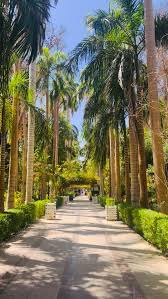
Royal palms, sabal palms, and date palms crowd the main paths, some tall enough to meet overhead and turn the walkway into a shaded tunnel. Each variety tends to carry a small identifying marker, a leftover habit from the garden's research-station days.
The palm avenue running down the island's spine is the most photographed stretch, especially in early morning light before the day's boat traffic picks up.
Beyond the Palms
Past the palm avenue, the garden opens into bamboo groves, cacti and succulents, orchids, fruit trees, and a scattering of medicinal plants. Estimates of the total species count vary by source — most put it around 300, some higher — since the collection has grown in stages since the 1890s without a single consistent survey. [Verify: current official species count, if the CMS needs a specific figure cited.]
What's consistent across sources is the range: this is one of the more botanically diverse single sites in Upper Egypt, built specifically for variety rather than local landscaping.
Birdlife on the Island
The island sits along the Nile flyway, so it doubles as a bird-watching spot without really trying to be one. Egyptian geese nest near the reedy edges, and herons and smaller waterbirds work the shoreline, especially in the early morning before boats start crossing regularly.
Birders visiting Aswan specifically for this often pair it with a slow felucca sail rather than a direct there-and-back trip.
Getting There
Feluccas and small motorboats leave from Aswan's east-bank Corniche and from Elephantine Island. There's no fixed schedule and no posted price list, so agree the fare with the boatman before you climb in.
The crossing itself, from either side, takes only a few minutes. (Boat fares fluctuate and aren't officially set — worth confirming locally on the day.)
Combining the Visit
Most people fold this into a felucca sail that already covers Elephantine Island or the nearby Nubian villages, since the boat's out on the water anyway and the extra stretch adds almost nothing to the trip.
Treating it as a stand-alone destination works less well — the value is really in pairing it with something else already happening on the water.
Best Time to Visit
October through April is the comfortable window. Walking the paths at midday in summer means little shade beyond what the trees themselves give you, and Aswan's summer heat makes that a real problem, not a minor inconvenience.
Mornings are best for birdwatching and for softer light if you're bringing a camera. (Exact opening hours and entrance fee vary by season and aren't consistent across sources — confirm before visiting.)
How Long to Stay
An hour covers the main paths at an easy, unhurried pace. Anyone genuinely into plants or birds tends to stay closer to two, since the garden rewards slow walking more than a quick loop.
Practical Notes
No bridge, no road — the boat crossing isn't a footnote, it's part of the visit, so build it into your timing rather than assuming you can just walk over. The paths are gravel, so decent shoes help, and shade is patchy enough that water is worth carrying.
It's a good half-day add-on to an Aswan trip that already has a felucca ride in it — less convincing as a destination on its own.