.jpg "Tomb of Queen Nefertari: Egypt's Most Beautiful Royal Tomb")

Tomb of Queen Nefertari: Egypt's Most Beautiful Royal Tomb
Why the Tomb of Queen Nefertari Stands Out
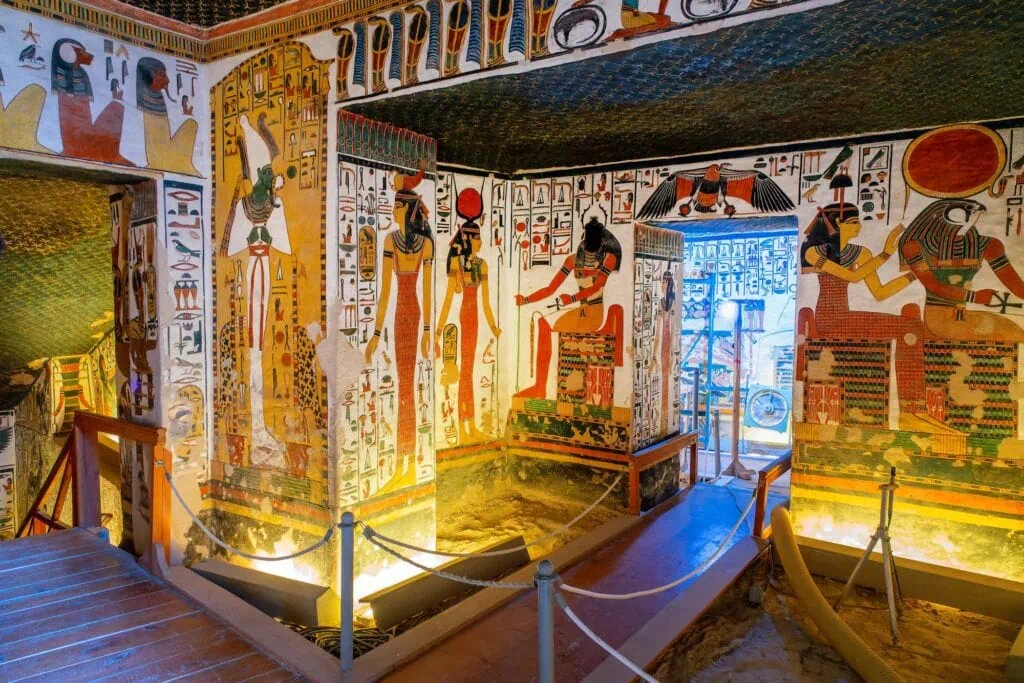
Few burial sites in Egypt draw the kind of reverence given to the Tomb of Queen Nefertari. Carved into the Valley of the Queens near Luxor, it holds some of the best preserved wall paintings from the New Kingdom. The colours remain vivid enough that scenes painted more than three thousand years ago still read clearly today, which is rare for a tomb of this age.
A Queen Honoured by a Pharaoh
Nefertari was the principal wife of Ramesses II, and the scale of her tomb reflects the affection he held for her. Unlike many royal tombs built for function first, this one was designed as a tribute. Every wall was planned as a passage of the Book of the Dead, guiding Nefertari through the afterlife with imagery meant to protect and elevate her.
Discovery and Restoration
The tomb was found in 1904 by an Italian archaeological mission, already damaged by flooding and salt crystallisation that had lifted paint from the plaster over the centuries. A major conservation project carried out decades later stabilised the walls and brought the artwork back to public view, and that restoration is the reason visitors can still see it today.
The Wall Paintings
The paintings cover the walls from floor to ceiling with scenes of Nefertari before gods including Osiris, Isis, and Horus. The blue and gold tones, the fine linework on her garments, and the detail in the hieroglyphic text set this tomb apart from most others in the valley. Egyptologists regard it as one of the finest examples of New Kingdom funerary art in existence.
The Burial Chamber
Deeper inside, the burial chamber contains scenes from the Book of the Dead alongside astronomical ceiling decoration representing the night sky. The chamber was designed to feel like a continuation of the cosmos, placing Nefertari among the stars rather than simply beneath the earth.
Visiting Information
Access to the tomb is limited and tightly controlled because of its fragile condition. Only a set number of visitors are permitted inside each day, and tickets must usually be arranged in advance through the Egyptian Ministry of Tourism and Antiquities or a licensed tour operator. Prices are quoted in EGP and are approximate, since entrance fees for Egyptian sites are subject to periodic increases.
Best Time to Visit
Early morning slots tend to be less crowded and cooler, which matters given the heat around Luxor for much of the year. Visiting between October and April is generally more comfortable for combining this stop with other Valley of the Queens tombs on the same day.
Tips for a Better Visit
Photography inside the tomb is either restricted or requires a separate permit, so it helps to confirm the current rules before entering. Time inside is limited per group, so it is worth deciding in advance which scenes to look at closely rather than trying to take in everything at once. Comfortable shoes and water are essential, since the valley offers little shade between tombs.
Combining the Visit with Other Sites
The Tomb of Queen Nefertari is usually visited as part of a wider day covering the Valley of the Kings, the Temple of Hatshepsut, or the Colossi of Memnon. Travellers arriving from Cairo or extending a trip from Alexandria's Greek and Roman heritage often build Luxor into a longer Egypt itinerary, with the best time to visit for the north coast overlapping conveniently with cooler months in the south.