Things to Do in Alexandria: A No-Nonsense Guide
Most people treat Alexandria as a day trip from Cairo. They take the morning train, race through two or three sites, eat seafood, and head back. That's fine you can see the main attractions in a single long day. But Alexandria rewards anyone who slows down. Give it a second day and the city starts opening up: the Corniche at golden hour, the old coffee houses where men play backgammon and nobody rushes you out, the side streets in Attarine full of antique shops and dust and the smell of old wood.
The thing about Alexandria is that it doesn't try to impress you the way Luxor does. There's no valley of kings, no massive temples. What it has is layers Greek, Roman, Ottoman, French, British all piled on top of each other in a city that still functions as a working port. The Mediterranean helps. Something about the sea air makes the whole place feel different from the rest of Egypt.
This is the guide I wish someone had handed me before my first visit.
The Historical Sites (and Which Ones Actually Matter)
Bibliotheca Alexandrina
Yes, it's a modern building. No, it's not a replica of the ancient library nobody knows exactly where that was. What stands on the Corniche now is a tilted granite disc, designed by a Norwegian architecture firm and opened in 2002. From the outside it looks like something between a sundial and a spaceship. The exterior wall is covered in characters from over a hundred writing systems, carved into the stone. Walk around it before going in.
Inside, the main reading room is the showpiece terraced levels dropping down under the tilted glass roof, with natural light pouring through skylights. It's less a library and more a cathedral built for books. There are four museums tucked inside the building (antiquities, manuscripts, a Sadat museum, and a science museum) plus a planetarium. With limited time, head straight for the Antiquities Museum it has artefacts pulled from the harbour floor and the construction site itself.
A basic ticket costs about 150 EGP and covers the library, a guided tour, and the Culturama shows. The all-inclusive ticket (around 300 EGP) adds the Antiquities and Manuscript Museums. Buying the museums separately costs more, so don't do that. Egyptians pay a fraction of the foreigner price. Hours are strange: Saturday and Sunday they close at 14:00, but Monday through Thursday they stay open until 18:00. Budget at least an hour and a half rushing through this building misses the point entirely. For the full breakdown, read our guide to the Bibliotheca Alexandrina.
Qaitbay Citadel
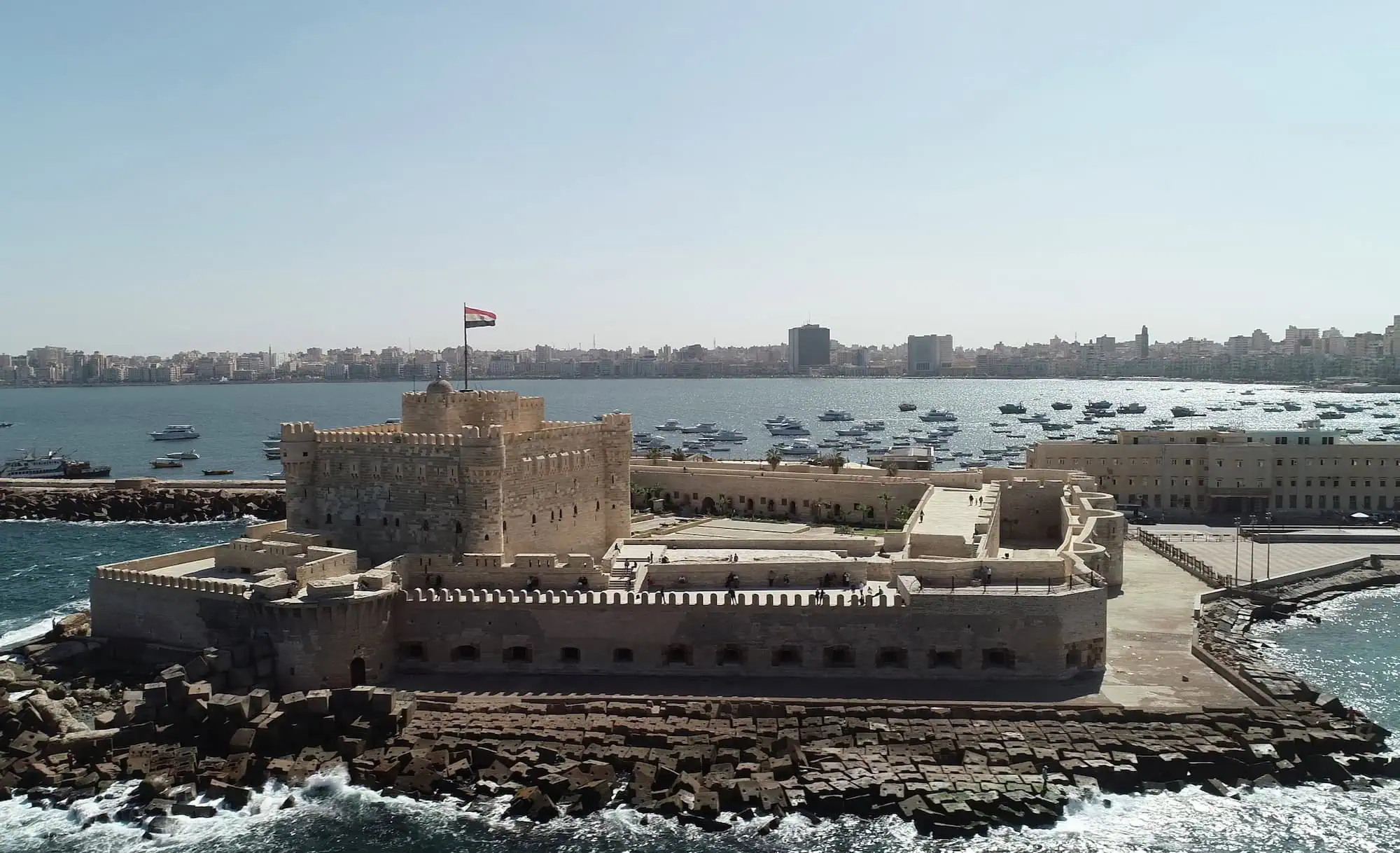
This is the one that photographs well. A 15th-century Mamluk fortress built on the site of the Pharos Lighthouse the one that was one of the Seven Wonders of the Ancient World. Nothing visible remains of the lighthouse itself; the citadel's walls were literally constructed on top of its ruins, and over the centuries earthquakes did the rest.
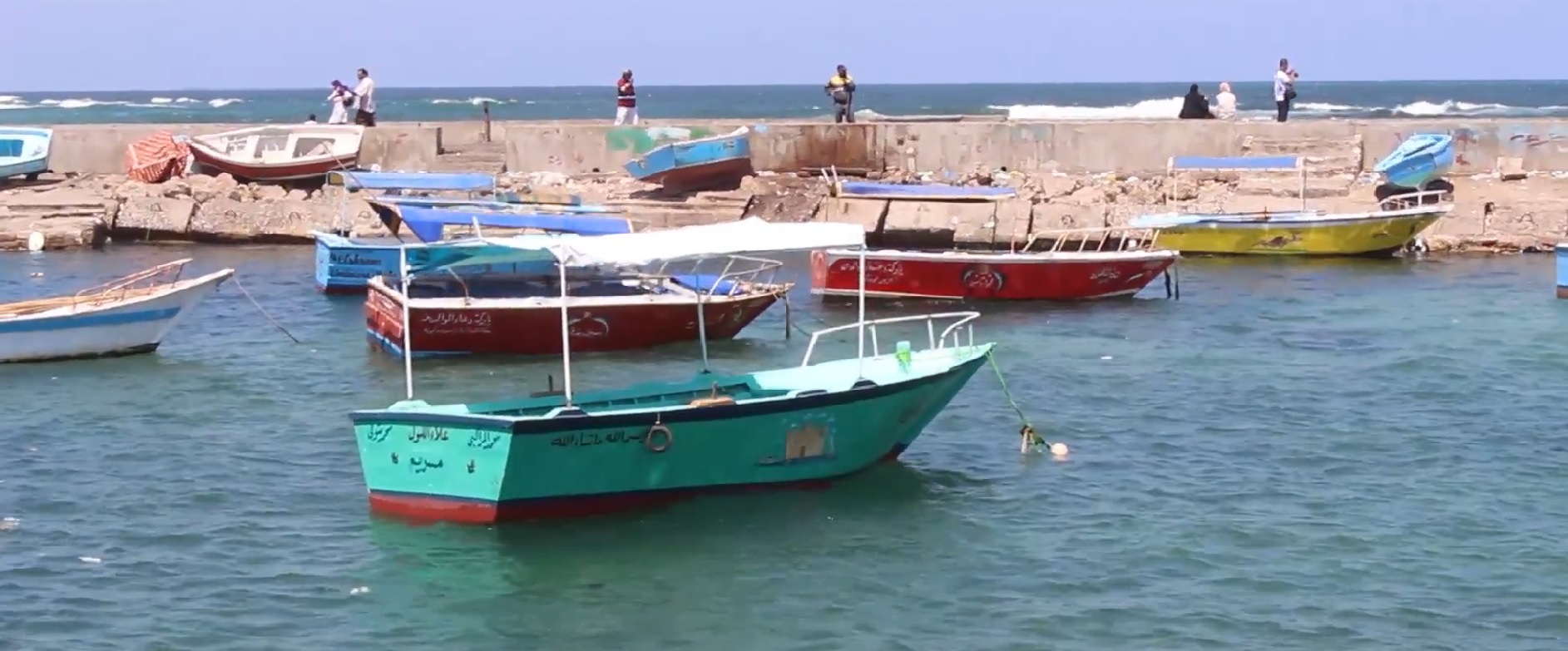
Inside there's a small naval museum (ship models, some recovered objects) and a mosque. Neither is the reason you came. The reason you came is the position: stand on the ramparts and look out over the Eastern Harbour, the fishing fleet bobbing at anchor, the sea stretching north toward Greece. You understand in about ten seconds why a sultan wanted a fortress right here. Come in the late afternoon if you can manage it the light turns golden against the stone and the whole thing looks like it belongs on a postcard.
For more detail, see our article on the Qaitbay Citadel.
Catacombs of Kom El Shoqafa
Discovered around 1900 when a donkey fell through a hole in the ground which, honestly, is how half the great archaeological finds in Egypt seem to happen. It's the largest Roman burial site found in Egypt, cut into the rock in three levels. The lowest level is still flooded, so you can't go down there.
A spiral staircase takes you into the main burial chamber, and this is where it gets interesting. The statues flanking the entrance wear Egyptian pharaonic headdresses but are carved in a distinctly Greco-Roman style. The wall decorations mix both traditions Anubis dressed in Roman military gear, that sort of thing. It's a visual mashup you won't see anywhere else, a reminder that Alexandria was a city where cultures didn't just coexist but actually blended. There's also the Hall of Caracalla inside, with rows of burial niches cut into the walls. The catacombs sit in the same district as Pompey's Pillar, and practically everyone visits both in one trip.
Pompey's Pillar
A 25-metre red granite column from Aswan, erected around 297 AD for Emperor Diocletian. Here's the thing: the name is completely wrong. Pompey had nothing to do with it. Crusaders centuries later just decided to call it that, and the name stuck. It stands on what was once the Serapeum, a major temple complex, and some partially excavated ruins surround it.
The column is striking when you first see it tall, red, slightly lonely against the sky. But honestly, ten minutes here is probably enough for most visitors. Pair it with the catacombs nearby and you've got a solid hour of ancient history.
Roman Theatre (Kom El Dikka)
Thirteen rows of white marble seating in a semicircle, uncovered during modern excavations that also revealed Roman baths and what was once a residential neighbourhood. The theatre is compact smaller than the name suggests. Right next to it, the Villa of the Birds has in-situ floor mosaics showing various bird species, protected under a modern shelter.
What makes this site worth visiting is the sense of scale. These aren't grand monumental ruins. This was a neighbourhood where people lived, bathed, and went to watch performances. Walking through it gives you a feel for the daily-life side of Roman Alexandria that the bigger, more famous sites don't really offer. See our full article on the Roman Theatre.
Royal Jewellery Museum
Housed in the Fatma Al-Zahra Palace a European-style building from the early 20th century with gilded ceilings and stained glass. The collection covers the Muhammad Ali dynasty: diamond tiaras, gold pocket watches, jewelled ceremonial swords, decorative boxes. The objects are beautiful, but the building is half the attraction. Every room has ornate ceilings and detailed woodwork that make you feel like you've walked into a period drama.
It's a small museum, and that's a good thing. You can actually absorb the whole collection in a focused visit instead of that museum fatigue that sets in after the fourteenth room of similar objects in larger institutions. Read our detailed article on the Royal Jewellery Museum.
Greco-Roman Museum
Founded in 1892, one of the oldest museums in Egypt. The collection spans from the 3rd century BC to the 3rd century AD sculptures, coins, pottery, funerary art across multiple halls. Worth noting: this museum has had extended closures for renovation, so check its current status before you plan around it. There's nothing worse than showing up and finding the doors shut. More details in our guide to the Greco-Roman Museum.
The Corniche and Stanley Bridge
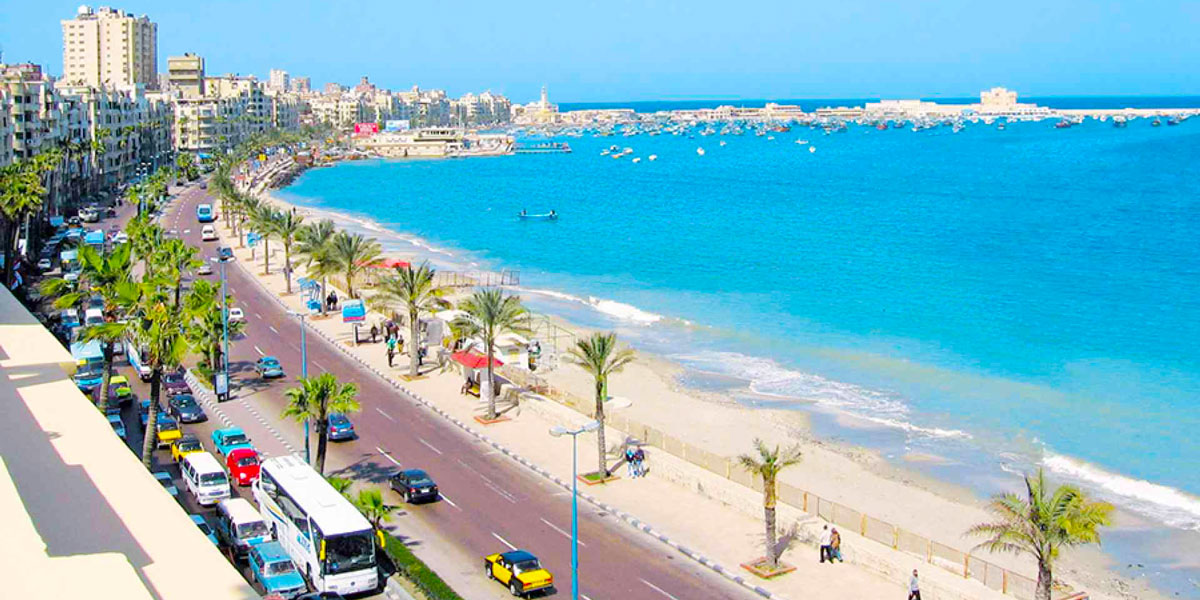
If there's one thing you should do in Alexandria that doesn't involve buying a ticket or looking at something old, it's walk the Corniche. This is the city's main waterfront road more than 15 kilometres of coast road with the Mediterranean on one side and the city on the other. There's no official starting point or ending point. You just pick a section and walk.
Stanley Bridge sits roughly in the middle of the Corniche, an arched concrete span over a small bay. It's the most photographed structure in the city, and it does look good at night when they turn the lights on. But the real pleasure is the stretch of road itself: the outdoor cafés, the seafood restaurants with their plastic chairs set out on the sidewalk, the families out for an evening stroll, the sound of the water on the other side of the seawall.
Walking from Stanley west toward the Citadel takes you past a steady run of cafés and seafood places, with public seating dotted along the way. Pick a spot, sit down, order a coffee or a fresh juice, and watch the sea for a bit. That's the Alexandria experience right there, and it costs almost nothing.
Montaza Palace and Gardens
At the far eastern end of the city, past the hotel strips and the resort areas, Khedive Abbas II built a palace. Later, King Farouk added the more elaborate Haramlik Palace, mixing Ottoman and Florentine design elements in a way that shouldn't work but kind of does.
The gardens are the real draw here. Tall palms, flowering bushes, shaded paths, some leading down to small coves along the shore. The sea breeze hits differently at Montaza noticeably cooler than the city centre in the warmer months, which explains why it was the royal family's summer retreat. It works best as a late-afterthing stop after you've finished with the historical sites. The light gets soft, the gardens empty out a bit, and you can walk down toward the water without the midday heat. For more on this, read our guide to Montaza Palace Gardens.
Beaches
Let's be honest about the beaches. By Mediterranean standards think the Italian coast, the Greek islands, the Turkish Riviera Alexandria's beaches are not going to blow you away. The water is fine. The sand is fine in places. But this isn't a resort destination in the traditional sense.
That said, on a scorching summer day, the beach is exactly where you want to be. Maamoura Beach is the main public option: broad sand, popular with local families, basic facilities nearby. The coast around Montaza has public access points close to the palace gardens. The hotel beaches in San Stefano and Montaza are cleaner and more organised, with sun loungers and on-site dining, but you're paying hotel guests or buying a day pass for the privilege.
Check current water quality conditions before you commit to a swimming spot it varies. For the full rundown of what to expect and where to go, see our article on the best beaches in Alexandria.
Food: What to Eat and Where
Seafood is the reason Alexandria has a food reputation at all. Fresh fish, shrimp, and calamari grilled whole, fried, or served as mezze at restaurants along the Corniche and near the main fish market. A proper seafood meal runs roughly EGP 200 to EGP 500 per person, depending on what you order and where you're sitting. Prices fluctuate with the season and the restaurant's mood, so ask before you sit down. All prices mentioned are approximate and may vary.
But there's more to the food scene than just fish. The Alexandrian liver sandwich kibda is serious street food. Chopped liver, heavily seasoned, served in baguette-style bread. The stalls in the El Mansheya area are where locals go for this. The city also has its own koshary places that hold their own against Cairo's stalwarts. And feteer meshaltet, that flaky layered pastry you find at bakeries all over Egypt, is everywhere here often stuffed with cheese or minced meat.
The café culture splits in two directions. There are the old Greek-style coffee houses with worn wooden chairs, shisha pipes, and men playing backgammon. Then there are the modern seaside places doing espresso, fresh juice, and cakes. Both have their place. For specific restaurant recommendations, check our guide to the best seafood restaurants in Alexandria.
Shopping
San Stefano Grand Plaza is the main modern mall international brands, a cinema, food court. It's air-conditioned and functional, not particularly memorable. The more interesting shopping is in the older parts of the city. The Saad Zaghloul and Attarine districts have narrow streets lined with shops selling antiques, second-hand books in multiple languages, and souvenirs that are actually worth looking at.
Olive wood products, handmade jewellery, and locally produced olive oil are the things worth carrying home. Bargaining is expected in the older markets, and prices tend to run lower than what you'd find in Cairo's tourist-oriented shops.
How to Plan Your Time
How many days? One very full day from Cairo covers the Bibliotheca, Citadel, Catacombs, and Roman Theatre if you start early and keep moving. But you'll be exhausted and you'll miss the Corniche at sunset, which is arguably the best part. Two to three days lets you breathe hit the historical sites at a reasonable pace, walk the waterfront, fit in a beach afternoon, eat properly, and visit Montaza. Beyond three days, you've seen the major sights and you're either very relaxed or day-tripping to places outside the city.
Best time to go. Spring (March to May) and autumn (September to November) are the sweet spot comfortable temperatures and thinner crowds. Summer is hot and gets slammed with domestic tourists on weekends and public holidays. Winter is mild but too cool for swimming.
Getting there. The train from Cairo takes about 2.5 to 3 hours each way and is the most straightforward option. Buses exist but the train is more comfortable and predictable. See our guide on how to get from Cairo to Alexandria.
Getting around. Uber and Careem both operate in Alexandria, and they're the easiest way to move between sites. The city also has a tram system one of the oldest in Africa which is cheap and covers much of the city centre. It's slow and the route maps aren't always clear if you don't already know the system, but it's an experience in itself.
Where to stay. For a neighbourhood-by-neighbourhood breakdown, see our guide on where to stay in Alexandria.
Day trip from Cairo. Totally doable. You'll get the core historical sites done and be back by evening. You'll miss sunset on the Corniche and you won't make it to Montaza, but for a first taste of the city it works. See our Cairo to Alexandria day trip article for a detailed itinerary.