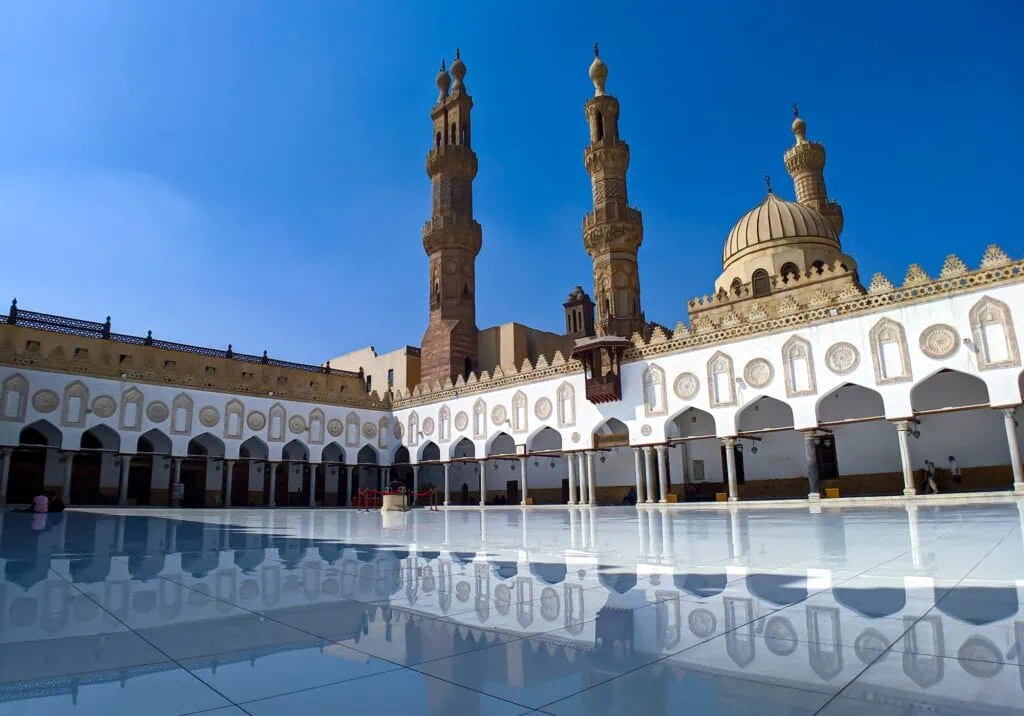
Al-Azhar Mosque
Al-Azhar Mosque in Cairo is one of the most significant monuments in Islamic Cairo. And honestly? It deserves every bit of that reputation. A place not to be missed if you want to experience the depth and vastness of Egyptian history and culture. Like, genuinely. Not just "oh that's a nice building" depth. We're talking centuries of scholarship, prayer, and architecture that shaped an entire civilization. Wild.
Being known as one of the oldest Islamic universities in the world, the mosque holds a lot of historical and religious value. Along with spectacular Islamic designs. The kind of designs that make you stop and just... stare. The geometric patterns, the calligraphy, the way light filters through those windows—it's not just pretty. It's intentional. Every detail means something. And when you realize this place has been operating as a center of learning since 970 AD? Like, over a thousand years? Your brain kind of short-circuits. In a good way.
Situated in the center of Old Cairo, the Al-Azhar Mosque receives tourists from all around the globe. People who desire to know about the serenity of the mosque along with the intricate detailing in the monument. And they find it. Both. The serenity hits you first. You step inside from the chaos of Khan El Khalili and BAM—silence. Not total silence. There's still the murmur of prayer, the rustle of robes, the distant call to prayer echoing. But it's a different kind of noise. Calm. Centered. Like the building itself is exhaling.
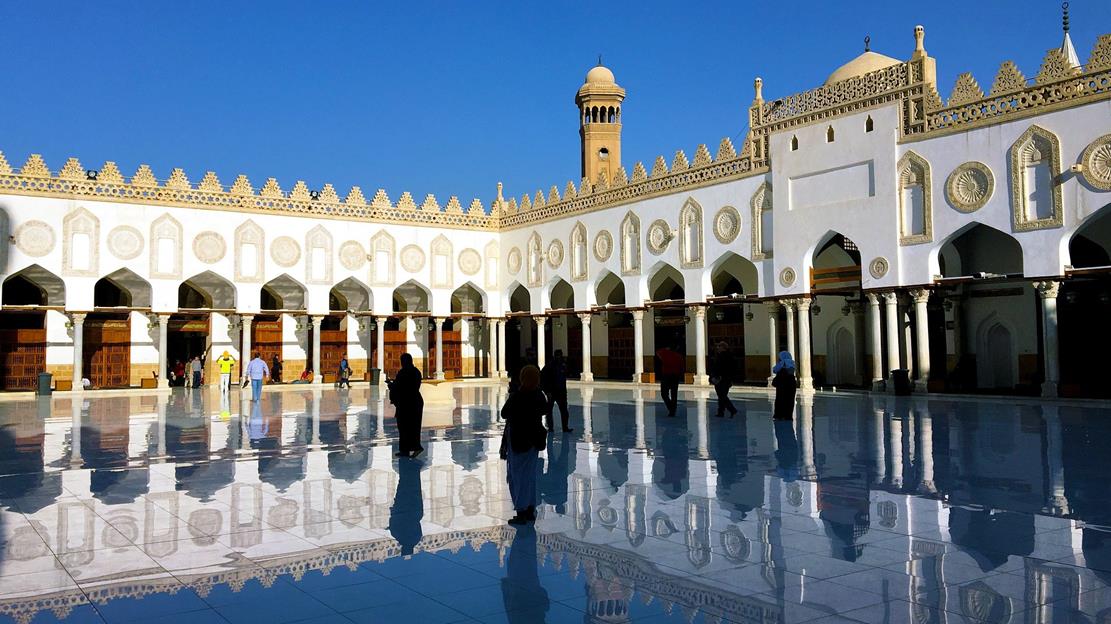
The guide below would help you get an overview of the history, architecture and tips for Al-Azhar Mosque. But honestly? Nothing prepares you for standing in that courtyard for the first time. The white marble floors, the five minarets rising against the Cairo skyline, the students walking through with their books. It's alive. Like, genuinely alive. Not some museum piece behind glass. People still study here. Still pray here. Still argue theology in the halls where scholars argued a thousand years ago.
If you're booking a Cairo day tour or browsing Egypt travel packages, this place slots right in. Especially if you're doing an Egypt culture tour or a classic Egypt tour. Most Cairo sightseeing tours hit the pyramids, the museum, maybe the citadel. And those are incredible. LOVE them. But Al-Azhar is different. It's the spiritual heart of the city. The place where Cairo's pulse actually started. Before the traffic, before the skyscrapers, before the chaos. There was this mosque. And it's still here. Still standing. Still teaching.
Look. I've been to a lot of religious sites. A LOT. And most of them? You walk around, you read a plaque, you take a photo, you leave. Al-Azhar is NOT that. You sit on the carpet in the main prayer hall and you feel the weight of it. The marble is cool under your feet. The ceiling soars above you. And somewhere, a student is reciting Quran in a voice that echoes through the arches. It's not a performance. It's just... life. Happening. In a building that's seen a thousand years of it.
The architecture alone is worth the visit. Five different minarets from different eras, each one telling a story about who ruled when. The Mamluk minaret, the Ottoman minaret—they're all different styles, all crammed together, and somehow it works. It shouldn't work. But it does. Like Cairo itself. Chaotic, layered, impossible, and beautiful.
Now. if you're the type who usually books Egypt package tours that pack in pyramids, temples, museums... i get it. Those are incredible. But after a few days of ancient ruins under the Egyptian sun? your feet are screaming. Your brain is full of pharaohs. You need something that feels different. Al-Azhar is that perfect palate cleanser. It fits into almost any itinerary without feeling forced or weird. And it's free. Like, actually free. No ticket. Just show up, cover your shoulders, take off your shoes, and walk in.
If you're building out a tailor-made trip or browsing luxury Egypt holidays, do NOT sleep on this. Whether you're dragging the family on an Egypt family tour, doing a quick 5-day Cairo and Luxor trip, or just exploring on your own, Al-Azhar delivers. All of it. History, spirituality, architecture, and that rare feeling of being somewhere that matters. Like, genuinely matters. Not just to tourists. To the city. To the country. To the Islamic world.
i've talked to people who've done the 8-day Cairo, Luxor & Aswan tour, the Nile cruises, the whole nine yards. And they loved those too. But Al-Azhar? different. It's for the people who want to feel the pulse of Cairo. The real pulse. Not the tourist version. The version that's been beating for over a thousand years.
History and Importance of Al-Azhar Mosque in Cairo
Al-Azhar mosque. The most famous in Cairo. Built in 970 during the Fatimid dynasty, right after the creation of Cairo. Like, literally right after. They built the city, then they built this. Erected at the order of Al-Mu'izz li-Din Allah and the intention was to set up a place of worship and study for Muslims. Not just worship. Worship AND study. That combination? Revolutionary at the time. And honestly? Still kind of revolutionary now.
Al-Azhar was progressively a renowned institution. Became one of the most famous institutions of the Muslim world. From mosque, it became a university where lectures are still given today. Like, TODAY. Right now. As you're reading this, someone is probably sitting in a hall in Al-Azhar learning Islamic law. People from around the world come to study here. Not just Egyptians. Not just Arabs. From everywhere. And it's been happening for over a thousand years. Let THAT sink in.
It was transformed into Al-Azhar University, which is still today a great centre of study. The word "great" doesn't even cover it. It's one of the oldest universities on the planet. Older than Oxford. Older than pretty much anything in Europe. And it never stopped. Never closed. Never became a museum piece. Still teaching. Still arguing theology. Still shaping Islamic thought.
Throughout different eras—Ayyubid, Mamluk, Ottoman periods—it was constantly renewed and amplified. Each sultan wishing to contribute to its construction. Each one adding their own architectural style, their own minaret, their own courtyard. So now it's this wild layered thing. Fatimid foundations, Mamluk arches, Ottoman minarets. All crammed together. And somehow? It works. It shouldn't work. But it does. Like Cairo itself. Chaotic, layered, impossible, and beautiful.
Therefore, it stands as the testimony of Muslim History in Egypt. Not just A history. THE history. The whole thing. From the Fatimids to the Ottomans to modern Egypt. All in one building. All in one courtyard.
Thus, the Al-Azhar Mosque represents today the symbol of knowledge, religion and eternal life. A testament to a thousand years of Islamic civilization. Like, actually a thousand. Not rounded up. Not approximate. Over a thousand. And counting.
Architecture and Design of Al-Azhar Mosque in Cairo
The architecture of the Al-Azhar Mosque is an intricate mix of various Islamic architectural styles. Developed throughout its history, which spans many centuries. Due to numerous additions throughout the years, the mosque displays styles from the Fatimid, Mamluk and Ottoman periods. All three. In one place. Walking through Al-Azhar is basically walking through a timeline of Islamic architecture. But not in a museum way. In a "this is still being used" way. Which hits different.
The large prayer hall is supported by a multitude of arches and columns. Allowing a spiritual feel to the environment. And it works. You walk in and the space just... opens up. The ceiling soars. The light filters through in these geometric patterns. It's not an accident. Nothing here is an accident. Every arch, every column placement, every window—intentional. Designed to make you feel small in the best way possible.
Furthermore, the mosque is also celebrated for its graceful white minarets. Reconstructed during the Ottoman period and a famous piece of Islamic Cairo architecture. There are five of them. FIVE. From different eras. Different styles. All standing together like some kind of architectural family reunion. The Mamluk one is my favorite. Tall, elegant, covered in intricate carving. But the Ottoman one has its own thing going too. More streamlined. More geometric. And the original Fatimid minaret? Still there. Still standing. After everything Cairo has thrown at it.
The courtyard, or sahn, is spacious. Has rows of arcades that let sunlight penetrate the whole area. Emphasizing the beauty of the space. The way the light moves across the white marble throughout the day? Unreal. Morning light hits different than afternoon light. And sunset? Forget about it. The whole courtyard turns gold. You'll take approximately 300 photos and keep all of them. Because deleting any feels wrong.
In the mosque you will be able to find complex Islamic calligraphy and geometric patterns throughout the walls and ceilings. And I mean EVERYWHERE. Look up. Look down. Look at the doorframe. It's all covered. The calligraphy isn't just decoration. It's Quranic verses. Theological statements. The whole building is basically a three-dimensional book. If you could read Arabic and architectural geometry, you'd be reading theology with your eyes.
What is perhaps most admirable about the Al-Azhar Mosque is the way it merges ancient and new architecture while maintaining its distinct original style. Hence, the mosque is considered a religious landmark, and an important cultural monument of Cairo. Not just important. ESSENTIAL. You can't understand Cairo without understanding Al-Azhar. You can't understand Islamic architecture without studying this place. It's that central.
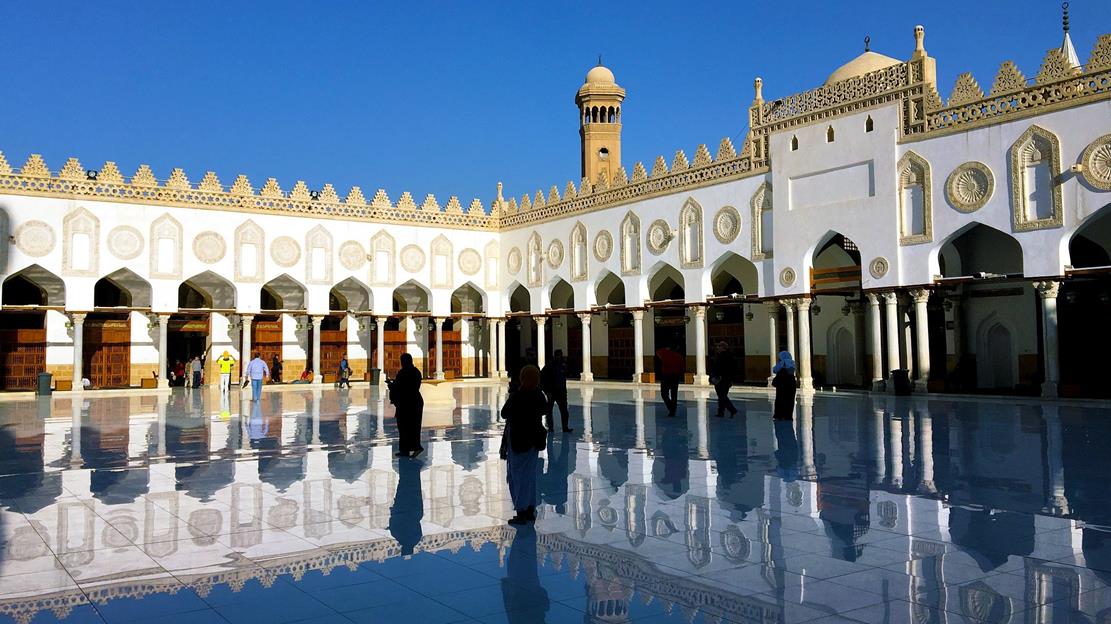
Al-Azhar Mosque Visitor Guide: Dress Code & Hours
A visit to the Al-Azhar Mosque in Cairo can be very rewarding and peaceful experience. Particularly when you first explore the Islamic Cairo sites. And honestly? It should be one of your FIRST stops. Not an afterthought. Not "oh we have an extra hour." No. Plan for it. Because once you're inside, time stops. Or at least it feels like it does.
Opening Hours and Entrance
The mosque is usually open to the public during the day. And the entrance is often complimentary. Like, FREE. Actually free. No ticket booth. No "student discount." Just walk in. But. Please note—you will not be allowed entry during prayer times. Which is fair. This is still a working mosque. People are still praying here. Have been for a thousand years. So check the prayer schedule. Or just listen for the call to prayer and time your visit around it. Easy.
Dress Code
You are highly encouraged to wear conservative clothing during your visit. Shoulders and knees must be covered. Non-negotiable. This isn't a suggestion. It's a requirement. And honestly? It's not that hard. Throw on a long skirt or pants. Bring a scarf. Done. Women are encouraged to wear a head scarf upon entering the prayer room. As this is still a place of active worship. Not a museum. Not a tourist attraction. A mosque. Where people pray. So cover up. Show respect. It's not complicated.
Walking and Comfort
It is advised that you wear comfortable shoes. A lot of walking around Islamic Cairo requires comfortable footwear when you are treading through stone pathways and courtyards. And the floors? Marble. Cool, smooth, beautiful marble. But also slippery if you're wearing the wrong shoes. So don't wear flip-flops. Don't wear heels. (Please. For the love of all that is holy, do NOT wear heels.) Wear something with grip. Your feet will thank you.
Best time of day and photography
Photography is encouraged in most areas of the Al-Azhar Mosque. So get your camera ready to shoot stunning Islamic architecture in Cairo. The most optimum times to visit would be in the morning or late in the afternoon. When the lighting is gentler and when the hustle and bustle of the day is just beginning to calm down. Morning light in the courtyard? Magical. Late afternoon light hitting those white minarets? Unreal. You'll fill your memory card. Promise.
How much time is required
An estimated visit takes about 1-2 hours. Depending on how much time you invest in exploring the mosque and its surroundings. But honestly? You could spend longer. Sit in the courtyard. Listen to the call to prayer. Watch the students walk through with their books. Absorb it. Don't rush. This isn't a "check the box" kind of place. This is a "sit down and feel the weight of history" kind of place.
Things to Do Near Al-Azhar Mosque in Islamic Cairo
A great perk of Al-Azhar Mosque is its prime location within Islamic Cairo. Which has so much nearby tourist interest that they may be visited during the same tour. Like, literally walking distance. You can do Al-Azhar, Khan El Khalili, Al-Muizz Street, and Al-Hussein all in one afternoon. Without a taxi. Without a bus. Just walking. Through streets that have been streets for a thousand years. Wild.
Khan El Khalili Bazaar
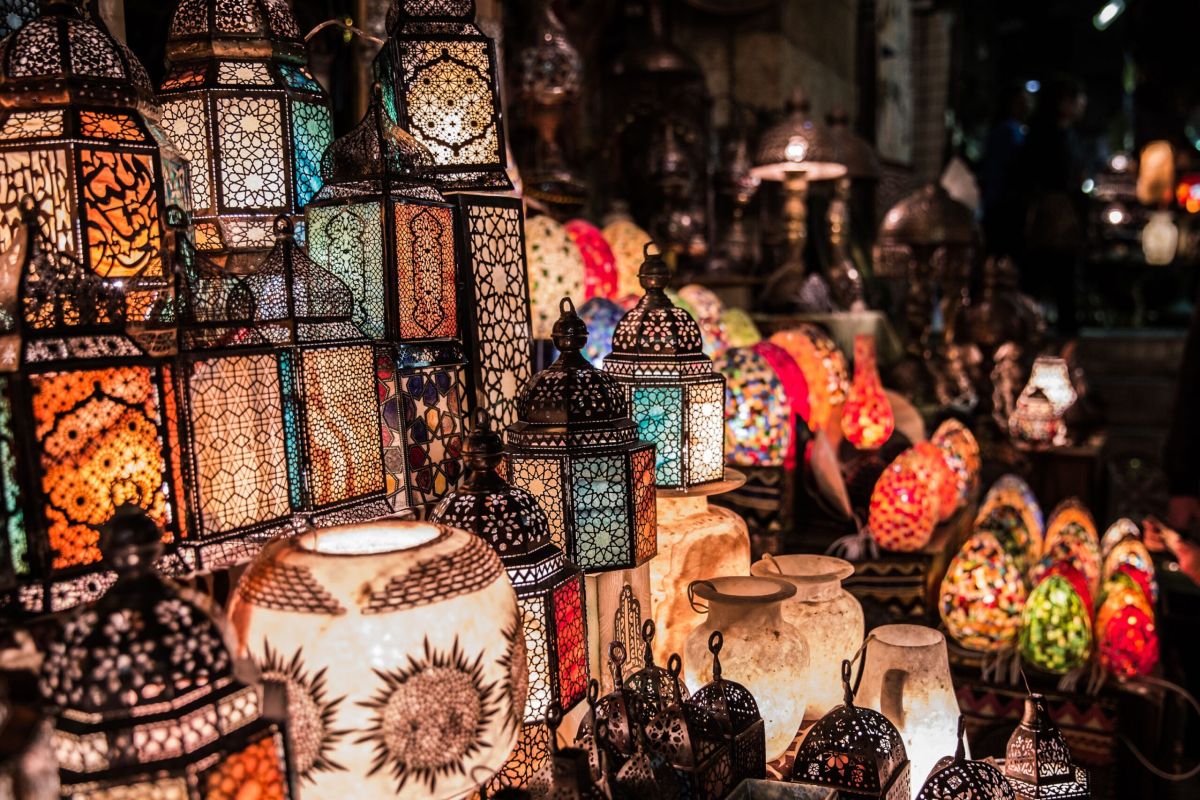
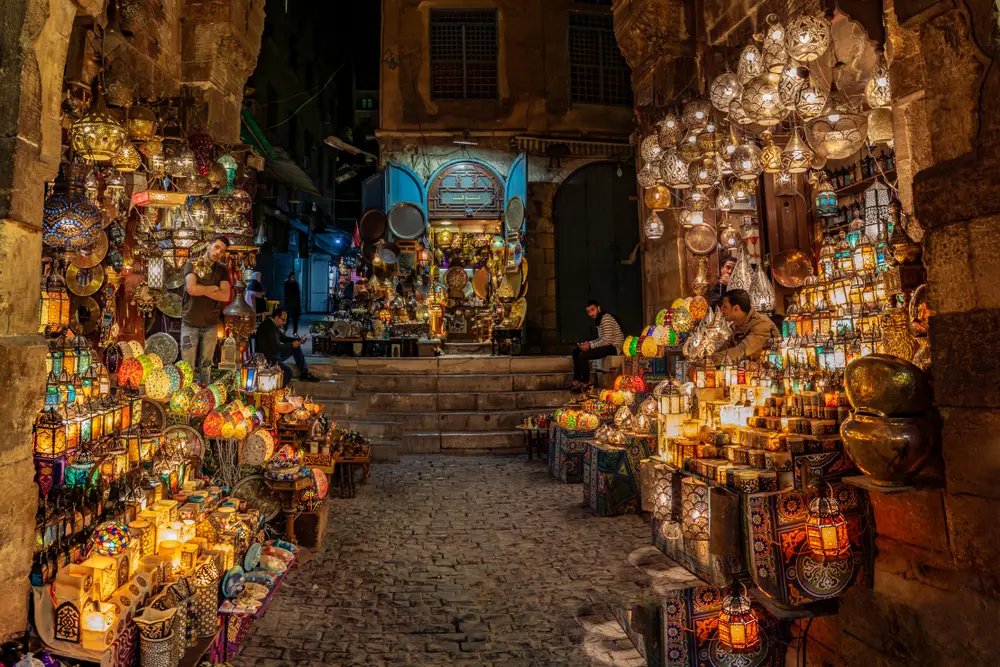
A short 10-minute walk will take you to Khan El Khalili Bazaar. One of the most famous bazaars in the Middle East. You can bargain for souvenirs, spices, jewelry, etc. And enjoy the hustle and bustle of authentic Egyptian culture. Is it touristy? Sure. But it's also genuinely local. Vendors who have been selling the same spices for generations. Coffee shops that look like they haven't changed since the 1800s. And the energy? Infectious. You'll go in planning to buy nothing and leave with bags. Happens every time.
Al-Muizz Street
This is one place you definitely don't want to miss! Al-Muizz street, also an open-air museum, displays stunning examples of Islamic architecture. Mosques, buildings, etc. Which date back to medieval Cairo. The whole street is basically a timeline of Islamic Cairo. And it's pedestrian-only now. So you can walk the whole thing without worrying about getting run over by a taxi. (A miracle in Cairo, honestly.) Every building has a story. Every mosque has a different architectural style. It's like Al-Azhar, but spread across an entire street.
Al-Hussein Area
You can always count on Al-Hussein Area to be full of life. With its range of cafés, street food, and traditional Egyptian restaurants. After all that mosque-hopping and history-absorbing, you need fuel. And this area delivers. Koshary, falafel, fresh juice—whatever your stomach wants, it's here. Plus the atmosphere is electric. Especially at night. When the lights come on and the call to prayer echoes from multiple mosques at once? Chills. Actual chills.
Cairo Day Tours
Due to Al-Azhar's ideal position, it's a popular part of many Cairo day tours and an easy way to cram the Islamic landmarks of Cairo into a single itinerary. If you're booking an Egypt culture tour or a classic Egypt tour, Al-Azhar is usually included. And for good reason. It's the anchor. The starting point. The place that makes everything else make sense.
If you're building out a tailor-made trip or browsing Egypt travel packages, do NOT sleep on this area. Whether you're dragging the family on an Egypt family tour, doing a quick 5-day Cairo and Luxor trip, or just exploring on your own, Islamic Cairo delivers. ALL of it. History, spirituality, architecture, and that rare feeling of being somewhere that matters. Like, genuinely matters.
So. Bottom line? You want to understand Cairo. Not just see it. Understand it. Al-Azhar Mosque is where you start. Put on some modest clothes, take off your shoes, and walk into a thousand years of history. You won't regret taking a breather for this one. Seriously. you really won't.