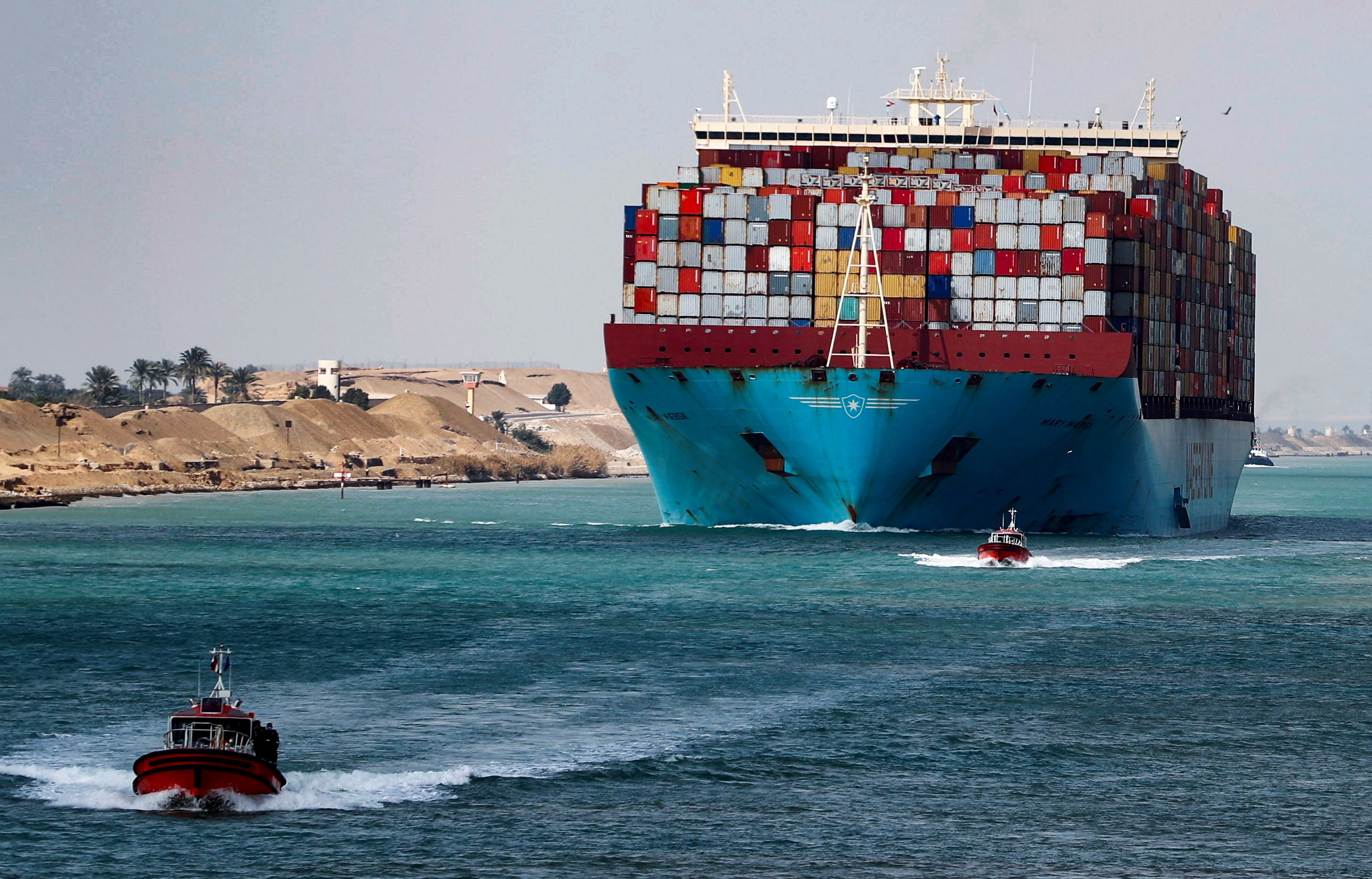
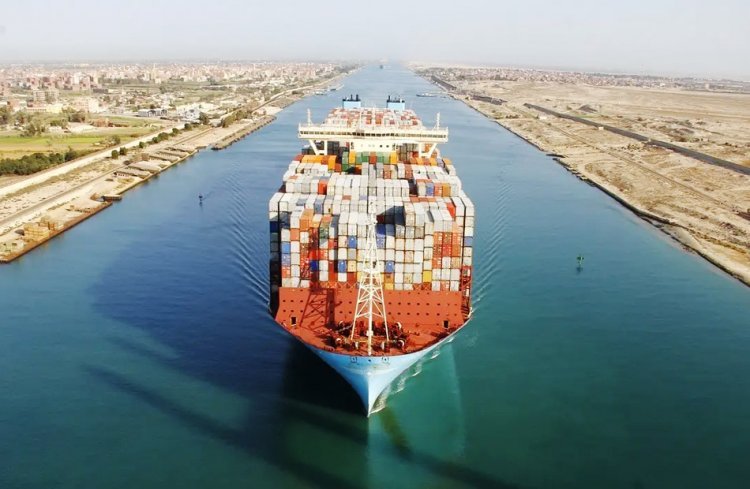
Container Ship Entering the Suez Canal

The History of the Suez Canal: Egypt's Gateway Between Two Seas
Discover how the Suez Canal transformed global trade, from ancient Egyptian waterways to the modern shipping route connecting the Mediterranean and th...

Container Ship Sailing Through the Suez Canal

The History of the Suez Canal: Egypt's Gateway Between Two Seas

Large container ship sailing through the Suez Canal with tugboats

The Suez Canal ranks among the most important waterways ever built, connecting the Mediterranean Sea to the Red Sea and cutting the sea journey between Europe and Asia by thousands of kilometres. Ships that once sailed around the entire African continent now pass through Egypt in a matter of hours. The canal's story stretches back far beyond its official opening in 1869, rooted in ideas that Egyptian rulers explored thousands of years earlier.

Long before modern engineering, Pharaoh Necho II ordered the first known attempt at a canal linking the Nile to the Red Sea around 600 BCE. The project stalled, and it fell to the Persian ruler Darius I to finish a working waterway roughly a century later. Ptolemy II later restored and extended the route, allowing boats to travel from the Mediterranean coast through the Nile Delta and into the Red Sea.

The ancient canal changed hands and purpose many times over the following centuries. Roman engineers under Emperor Trajan reopened it after it silted up, and following the Arab conquest of Egypt, the general Amr ibn al As restored it again to move grain to Arabia. Caliph al Mansur ordered it closed in the eighth century for strategic reasons, and the waterway gradually disappeared under sand, leaving only traces for archaeologists to study.

Interest in a direct sea link between the Mediterranean and Red Sea returned during Napoleon Bonaparte's Egyptian campaign in 1799. French engineers surveyed the route but concluded, incorrectly, that the Red Sea sat about ten metres higher than the Mediterranean. That miscalculation convinced planners that a canal without locks was impossible, and the idea was shelved for decades.

The modern canal owes its existence to French diplomat Ferdinand de Lesseps, who secured a concession from Egypt's ruler Said Pasha in 1854. The Suez Canal Company formed in 1858 with French and Egyptian backing, and construction began the following year. Thousands of Egyptian labourers worked under difficult conditions through forced labour arrangements before international pressure pushed the project toward paid workers and steam powered machinery.

The canal opened on 17 November 1869, marked by an elaborate ceremony attended by European royalty, including Empress Eugénie of France, and hosted by Khedive Ismail of Egypt. At 193 kilometres long, it gave ships a direct route between Europe and Asia, reshaping global shipping almost overnight and turning Egypt into a strategic crossroads for world trade.

Egypt's mounting debts forced Khedive Ismail to sell the country's canal shares to Britain in 1875, giving the British government significant influence over the waterway. Britain occupied Egypt outright in 1882, partly to protect this vital trade route, and the canal remained under heavy British influence through both World Wars, serving as a critical supply line for Allied forces.

Egyptian President Gamal Abdel Nasser nationalised the canal in 1956, triggering the Suez Crisis and a brief military conflict involving Britain, France, and Israel. The canal closed again between 1967 and 1975 following regional conflict, then reopened as a fully Egyptian operated waterway. A major expansion completed in 2015 added a parallel channel to ease congestion, and the canal made global headlines again in 2021 when the container ship Ever Given ran aground and blocked traffic for six days.

Travellers exploring Egypt beyond Cairo can combine a Suez Canal visit with a trip to Alexandria, itself shaped by centuries of Mediterranean trade. The Suez Canal Authority building in Ismailia and viewing points along the waterway give visitors a close look at ships passing between two seas. Many guests pair this excursion with things to do in Alexandria or explore the city's own Greek and Roman heritage, and those planning the route from the capital can check how to get from Cairo to Alexandria to build a full itinerary around Egypt's maritime history.
Why Choose Aten Tours

Travel with confidence with Aten Tours, where local expertise meets exceptional service. From carefully curated itineraries and handpicked experiences to seamless planning and dedicated support, we create personalized journeys designed around what matters most—comfort, quality, and unforgettable experiences across Egypt and beyond.

Secure Online Payment

Enjoy safe and secure online payments with full protection of your personal and financial information. Book your trips with confidence anytime, anywhere.

Help & Support

Travel with confidence knowing that our Help & Support team is always here for you. From booking to your return, we’re just one message away.

Tailored Travel Experiences

Your journey, your way. We design tailored experiences that match your style, ensuring comfort, flexibility, and unforgettable moments in every destination.

Client Testimonials

At Aten Tours, we are proud to create experiences that leave lasting memories. Read genuine feedback from travelers who explored Egypt’s wonders, enjoyed luxury holidays, and discovered the world with confidence and ease.

Traveling solo in Egypt with Aten Tour was one of the best decisions I made. As a 22-year-old female traveler, I was a little nervous before arriving, but I felt safe and well looked after from day one. Everything was well organized, my guide was knowledgeable, kind, and always happy to help, and I never had to worry about a thing. The whole trip was smooth, enjoyable, and filled with unforgettable moments. I'm so glad I chose Aten Tour and would definitely travel with them again.

Sarah
Sarah May 2026

My fiancé and I booked a private 5-day tour of Egypt with Aten Tours, covering Cairo, Aswan, Abu Simbel, and Luxor. From the moment we arrived, everything was perfectly organized. The team took care of every detail, making our trip completely stress-free. Our guides were knowledgeable, friendly, and passionate about Egypt's history, and every destination exceeded our expectations. Even after returning home, we still find ourselves talking about this unforgettable experience. We highly recommend Aten Tours to anyone looking for a well-planned and memorable trip to Egypt.

Thomas
Thomas May 2026

Traveling with Aten Tour made our vacation completely stress-free. Every hotel, transfer, and excursion was exactly as promised, and the team was always available whenever we had a question. We really appreciated the personal attention and warm hospitality throughout the trip. We came home with unforgettable memories and would definitely recommend Aten Tour to anyone planning a trip to Egypt.

Olivia
Olivia April 2026

We booked an 8-day trip with Aten Tour, and it turned out to be one of our favorite vacations. Everything was well organized from start to finish, which made traveling around Egypt really easy. We never felt rushed, the hotels were great, and the team was always helpful whenever we needed anything. Egypt had been on our bucket list for a long time, and we're so glad we chose Aten Tour for this experience.

Nicholas
Nicholas July 2026

Our family booked a tour with Aten Tour after reading several positive reviews, and they definitely lived up to our expectations. Communication before the trip was quick and helpful, and everything during the tour was exactly as described. The hotels were comfortable, the transportation was smooth, and the guides made every stop interesting with their stories and local knowledge. Egypt had always been a dream destination for us, and this trip made it even more memorable.

Emma
Emma June 2026

All FAQ about Egypt

Yes. Viewing points and the Suez Canal Authority building in Ismailia let visitors watch ships pass through, and the site pairs well with a wider Egypt itinerary that includes Alexandria.

The canal closed between 1967 and 1975 following regional conflict, reopening only after extensive clearance and repair work.

Yes. Pharaoh Necho II began an early version of the canal around 600 BCE, and Persian ruler Darius I later completed a working waterway linking the Nile to the Red Sea.

The canal opened on 17 November 1869 after ten years of construction led by French diplomat Ferdinand de Lesseps and the Suez Canal Company.

The Suez Canal is known for connecting the Mediterranean Sea and the Red Sea, giving ships a direct route between Europe and Asia without sailing around Africa.

94%
WhatsApp Call