Planting in Ancient Egypt: How the Nile Shaped a Civilization
Planting in Ancient Egypt: How the Nile Shaped a Civilization

Discover how ancient Egyptian farmers turned the Nile's yearly floods into one of history's most reliable food systems, and where that legacy still su...

Planting in Ancient Egypt: How the Nile Shaped a Civilization

Planting in Ancient Egypt: How the Nile Shaped a Civilization

Planting in Ancient Egypt: How the Nile Shaped a Civilization

The Nile's Gift: A Calendar Built on Water

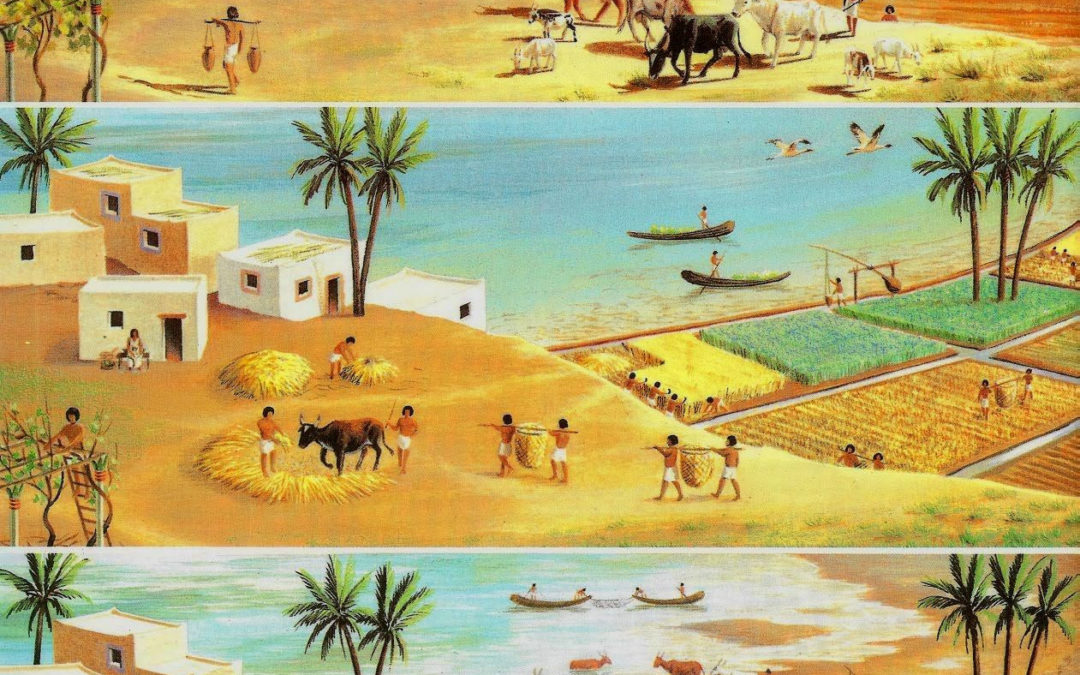
Ancient Egyptian life ran on a rhythm set by the river, not the sun alone. The year split into three seasons: Akhet, the flooding period; Peret, the growing season; and Shemu, the harvest. Farmers planned planting, weddings and even temple festivals around this cycle, because missing the flood's timing could mean a lean year for the entire region.

The flood itself carried a dark, mineral rich silt from the Ethiopian highlands. Egyptians called their land Kemet, the Black Land, after this soil, distinguishing it from Deshret, the Red Land of surrounding desert. That yearly layer of silt renewed the fields naturally, allowing the same plots to stay productive for thousands of years without the soil exhaustion seen elsewhere in the ancient world.

Tools and Techniques That Fed a Nation

Farming tools stayed simple but effective. Wooden ploughs pulled by oxen broke up the softened earth after the flood receded, while workers used hand sickles to cut wheat and barley at harvest. A device called the shadoof, a pole with a counterweight and bucket, let a single person raise river water into irrigation channels far more efficiently than carrying it by hand.

Land itself was remeasured every year, since floodwaters often shifted field boundaries. Scribes recorded plot sizes for taxation, and communities cooperated to maintain shared canals and dykes. This organised approach to water management is one reason historians consider Egyptian agriculture among the most stable of the ancient world.

Crops That Built an Economy

Emmer wheat and barley formed the backbone of the Egyptian diet, ground into flour for bread and fermented into beer, a daily staple for workers and elites alike. Flax fields supplied fibres for linen, Egypt's dominant textile and a valuable export good. Vegetable plots produced onions, garlic, leeks and lettuce, while orchards yielded grapes, dates and figs.

Papyrus reeds grew wild along the riverbanks and served purposes well beyond food, from writing material to rope, sandals and small boats. Control over these crops gave Egypt both food security and trade leverage across the ancient Mediterranean.

Sacred Green Spaces: Gardens for Gods and Kings

Beyond working fields, Egyptians cultivated gardens with clear religious and symbolic purpose. Temples kept groves of sycamore figs, date palms and sacred lotus, offering their fruit and flowers to the gods during festivals. Tomb paintings often show lush garden scenes, representing the abundance the deceased hoped to enjoy in the afterlife.

Pharaohs and nobles maintained private gardens at their estates, some elaborate enough to include ponds stocked with fish and waterfowl. These gardens were as much a display of status as they were a source of food, blending practicality with religious devotion.

Where This Story Continues in Alexandria

Alexandria sits close to the delta land that fed Egypt for millennia, and its museums preserve tangible pieces of that farming story. Artefacts, tools and artwork tied to agricultural life appear throughout the city's collections, particularly where Alexandria's Greek and Roman heritage overlaps with older Pharaonic traditions. Pairing a museum visit with a broader look at things to do in Alexandria gives travellers a fuller picture of how the Nile shaped everyday life long before the city itself existed.
Why Choose Aten Tours

Travel with confidence with Aten Tours, where local expertise meets exceptional service. From carefully curated itineraries and handpicked experiences to seamless planning and dedicated support, we create personalized journeys designed around what matters most—comfort, quality, and unforgettable experiences across Egypt and beyond.

Secure Online Payment

Enjoy safe and secure online payments with full protection of your personal and financial information. Book your trips with confidence anytime, anywhere.

Help & Support

Travel with confidence knowing that our Help & Support team is always here for you. From booking to your return, we’re just one message away.

Tailored Travel Experiences

Your journey, your way. We design tailored experiences that match your style, ensuring comfort, flexibility, and unforgettable moments in every destination.

Client Testimonials

At Aten Tours, we are proud to create experiences that leave lasting memories. Read genuine feedback from travelers who explored Egypt’s wonders, enjoyed luxury holidays, and discovered the world with confidence and ease.

Traveling solo in Egypt with Aten Tour was one of the best decisions I made. As a 22-year-old female traveler, I was a little nervous before arriving, but I felt safe and well looked after from day one. Everything was well organized, my guide was knowledgeable, kind, and always happy to help, and I never had to worry about a thing. The whole trip was smooth, enjoyable, and filled with unforgettable moments. I'm so glad I chose Aten Tour and would definitely travel with them again.

Sarah
Sarah May 2026

My fiancé and I booked a private 5-day tour of Egypt with Aten Tours, covering Cairo, Aswan, Abu Simbel, and Luxor. From the moment we arrived, everything was perfectly organized. The team took care of every detail, making our trip completely stress-free. Our guides were knowledgeable, friendly, and passionate about Egypt's history, and every destination exceeded our expectations. Even after returning home, we still find ourselves talking about this unforgettable experience. We highly recommend Aten Tours to anyone looking for a well-planned and memorable trip to Egypt.

Thomas
Thomas May 2026

Traveling with Aten Tour made our vacation completely stress-free. Every hotel, transfer, and excursion was exactly as promised, and the team was always available whenever we had a question. We really appreciated the personal attention and warm hospitality throughout the trip. We came home with unforgettable memories and would definitely recommend Aten Tour to anyone planning a trip to Egypt.

Olivia
Olivia April 2026

We booked an 8-day trip with Aten Tour, and it turned out to be one of our favorite vacations. Everything was well organized from start to finish, which made traveling around Egypt really easy. We never felt rushed, the hotels were great, and the team was always helpful whenever we needed anything. Egypt had been on our bucket list for a long time, and we're so glad we chose Aten Tour for this experience.

Nicholas
Nicholas July 2026

Our family booked a tour with Aten Tour after reading several positive reviews, and they definitely lived up to our expectations. Communication before the trip was quick and helpful, and everything during the tour was exactly as described. The hotels were comfortable, the transportation was smooth, and the guides made every stop interesting with their stories and local knowledge. Egypt had always been a dream destination for us, and this trip made it even more memorable.

Emma
Emma June 2026

All FAQ about Egypt

Flax was woven into linen, Egypt's most common fabric and a major export good, supporting a textile industry that stretched from farming villages to royal workshops.

Farmers relied on wooden ploughs pulled by oxen, hand sickles for harvesting, and a shadoof, a simple lever device, to lift water from the river into irrigation channels.

Each year's flood deposited a layer of fertile black silt across the fields, renewing the soil naturally. This cycle divided the calendar into flooding, growing and harvest seasons.

Farmers grew emmer wheat and barley for bread and beer, flax for linen, and vegetables such as onions, garlic and leeks. Grapes, dates and figs added variety, while papyrus reeds served practical and ceremonial purposes.

94%
WhatsApp Call