Who Was Amenhotep II? Egypt's Warrior Pharaoh
_with_an_ankh_being_raised_to_his_lips_from_the_sarc_-_(MeisterDrucke-426886).jpg "Who Was Amenhotep II? Egypt's Warrior Pharaoh")
Who Was Amenhotep II?
Amenhotep II ruled Egypt during the 18th Dynasty, taking the throne around 1427 BCE as the son of Thutmose III, one of the most powerful pharaohs of the New Kingdom. His reign lasted roughly a quarter century, a period when Egypt controlled territory stretching from Nubia in the south to parts of the Levant in the north. Unlike some of his predecessors, Amenhotep II built his public image as much on physical prowess as on political authority, and that reputation has outlived him by more than three thousand years.
A Warrior Raised for the Throne
Before he ever wore the double crown, Amenhotep II trained at Perunefer, a military and naval base near Memphis, where he mastered horsemanship, archery, and rowing. Temple inscriptions describe him breaking horses that no one else could handle and rowing faster and longer than entire crews of trained oarsmen. Whether these accounts are strictly literal or partly royal propaganda, they set the tone for how Egyptians were meant to see their king: a ruler who led by physical example, not just by decree.
The Archery Feat That Became Legend
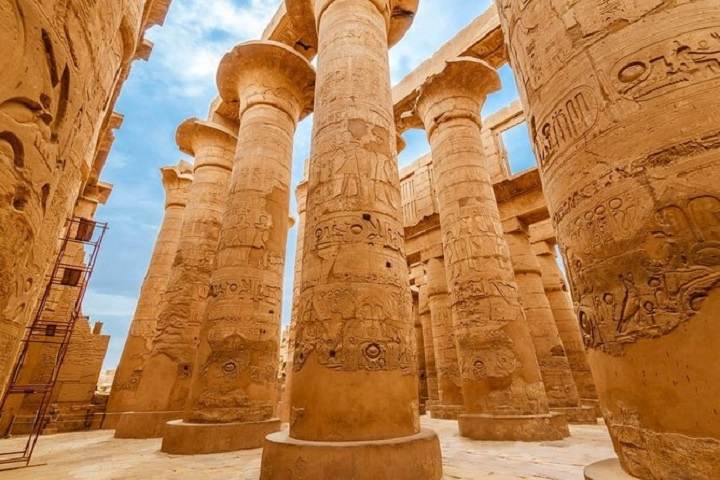
The most famous story tied to Amenhotep II involves a bronze target. According to inscriptions, he fired arrows from a moving chariot with the reins tied around his waist, piercing a thick copper target clean through, a feat no other archer was said to match. Carvings of this scene appear at Karnak and elsewhere, reinforcing the image of a king whose strength matched Egypt's military dominance at the time.
Continuing His Father's Empire
Once crowned, Amenhotep II faced early rebellions in the Levant, a common test for any new pharaoh inheriting a large empire. He led at least two military campaigns into Syria and Nubia to reassert control, and inscriptions from this period record captives and tribute brought back to Thebes. After stabilizing the borders, his reign settled into a relatively peaceful stretch focused on construction and administration rather than constant warfare.
Temples and Monuments
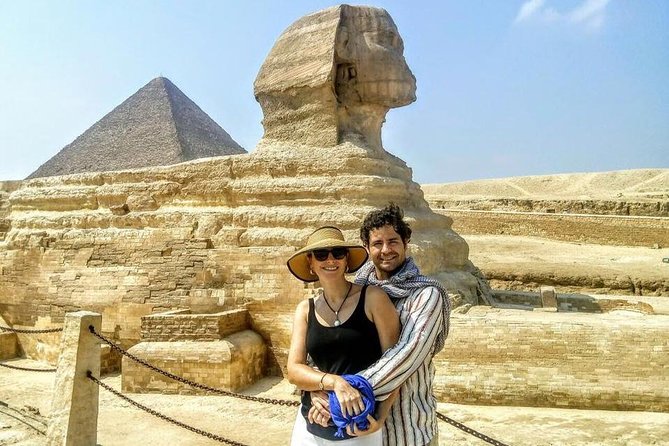
Amenhotep II added structures to the Karnak Temple complex and built a small temple near the Great Sphinx at Giza, tying his name to one of Egypt's oldest and most recognizable monuments. He also expanded religious sites in Nubia, including work at Amada, reflecting how far south Egyptian influence reached during his rule.
The Tomb That Held More Than One King
His tomb, known as KV35, lies in the Valley of the Kings and became one of the most significant discoveries in Egyptology. Beyond his own well-preserved mummy, the tomb was later used as a hiding place for other royal mummies during a turbulent period when tomb robbing threatened the remains of Egypt's kings. Archaeologists found a cache of pharaohs stored there for safekeeping, making KV35 a kind of ancient rescue vault.
Seeing His Legacy in Egypt Today
Travelers exploring Egypt's ancient past can still trace Amenhotep II's story through artifacts and inscriptions held in major collections, alongside the temples he expanded at Karnak. For visitors building a broader itinerary around Egypt's layered history, pairing this deeper pharaonic story with a look at Egypt's later Greek and Roman heritage in Alexandria rounds out the picture of how many civilizations shaped the country. Those planning a full history-focused trip can also check things to do in Alexandria for sites that connect ancient Egypt to its Mediterranean chapter.