Best Day Trips from Beirut, Lebanon: Where to Go and What to Know
How Far Are the Best Day Trips from Beirut?
The best day trips from Beirut generally take anywhere from half an hour to two and a half hours by road. A good working rule is to cover a single region each day. From its northern tip to its southern border, Lebanon measures roughly 225 km, which means the real variable is how long it takes to get out of the city. On weekday mornings and Sunday evenings, the stretch of coastal highway from Beirut to Jounieh can cost you an extra 30 to 45 minutes, and any route north has to pass through it.
The easiest region to begin with is the north. From Beirut, it’s 30 to 45 minutes to Jeita Grotto and Harissa, a little under an hour to Byblos when the roads are clear, and around an hour to Batroun, so one day can cover all of them. Inland, Bcharre, the Qadisha Valley, and the Cedars of God are a two- to two-and-a-half-hour drive each way. The day is long, but because the three are neighbors, they work as one outing. Tannourine and the Baatara Gorge, roughly two hours out, are mostly worth the trip in spring, when the waterfall carries the most water.
To the south-east, Deir el Qamar, with its old stone houses, and Beiteddine Palace sit about an hour away in the Chouf mountains, with the Chouf Cedar Reserve some 30 minutes further on. Crossing Mount Lebanon eastward, the Bekaa Valley, where Zahle, Château Ksara, Anjar, and Baalbek are found, is one to two hours from the capital.
These days, though, distance is not the only thing to weigh. As of October 2026, official travel advice draws sharp lines between regions: UK guidance leaves the north coast out of its regional warnings entirely, while it advises against any travel to the south. Every section that follows explains the current position for each destination.
North of Beirut: Jeita, Byblos, Batroun, and Tripoli
Drive out of Beirut along the coast heading north, and you hit one possible stop after another. None of them is much more than an hour and a half from the city, which is why first-time visitors usually give this direction at least one of their days. A common plan is to group Jeita Grotto, Harissa, and Byblos into one day, then either give Batroun a day of its own or tack it onto the Byblos visit. Tripoli deserves an entire day to itself.
Jeita Grotto and Harissa
About 20 km north-east of Beirut, in the Nahr al-Kalb valley, Jeita Grotto is made up of two linked limestone caves. The upper cave is explored on foot, along an elevated path that winds between stalactites and stalagmites, a few of which reach several meters in length. Down in the lower cave, an underground river flows out to become the Nahr al-Kalb, and visitors travel along it in small boats. This lower section sometimes shuts in winter, when the water rises too high. Cameras and phones can’t be used for photos at any point inside. After a management change kept it closed for eight months, the grotto opened again in July 2025, so confirm which days it’s open before you set off.
From Jeita, Harissa is roughly a quarter of an hour’s drive. Here, a bronze statue of Our Lady of Lebanon, painted white, looks down on Jounieh Bay from around 600 meters up. Visitors either drive to the top or ride the Téléférique cable car up from Jounieh, a journey of about 10 minutes in each direction. Near the point where the valley reaches the sea, the Nahr al-Kalb stelae are worth a quick stop by the road. For over 3,000 years, armies marching past this spot left carved inscriptions in the rock, and the earliest belongs to Ramesses II of Egypt.
Byblos Day Trip from Beirut
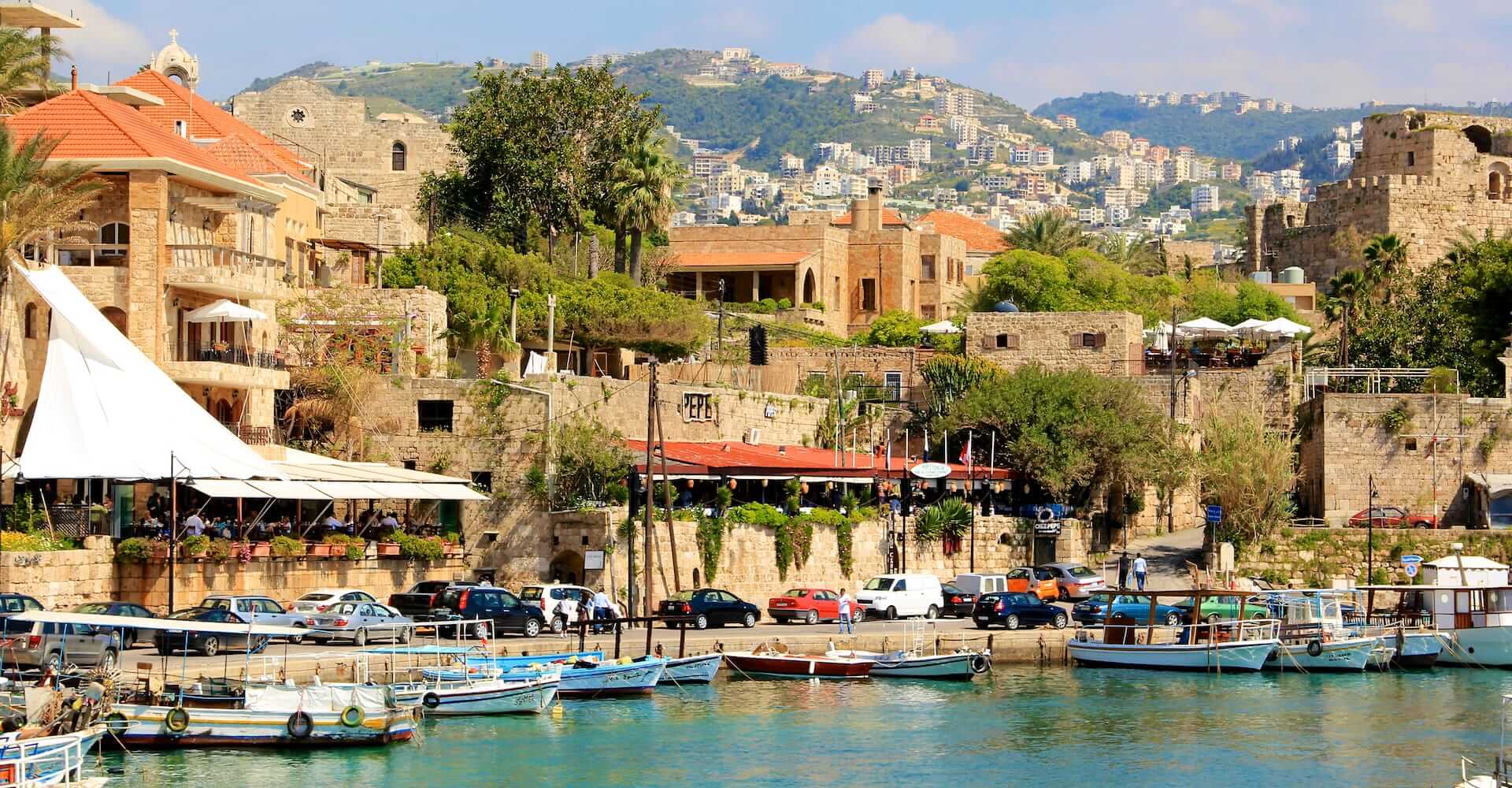
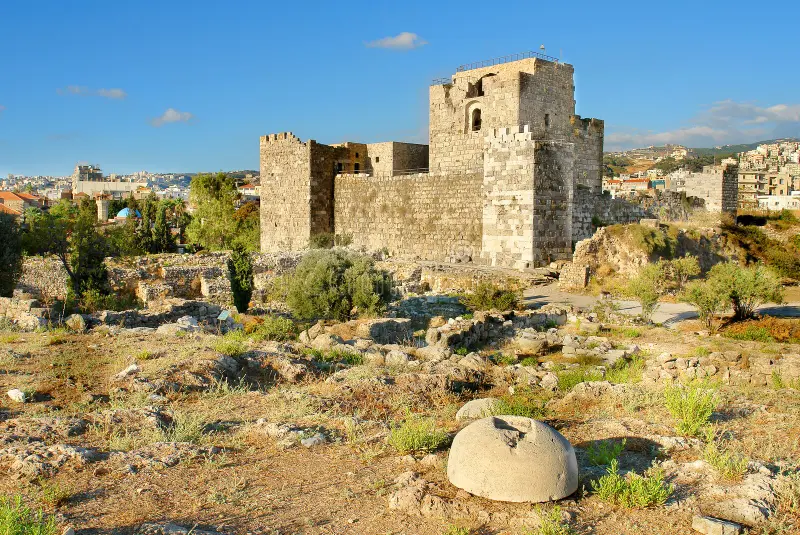
Jbeil, as the Lebanese call Byblos, is 40 km up the coast from Beirut, and archaeologists have found signs of people settled here as far back as the Neolithic. The ruins crowd onto a headland above the water. In a couple of hours you can walk from the foundations of Bronze Age temples to a small Roman theater and on to the shaft tombs where the city’s early kings were buried. UNESCO inscribed the site on its list in 1984. It was here that archaeologists uncovered the sarcophagus of King Ahiram, whose inscription ranks among the oldest surviving examples of the Phoenician alphabet. Today it’s displayed in the National Museum of Beirut. At the entrance to the site stands a 12th-century Crusader castle, put together in part with stones taken from earlier Roman buildings, and climbing to its roof gives you a view across the entire site.
Plan on roughly two hours to explore the ruins. Then head through the restored old souk to the little fishing port, the usual place for lunch. On summer weekends the town is packed. Choosing a weekday in spring or autumn means fewer people and milder temperatures, plus enough time to see Jeita beforehand or continue to Batroun later in the day.
Batroun and Mseilha Fort
Around 50 km up the coast from Beirut, the small town of Batroun is a favourite summer weekend escape for Lebanese families and friends. Its old quarter is compact enough to explore on foot. Look for the remains of a Phoenician sea wall, St. Stephen’s Church beside the old port, and the tiny chapel of Our Lady of the Sea, and make time for a glass of the fresh lemonade Batroun is famous for. Between May and October, the beach clubs and waterfront restaurants are full, and the town keeps going well into the night.
Just five minutes further north, Mseilha Fort perches on a rocky outcrop over the Nahr al-Jawz River, right next to the main highway. Local tradition, followed by most guidebooks, links the fort to Emir Fakhreddine II. He is said to have had it built in the 17th century so that whoever held the rock could control who passed along the road between Beirut and Tripoli. A walk through its rooms and stairways takes 20 to 30 minutes. With Byblos only about 25 minutes south of Batroun, it’s easy to see both on the same day.
Tripoli
About 85 km north of Beirut, Tripoli is the second-biggest city in Lebanon, and no other Lebanese city has a larger old quarter from the Mamluk period. Above it rises the Citadel of Raymond de Saint-Gilles, which the Crusaders started in the 12th century and later rulers reconstructed. Below lie the covered markets, the Taynal Mosque from the 14th century, and Khan al-Saboun, where shops still sell soap made from olive oil. The city is also famous for its Arabic sweets. Across town, the Rashid Karami International Fair, a modernist design by the Brazilian architect Oscar Niemeyer, joined UNESCO’s World Heritage List in 2023.
A visit to Tripoli takes more preparation than other trips in the north. The UK advises against all but essential travel to the part of the city east of Bechara El Khoury Road, an area that includes Bab al-Tabbaneh, near the citadel. The safest approach is to go with a local guide who knows which streets to take and to look at the advice map before deciding on your route.
If you’d prefer to leave the drivers and timings to someone else, Aten Tours can plan private day trips from Beirut with a guide and driver, for example, Jeita Grotto, Harissa, and Byblos in one day, setting off early enough to get past Jounieh before the traffic builds.
The Northern Mountains: Qadisha Valley, the Cedars and Baatara Gorge
Much of Lebanon’s best-known scenery, the cedar trees and the monasteries clinging to cliffs, comes from the mountains north-east of Byblos. These trips also mean the longest time in the car of anything in this guide. Because Bcharre, the Qadisha Valley, and the Cedars of God are close neighbors, they fill one full day together. Tannourine and the Baatara Gorge fill a second, ideally in spring.
Bcharre and the Qadisha Valley
Roughly 120 km north-east of Beirut, the Qadisha Valley is a steep gorge that drops away beneath the town of Bcharre. Over many centuries, Maronite monks and hermits made their homes here, carving chapels and monasteries out of the cliffs. UNESCO added the valley to its World Heritage List in 1998, together with the Forest of the Cedars of God on the slopes above it. Of the monasteries, Qozhaya is the simplest to reach by car. A small museum there tells the story of its early printing press, which printed a Syriac psalter in 1610. Deir Qannoubine, where the Maronite patriarchs had their seat for nearly 400 years, and Mar Lichaa can only be reached by walking along the valley floor. Expect the hike to add two to three hours, and save it for the drier months between May and October.
Bcharre itself perches on the edge of the gorge at roughly 1,500 meters. It is the birthplace of Khalil Gibran, who wrote The Prophet. His paintings and manuscripts are kept at the Gibran Museum, housed in what was once the Mar Sarkis monastery, which is also where he was laid to rest.
The Cedars of God
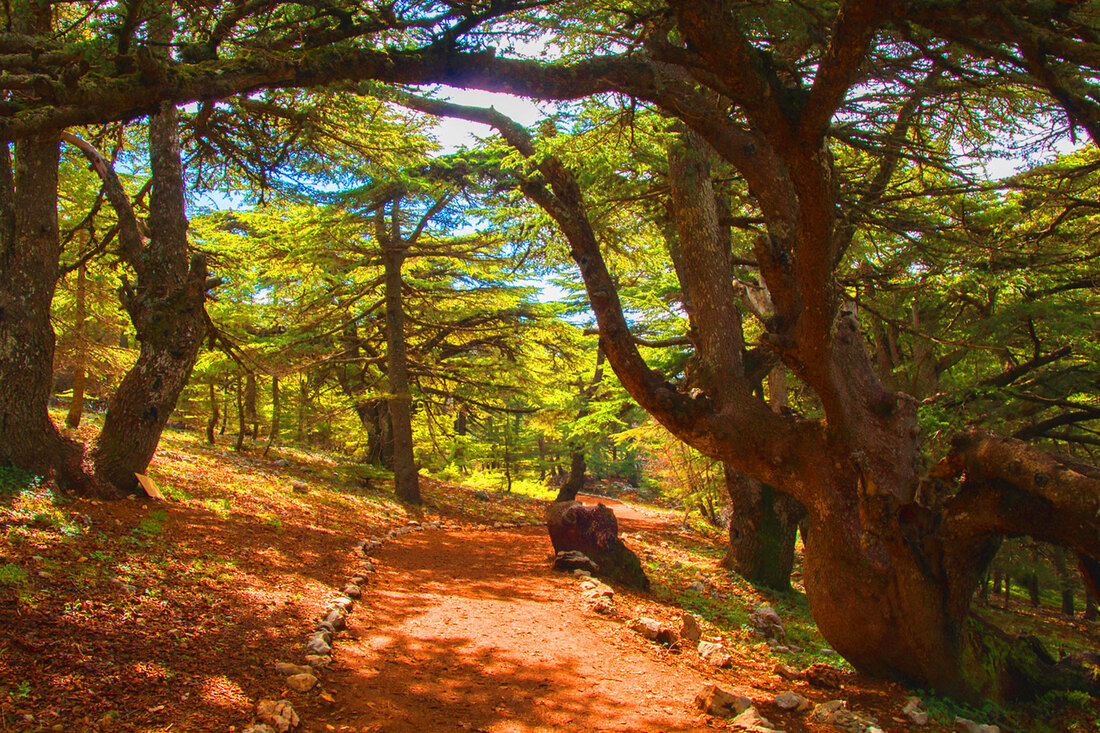
Locally called Arz el-Rab, the Forest of the Cedars of God is an enclosed grove at nearly 2,000 meters, around 20 minutes by car up the mountain from Bcharre. The few hundred trees still standing are a remnant of the forests that once spread across large parts of Mount Lebanon, and some of them are believed to be more than a thousand years old. In 1876, Queen Victoria funded the stone wall that surrounds the grove, built to stop goats from grazing on young trees. A gentle circular path through the cedars takes between 30 and 45 minutes.
How the grove looks changes a great deal with the seasons. Between late spring and autumn, the trails are dry and you can see far down towards the valley. In winter, snow covers the ground under the trees, and the nearby Cedars ski area is open. Snowploughs usually clear the road from Bcharre after a snowfall, but severe storms can shut it, and on bad-weather days the grove may also close.
Tannourine and Baatara Gorge
Close to the village of Balaa in the Tannourine district, the Baatara Gorge waterfall is roughly two hours’ drive from Beirut, by way of Byblos and the Laqlouq plateau. Here, water falls some 255 meters into a sinkhole in the limestone, dropping past three natural stone bridges that sit one on top of another. The cave was first documented in 1952 by Henri Coiffait, a French biospeleologist. Because the waterfall is fed by melting snow, it’s fullest between March and May. Late in the summer it may thin out to a trickle, and in winter the road can be blocked by snow.
Reaching the viewpoints involves a descent down steep stone steps from the car park. In some places, the paths along the edge have little or no railing, so wear sturdy shoes and keep children within reach. Around 20 minutes away, the Tannourine Cedars Forest Nature Reserve is bigger than the Cedars of God and far less crowded. Its marked trails make it a natural second stop on the same trip.
Chouf Day Trip from Beirut: Deir el Qamar, Beiteddine and the Cedar Reserve
If you’d like to see historic mountain villages and cedar woods without spending two hours on the road, a Chouf day trip from Beirut is the simplest option. Taking the coast road via Damour, you’ll reach Deir el Qamar and Beiteddine Palace in around an hour, and the two are just five minutes apart. Leave early and there’s time to visit the Chouf Cedar Reserve in the afternoon as well.
Deir el Qamar and Beiteddine Palace
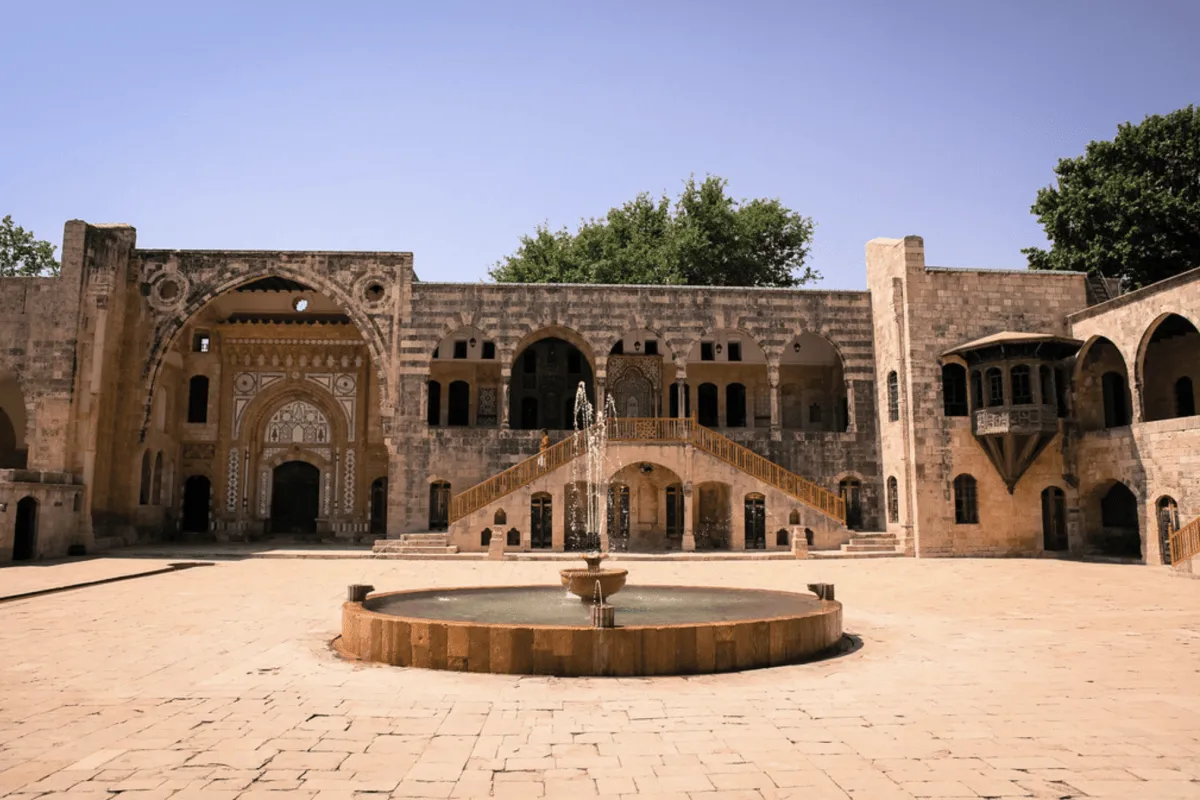
From the 16th century onward, Deir el Qamar served as the capital of Mount Lebanon’s emirs, until Emir Bashir Shihab II relocated his court to Beiteddine on the other side of the valley. The heart of the village looks much as it did then. A small square is ringed by sandstone houses topped with red tiles, and around it you’ll find the Fakhreddine Mosque, which dates to 1493, the Serail of Emir Youssef Chehab and the church of Saydet el Talle. One or two hours is plenty, and that includes a coffee on the square.
Construction of Beiteddine Palace began in 1788 and went on for some 30 years under Bashir II. The building is arranged around a chain of courtyards that lead you into painted reception halls, a domed bathhouse and the emir’s private rooms, where his tomb is also found. In the former stables, there’s now an extensive display of Byzantine mosaics that were moved from Jiyeh, on the coast. Each July and August, the main courtyard becomes the venue for evening concerts during the Beiteddine Art Festival. A good plan is to tour the palace first, before the crowds arrive, and then eat lunch in Deir el Qamar. On the road between them is Moussa Castle, which one man built mostly with his own hands over several decades. It’s an eccentric detour, but a fun one.
Chouf Cedar Reserve
No nature reserve in Lebanon is bigger than the Chouf Cedar Reserve, which takes up around 5% of the country’s land and forms part of the Shouf Biosphere Reserve, recognised by UNESCO in 2005. Along the ridge above the Chouf villages, it protects three cedar forests, at Barouk, Maasser el Chouf and Ain Zhalta, and its waymarked trails range from one hour to four. Around 30 minutes from Beiteddine, the Barouk entrance is the most convenient to combine with a morning of sightseeing. In spring the slopes are covered in wildflowers, late autumn brings cool, clear days, and between December and March the upper trails are often under snow.
Outside the Bekaa, the Chouf is the area where you most need to look at the travel advice map. In October 2026, the UK advised against all but essential travel to the area south of a road linking Aanout, Boqaata and Maasser el Chouf, which places the Maasser el Chouf entrance right on that boundary. Because Deir el Qamar, Beiteddine and Barouk are all nearby, find out where the line currently runs before you finalise your route.
Bekaa Valley Day Trips: Zahle, Ksara, Anjar and Baalbek
Lying between Mount Lebanon and the Anti-Lebanon mountains, the Bekaa Valley is a flat, high-altitude plain one to two hours east of Beirut, reached by crossing the Dahr el Baidar pass. Most of Lebanon’s wine and much of its farming come from here, and two of the country’s UNESCO sites, Anjar and Baalbek, are in the valley. Because current travel advice varies from one part of the Bekaa to another, each place is covered separately below.
Zahle and Château Ksara: A Bekaa Wine Day
The biggest town in the Bekaa, Zahle lies on the western side of the valley about 50 km from Beirut. It’s famous for its outdoor restaurants beside the Berdawni river, where people linger over lengthy lunches of mezze and arak. Ten minutes from town is Château Ksara, established by Jesuit monks in 1857 and generally regarded as the oldest commercial winery in Lebanon. A visit leads you through roughly 2 km of caves, originally excavated in Roman times and now used for ageing wine, before ending with a tasting. The grape harvest falls in September and October, which makes those months the best time for a wine day in the Bekaa. In October 2026, UK regional warnings did not mention Zahle or Ksara, but both lie within a governorate that includes restricted zones, so check the advice map before travelling.
Anjar
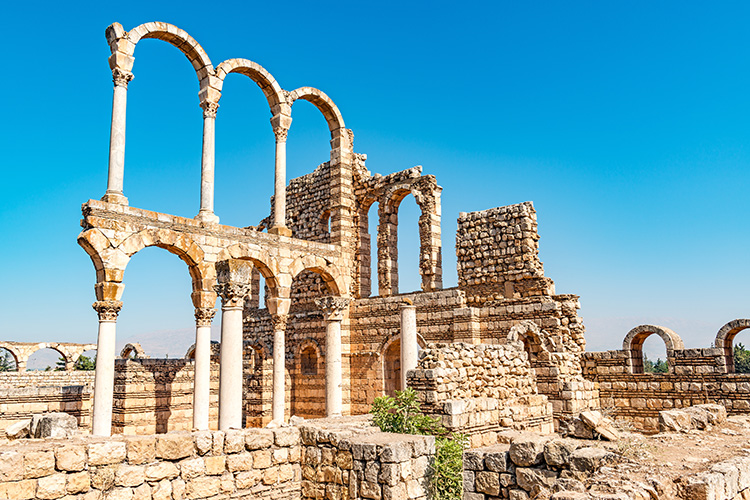
At the base of the Anti-Lebanon range, about 60 km from Beirut, lie the remains of Anjar, a city founded in the 8th century under the Umayyad caliph al-Walid I. UNESCO, which added it to its list in 1984, calls it a unique example of Umayyad urban planning. Its two main colonnaded streets cross at a tetrapylon with four arches. Along them are the foundations of shops, a palace whose arches have been partly reconstructed, and a set of baths. Walking the whole site takes around an hour. Anjar is east of the Litani River and just a few kilometres from the border with Syria, so it falls inside or close to zones covered by both Australian and UK warnings. Before you add it to a day in Zahle, check exactly where it sits on both countries’ advice maps.
Baalbek: What to Know Before Planning a Day Trip
Located 85 km north-east of Beirut, Baalbek ranks among the biggest Roman temple complexes ever constructed, and when conditions are normal it’s the main day trip on most visitors’ plans for Lebanon. Six columns from the Temple of Jupiter remain upright, each standing roughly 20 metres high. Next to them, the Temple of Bacchus is one of the most complete Roman temples to survive anywhere in the world. In a quarry close by sits the Stone of the Pregnant Woman, one carved block thought to weigh about 1,000 tonnes.
Right now, deciding whether to make a Baalbek day trip from Beirut is not straightforward. The city belongs to the Baalbek-Hermel governorate, which was hit by airstrikes in the 2024 conflict and again once fighting intensified in March 2026. Australia advises against all travel to the governorate, while the UK advises against all travel or all but essential travel, depending on the area. Ignoring official advice may also void your travel insurance. Once the situation allows, the site fully justifies the 90-minute to two-hour drive. In the meantime, recheck the advice in the week of your trip, and travel only with a driver or guide who keeps up with local news every day.
Sidon and Tyre: The South Today
For now, neither Sidon nor Tyre is a practical day trip from Beirut. Both are located in the South governorate. In October 2026, travel advice from the UK and Australia advised against all travel to the area, citing ongoing military activity close to the Israeli border and airstrikes that continued even after the cessation of hostilities announced in June 2026.
When things were quieter, both cities were simple trips along the coast. Sidon lies about 45 minutes from Beirut. The Crusaders built its Sea Castle in 1228 on a small island joined to the mainland by a stone causeway. Nearby you’ll find a vaulted old souk, Khan al-Franj, a caravanserai from the 17th century, and a museum dedicated to the city’s history of soap-making. Some 80 km south of Beirut, Tyre was among the leading ports of the Phoenician world, and UNESCO listed it in 1984. At its Al-Bass site are a long Roman road lined with columns, a monumental arch and a Roman hippodrome that ranks among the biggest yet discovered. Because of the fighting, UNESCO granted enhanced protection to Tyre and dozens of other sites in Lebanon in late 2024.
To explore Phoenician history without travelling south, visit Byblos, which covers much of the same story, and the National Museum of Beirut, home to many of the most important objects found in Sidon and Tyre. Among them is a line of marble anthropoid sarcophagi from the Sidon necropolis, which you can see in a single afternoon without leaving the city.