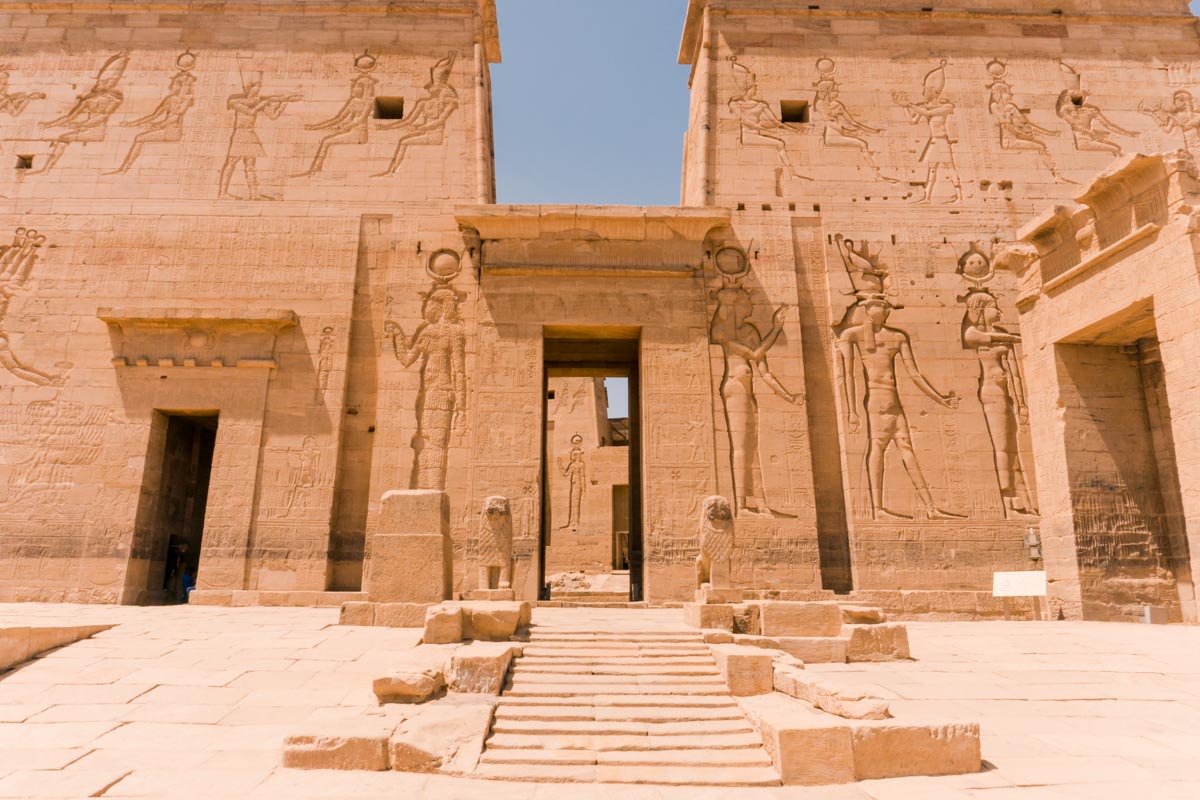
.jpg "Philae Temple The Island Temple of Isis in Aswan")
Philae Temple Aswan
-History and Relocation of Philae Temple
Construction of the Philae Temple complex began in the 4th century BC under Ptolemy I, and work continued for centuries under later Ptolemaic rulers and a succession of Roman emperors. The temple was dedicated primarily to Isis goddess of magic, motherhood, healing, and protection, and grew into one of Egypt's most important pilgrimage sites. It remained in active use, remarkably, until the 6th century AD, long after most other ancient Egyptian temples had fallen silent.
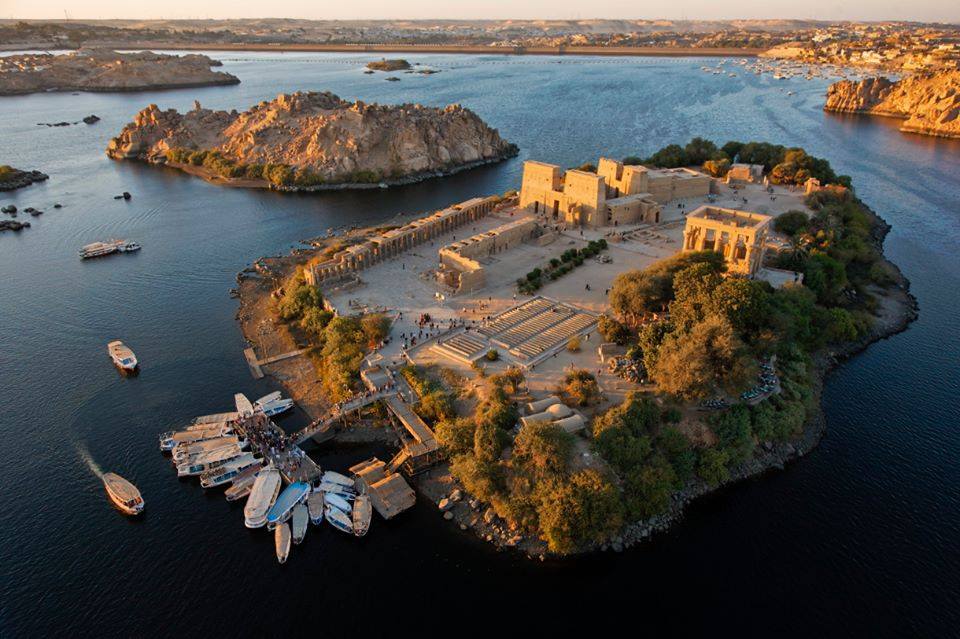
Everything changed with the construction of the Aswan High Dam in the 1960s. As Lake Nasser began to rise, it became clear the temple would eventually disappear underwater. UNESCO stepped in with its International Campaign to Save the Monuments of Nubia, and in one of the most ambitious rescue operations in archaeological history, the entire complex was dismantled stone by stone; over 40,000 blocks in total were moved to the nearby island of Agilkia and rebuilt between 1972 and 1980 to match its original layout almost exactly. It's still held up today as a model of how large-scale heritage preservation can actually work.
-An Island Temple on the Nile
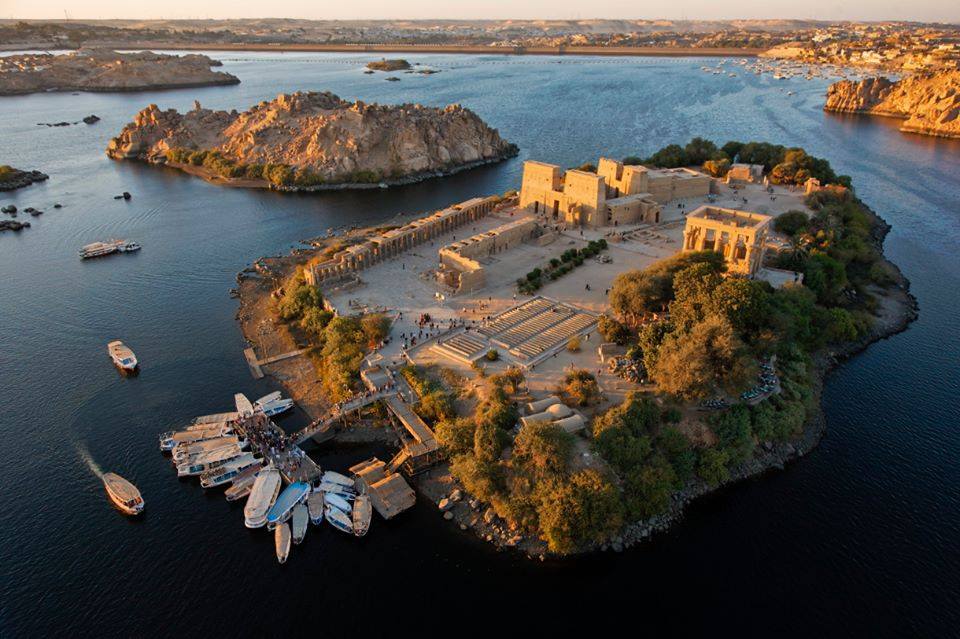
Most Egyptian temples are approached on foot or by road, but Philae is different — you can only get there by boat. That short crossing turns out to be part of the appeal: granite outcrops rising out of the water, the river opening up around you, and the temple slowly coming into view as you approach. It's a quieter, slower kind of arrival than most sites in Egypt offer, and it sets the tone for the visit before you've even set foot on the island.
-The Isis and Osiris Myth Behind the Walls
You'll get more out of Philae if you know the backstory before you walk in. The short version: Osiris was killed by his own brother, Set, who hacked his body apart and scattered the pieces across Egypt. Isis wasn't willing to leave it there. She went looking all over the country collecting what was left of him and eventually brought him back long enough to conceive their son, Horus. It's not a tidy myth. It's about grief and refusing to let go, and it's part of why Isis became one of the most widely worshipped figures in the ancient Mediterranean, not just in Egypt. Knowing this makes a real difference once you're standing in front of the reliefs they stop being "nice carvings" and start reading like scenes from an actual story.
-The Sound and Light Show
Philae after dark is a different place entirely. There's an evening show where the whole Isis and Osiris story gets retold across the temple itself with narration, music, and lights sweeping over the columns and courtyards. Sitting there once the sun's gone and the temple's lit up against the sky, with the Nile right behind you, hits differently than seeing it in daylight. It's slower, more dramatic, and if you can fit it into your trip, it's genuinely worth staying for. Philae by day and Philae by night feel almost like two separate visits.
-Visiting Philae Temple: A Few Practical Tips
You can't just walk up to Philae; it's out on Agilkia Island, so the visit starts at a small marina outside Aswan where you catch a motorboat over. Don't treat that part as a formality either; it's a nice few minutes on the water before the temple even comes into view.
-Try to get there early. Once the tour buses start arriving mid-morning, the courtyards fill up fast, and the whole feel of the place changes. Show up closer to opening time and there's a decent chance you'll have entire sections almost to yourself, plus better light if you're taking photos.
*One thing that trips people up: the boat ride usually isn't included in the temple ticket, so keep some cash on you for that.
-There's almost no shade once you're on the island, so a hat and water matter more than you'd think, especially outside the winter months. And give yourself more time than you'd expect; the complex is bigger once you're actually inside it, and the carvings are worth slowing down for rather than rushing past.
-If you can manage it, don't try to cram the evening sound and light show into the same visit as your daytime trip. It's a different atmosphere entirely, and it deserves its own time slot rather than being an afterthought.
-Most people see Philae as a rushed stop on a day trip from Luxor, but if you're already spending a night or two in Aswan, it makes more sense paired with the High Dam and the Nubian villages nearby; no need to rush it.
-Why It's Worth the Trip
If you're spending time in Aswan or making your way down the Nile, Philae is hard to leave off the itinerary. Part of what makes it memorable is the setting itself; there's really nowhere else in Egypt quite like it. Whether you're there for the mythology, the architecture, or just the boat ride out, it's one of those places that tends to stick with people long after the trip is over.