The History of Hypatia in Alexandria: The City's Great Woman Philosopher
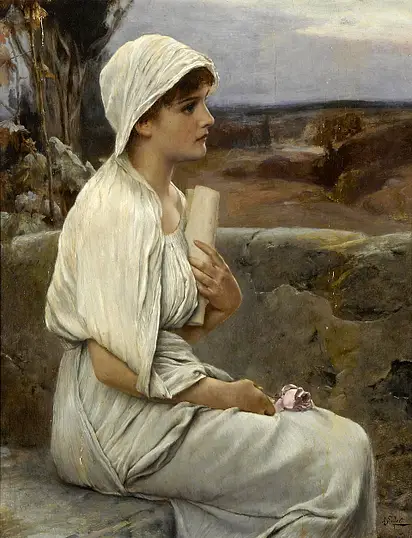
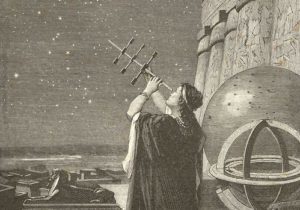
Hypatia is the best known scholar in the history of Alexandria, and one of the few women of the ancient world remembered for her mind rather than her rank. Mathematician, astronomer and philosopher, she taught in the city in the late fourth and early fifth centuries AD, when Alexandria was still one of the great intellectual centres of the Mediterranean. Her story has been retold in books, plays and films, but the documented facts are more interesting than most of the myths.
Who Was Hypatia of Alexandria?
Hypatia was born in Alexandria, most likely between 350 and 370 AD, though the exact year is debated. Her father, Theon, was a respected mathematician linked by later sources to the Museion, the scholarly institution beside the Great Library, and he edited Euclid's Elements. He gave his daughter a rigorous education in mathematics and astronomy, and she soon matched and then surpassed him. Later writers credit her with commentaries on Ptolemy, Diophantus and Apollonius of Perga, although none of her own works survives intact.
What Did Hypatia Teach?
Hypatia taught Neoplatonist philosophy, a tradition that joined Plato's ideas with mathematics and reasoned argument. Students travelled from across the eastern Mediterranean to hear her, among them Synesius of Cyrene, later a bishop, whose letters remain the best evidence of her standing. He asked her advice on scientific instruments, including a hydroscope, which shows a reputation for practical science as well as theory. Ancient writers describe her lecturing in public in the philosopher's cloak and advising city leaders, both rare for a woman of her time.
Alexandria in Hypatia's Time
The city she knew was tense. Alexandria was now largely Christian, the great temple of Serapis, the Serapeum, had been destroyed in 391, and rivalry between the Roman prefect Orestes and the patriarch Cyril kept public life on edge. Hypatia, a Neoplatonist who taught pagan and Christian students alike, was a trusted adviser to Orestes. Her influence and independence made her a target in a political struggle as much as a religious one.
How Did Hypatia Die?
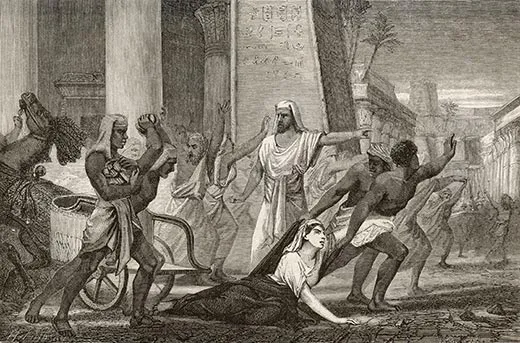
In March 415 AD a mob of Christian zealots, led according to the historian Socrates Scholasticus by a church reader named Peter, seized her carriage as she travelled through the city. She was dragged to the Caesareum, a former temple turned church, and killed with roof tiles or pottery shards, and her body was burned. Whether Cyril gave the order is unknown, and historians still disagree. The murder is often treated as the end of classical scholarship in Alexandria, though the decline was slower than that.
Myth Versus Fact
Popular retellings say Hypatia died defending the Great Library and that her death ended ancient science. Neither claim holds up. The Library's main collections had faded long before 415 through neglect and damage over centuries, and scholars kept working in the city afterwards. What her death does show is how fragile intellectual freedom becomes when politics turns violent. Thinkers from the Enlightenment onwards made her a symbol of reason, and the 2009 film Agora brought her story to a wide audience, though it takes liberties with the facts.
Where to Trace Hypatia's Story in Alexandria
Kom El Dikka Roman Amphitheatre
No tomb or house of Hypatia has been found, and the Caesareum where she died is long gone. The best place to picture teaching in her city is Kom El Dikka, where excavators uncovered a small Roman theatre beside rows of late Roman lecture halls dating from the fifth and sixth centuries, shortly after her death. They do not prove she taught here, but they show how higher learning was organised in Alexandria.
Bibliotheca Alexandrina, Graeco Roman Museum and Pompey's Pillar
The Bibliotheca Alexandrina, opened in 2002, honours the ancient Great Library and tells its story through exhibitions and manuscript collections. The Graeco Roman Museum, founded in 1892, holds statues, coins and everyday objects from the city of Hypatia's era. Pompey's Pillar rises above the remains of the Serapeum, whose destruction in 391 shaped her age, and the scale of the old temple hill is still visible.
Planning Your Hypatia Day in Alexandria
These sites lie within a short taxi ride of each other, so one unhurried day covers them all, and a guided tour with Aten Tours ties them into a single story. For wider context, read our guide to Greek and Roman heritage in Alexandria, build the rest of your trip from our list of things to do in Alexandria, and check the best time to visit Alexandria before choosing dates. Our guide to getting around Alexandria explains how to move between sites by tram, taxi or ride hailing app.