.jpg "Coronation of the Pharaoh: Ancient Egypt's Ritual of Divine Kingship")
Coronation of the Pharaoh: Ancient Egypt's Ritual of Divine Kingship
What the Coronation of a Pharaoh Meant in Ancient Egypt
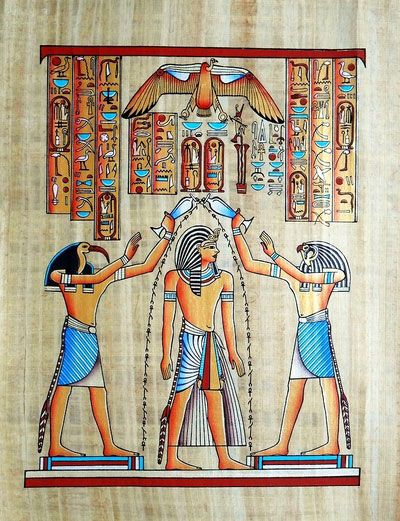
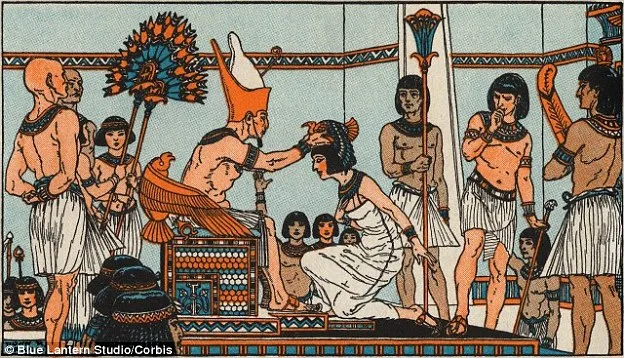
In ancient Egypt, the coronation of a pharaoh was never simply a change of ruler. It marked the moment a mortal became the living embodiment of Horus, the falcon god of kingship, and took on the responsibility of maintaining ma'at, the cosmic balance between order and chaos. The ceremony fused political authority with religious duty, and every symbol used that day carried thousands of years of meaning.
Crowns, Crook and Flail: The Symbols of Kingship
Two crowns anchored the ritual: the white Hedjet of Upper Egypt and the red Deshret of Lower Egypt. Combined, they formed the Pschent, the double crown that declared the pharaoh ruler of a unified nation stretching from the Nile Delta to Aswan. Alongside the crown, the new king received the crook and flail, a shepherd's staff and a threshing tool representing the pharaoh's role as both protector and provider. A ceremonial false beard, tied rather than grown, completed the transformation from man to divine ruler, regardless of the pharaoh's age or, in rare cases, gender.
The Ceremony: From Memphis to the Sed Festival
Most coronations took place at Memphis, in the temple of Ptah, where priests performed rites believed to channel divine authority directly into the new ruler. The pharaoh's name was inscribed within a cartouche, and offerings were made to secure the support of the gods for a prosperous reign. Decades later, if the pharaoh still held the throne, the Sed festival renewed royal power through a ritual re-enactment of the coronation itself, proof that kingship needed periodic restoration to remain strong.
The Ptolemies of Alexandria and the Rebirth of an Ancient Rite
When the Ptolemaic dynasty took control of Egypt after Alexander the Great, they inherited a country with three thousand years of coronation tradition already in place. Rather than replace it, the Greek-born rulers embraced it. Each Ptolemy was crowned according to Egyptian rite at Memphis, adopting a Horus name and appearing before Egyptian priests in full pharaonic regalia, even while governing from the new Hellenistic capital of Alexandria.
The Rosetta Stone itself is a product of this tradition. Its inscription records a decree issued by Egyptian priests following the coronation of Ptolemy V at Memphis, thanking the young king for tax relief and temple support. The stone's three scripts, hieroglyphic, Demotic and Greek, reflect exactly the dual identity that Alexandria's rulers cultivated: pharaohs to their Egyptian subjects, kings to their Greek administration.
Where to Encounter This Legacy in Alexandria Today
Alexandria still holds physical traces of this royal duality. The Greco-Roman heritage of Alexandria survives in temple fragments, statuary and burial sites that blend Egyptian religious symbolism with Hellenistic artistry, nowhere more strikingly than in the underground galleries of Kom el Shoqafa. For a closer look at the regalia associated with Egyptian royalty across different eras, the Royal Jewellery Museum in Alexandria displays crowns, diadems and ceremonial pieces that echo the same symbols pharaohs wore three millennia earlier.
Best Time and Ways to Explore Alexandria's Royal Past
Alexandria's museums and archaeological sites are best explored without the summer heat weighing down a full day of walking, so check the best time to visit Alexandria before planning a trip. Pairing these historical sites with a broader look at things to do in Alexandria makes it easier to build an itinerary that moves from ancient royal history to the city's Mediterranean coastline in the same day.
Experience It With Aten Tours
Understanding a coronation ceremony from a description is one thing; standing in front of the artifacts that once surrounded a crowned pharaoh is another. Aten Tours arranges guided visits to Alexandria's key historical sites with Egyptology-trained guides who bring these rituals back to life, turning a walk through a museum into a clear, connected story of how Egypt's kings claimed and kept their divine authority.